
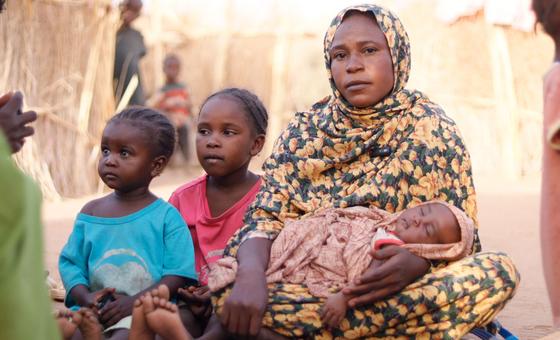
Sudan: ‘Devastating tragedy’ for children in El Fasher after 500 days of siege

Around 260,000 civilians – including 130,000 children – remain trapped in the area’s main camp for internally displaced people, enduring desperate conditions without aid for more than 16 months.

The Rapid Support Forces (RSF), which has been battling forces of the military government for control of Sudan for over two years, has cut off all supply lines.

RSF militia have been besieging the city since May last year and it is the last urban area still under government control.

“We are witnessing a devastating tragedy – children in Al Fasher are starving while UNICEF’s lifesaving nutrition services are being blocked,” said Catherine Russell, UNICEF Executive Director.

Deadly violence

Reports this week point to yet another mass-casualty incident, with seven children reportedly killed in an attack on Abu Shouk camp for internally displaced people, on the outskirts of El Fasher.

Since the start of the siege in May 2024, more than 1,100 grave violations have been verified in El Fasher alone, including the killing and maiming of over 1,000 children.

Meanwhile, at least 23 children have been subjected to rape, gang rape, or sexual abuse. Others have been abducted, recruited, or used by armed groups, said UNICEF.

Health and education facilities have also come under sustained attack, with 35 hospitals and six schools struck, killing and injuring many, including children.

Aid blocked

Meanwhile, the UN aid coordination office (OCHA) warned Wednesday that the already dire situation in North Darfur continues to worsen.

“Blocking humanitarian access is a grave violation of children’s rights, and the lives of children are hanging in the balance,” Ms. Russell said, reiterating UNICEF’s call for immediate and full access to El Fasher.

The toll on children is catastrophic, the agency suspension of medical services due to depleted supplies has left an estimated 6,000 children suffering from Severe Acute Malnutrition (SAM) without treatment, UNICEF said.

Without therapeutic food and medical care, these children face an extremely high risk of death. News reports indicate at least 63 people, mostly women and children, died of malnutrition in just a single week.  

UNICEF continues to call for unimpeded humanitarian access for the delivery of therapeutic food, medicines, clean water, and other essentials.

Cholera outbreak

The siege is colliding with Sudan’s worst cholera outbreak in decades. More than 2,400 deaths have been reported since July 2024.

In overcrowded camps around Tawila, Zamzam and El Fasher, children weakened by hunger are now especially vulnerable to cholera and other deadly waterborne diseases.

“Children must be protected at all times, and they must have access to life-saving aid,” said Ms Russell.

Source link

Gazans ‘in terror’ after another night of deadly strikes and siege

Updating journalists in Geneva, Dr. Margaret Harris described another night of terror in the war-torn enclave.

She said that some of those injured in the attacks had sought help from the Indonesian hospital in northern Gaza, even though it was now “just a shell” after 19 months of war.  

“We’ve done our best to bring it back together and they are doing their best to treat everyone, but [medical teams] lack everything needed,” she insisted.

Rejecting accusations that relief supplies have been handed over to Hamas, the WHO spokesperson said that “in the health sector, we’ve not seen that. All we see is a desperate need at all times.”

Echoing that message, the UN aid coordination office, OCHA, explained that a stringent system of checks and reports to donors meant that all relief supplies were closely tracked in real time, making diversion highly unlikely.  

Even if it were happening, “it’s not at a scale that justifies closing down an entire life-saving aid operation,” OCHA spokesperson Jens Laerke said.

If you had been in a coma for the last three years and you woke up and saw this for the first time, anyone with common sense would say this is insane.

The development comes more than 10 weeks since the Israeli authorities stopped all food, fuel, medicines and more from reaching Gaza.  

To date, their proposal for an alternative aid distribution platform bypassing existing UN agencies – widely criticized by the humanitarian community – has not been implemented.  

The result has been rising malnutrition – unknown in Gaza before the war – and looming famine, while thousands of truckloads of essential supplies have had to be stored in Jordan and Egypt, according to UNRWA, the UN agency for Palestine refugees and the largest aid operation in Gaza.

In its latest update, OCHA said that the UN and its partners have 9,000 truckloads of vital supplies ready to move into Gaza. More than half contain food assistance which could provide months of food for the enclave’s 2.1 million people.

An inventory of the relief supplies “waiting just outside the borders to get in” illustrates their humanitarian purpose, Mr. Laerke said.

Pasta and stationary: Weapons of war?

“It includes educational supplies, children’s bags, shoes, size three to four years old and up to 10 years old; stationery and toys, rice, wheat flour and beans, eggs, pasta, various sweets, tents, water tanks, cold storage boxes, breastfeeding kits, breastmilk substitutes, energy biscuits, shampoo and hand soap, floor cleaner. I ask you, how much war can you wage with this?

Mr. Laerke said that UN officials have held 14 meetings with the Israeli authorities about their proposed aid scheme, which if implemented would restrict aid “to only part of Gaza” and exclude the most vulnerable.

It makes starvation a bargaining chip,” he maintained.

More than 53,000 people have been killed in Gaza since war erupted on 7 October 2023 in response to Hamas-led terror attacks on Israel, according to the health authorities.  

WHO said only 255 patients needing specialist care outside the Strip have been evacuated since 18 March leaving more than 10,000 patients – including approximately 4,500 children – who also need urgent medical attention outside Gaza.

In response to this week’s attack on the European General Hospital in Khan Younis, WHO’s Dr. Harris noted that it had been used as a meeting point for an evacuation. “That first bombing, as you probably know, destroyed two of the buses that we’d assembled to take children,” she added.

On Tuesday, the Security Council heard the UN’s top aid official Tom Fletcher call for immediate international pressure to stop Gaza’s “21st century atrocity” – a message amplified by OCHA’s Mr. Laerke:

The situation as it has developed now is so grotesquely abnormal that some popular pressure on leaders around the world needs to happen,” he said.

“We know it is happening, I’m not saying that people are silent, because they are not. But it doesn’t appear that their leaders are listening to them.”