UN social policy commission closes with calls to turn pledges into action

Meeting at UN Headquarters, in New York, from 2 to 10 February, the Commission for Social Development marked its first session since the Second World Summit for Social Development, held in Doha last year.

The gathering brought together ministers, senior UN officials, civil society groups and youth representatives to examine how global pledges can be translated into coordinated, inclusive and equitable policies at the national level.

Opening the session, Economic and Social Council (ECOSOC) President Lok Bahadur Thapa stressed that social development policies are where “resilience, social cohesion, and trust are ultimately tested.”

He warned that widening inequalities, demographic change, and rapid digital and green transitions are placing growing strain on societies worldwide. Responding in an integrated, people-centred way, he said, is “not merely a policy choice; it is a moral imperative.”

Delegates at the 64th session of the Commission for Social Development.

What is the Commission for Social Development?

The Commission for Social Development is an ECOSOC functional commission and the United Nations’ primary intergovernmental body for social development.

Established in 1946, it has helped shape global policy frameworks on poverty eradication, employment, social protection and inclusion, including by steering follow-up to landmark agreements such as the 1995 Copenhagen Declaration and, more recently, the 2025 Doha Political Declaration.

Click here for UN News special coverage of the Doha Summit

Over the years, the Commission has driven progress on universal social protection, decent work for all, and international focus on groups at risk of exclusion, including persons with disabilities, older persons, youth and families.  

Its conclusions have informed national policies, helped develop social protection floors, and reinforced links between social development and the Sustainable Development Goals.

The Commission meets annually at UN Headquarters, in New York, generally in February.

Click here for more information on the Commission

A post-Doha moment for social policy

This year’s priority themeadvancing social development and social justice through coordinated, equitable and inclusive policies – framed discussions throughout the session, reflecting concerns that fragmented policymaking is slowing progress on poverty eradication, decent work and social inclusion.

Addressing delegates, General Assembly President Annalena Baerbock underscored that social development is not a secondary concern reserved for calmer times, but “the foundation that peace is built upon” and a critical investment in stability.

Ending hunger and poverty, she said, is both a moral obligation and a matter of security, noting how deprivation fuels conflict, migration and instability.

From commitments to delivery

In a message to the Commission, Deputy Secretary-General Amina Mohammed highlighted the shift signalled by the Doha Political Declaration away from incremental progress towards more ambitious, coordinated action.

She pointed to strong civil society engagement – with more than 700 non-governmental organizations (NGOs) registered for the session – and urged governments to match that readiness with concrete delivery.

“If Copenhagen, Doha and the 2030 Agenda are where we drew the map, then the Commission for Social Development sets us on the road,” she said.

Click here to watch the Deputy Secretary-General’s message

Coordinating policies in a changing world

Throughout the session, speakers repeatedly stressed the need for greater policy coherence – aligning employment strategies with universal social protection floors, inclusive education and health systems, and just-transition measures.

The Commission also examined emerging social challenges, including demographic change, labour-market disruption, and the social impacts of digital transformation and artificial intelligence.

Delegates heard that while new technologies carry risks, they can also accelerate progress towards the Sustainable Development Goals (SDGs) if governed inclusively and equitably.

A young boy relaxes in a wicker basket as his family threshes harvested wheat.

Youth mental health in focus

Youth voices featured prominently, reflecting the Commission’s emphasis on inclusion. The launch of the World Youth Report on Youth Mental Health and Well-being highlighted the growing pressures facing young people – from poverty and inequality to climate stress, conflict and digital harms.

Youth delegates and advocates shared lived experiences, describing how uncertainty about the future is eroding trust and well-being among younger generations, while calling for preventive, community-based and youth-responsive approaches.

Resolutions endorsed

At the close of the session, Member States endorsed two draft resolutions – one on advancing social development and social justice through coordinated, equitable and inclusive social policies, and another on the social dimensions of the New Partnership for Africa’s Development.

The resolutions reaffirm commitments made at the 1995 Copenhagen Summit and the 2025 Doha Summit, while emphasizing the need to translate global pledges into concrete national action.

Outcomes from the session will feed into upcoming UN processes, including the High-Level Political Forum on Sustainable Development in July, ECOSOC’s broader work, and the General Assembly’s five-year follow-up towards a high-level review of social development commitments in 2031.

Source link

‘Yawning gap’ remains between climate adaptation funds and funding pledges

That’s the main message in this year’s Adaptation Gap Report from the UN Environment Programme (UNEP).

By 2035, developing nations will need well over $310 billion per year in dedicated funding to adapt to a planet increasingly altered by polluting fossil-fuel emissions, the report states.

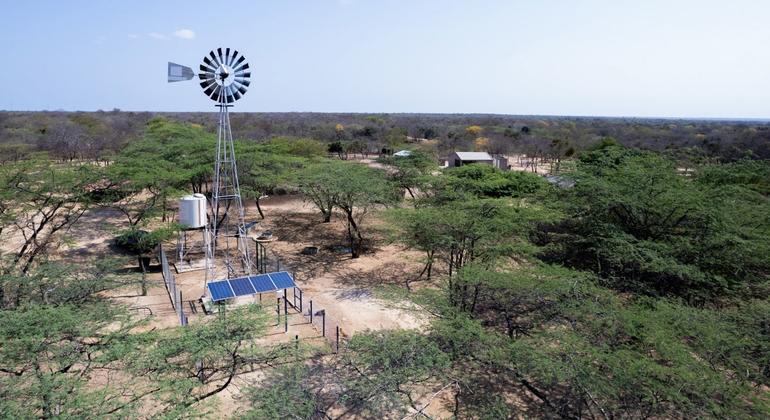
“Climate adaptation” refers to the ways countries respond to actual or expected climate change and its effects, to moderate the harm caused.

Examples include flood defences such as seawalls, improved drainage systems, or elevating roads and buildings. In 2023, vulnerable countries received around $26 billion. 

‘Adaptation is a lifeline’

UN Secretary-General António Guterres, who warned on Tuesday that humanity’s failure to limit man-made global warming to 1.5ºC above pre-industrial levels will lead to “devastating consequences,” said on Wednesday that the adaptation gap leaves the world’s most vulnerable people exposed to rising seas, deadly storms, and searing heat.

“Adaptation is not a cost – it is a lifeline,” declared the UN chief. “Closing the adaptation gap is how we protect lives, deliver climate justice, and build a safer, more sustainable world. Let us not waste another moment.”

Although far more needs to be done, the report notes that visible progress is being made to close the gap.

For example, most countries have at least one national adaptation plan in place, and climate funding for new adaptation projects rose in 2024 (although the current financial landscape means future funding is in jeopardy).

Baku to Belém, to $1.3 trillion

The latest adaptation data will help negotiations focused on tackling the climate crisis at the annual UN Climate Conference.

This year’s event, COP30, is being held next month in Belém, Brazil, where ramping up financing for developing nations will be high on the agenda.

At last year’s UN Climate Conference in Baku, Azerbaijan (COP29), a new goal – the Baku to Belém Roadmap – was launched: $1.3 trillion for climate finance – from public and private sources – by 2035.

This is not just for adaptation, it also covers the transition to economies that don’t rely on fossil fuels for energy.

The authors of the Adaptation Gap report agree that the roadmap could, if implemented, make a huge difference, but the devil is in the detail.

They argue that funding should come from grants rather than loans, which would make it even harder for vulnerable countries to invest in adaptation.

Speaking at the launch of the report on Wednesday, Inger Andersen, Executive Director of UNEP, called for a global push to increase adaptation finance – from both public and private sources – without adding to the debt burdens of vulnerable nations.

Investment now, she said, will avoid the cost of adaptation escalating.

Climate inaction is claiming millions of lives every year.

Climate inaction costing ‘millions of lives’: WHO

Underscoring the urgency of adapting to the changing climate, the World Health Organization (WHO) announced on Wednesday that climate inaction costs millions of lives each year.

The findings are contained within the latest Lancet Countdown on Health and Climate Change on Wednesday, which shows continued over-reliance on fossil fuels, coupled with a failure to adapt to a heating world, are already having a devastating toll on human health in all countries, rich and poor.

The rate of heat-related deaths, for example, has gone up by 23 per cent since the 1990s, to an average 546 000 deaths per year. Droughts and heatwaves added 124 million people to the numbers facing moderate or severe food insecurity in 2023, and heat exposure caused productivity losses equivalent to US$ 1.09 trillion to be lost.

Despite the human and economic costs, governments spent $956 billion on net fossil fuel subsidies in 2023, more than triple the annual amount pledged to support climate-vulnerable countries: fifteen countries spent more subsidising fossil fuels than on their entire national health budgets.

‘We have the solutions at hand’

“We already have the solutions at hand to avoid a climate catastrophe,” said Dr Marina Romanello, Executive Director of the Lancet Countdown at University College London. “Communities and local governments around the world are proving that progress is possible. From clean energy growth to city adaptation, action is underway and delivering real health benefits – but we must keep up the momentum.”

Dr. Romanello described the rapid phase out of fossil fuels in favour of clean renewable energy and efficient energy use as the most powerful lever to slow climate change and cut deaths, estimating that a shift to healthier, climate-friendly diets and more sustainable agricultural systems would massively cut pollution, greenhouse gases and deforestation, potentially saving over ten million lives a year.


After the big development pledges in Seville, UN says action starts now

That’s where the Sevilla Platform for Action (SPA) comes in – a major step to begin implementing the Seville Agreement without delay.

It features over 130 concrete actions to support the renewed global financing framework that world leaders just adopted at the international conference.

They will help countries mobilise resources for an SDG investment push, build developing countries’ development capacity, help address the sustainable development debt crisis, and take steps to improve the system by which the developing world can borrow money for national investment without crippling debt burdens.

Launching the platform, Spain’s Prime Minister Pedro Sánchez, highlighted the urgency of collective action saying the platform represents “a critical opportunity to restore trust in multilateralism and deliver tangible financing.”

UN Secretary-General António Guterres underscored the importance of the SPA as a catalyst for joint action and delivery.

In a world divided, it is “a springboard towards a more just, inclusive and sustainable world for all countries,” he said.

Countries can make up for absence of US

Speaking earlier at press conference for the hundreds of journalists here in Sevilla, he said the absence of the United States which left negotiations earlier this month was a challenge but there are always ways to raise the money needed: “It’s a question of political will.”

This can be done if leaders are willing to take the necessary measures such as working through multilateral development banks and carbon taxes, for example.

Power shifts

To have the United States on board would be excellent but it can be done in any case by those willing to do so.”

“I have a clear message to the powerful,” the UN chief continued. “It’s better to lead the reform of the system now than to wait and eventually suffer the resistance later when power relations change.

“And I believe that the reforms that are proposed in Sevilla in line with the work that was done in the Summit of the Future are reforms that are absolutely needed both for developing and developed countries.”

Following the opening remarks, interventions demonstrated strong political commitment to start implementing the historic funding agreement.

Notable initiatives include a global hub for debt swaps for development at the World Bank and a debt pause clause alliance – championed by Spain and a coalition of partners.

Sevilla Platform for Action at a glance:

  • It aims to bring together countries, organisations, businesses and others to make real, measurable progress in tackling global financial and development challenges.
  • Any group – from governments to charities, businesses to universities – can put forward a new or significantly expanded plan that supports the UN’s sustainable development goals.
  • Proposals must set out clear, achievable actions with specific results, a timeline, and show how they will be funded.
  • Submissions were open from 1 May to 6 June 2025, using an online form.
  • Each plan had to name the lead group behind it, list any supporting partners, explain what makes it new or ambitious, and include a communications plan.
  • Selected initiatives will be presented to the public and media during FFD4 in Sevilla.
  • All approved commitments will be listed online, with progress tracked and reported through future UN reviews and meetings.

‘Everyone’s business’

A further essential part of turning words in Sevilla into action on the ground, is mobilising the business community.

Business leaders on Monday issued an urgent appeal to unlock more private capital at the opening of the International Business Forum on Monday.

António Guterres told delegates: “Development is everyone’s business”, emphasising the private sector’s essential role alongside public institutions in achieving the SDGs.

Sevilla in the south of Spain is the venue for FFD4.

Five priorities for delivery

A new communique from the conference’s Business Steering Committee – co-chaired by the International Chamber of Commerce (ICC) and Global Investors for Sustainable Development (GISD) – outlines five priority areas for action:

  • Create more ways to invest in development: Set up tools and platforms that make it easier and safer for private money to flow into projects that help people, especially in poorer countries.
  • Work more closely with governments: Join forces to plan and support projects from an early stage, making them ready for investment.
  • Make sustainability rules clearer and more consistent: Align standards across countries so businesses can invest more confidently and support national development goals.
  • Fix financial rules that get in the way: Update regulations that make it harder to invest long-term in developing countries.
  • Help small businesses get funding: Improve access to finance for entrepreneurs by reducing risks and partnering with development banks and governments.

The communiqué complements the newly endorsed Seville Agreement and business leaders described the moment as pivotal. “Private finance is essential to bridge the global gap,” said José Viñals, co-chair of GISD.

At the forum, developing countries are showcasing over $1 billion worth of investable projects in sectors including energy, agriculture and digital infrastructure.

“The focus now must be on action,” said UN economic chief and conference Secretary-General Li Junhua.

Source link