
‘Wars, disasters, displacement, hunger’ continue to burden Myanmar

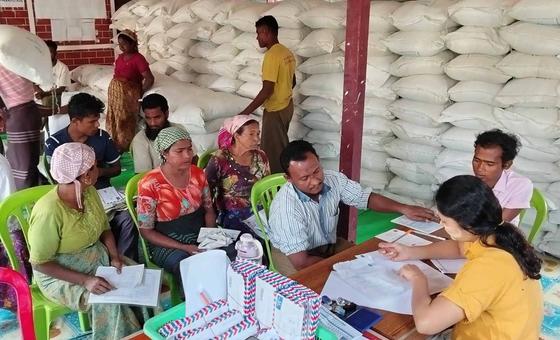
Four years after the military coup which deposed the democratically elected government, Myanmar’s civil conflict grinds on, leaving millions displaced and without a home.

The suffering of millions of people across Myanmar is immense,” said UNHCR chief Filippo Grandi. “With aerial bombardments, destruction of property, and forced recruitment, they live in daily fear for their lives.”

He added that “civilian men, women and children must be protected from violence, and solutions found so that they can choose to return home in safety and dignity.”

Many crises in need of response

A brutal civil war is not all Myanmar has to face.

In March, a 7.7 magnitude earthquake hit the country affecting multiple regions including the capital, Nay Pyi Taw. The UN relief chief Tom Fletcher said then on X that the humanitarian response “has been hampered by lack of funding.”

Mr. Grandi, who visited the affected communities earlier this year, urged wider humanitarian access and discussed solutions for the forcibly displaced.

“Millions of people forcibly displaced within the country and as refugees throughout the region, want nothing more than to be able to return home. They demand – and are entitled to – the safety and security that comes with peace.” Mr. Grandi said.

Homes destroyed

Thousands of people also had their homes destroyed after floods swept through many regions in July.

“Wars, disasters, displacement, hunger: the forgotten plight of so many people in Myanmar, like the Rohingya, never ends,” Mr. Grandi said in a post on X.

In the last year and a half, 150,000 Rohingya, a mainly Muslim minority in the majority Buddhist country, have fled to neighbouring Bangladesh. This marks the largest exodus to the country since 2017, when 750,000 Rohingya sought refuge from the violence in Rakhine state.

A call for solutions

UNHCR works with other UN agencies, NGO partners and communities in Myanmar to address the basic needs, physical safety and well-being of forcibly displaced and stateless people.

But many communities still suffer from lack of access to vital aid. This year’s UN response plan for Myanmar is currently only funded at 22 per cent.

Later this month in New York, Mr. Grandi will attend a high-level conference on the Rohingya and other minorities in Myanmar, calling for greater regional and international efforts to address the crisis.

All parties – with the support of the international community – must engage seriously to find solutions to their plight. This is particularly needed for the Rohingya, who have not only been attacked and displaced, but deprived of their basic rights for far too long,” the UNHCR chief said.

Source link

‘Peace is a choice’: UN chief urges diplomacy as wars spread from Gaza to Ukraine

This is the only sustainable path to global security, he told ministers at a high-level open debate of the Security Council on Tuesday.

The Secretary-General emphasised that the UN Charter’s tools – negotiation, mediation, conciliation, arbitration and more – remain a lifeline when tensions escalate, grievances fester and states lose trust in each other.

These tools are needed now more than ever, he stressed, as conflicts rage and international law is violated with impunity.

The cost is staggering – measured in human lives, shattered communities and lost futures. We need look no further than the horror show in Gaza – with a level of death and destruction without parallel in recent times.”

The risk of starvation looms and aid operations are being denied the space and safety to function. UN premises, such as the UN Office for Project Services (UNOPS) and the World Health Organization (WHO)’s main warehouse, have been hit despite parties being notified of their locations.

“These premises are inviolable and must be protected under international humanitarian law – without exception,” Mr. Guterres reiterated.

Peace is a choice – make it

From Gaza to Ukraine, from the Sahel to Sudan, Haiti and Myanmar, “conflict is raging, international law is being trampled, and hunger and displacement are at record levels,” he continued, adding that terrorism, violent extremism and transnational crime also remain “persistent scourges” pushing security further out of reach.

Peace is a choice. And the world expects the Security Council to help countries make this choice.

Mr. Guterres pointed to the UN Charter’s bedrock obligation in Article 2.3 that “all Members shall settle their international disputes by peaceful means”, and to Chapter VI, which empowers the Security Council to support “negotiation, enquiry, mediation, conciliation, arbitration, judicial settlement, resort to regional agencies or arrangements, or other peaceful means of their own choice.”

Action 16 of last year’s Pact for the Future urges states to recommit to preventive diplomacy, he said, commending Pakistan – the Council President for July – for tabling a resolution encouraging fuller use of those tools, which was adopted unanimously at the meeting.

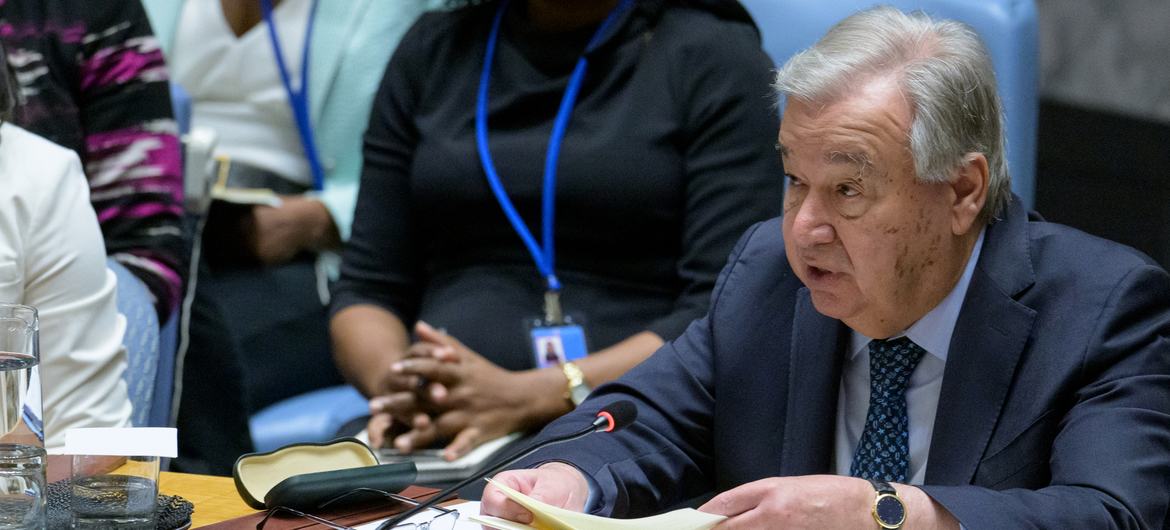
Secretary-General António Guterres addresses the Security Council high-level open debate.

P5 must overcome divisions

Security Council members – “in particular its permanent members” – must overcome divisions, the Secretary-General said, reminding them that even during the Cold War, Council dialogue underpinned peacekeeping missions and humanitarian access, and helped prevent a third world war.

He urged members to keep channels open, build consensus and make the body “more representative” of today’s geopolitical realities with more inclusive, transparent and accountable working methods.

Mr. Guterres also urged deeper cooperation with regional and subregional organizations.

Mediation can work even amid war, he said, noting the third anniversary of the Black Sea Initiative and a related memorandum with Russia that enabled grain movements during the conflict in Ukraine.

Renew commitment to multilateralism

States must honour their obligations under the Charter; international human rights, refugee and humanitarian law, and the principles of sovereignty, territorial integrity and political independence, Mr. Guterres said.

As we mark the 80th anniversary of our Organization and the Charter that gave it life and shape, we need to renew our commitment to the multilateral spirit of peace through diplomacy,” he said.

I look forward to working with you to achieve the international peace and security the people of the world need and deserve.

Security Council open debate

A signature event of the Pakistani presidency, Tuesday’s open debate was chaired by Deputy Prime Minister and Foreign Minister Mohammad Ishaq Dar.

The session aimed to assess the effectiveness of existing mechanisms for pacific dispute settlement, examine best practices and explore new strategies for tackling protracted conflicts.

It also sought to enhance cooperation with regional organizations, boost capacity-building and resource mobilisation, and align future efforts with the conflict-prevention vision outlined in the Pact for the Future.

Source link

Children’s lives ‘turned upside down’ by wars across Middle East, North Africa, warns UNICEF

Alarmingly, 110 million children in the region live in countries affected by war, with homes, schools and health facilities damaged or destroyed in fighting.

“A child’s life is being turned upside down the equivalent of every five seconds due to the conflicts in the region,” said Edouard Beigbeder, UNICEF Regional Director for the Middle East and North Africa, on Tuesday.

UNICEF estimates indicate that 45 million children across the region will require humanitarian assistance in 2025, a 41 per cent increase since 2020.  

Funding shortfalls  

However, funding gaps are affecting vital programmes across the region.

For instance, as of May, Syria faced a 78 per cent funding gap and the State of Palestine a 68 per cent gap for their 2025 appeals. UNICEF’s regional programmes are also under increasing financial strain.

The outlook for 2026 also remains bleak, UNICEF said, noting that its funding for Middle East and North Africa is projected to decline by 20 to 25 per cent, potentially resulting in shortfalls of up to $370 million.

Conflicts must stop  

This would jeopardize lifesaving programmes across the region, including treatment for severe malnutrition, safe water production in conflict zones and vaccinations against deadly diseases.

“As the plight of children in the region worsens, the resources to respond are becoming sparser,” said Mr. Beigbeder.

“Conflicts must stop. International advocacy to resolve these crises must intensify. And support for vulnerable children must increase, not decline.”