Peacekeeping: Lacroix warns of rising threats to ‘blue helmets’ in Middle East

Briefing journalists by video link from Jeddah following an extensive visit to the region, Jean-Pierre Lacroix, said there has been an uptick in dangerous incidents involving peacekeepers and the fragile environment in which missions are operating.

He added that UN missions are continuing to deliver on their mandates despite increasingly challenging conditions on the ground.

“There is no pre-drawdown mandate,” Mr. Lacroix said of the UN Interim Force in Lebanon (UNIFIL), stressing that the mission will continue to operate under its current authorisation until the end of December 2026.

UNIFIL, he said, remains focused on supporting the Lebanese Armed Forces (LAF) and advancing implementation of Security Council resolution 1701, which brought an end to hostilities between Israeli forces and Hezbollah in 2006.

Mr. Lacroix said cooperation with Lebanese authorities and the LAF remained “excellent,” and welcomed recent statements by the Government regarding progress in establishing operational control in the south, while acknowledging that “a number of things remain to be done.”

Increasing danger

At the same time, he expressed grave concern over a growing number of hostile incidents affecting UN peacekeepers, particularly those involving the Israeli Defense Forces.

“The frequency of these incidents has been quite high – it has been increasing,” he said, warning that several encounters “could have had very tragic consequences” for peacekeepers.

He said he had raised the issue with Israeli counterparts, stressing that “it is in no one’s interest to put the lives of peacekeepers at risk,” and reminded all parties of their responsibility to ensure the safety and security of UN personnel.

Mr. Lacroix also described widespread devastation in southern Lebanon, where entire villages and civilians remain unable to return to their homes, undermining prospects for recovery and reconstruction.

Beyond security risks, Mr. Lacroix highlighted the impact of funding shortfalls on peacekeeping operations, noting that UNIFIL and other missions have had to implement savings plans due to delayed or incomplete contributions by some Member States.

He praised peacekeepers for adapting under pressure, saying they had “succeeded in mitigating the impact” of financial constraints through innovation and operational adjustments.

Syria and regional dynamics

Turning to Syria, Mr. Lacroix said the UN Disengagement Observer Force (UNDOF) continues to carry out its mandate with strong backing from both the Security Council and Syrian authorities.

However, he noted that conditions on the ground have changed significantly since Israeli forces established positions inside the area of separation defined by the 1974 disengagement agreement.

Established in May 1974, following the Yom Kippur War, UNDOF is mandated to maintain the ceasefire between Israel and Syria, and supervise the areas of separation as provided in the 1974 agreement.

What we would want is a return to the situation where UNDOF would be the only military presence in the area of separation,” Mr. Lacroix said, describing recent talks between Israel and Syria, mediated by the United States, as “positive.”

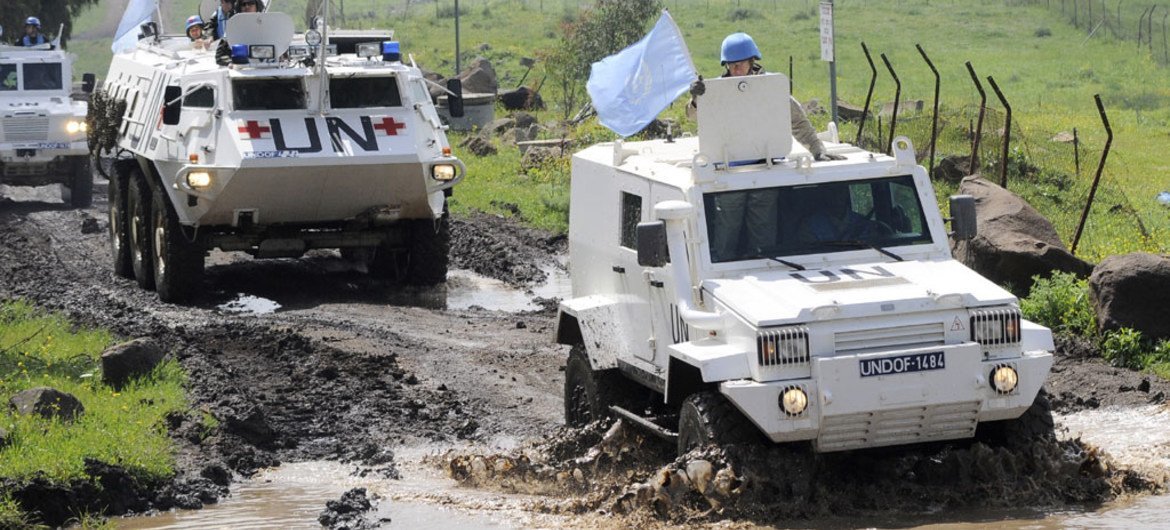
UN Photo/Wolfgang Grebien

UNDOF peacekeepers on patrol in the Golan Heights.

Mine action and wider needs

He also underscored the growing importance of UN mine action efforts in Lebanon, Syria, Gaza and the Occupied Palestinian Territory overall, saying needs were “huge” and urging greater donor support.

We are willing to do more,” Mr. Lacroix said, stressing that additional resources would be critical to protect civilians and support recovery in conflict-affected areas.

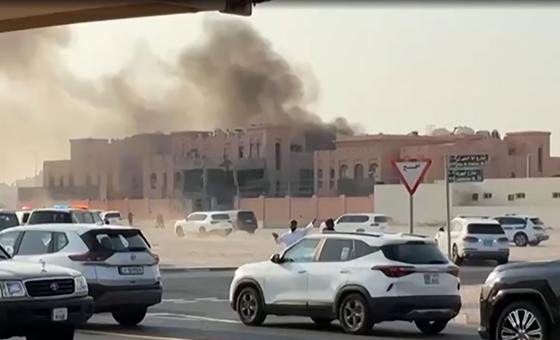
MIDDLE EAST LIVE: Israeli attack on Hamas leaders in Doha ‘potentially opens a new and perilous chapter’

The UN Secretary-General has condemned an Israeli strike targeting Hamas leaders in Doha, the capital of Qatar, on Tuesday, while highlighting the “very positive role” played by the country in achieving a ceasefire in Gaza and securing the release of hostages.

Source link

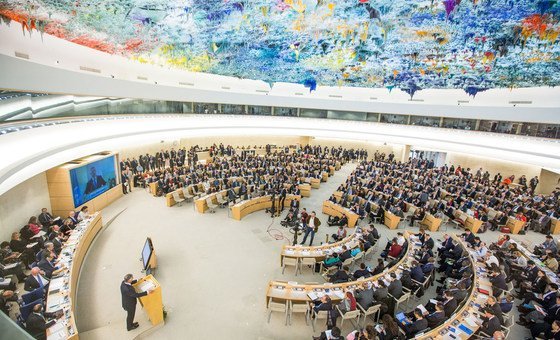
SECURITY COUNCIL LIVE: Debate on the situation in the Middle East

The Security Council meets today for its quarterly open debate on the situation in the Middle East, with a focus on the worsening crisis in Gaza. UN Assistant Secretary-General Khaled Khiari is expected to brief on the situation in the war-ravaged enclave where food entry and distribution remain severely restricted, malnutrition is rising, and fuel and shelter supplies are critically scarce. UN News, in coordination with UN Meetings Coverage, brings you live updates from today’s discussions. UN News App users can follow here.

Children’s lives ‘turned upside down’ by wars across Middle East, North Africa, warns UNICEF

Alarmingly, 110 million children in the region live in countries affected by war, with homes, schools and health facilities damaged or destroyed in fighting.

“A child’s life is being turned upside down the equivalent of every five seconds due to the conflicts in the region,” said Edouard Beigbeder, UNICEF Regional Director for the Middle East and North Africa, on Tuesday.

UNICEF estimates indicate that 45 million children across the region will require humanitarian assistance in 2025, a 41 per cent increase since 2020.  

Funding shortfalls  

However, funding gaps are affecting vital programmes across the region.

For instance, as of May, Syria faced a 78 per cent funding gap and the State of Palestine a 68 per cent gap for their 2025 appeals. UNICEF’s regional programmes are also under increasing financial strain.

The outlook for 2026 also remains bleak, UNICEF said, noting that its funding for Middle East and North Africa is projected to decline by 20 to 25 per cent, potentially resulting in shortfalls of up to $370 million.

Conflicts must stop  

This would jeopardize lifesaving programmes across the region, including treatment for severe malnutrition, safe water production in conflict zones and vaccinations against deadly diseases.

“As the plight of children in the region worsens, the resources to respond are becoming sparser,” said Mr. Beigbeder.

“Conflicts must stop. International advocacy to resolve these crises must intensify. And support for vulnerable children must increase, not decline.” 

MIDDLE EAST CRISIS: Live updates for 20 June


One week since the Israel-Iran conflict erupted, diplomatic efforts to end the war are ramping up in Geneva today as foreign ministers from France, Germany, the UK and the European Union prepare to meet their Iranian counterpart. In New York, meanwhile, the UN Security Council is also set to discuss this latest worrying escalation, against the backdrop of the ongoing emergency in Gaza. We’ll be covering these developments and more across the UN system today. UN News app users can follow here.

Source link

Middle East crisis: Live updates for 16 June

After a weekend of massive strikes and counter-strikes between Tel Aviv and Tehran, the UN’s human rights chief, Volker Türk on Monday condemned the violence and echoed wider calls for a negotiated end to the attacks. Meanwhile in Gaza, aid workers report that mobile communications networks continue to be cut in the shattered enclave. We’ll be covering these developments and more across the UN system and beyond today, thanks for joining us. UN News app users can follow our live coverage here.

Source link

Stuck in the middle? Indebted nations plot path to growth amid global trade upheaval

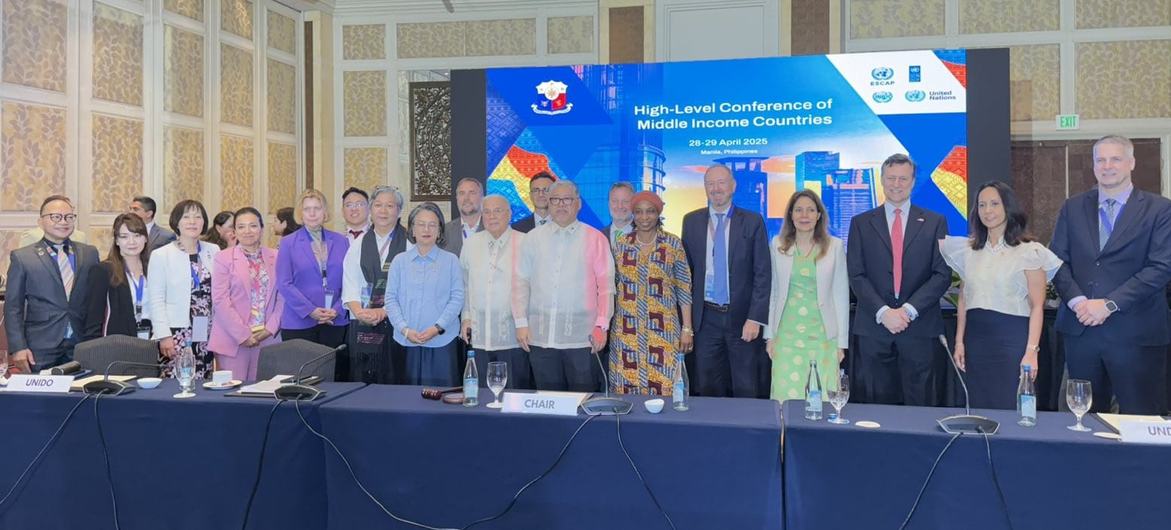
The High-Level Conference of Middle-Income Countries (MICs), held on 28 and 29 April, was attended by senior representatives from 24 MICs, many of which are highly indebted, leaving them little room for spending on developing their economies.

Since 2000, only 27 countries transitioned from middle income to high-income status, and many have experienced reversals back to middle-income level: 11 nations switched back and forth at least once before reaching their current high-income status.

“The transition of middle-income countries to high-income status while meeting sustainable development ambitions calls for the bolstering of financing for development,” said Armida Salsiah Alisjahbana, Executive Secretary of the UN Economic and Social Commission for Asia and the Pacific (ESCAP) at the opening of the event. “This calls for domestic policy reforms aimed at expanding fiscal space, maintaining debt sustainability and channeling resources towards productive investments.”

The Makati Declaration on Middle-Income Countries calls for the UN to support MICs in accessing development financing, including via innovative financing mechanisms, and to provide support in a number of areas, ranging from programs and initiatives to mitigate and adapt to the climate crisis to digital transformation and making countries more resilient to global shocks (see full list of measures below).

Delegates at the High-Level Conference of Middle-Income Countries (April 2025)

“We recognize that middle-income countries experience frequent growth slowdowns, and if left unaddressed, this loss of economic dynamism can cause countries to get stuck in what is referred to as the “middle-income trap,” the Declaration states. “We stress that middle-income countries continue to face specific challenges related to, inter alia, high levels of inequalities, low growth, persistent poverty, unemployment, loss of biodiversity, the adverse effects of disaster risks and climate change, reliance on primary commodity exports, high levels of external debt and the volatility of exchange rates and capital flows, and digital divide.”

MICs will strengthen cooperation among themselves and offer increasing resources under technical cooperation between countries in the global South, which could become particularly important given the recent reduction in development support from traditional donors of the global North.

“We are re-moulding traditional development partnerships as more MICs, including the Philippines, increase resources for South-South and technical cooperation,” said Enrique Manalo, Secretary for Foreign Affairs of the Philippines at the event. “This is a trend that, if scaled up, could potentially result in game-changing dividends for the global development system.”

The Like-Minded Group of MICs are “as champions of multilateralism,” he added. “Carving a steady path for all middle-income countries behooves us to support strongly an international rules-based order underpinned by equity and justice.”

Source link

MIDDLE EAST LIVE: Security Council meets on Gaza crisis as starvation threat grows

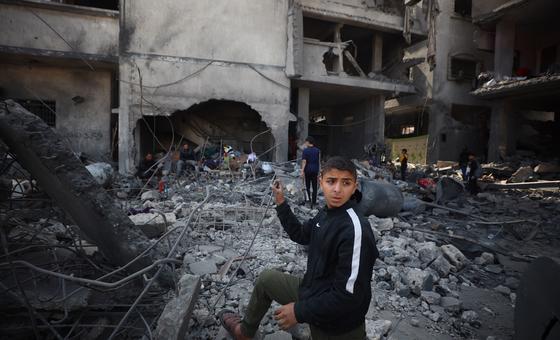
The Security Council will meet on Tuesday to discuss the situation in the Middle East, with French Foreign Minister Jean-Noël Barrot presiding. The UN Secretary-General is expected to brief ambassadors as the humanitarian crisis in Gaza deepens, with reports from the UN Palestine refugee relief agency (UNRWA) this morning that children are “going to bed starving” amid the two-month Israeli aid blockade and continuing bombardment. App users can follow coverage here.

Source link