Haiti: More than 1,500 killed between April and June, UN report finds

These numbers are similar to those from the first quarter of 2025 when 1,617 people were killed and 580 were injured.  

“Gang attacks in the Artibonite and Centre departments, and in the capital, continue to cause serious human rights violations and exacerbate an already dire humanitarian crisis,” said Ulrika Richardson, the UN Resident and Humanitarian Coordinator in Haiti.  

Gangs within and beyond the capitol

President Jovenel Moïse’s assassination in 2021 triggered widespread gang violence in the capital of Port-au-Prince. Today, the UN estimates that gangs control at least 85 per cent of the city.  In the past few months, many have begun to expand their influence in the Centre and Artibonite departments.  

In June alone, 45,000 people were displaced in Centre and Artibonite, meaning that the total number of displaced people across these two departments totals over 240,000, according to the International Organization for Migration (IOM).  

Between April and June, security forces were able to slow down the gang’s expansion in the capital, but the UN office in Haiti, BINUH.  noted that the situation still remains exceptionally volatile.  

As they expand their territory, gangs have committed human rights violations, according to the UN, including gang rape, extrajudicial killings, child exploitations, trafficking and murder.

“Gang members continued to resort to murders, gang rapes, and kidnappings to maintain their control over populations living in areas under their influence,” BINUH said.  

Different perpetrators

The UN has long warned that gangs are not the only groups committing human rights abuses and violations in Haiti — government security forces and local self-defence groups have also committed violations.  

Of the 1,520 people killed and 609 injured between April and June, most were in the capital or the Centre and Artibonite departments, with 24 per cent of them killed or injured by gangs.  

Security operations against gangs accounted for 64 per cent of the deaths and injuries during this period, with 73 documented cases of summary executions and one-third of the deaths occurring as a result of explosive drones.  

Self-defence groups, which have formed as a reaction against the gangs and security force’s inability to contain them, were responsible for 12 per cent of those killed and injured.  

Respect human rights

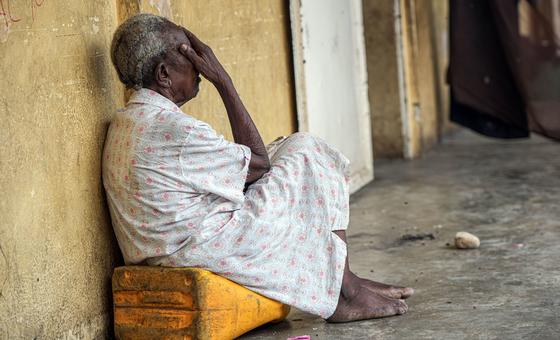
The humanitarian situation in Haiti is increasingly dire, with over 1.3 million people displaced and half of the population facing food insecurity.  

With the humanitarian response plan only 8 per cent funded, the UN Office for the Coordination of Humanitarian Affairs (OCHA) is calling on the international community to step up financial support.  

The report also urged the international community to continue to increase support for Haiti’s fight against gangs.  

“The report calls on the Haitian government, with the support of the international community, to strengthen the fight against gangs while strictly respecting human rights and standards on the use of force,” the UN Mission in Haiti said.  
Source link

MIDDLE EAST CRISIS: Live updates for 20 June


One week since the Israel-Iran conflict erupted, diplomatic efforts to end the war are ramping up in Geneva today as foreign ministers from France, Germany, the UK and the European Union prepare to meet their Iranian counterpart. In New York, meanwhile, the UN Security Council is also set to discuss this latest worrying escalation, against the backdrop of the ongoing emergency in Gaza. We’ll be covering these developments and more across the UN system today. UN News app users can follow here.

Source link

Middle East crisis: Live updates for 16 June

After a weekend of massive strikes and counter-strikes between Tel Aviv and Tehran, the UN’s human rights chief, Volker Türk on Monday condemned the violence and echoed wider calls for a negotiated end to the attacks. Meanwhile in Gaza, aid workers report that mobile communications networks continue to be cut in the shattered enclave. We’ll be covering these developments and more across the UN system and beyond today, thanks for joining us. UN News app users can follow our live coverage here.

Source link

Diplomats prepare ground for June conference on two-State solution for Israel and Palestine

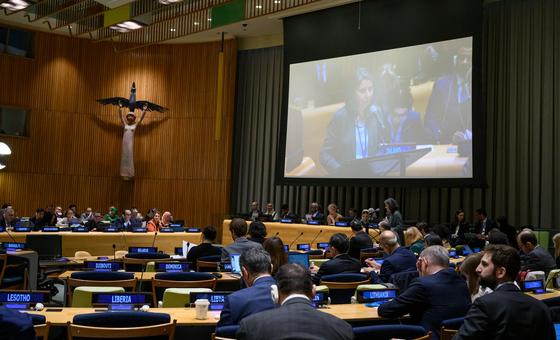
The preparatory session brought together UN Member States to align expectations and finalise arrangements for eight thematic roundtables that will help shape the conference’s outcome.

General Assembly President Philémon Yang urged countries to seize the crucial opportunity to finally make progress.

“The horrors we have witnessed in Gaza for over nineteen months should spur us to urgent action to end the Israeli-Palestinian conflict. The devastating cycles of death, destruction, and displacement cannot be allowed to continue,” he said.

“This conflict cannot be resolved through permanent war, nor through endless occupation or annexation. It will only end when Israelis and Palestinians can live side by side in their own sovereign, independent States, in peace, security, and dignity,” he added.

General Assembly President Yang addresses the preparatory meeting.

Concrete outcomes needed

Co-chairs France and Saudi Arabia emphasised the need for the June conference to go beyond reaffirming principles and achieve concrete results on the ground.

“We must urgently move from words to deeds. We must move from ending the war in Gaza to ending the conflict itself,” said Anne-Claire Legendre, Middle East and North Africa advisor to French President Emmanuel Macron.

“Faced with the facts on the ground, the prospects of a Palestinian State must be maintained. Irreversible steps and concrete measures for the implementation thereof are necessary.”

Alongside, she reiterated calls for a lasting ceasefire, an immediate influx of humanitarian aid and the release of hostages.

Historic moment

Manal bint Hassan Radwan, head of the Saudi Arabian negotiating team, called the moment “historic,” stating that the preparatory meeting must “chart a course for action, not reflection.”  

“Civilians continue to pay the price of a war that must end immediately. The escalation in the West Bank is equally alarming. Despair grows deeper by the day,” she said.

“This is precisely why we must speak not only of ending the war, but of ending a conflict that has lasted nearly eight decades,” she continued, adding efforts to end fighting and secure release of hostages and detainees must be “anchored in a credible and irreversible political plan that addresses the root cause of the conflict and offers a real path to peace, dignity and mutual security.”

Outcome document

The General Assembly decided to convene the conference in its resolution ES-10/24. Further details were outlined in resolution 79/81.

As outlined in General Assembly resolution 79/81, the Conference will produce an action-oriented outcome document entitled “Peaceful settlement of the question of Palestine and implementation of the two-State solution”.

The aim is to chart a clear and irreversible pathway toward a comprehensive, just, and lasting peace in accordance with UN resolutions.

About the Conference

The conference will include a plenary session with statements from the President of the General Assembly, the UN Secretary-General, and the co-chairs, followed by interventions from Member States and observers.

According to a concept note from the co-chairs, the conference will also feature eight thematic roundtables, each focused on critical dimensions of the two-State solution. 

The working groups include security arrangements for both Israelis and Palestinians, the economic viability of a Palestinian State, and humanitarian action and reconstruction.

Source link