Syria transition gains ground with Kurdish deal, but violence and humanitarian strain persist

Briefing ambassadors for the first time as Deputy Special Envoy, Claudio Cordone pointed to the 30 January ceasefire and integration agreement between the Syrian Government and the Syrian Democratic Forces (SDF) as a potentially transformative development.

The deal provides for a phased military and administrative integration of northeast Syria and includes provisions on the return of displaced people and the protection of Kurdish civil and educational rights, building on Presidential Decree 13 on linguistic, cultural and citizenship rights.

“Hostilities have ended and work on an implementation plan has been progressing in a positive manner,” Mr. Cordone said, noting deployments of Ministry of Interior forces in Al-Hasakeh and Qamishli, and discussions on local governance and political appointments.

The Secretary-General on 30 January welcomed the agreement, appealing for all sides “to work swiftly to ensure its implementation, especially in terms of the peaceful integration of northeast Syria, the rights of Syrian Kurds, the safe, dignified and voluntary return of the displaced.”

In a presidential statement issued on Thursday, Council members likewise welcomed the “comprehensive agreement” and stressed the need to adhere to it to “minimize civilian suffering” and prevent any “security vacuum” around ISIL (Da’esh) detention facilities.

What is the UN doing in Syria now?

The UN is supporting Syria’s political transition while continuing large-scale humanitarian operations across the country.

The Office of the Special Envoy is engaging with the Government and a broad range of stakeholders to help advance the political process, including implementation of the recent agreement on northeast Syria, support for inclusive governance, and the protection and promotion of human rights.

At the same time, humanitarian agencies are delivering life-saving assistance to millions of Syrians.

UN teams and partners are providing food, water, medical supplies, shelter and protection services, while supporting mine action, restoring basic services and helping create conditions for safe, dignified and voluntary returns.

Visit the UN News Focus on Syria section to read more about UN’s work in and engagement with Syria.

Situation remains sensitive

The evolving situation around those facilities remains sensitive.

Mr. Cordone said the UN is closely following transfers of Syrian and non-Syrian Da’esh suspects to Iraq, adding that Iraqi proceedings must “fully respect fair trial standards” and urging Member States to repatriate their nationals “as swiftly as possible.”

While the northeast has seen relative stabilization, tensions persist elsewhere.

In Sweida, renewed clashes between Government forces and local armed groups have caused damage and electricity outages. Protests calling for self-determination have resurfaced, and the UN reiterated calls for confidence-building measures within “the full respect of Syria’s sovereignty and territorial integrity.”

In southern Syria, Israeli incursions and search operations have continued, alongside reports of aerial herbicide spraying damaging crops. The UN envoy called for “full respect for international law” and urged Israel to withdraw from areas it occupies “in violation of the 1974 Disengagement of Forces Agreement,” while supporting “mutually acceptable security arrangements between Israel and Syria.”

Humanitarian challenges persist

Humanitarian conditions remain severe despite modest improvements.

Lisa Doughten, Director of Financing at the UN Office for the Coordination of Humanitarian Affairs (OCHA), said recent clashes displaced tens of thousands; although many have returned, about 130,000 people remain uprooted across Al-Hasakeh, Ar-Raqqa and Aleppo governorates. More than 90 per cent are women and girls, with many sheltering in overcrowded camps or with host families already under strain.

Heavy flooding this week in Idleb and northern Latakia killed two children and damaged or destroyed some 2,000 tents, affecting over 5,000 displaced people.

Still, access and basic services are gradually improving in parts of the northeast. UN teams have reached 200,000 people and organized more than 170 truck movements. In Ain al-Arab (Kobane), electricity supply has reportedly resumed after repairs.

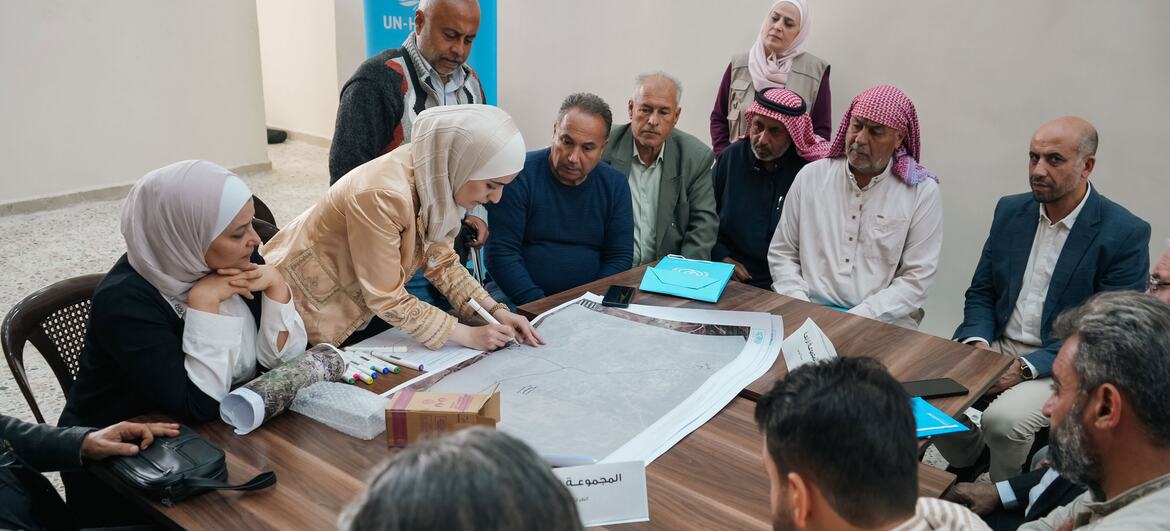
Participants at a UN workshop on recovery priorities, challenges and response planning.

Meaningful representation of all Syrians crucial

Politically, the next milestone in the transition is the formation of the People’s Assembly. Voting for most elected seats took place in October 2025 – with additional seats, including in Raqqa, due to be filled. Confirmation is awaited on the appointment of 70 members by President Ahmed al-Sharaa, as well as of the date of the opening session.

Mr. Cordone reiterated the importance of meaningful representation of Syria’s regions and diverse groups, stressing that “the protection and promotion of human rights – including addressing the issue of the missing and transitional justice – are fundamental elements for a credible and successful political transition.

‘Extraordinary role’ of Syrian women

He highlighted the “extraordinary role” of Syrian women and civil society over the decade-long conflict, saying women’s political participation at all levels is “a pillar for a state committed to plurality, inclusion and opportunity for all.”

“I salute the Syrian people for their determination in overcoming decades of oppression and brutal conflict. I look forward to strengthening the UN’s partnership with Syria in pursuit of a stable, peaceful and prosperous future,” he said in Arabic as he concluded his briefing.

Source link

Global push to end plastic pollution gains ground in Nice

Away from the cameras and fanfare of the Third UN Ocean Conference under way in the coastal French city, they voiced a shared determination to finalize this year a global treaty that could, for the first time, regulate plastics across their entire life cycle.

“There is renewed commitment to conclude the treaty in August,” Jyoti Mathur-Filipp, who attended the meeting and is leading the treaty negotiations, told UN News. “This is too urgent an issue to be left for the future.”

Hosted by Inger Andersen, the head of the UN Environment Programme (UNEP), the informal gathering marked a quiet but significant diplomatic moment – a sign that after two years of deliberations, political momentum may finally be catching up with scientific alarm.

With one round of talks remaining – scheduled from August 5 to 14 in Geneva – negotiators are now under pressure to deliver the first legally binding treaty aimed at tackling plastic pollution across production, consumption, and waste.

A crisis accelerating in plain sight

Plastic waste has infiltrated nearly every ecosystem on Earth, and increasingly in the form of microplastics – the human body. Without urgent action, the amount of plastic entering the ocean each year could reach 37 million metric tons by 2040, according to UN estimates.

“We are choking with plastic,” Ms. Mathur-Filipp said. “If we do not do something to tackle plastic pollution, we will not have a single ecosystem left, whether it’s terrestrial or marine.”

The economic toll is no less staggering. Between 2016 and 2040, the projected cost of plastic-related damage could reach $281 trillion. “It is costing the economy a lot,” said the Indian native. “In tourism, in beach clean-up, in lack of fish for fishing folk, coastal damage, wetlands damage.”

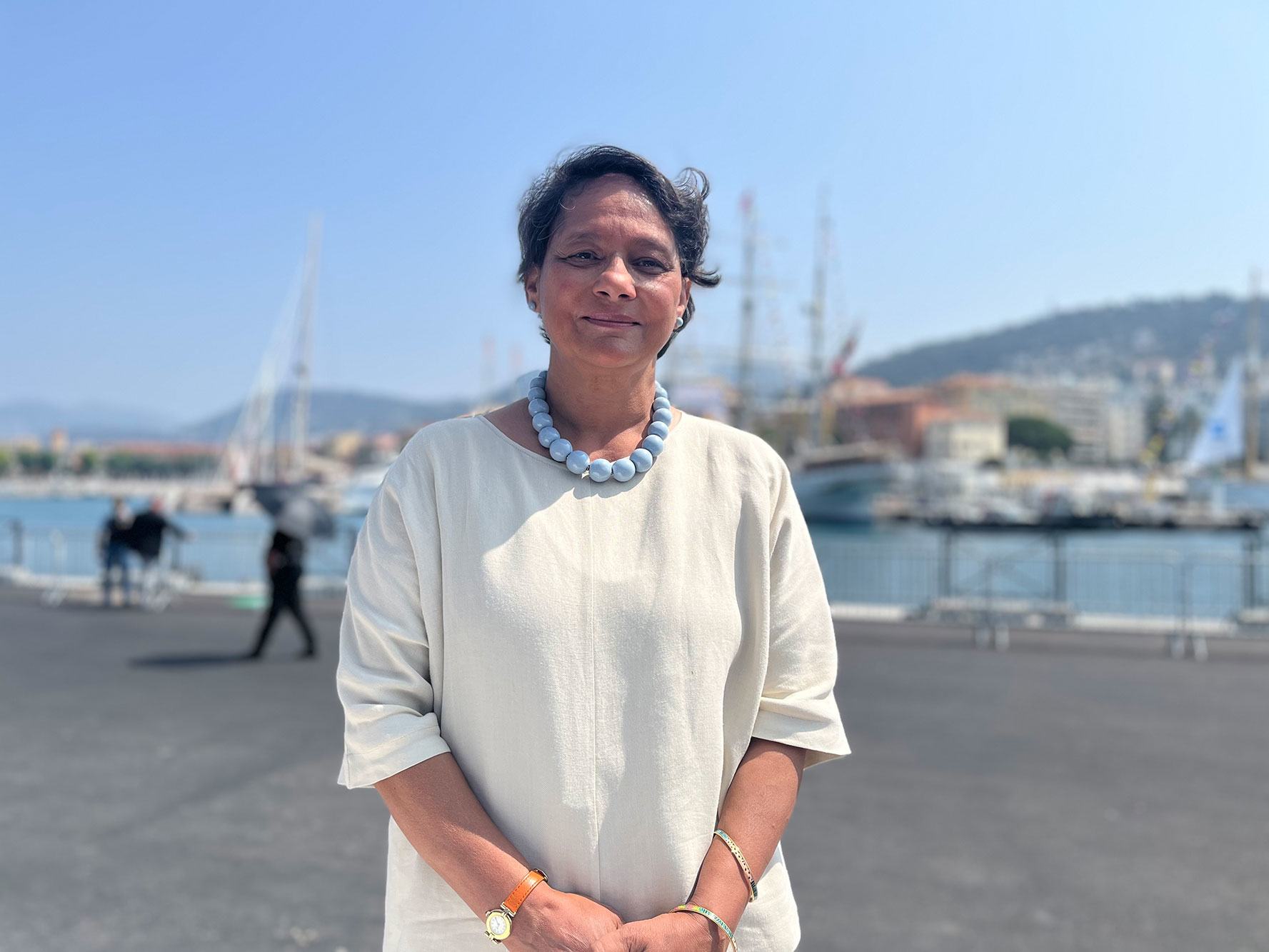
Jyoti Mathur-Filipp, Executive Secretary of the Intergovernmental Negotiating Committee (INC) on Plastic Pollution.

The final stretch in Geneva

The treaty process was launched in 2022, at the request of the UN Environment Assembly, the world’s highest decision-making body on environmental issues. Since then, the Intergovernmental Negotiating Committee (INC) has convened five times in less than two years – an unusually rapid timeline by UN standards.

“We have had five sessions very rapidly from December of 2022 to December of 2024,” said Ms. Mathur-Filipp, who serves as the INC’s Executive Secretary. She hopes the upcoming session this August in Geneva will mark the treaty’s conclusion.

A key breakthrough came six months ago at the last round of talks in Busan, South Korea, where delegates produced a 22-page “Chair’s text,” outlining the draft treaty’s basic structure.

“It has 32 or 33 articles in it, with names of articles, so countries can now start seeing what this treaty will look like,” she explained. “They have started speaking with article numbers for negotiation… and this is why my hope is that there would be a conclusion.”

A treaty with teeth – and flexibility

While the draft treaty is still under negotiation, it includes measures that would target the entire life cycle of plastic – from upstream production to downstream waste. It reflects both mandatory and voluntary provisions, in line with the original UN mandate.

The current draft also includes the institutional architecture of a typical multilateral treaty: the ratification process, governance rules, and proposed implementation bodies.

“It has an objective. It has a preamble,” said Ms. Mathur-Filipp. “It looks like a treaty.”

If all goes according to plan, the final text will be submitted to a diplomatic conference – later this year or in early 2026 – where governments can formally adopt it and begin the ratification process.

Unequal burdens, global stakes

Although plastic pollution is a global issue, some countries – especially small island developing states – bear a disproportionate burden.

“It is a fact that small island developing states are not the ones that are using plastic as much as what’s flowing onto their shores and therefore, they become responsible for beach clean-up, which is not their doing,” Mathur-Filipp said. “They are unfairly impacted.”

An estimated 18 to 20 per cent of global plastic waste ends up in the ocean.

One diplomat’s mission

Before leading the INC, Ms. Mathur-Filipp worked at the UN Convention on Biological Diversity, where she helped shape the landmark Kunming-Montreal Global Biodiversity Framework, the 2022 agreement to protect 30 per cent of the planet’s land and ocean by 2030. The challenge of managing a fast-moving, high-stakes negotiation is familiar terrain.

“I wasn’t tired enough there, so now I’m doing this,” she said.

As the Mediterranean UNOC3 host city plays its part in building momentum, all eyes will, in the weeks ahead, turn to Geneva. The outcome in August could determine whether the world takes a decisive step toward curbing the plastic crisis – or allows it to deepen, unchecked.


Diplomats prepare ground for June conference on two-State solution for Israel and Palestine

The preparatory session brought together UN Member States to align expectations and finalise arrangements for eight thematic roundtables that will help shape the conference’s outcome.

General Assembly President Philémon Yang urged countries to seize the crucial opportunity to finally make progress.

“The horrors we have witnessed in Gaza for over nineteen months should spur us to urgent action to end the Israeli-Palestinian conflict. The devastating cycles of death, destruction, and displacement cannot be allowed to continue,” he said.

“This conflict cannot be resolved through permanent war, nor through endless occupation or annexation. It will only end when Israelis and Palestinians can live side by side in their own sovereign, independent States, in peace, security, and dignity,” he added.

General Assembly President Yang addresses the preparatory meeting.

Concrete outcomes needed

Co-chairs France and Saudi Arabia emphasised the need for the June conference to go beyond reaffirming principles and achieve concrete results on the ground.

“We must urgently move from words to deeds. We must move from ending the war in Gaza to ending the conflict itself,” said Anne-Claire Legendre, Middle East and North Africa advisor to French President Emmanuel Macron.

“Faced with the facts on the ground, the prospects of a Palestinian State must be maintained. Irreversible steps and concrete measures for the implementation thereof are necessary.”

Alongside, she reiterated calls for a lasting ceasefire, an immediate influx of humanitarian aid and the release of hostages.

Historic moment

Manal bint Hassan Radwan, head of the Saudi Arabian negotiating team, called the moment “historic,” stating that the preparatory meeting must “chart a course for action, not reflection.”  

“Civilians continue to pay the price of a war that must end immediately. The escalation in the West Bank is equally alarming. Despair grows deeper by the day,” she said.

“This is precisely why we must speak not only of ending the war, but of ending a conflict that has lasted nearly eight decades,” she continued, adding efforts to end fighting and secure release of hostages and detainees must be “anchored in a credible and irreversible political plan that addresses the root cause of the conflict and offers a real path to peace, dignity and mutual security.”

Outcome document

The General Assembly decided to convene the conference in its resolution ES-10/24. Further details were outlined in resolution 79/81.

As outlined in General Assembly resolution 79/81, the Conference will produce an action-oriented outcome document entitled “Peaceful settlement of the question of Palestine and implementation of the two-State solution”.

The aim is to chart a clear and irreversible pathway toward a comprehensive, just, and lasting peace in accordance with UN resolutions.

About the Conference

The conference will include a plenary session with statements from the President of the General Assembly, the UN Secretary-General, and the co-chairs, followed by interventions from Member States and observers.

According to a concept note from the co-chairs, the conference will also feature eight thematic roundtables, each focused on critical dimensions of the two-State solution. 

The working groups include security arrangements for both Israelis and Palestinians, the economic viability of a Palestinian State, and humanitarian action and reconstruction.

Source link

Guterres alarmed by Israeli plans to expand Gaza ground offensive

 “This will inevitably lead to countless more civilians killed and the further destruction of Gaza,” said UN Deputy Spokesperson Farhan Haq, responding to a journalist’s question during the regular media briefing in New York.

“What’s imperative now is an end to the violence, not more civilian deaths and destruction. Gaza is, and must remain, an integral part of a future Palestinian State.” 

The alert comes as the UN humanitarian team and other NGOs in the Occupied Palestinian Territory on Sunday condemned Israeli efforts to replace the aid delivery system with one where supplies would reportedly be funnelled through military hubs in the south.

This proposal would leave “large parts of Gaza…less mobile and (the) most vulnerable” without lifesaving supplies, aid chiefs insisted.

The Secretary-General continues to call for an immediate permanent ceasefire and the immediate and unconditional release of hostages in Gaza, said Mr. Haq.

Deadly attacks and looting

Meanwhile, airstrikes and other attacks continue across the Strip, where Israel has blocked the entry of aid and commercial supplies for more than two months.

Reports indicate that scores of people were killed and hundreds injured over the weekend, including children, the UN aid coordination office OCHA said on Monday.

OCHA noted that robbery and looting have become a daily reality in the Strip, especially in and around Gaza City, which is occurring in parallel with the depletion of supplies.

Businesses are being targeted, and there have also been attempts against UN warehouses.  In most cases the looters were stopped by guards, or the warehouses were already empty.

Water woes

Last week, OCHA reported that water pumping and sanitation systems in Beit Lahiya had gone down because fuel had run out. Services are still not back due to continuing shortages.

Furthermore, a major water line from Israel was damaged on Friday, cutting water supply to northern Gaza – including Gaza City – by half. Teams were only able to fix the problem on Sunday as the repair work required coordination with the Israeli authorities.

Also on Sunday, a UN team managed to retrieve some fuel from a station in Gaza City after the Israeli authorities facilitated their efforts to reach it. However, many reserves remain out of reach due to denial of access.

OCHA noted that in Rafah in southern Gaza, not a single attempt to retrieve fuel has been facilitated since 18 April.

The agency also reported that since Saturday, 19 out of 27 planned humanitarian movements within Gaza were denied outright.  Other attempts were initially given the go-ahead – but then impeded by forces on the ground. 

Source link