A new agreement between the Syrian government and Kurdish-led forces in the country’s northeast is being viewed by the United Nations as a potentially significant step toward stabilising a region long shaped by conflict and competing authorities.
Briefing members of the UN Security Council for the first time in his role as Deputy Special Envoy for Syria, Claudio Cordone highlighted the ceasefire and integration agreement signed on January 30 between Damascus and the Syrian Democratic Forces (SDF). The arrangement, he said, could mark an important turning point if implemented effectively.
Agreement Aims To Integrate Northeast Syria
The deal outlines a gradual process to integrate the military and administrative structures of northeast Syria with the Syrian state. It also contains provisions aimed at facilitating the return of displaced residents and safeguarding Kurdish cultural and educational rights.
Officials say the framework builds upon earlier government measures, including Presidential Decree 13, which recognised certain linguistic, cultural and citizenship rights for Kurdish communities.
Cordone told the Council that hostilities in the region had largely subsided and that work on implementing the agreement had begun.
Security deployments by Syria’s Ministry of Interior have already taken place in key cities such as Al-Hasakeh and Qamishli, while talks are underway regarding local governance arrangements and political appointments.
The United Nations Secretary-General welcomed the agreement soon after it was announced, urging all sides to move quickly to ensure its full implementation. He emphasised that the deal should guarantee the peaceful integration of the northeast, protect Kurdish rights and enable displaced Syrians to return home voluntarily and safely.
Security Council members echoed that message in a presidential statement this week, describing the deal as a comprehensive step that could help prevent further civilian suffering and reduce risks surrounding detention facilities holding suspected fighters from the Islamic State group, also known as ISIL or Da’esh.
UN Continues Political And Humanitarian Engagement
Alongside political mediation, the United Nations remains heavily involved in humanitarian operations across Syria.
The office of the UN Special Envoy continues to engage with the Syrian government and other political actors in an effort to advance the broader political transition. These discussions include implementing the northeast agreement, encouraging inclusive governance and promoting respect for human rights.
At the same time, UN agencies and partner organisations are delivering food, water, healthcare and shelter to millions of Syrians affected by years of war. Aid teams are also supporting mine clearance operations, restoring damaged infrastructure and helping communities rebuild basic services.
These efforts aim to create conditions that would allow displaced families to return home in safety and dignity.
Security Concerns Persist In Several Regions
Despite the relative calm in parts of the northeast, the situation across Syria remains fragile.
Cordone said the United Nations is closely monitoring the transfer of suspected Islamic State fighters from Syria to Iraq. He stressed that legal proceedings must meet international fair-trial standards and urged countries to repatriate their citizens detained in Syria as quickly as possible.
Elsewhere in the country, tensions continue to flare. In the southern province of Sweida, clashes between government forces and local armed groups have caused damage to infrastructure and triggered electricity outages. Protests calling for greater local autonomy have also resurfaced.
In southern border areas, Israeli military operations and search activities have continued. Reports have also emerged of aerial herbicide spraying damaging farmland. UN officials have called for adherence to international law and urged Israel to withdraw from territories it occupies in violation of the 1974 Disengagement of Forces Agreement.
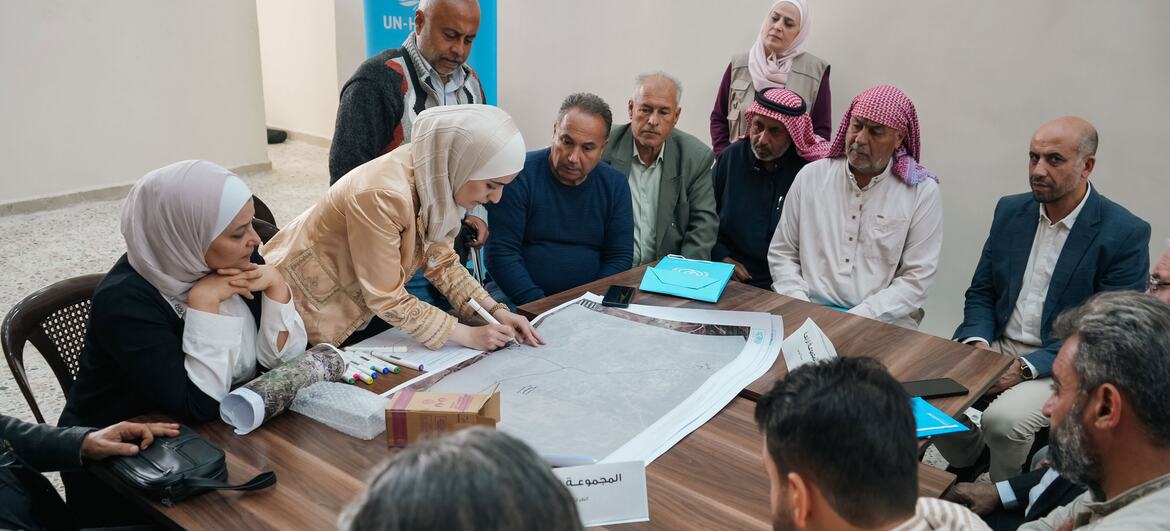
Participants at a UN workshop on recovery priorities, challenges and response planning /UN
Displacement And Humanitarian Needs Remain High
Humanitarian conditions remain difficult for many Syrians despite some limited improvements.
According to the UN humanitarian coordination office, recent clashes in the northeast displaced tens of thousands of people. Although many have since returned, around 130,000 individuals remain displaced across the governorates of Al-Hasakeh, Ar-Raqqa and Aleppo.
More than 90 percent of those affected are women and girls, many of whom are living in overcrowded camps or staying with host families already facing economic hardship.
Heavy flooding this week in Idlib and northern Latakia further compounded the crisis, killing two children and destroying or damaging around 2,000 tents sheltering displaced families.
Still, aid groups say access to some areas is gradually improving. UN teams have reached around 200,000 people in recent weeks, delivering assistance through more than 170 aid convoys.
Electricity supply has also reportedly resumed in the town of Ain al-Arab, also known as Kobane, following repairs to damaged infrastructure.
Political Transition Moves Forward
Attention is now turning to the next stage in Syria’s political transition: the formation of a new People’s Assembly.
Elections for most seats were held in October 2025, though additional seats, including those representing Raqqa, remain to be filled. Confirmation is still awaited regarding the appointment of 70 members by President Ahmed al-Sharaa and the date of the assembly’s opening session.
Cordone stressed that the success of the transition would depend on meaningful representation from Syria’s diverse communities and regions.
He also underscored the need to address long-standing issues such as the fate of missing persons and mechanisms for transitional justice.
Highlighting the contributions of Syrian women throughout years of conflict, the UN envoy said their participation in politics and civil society would be essential for building a more inclusive and stable future.
He concluded his remarks by praising the resilience of the Syrian people and expressing hope that continued cooperation between Syria and the United Nations would help lay the foundations for lasting peace and recovery.
The accord is “a significant step towards de-escalation, peace and stability in the eastern Democratic Republic of the Congo and the Great Lakes region,” he said in a statement that evening.
A breakthrough amid crisis
Since the 1990s, eastern DRC has been plagued by dozens of armed groups who have terrorized the population.
The Government has long accused Rwanda of supporting the M23 rebel group which Rwanda has denied.
Earlier this year, the M23 launched an offensive in North and South Kivu provinces, capturing cities and villages, including provincial capitals Goma and Bukavu.
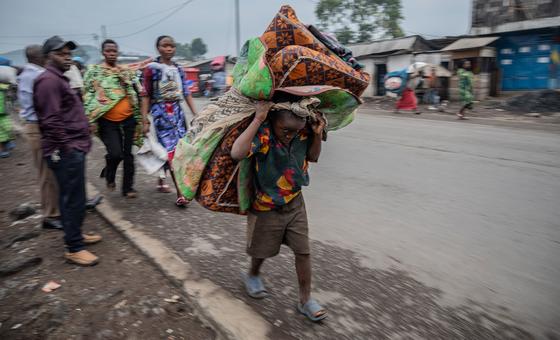
Thousands of civilians were killed, hundreds of thousands more were displaced, and serious human rights violations were committed.
UN commitment remains
The Secretary-General commended the US for its leadership in facilitating the mediation process, in coordination with Qatar and the African Union Mediator, President Faure Gnassingbé of Togo.
He also acknowledged the contributions of the five co-facilitators designated by the East African Community (EAC) and the Southern African Development Community (SADC).
He urged the parties to fully honour their commitments under the peace agreement and in line with UN Security Council resolution 2773 (2025), including the cessation of hostilities and all other agreed measures.
The resolution, unanimously adopted in February, condemned the M23 offensive and called for the DRC and Rwanda to return to diplomatic talks.
The Secretary-General concluded his statement by saying the UN, including through its peacekeeping mission in the DRC, MONUSCO, “remains fully committed to supporting the implementation of the agreement, in close coordination with the African Union, regional and international partners.”
Coincidentally, the Security Council met on Friday to discuss developments in the DRC.
The Secretary-General’s Special Representative for the country and Head of MONUSCO, Bintou Keita, welcomed the peace agreement as a significant step towards ending the conflict.
‘A chance to turn the page’
The UN refugee agency, UNHCR, echoed this message in a statement on Saturday, saying the agreement “offers a chance to stop the cycle of violence and displacement and focus on solutions that restore dignity, stability, and opportunity.”
Furthermore, it “can bring renewed hope to those who have endured far too much for far too long,” added the agency’s chief, UN High Commissioner for Refugees Filippo Grandi.
“This is a chance to turn the page – ensuring the protection of civilians, including refugees and internally displaced people, and advancing durable solutions that allow them to rebuild their lives in safety and dignity,” he said.
Amid this relative calm, the United Nations has renewed its call for a diplomatic solution to the Iran nuclear issue, warning that the objectives of the Joint Comprehensive Plan of Action (JCPOA) – and the resolution that endorsed it – remain unmet.
Addressing a planned Security Council meeting on Tuesday to try and revive the deal amid the dramatic military escalation of the past 12 days, UN political affairs chief Rosemary DiCarlo said the fragile ceasefire announced by Donald Trump overnight provided “an opportunity to avoid a catastrophic escalation and achieve a peaceful resolution of the Iran nuclear issue.”
The 2015 Iran nuclear deal – more formally known as the JCPOA and backed by the Security Council – offered Tehran sanctions relief in exchange for strict limits on uranium enrichment, stockpile levels and centrifuge use, alongside robust monitoring and verification by the International Atomic Energy Agency (IAEA).
But the accord has remained in limbo since the United States withdrew in 2018, followed by Iran’s rollbacks of its nuclear-related commitments.
With key provisions under resolution 2231 set to expire on 18 October – unless the Council decides otherwise – the UN’s top political official has warned that the window for reviving diplomacy is narrowing.
With less than four months before resolution’s remaining nuclear-related restrictions are set to expire on 18 October – unless extended by the Council – the UN’s top political official warned that the agreement’s key aims remain elusive.
Diplomacy kneecapped?
Ms. DiCarlo told ambassadors the recent surge in violence had significantly undermined diplomatic momentum.
“The military escalation between Israel and Iran since 13 June and United States air strikes on Iran’s nuclear facilities on 21 June complicated prospects for achieving full implementation of resolution 2231,” Ms. DiCarlo said.
“Iran’s strikes yesterday on a base in Qatar further exacerbated insecurity in an already tense region.”
Despite five rounds of bilateral talks between Iran and the US, facilitated by Oman in recent months, Ms. DiCarlo noted that efforts “did not produce a way forward” to restore full JCPOA implementation.
A sixth round of talks was called off due to the outbreak of hostilities.
Meanwhile, the toll from the recent conflict has been sobering. According to Iranian authorities, at least 606 people were killed and more than 5,300 injured since hostilities erupted on 13 June. Israeli officials reported 28 deaths and nearly 1,500 injuries.
Time running out
While divisions persist, Ms. DiCarlo said JCPOA participants – China, France, Germany, Iran, Russia, and the United Kingdom – had all reiterated their commitment to finding a diplomatic solution.
In a joint statement shared with the Secretary-General in March, China, Iran and Russia stressed the importance of resolution 2231’s provisions and timelines. China separately proposed a “step-by-step and reciprocal approach” to settle the nuclear issue.
“Diplomacy, dialogue and verification remain the best option to ensure the exclusively peaceful nature of Iran’s nuclear programme,” Ms. DiCarlo said.
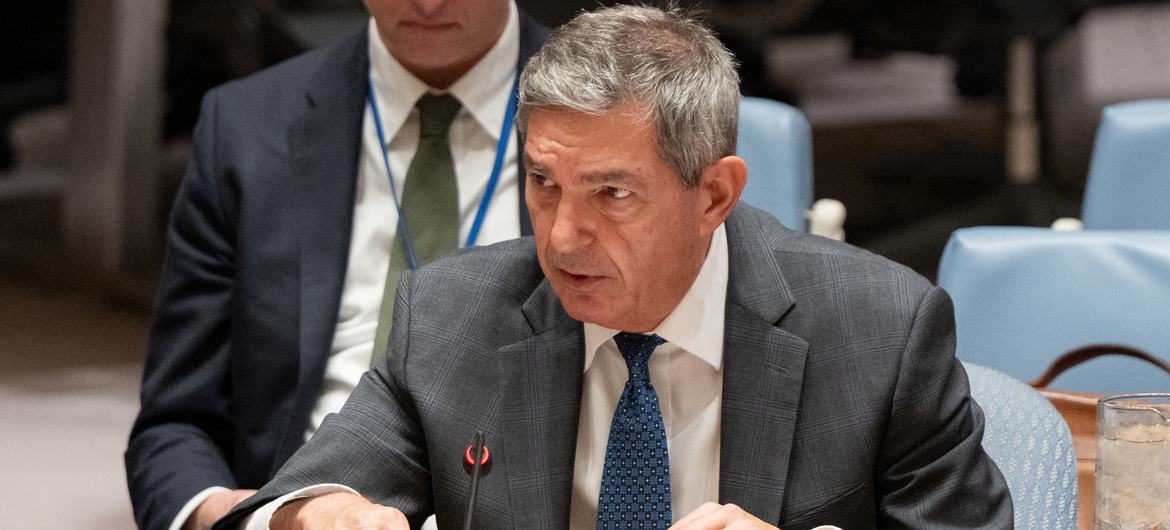
EU Ambassador Stavros Lambrinidis briefs the Security Council as the Coordinator of the Joint Commission established by the JCPOA.
Deal, not force, key to resolution: European Union
Echoing UN appeals for dialogue, the European Union stressed that “a lasting solution to the Iranian nuclear issue can only be through a negotiated deal, not military action.”
Briefing the Council on behalf of EU High Representative Kaja Kallas, Ambassador Stavros Lambrinidis underscored the urgent need “to come back to a diplomatic solution.”
Ensuring that Iran does not acquire or develop a nuclear weapon remains a key security priority for the EU, he said.
He added that Iran’s accelerating nuclear activities and the absence of IAEA oversight – compounded by the economic fallout from US sanctions – have severely undermined the JCPOA, despite sustained EU efforts to preserve it through diplomacy.
Mr. Lambrinidis reaffirmed that diplomacy must prevail, with the IAEA remaining central to monitoring and verification efforts going forward.
US urges Iran to return to talks
Ambassador Dorothea Shea, Acting US Representative, said Iran’s increase in nuclear activity lacked “any credible civilian justification.”
Even after the IAEA Board of Governors found it noncompliant with nuclear safeguards, she noted, “it is regrettable that certain members of this Council have opted to turn a blind eye to, if not encourage, Iranian noncompliance.”
The US “will not turn a blind eye to Iran’s noncompliance and ongoing threat to regional stability,” she continued.
Ambassador Shea said the 21 June “precision operation effectively fulfilled our narrow objective – to degrade Iran’s capacity to produce a nuclear weapon,” after which President Trump coordinated a ceasefire between Iran and Israel.
“In this critical moment,” she concluded, “we must all urge Iran to seize this opportunity for peace and prosperity and abide by its international obligations.”
UK calls ceasefire a first step
UK Ambassador Barbara Woodward welcomed the ceasefire brokered by President Trump but warned that “the situation remains extremely fragile.”
Expressing that “now is the time for a return to diplomacy,” she urged Iran to engage in talks without delay, warning that its nuclear programme has exceeded “any credible civilian justification.”
She said all diplomatic levers will be deployed for a negotiated outcome and to “ensure Iran does not develop a nuclear weapon.”
Iran: Diplomacy can and must resolve differences
Iran’s Ambassador, Amir Saeid Iravani, said that his country “never initiated this war” and that “once the aggressors stopped their attacks, Iran stopped its lawful military response as well”.
Mr. Saeid also expressed his country’s strong commitment to diplomacy as the path through which differences can and should be resolved.
“Iran continues to believe that a diplomatic resolution to nuclear and sanction issues is possible,” Mr. Saeid said.
He called on the Security Council to condemn Israel’s and the United States’ attacks on Iran and their IAEA-protected nuclear facilities and work to ensure that they never happen again.
Ambassador Iravani added that Iran upheld Council resolution 2231 and the JCPOA, and that remedial measures were “fully consistent” with these two instruments.
Israel warns diplomacy with Iran has failed
Israeli Ambassador Danny Danon defended his country’s military operation against Iran, describing it as a necessary move to neutralise a “double existential threat” from Tehran’s nuclear and missile programmes.
He said Israel achieved complete air superiority and removed key regime targets, acting in coordination with the US.
Ambassador Danon accused Iran of deceiving the world for years, using diplomacy as cover to advance its nuclear weapons programme.
“There is still time,” he said, “to take meaningful and decisive action to ensure that the threat of a nuclear Iran does not return stronger than before.”
“We are often told that diplomacy must be given a chance – it was given every chance, every round, every channel, every deadline – but so far it has failed, the regime in Tehran never had any intention of complying.”
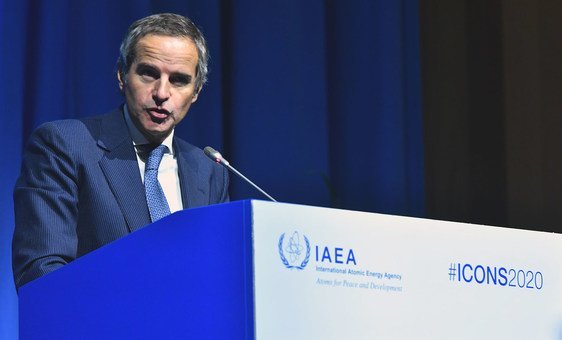
“I welcome announcements on Iran situation. Resuming cooperation with [the International Atomic Energy Agency (IAEA)] is key to a successful agreement,” said Rafael Grossi, Director General of the (IAEA).
In a short online post on X, Mr. Grossi added that he had offered to meet Iranian Foreign Minister Abbas Araghchi on working together, “stressing this step can lead to a diplomatic solution to the long-standing controversy” over Iran’s nuclear programme.
Tehran prison concern
Meanwhile, the UN human rights office, OHCHR, insisted that a notorious Tehran prison known for holding dissidents should not be a target, a day after a reported Israeli strike on the complex.
OHCHR spokesperson Thameen Al-Kheetan told media in Geneva that Evin prison is not a military objective, according to the laws of war.
“Targeting it constitutes a grave breach of international humanitarian law”, he said.
OHCHR does not have specific details about what the alleged attack, Mr. Al- Kheetan said, but there have reportedly been fires inside the prison and a number of injuries.
Casualty count
An updated casualty count from the Iranian authorities on Tuesday indicated that 610 people have been killed including 49 women and 13 children since 13 June. That number includes two pregnant women and one infant along with 4,746 injured, including 185 women and 65 minors.
Seven hospitals, four health units and six emergency bases and nine ambulances have been damaged, the Iranian health authorities said.
Some 28 Israeli citizens have reportedly been killed by Iranian missile strikes to date.
Civilians must be protected
Political prisoners including journalists are held at Evin prison, but whether they are detained “arbitrarily” or in connection with “crimes they’ve actually committed”, the inmates must be protected, Mr Al-Kheetan insisted.
According to media reports on Tuesday, Iran said that it transferred all the inmates out of the prison after it was hit by an Israeli strike, moving them to other prisons around the capital in order to repair damage.
A fragile ceasefire proposed by the United States seemed to take hold briefly on Tuesday morning, before reports of further Iranian missile strikes on Israel, disputed by Tehran.
The conflict began with Israeli air attacks on 13 June and escalated over the weekend with US forces striking Iranian nuclear facilities. Hundreds of civilians have reportedly been killed in the Israeli airstrikes, while Iran’s retaliatory strikes killed close to 30 people in Israel.
Asked about signs of a crackdown on dissent by the Iranian authorities in the context of the Israeli and US military campaign against the country, the OHCHR spokesperson stressed that it was “difficult to verify information” coming from Iran, given the lack of access.
He confirmed seeing reports about Iranians being “arrested for cyber activities and publishing content related to the Israeli attacks on Iran, according to NGOs”.
Mr. Al-Kheetan also spoke of reports that nine men have been executed in Iran since Israel attacked the country on 13 June.
He called on the Iranian authorities to “completely respect the rights to freedom of expression and information, at all times”, insisting that journalists “must be able to do their work without any obstacles”.
Iranian citizens reportedly arrested and accused of espionage or collaboration with Israel “must have their full rights in terms of legal procedures and a fair trial”, he said.
“If these arrests are arbitrary, those persons must be freed immediately and unconditionally,” he concluded.
Human Rights Council concerns
On Monday, independent human rights experts reiterated their concerns about Iran’s “use of broadly defined national security offences, some of which are punishable by death”, in the context of recent reported executions on espionage charges.
Last week, the UN deputy human rights chief, Nada Al-Nashif, told the Human Rights Council that at least 975 people were executed in Iran last year – the highest number of reported executions since 2015.
She also briefed the Council on the use of torture in Iranian prisons and the ongoing targeting of minorities, journalists and human rights defenders.
Private equity firm Odyssey is reportedly in advanced negotiations to acquire Honeywell’s face mask unit, a potential deal valued at around $1.5 billion. This acquisition marks a strategic move by Odyssey to capitalize on the surging demand for personal protective equipment (PPE), driven by the global pandemic. The deal would be a significant milestone in the PPE industry, as face masks have become an essential commodity worldwide.
The ongoing talks, initially reported by Bloomberg News, suggest Odyssey’s growing interest in expanding its investment portfolio within the PPE sector. Honeywell, a global conglomerate known for its diversified product offerings, including aerospace systems and engineering services, has played a key role in meeting the massive demand for PPE during the COVID-19 crisis.
While the reasons behind Odyssey’s interest in Honeywell’s face mask division remain unspecified, the acquisition is seen as a calculated effort to tap into the lucrative market. The surge in demand for PPE since the pandemic began has transformed the sector, making it an attractive investment opportunity for private equity firms.
PPE Market
If the deal proceeds, it could have broader implications for both companies and the PPE market. Honeywell’s face mask unit, known for its production capacity and established reputation, has been a leader in addressing global PPE needs. Odyssey’s acquisition could further shake up the competitive landscape as private equity firms continue to show interest in PPE-related assets.
This is not the first time a private equity firm has targeted the PPE industry. In 2016, Blackstone acquired a majority stake in Ansell Limited’s industrial and medical gloves business for $600 million, a deal that highlighted the profitability of the sector even before the pandemic. Odyssey’s potential acquisition of Honeywell’s unit could be viewed in a similar light, setting the stage for more deals as the industry continues to expand.
While the deal is still in its negotiation phase, the final terms could evolve as discussions progress. The outcome will not only impact Odyssey’s investment portfolio but also shape Honeywell’s future business strategy. Industry stakeholders are watching closely, as this acquisition could set a benchmark for future investments in the PPE market.