


The accord is “a significant step towards de-escalation, peace and stability in the eastern Democratic Republic of the Congo and the Great Lakes region,” he said in a statement that evening.
A breakthrough amid crisis
Since the 1990s, eastern DRC has been plagued by dozens of armed groups who have terrorized the population.
The Government has long accused Rwanda of supporting the M23 rebel group which Rwanda has denied.
Earlier this year, the M23 launched an offensive in North and South Kivu provinces, capturing cities and villages, including provincial capitals Goma and Bukavu.
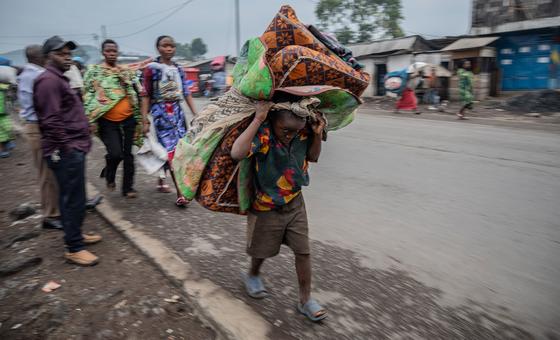
Thousands of civilians were killed, hundreds of thousands more were displaced, and serious human rights violations were committed.
UN commitment remains
The Secretary-General commended the US for its leadership in facilitating the mediation process, in coordination with Qatar and the African Union Mediator, President Faure Gnassingbé of Togo.
He also acknowledged the contributions of the five co-facilitators designated by the East African Community (EAC) and the Southern African Development Community (SADC).
He urged the parties to fully honour their commitments under the peace agreement and in line with UN Security Council resolution 2773 (2025), including the cessation of hostilities and all other agreed measures.
The resolution, unanimously adopted in February, condemned the M23 offensive and called for the DRC and Rwanda to return to diplomatic talks.
The Secretary-General concluded his statement by saying the UN, including through its peacekeeping mission in the DRC, MONUSCO, “remains fully committed to supporting the implementation of the agreement, in close coordination with the African Union, regional and international partners.”
Coincidentally, the Security Council met on Friday to discuss developments in the DRC.
The Secretary-General’s Special Representative for the country and Head of MONUSCO, Bintou Keita, welcomed the peace agreement as a significant step towards ending the conflict.
‘A chance to turn the page’
The UN refugee agency, UNHCR, echoed this message in a statement on Saturday, saying the agreement “offers a chance to stop the cycle of violence and displacement and focus on solutions that restore dignity, stability, and opportunity.”
Furthermore, it “can bring renewed hope to those who have endured far too much for far too long,” added the agency’s chief, UN High Commissioner for Refugees Filippo Grandi.
“This is a chance to turn the page – ensuring the protection of civilians, including refugees and internally displaced people, and advancing durable solutions that allow them to rebuild their lives in safety and dignity,” he said.