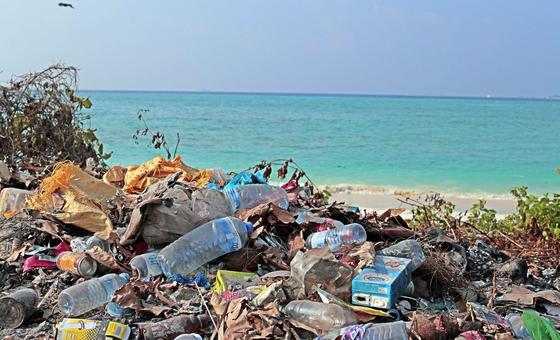
Plastic pollution talks adjourn, but countries want to stay engaged: UNEP chief

“This has been a hard-fought 10 days against the backdrop of geopolitical complexities, economic challenges and multilateral strains,” said Inger Andersen, Executive Director of the UN Environment Programme (UNEP). “However, one thing remains clear: despite these complexities, all countries clearly want to remain at the table.”   

Speaking to media at the end of Intergovernmental Negotiating Committee (INC) talks at the UN in the Swiss city, Ms. Andersen emphasized how Member States had expressed a clear wish to continue engaging in the process, recognising their significant differences regarding plastic pollution.

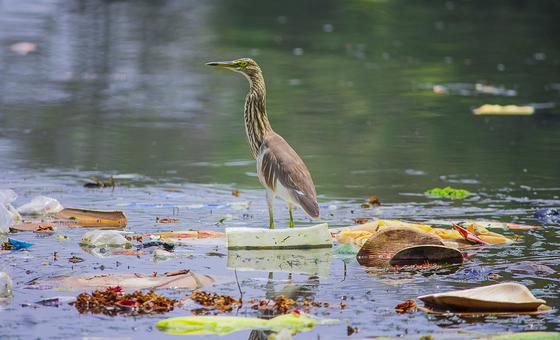
“While we did not land the treaty text we hoped for, we at UNEP will continue the work against plastic pollution – pollution that is in our groundwater, in our soil, in our rivers, in our oceans and yes, in our bodies,” she said.

World view

“People are demanding a treaty,” the UN agency head continued, before underscoring the hard work that lies ahead to maintain the momentum needed to ink a binding international accord.

Delegates from 183 nations attested to the convening power and importance of the proposed agreement, with some Pacific island representatives – complete with dazzling fresh blooms in their hair – rubbing shoulders with other participants, drained by the final all-night negotiating session.

The resumed fifth session of talks – referred to as INC-5.2, after previous talks in Busan known as INC-5.1 – gathered more than 2,600 participants at the UN Palais des Nations. In addition to the approximately 1,400 country delegates, there were close to 1,000 observers representing at least 400 organizations.

NGO voices heard

The session also involved the active participation of civil society – including Indigenous Peoples, waste pickers, artists, young people and scientists. They raised their voices through protests, art installations, press briefings and events in and around the Palace of Nations.

The goal of the negotiations was to agree on a text for the legally binding instrument to end plastic pollution “and highlight unresolved issues requiring further preparatory work ahead of a diplomatic conference”, UNEP said.

In addition to meetings together in UN Geneva’s vast assembly hall, four contact groups were created to tackle key issues including plastic design, chemicals of concern, production caps, finance and compliance instruments.

Despite “intensive engagement”, Members of the Intergovernmental Negotiating Committee was unable to reach consensus on the proposed texts, UNEP explained.

Chair’s action call

“Failing to reach the goal we set for ourselves may bring sadness, even frustration. Yet it should not lead to discouragement. On the contrary, it should spur us to regain our energy, renew our commitments, and unite our aspirations,” said INC Chair, Luis Vayas Valdivieso.

“It has not happened yet in Geneva, but I have no doubt that the day will come when the international community will unite its will and join hands to protect our environment and safeguard the health of our people.” 

The INC process began in March 2022 when the UN Environment Assembly passed resolution 5.2 to develop an international legally binding instrument on plastic pollution, including in the marine environment.   

“As this session concludes, we leave with an understanding of the challenges ahead and a renewed and shared commitment to address them,” said Jyoti Mathur-Filipp, Executive Secretary of the INC Secretariat. “Progress must now be our obligation.”  
Source link

The world is demanding action over plastic pollution: UN environment chief

The world wants and indeed needs a plastic conventional treaty because the crisis is getting out of hand – and people are frankly outraged,” said Inger Andersen, UNEP Executive Director of the UN Environment Programme (UNEP), the UN agency leading the talks.

“We know that plastic is in our nature, in our oceans, and yes, even in our bodies…What is sure is that no one wants to live with the plastic pollution.”

Out of control

Unless an international accord is inked, plastic production and waste is projected to triple by 2060, causing significant damage – including to our health – according to UNEP.

Switzerland’s top environment official Katrin Schneeberger echoed the call for a legally binding treaty, insisting that plastic waste “is choking our lakes, harming wildlife and threatening human health. This is more than just an environmental issue, it is a global challenge that demands urgent and collective action.”

Speaking to journalists on the sidelines of the treaty negotiations, Ms. Schneeberger underscored that there was “no call for a production cap” by producing countries.

Spirit of compromise?

Reaching a shared understanding that measures are needed on both the production and consumption sides can help unlock the negotiations,” she said in her capacity as Director of the Swiss Federal Office for the Environment.

Supporters of a deal have compared it to the Paris Climate Accord in terms of its significance. They have also pointed to the pressure allegedly being brought to bear against a deal by petrostates, whose crude oil and natural gas provide the building blocks of plastics.

“We will not recycle our way out of the plastic pollution crisis: we need a systemic transformation to achieve the transition to a circular economy,” UNEP Executive Director Inger Andersen has insisted in previous comments on the need for global regulations on plastics.

Virtuous circle

With 10 days of talks scheduled on the treaty at the UN in Geneva, supporters of an accord hope that the deal will cover the full life cycle of plastics, from design to production and disposal.

The treaty should “promote plastic circularity and prevent leakage of plastics in the environment”, according to the text now guiding negotiations led by the Intergovernmental Negotiating Committee (INC).

At 22 pages, the INC document contains 32 draft articles which will be discussed line by line. The text is designed to shape the future instrument and serves as a starting point for negotiations by countries meeting in Geneva.

“Some [countries] will have to deal with reduction, others will have to deal with mechanical recycling and others will deal with alternatives,” Ms. Andersen said. “Let’s see how we can get to this through the negotiations. I think there’s a lot of good faith in the working group right now.”

The UNEP-led talks follow a decision in 2022 by Member States to meet and develop an international legally binding instrument to end the plastic pollution crisis, including in the marine environment, within two years.

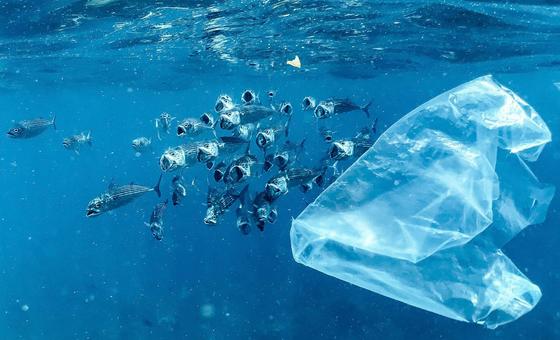
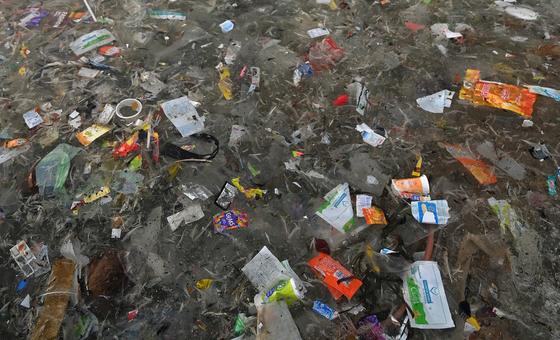
The scale of the problem is massive, with straws, cups and stirrers, carrier bags and cosmetics containing microbeads just a few of the single-use products ending up in our oceans and landfill sites.

In comments to journalists, Ms. Andersen recalled touring Pakistan after deadly flooding killed more than 1,000 people in 2022 and seeing that debris and plastic were “a big part of the problem and so this is why we’re here, to find a solution while not leaving anyone behind and while ensuring that the economic wheels would keep turning”.

Disabling effect

Campaigners gathering on the sidelines of the negotiations expressed their hopes for as ambitious a treaty as possible.

They included Shellan Saling, from California, who’s the interim chair of the Youth Plastic Action Network (YPAN). “Plastic affects everything from climate change to health to fertility to even birth defects; it affects physical disabilities, as well as invisible disabilities,” she told UN News on Monday.

Any treaty inked in Geneva will have to be sufficiently robust to accommodate the needs of all countries of the world whose approach differs regarding plastic design, production, waste and recycling. It will also have to stand the test of time, Ms. Andersen said.

UN News interview with YPAN interim chair Shellan Saling

Source link

The final straw? Plastic pollution talks get underway in Geneva

Unless an international accord is inked, plastic waste is projected to triple by 2060, causing significant damage – including to our health – according to the UN Environment Programme (UNEP).

The UNEP-led talks follow a decision in 2022 by Member States to meet and develop an international legally binding instrument to end the plastic pollution crisis, including in the marine environment, within two years.

The scale of the problem is massive, with straws, cups and stirrers, carrier bags and cosmetics containing microbeads just a few of the single-use products ending up in our oceans and landfill sites.

Supporters of a deal have compared it to the Paris Climate Accord in terms of its significance. They have also pointed to the pressure allegedly being brought to bear against a deal by petrostates, whose crude oil and natural gas provide the building blocks of plastics.

“We will not recycle our way out of the plastic pollution crisis: we need a systemic transformation to achieve the transition to a circular economy,” UNEP Executive Director Inger Andersen has insisted.

Circular argument

The aim of the deal is for it to encompass the full life cycle of plastics, from design to production and disposal “to promote plastic circularity and prevent leakage of plastics in the environment”, according to the text being used to guide the talks of the Intergovernmental Negotiating Committee (INC) gathering in the Swiss city.

At 22 pages, the INC document contains 32 draft articles which will be discussed line by line. The text is designed to shape the future instrument and will serve as a starting point for negotiations.

10-day stint

For 10 days from 5-14 August, delegations from 179 countries are due to pore over the INC text as they meet at UN Geneva, alongside more than 1,900 other participants from 618 observer organizations including scientists, environmentalists and industry representatives.

A key aim of the meeting is to share tried and tested ways of reducing plastic use such as non-plastic substitutes and other safer alternatives.

Ahead of the talks in Geneva, the respected medical journal The Lancet published a warning that the materials used in plastics cause extensive disease “at every stage of the plastics life cycle and at every stage of human life”.

According to more than two dozen health experts cited in the journal, infants and young children are particularly vulnerable. “Plastics are a grave, growing, and under-recognized danger to human and planetary health” and are responsible for health-related economic losses exceeding $1·5 trillion annually”, it noted.

To follow the plastic pollution talks live on UN Web TV, click here: https://webtv.un.org/en/asset/k16/k16cqrvu2w 

Leading the talks in Geneva is Jyoti Mathur-Filipp, Executive Secretary of the Intergovernmental Negotiating Committee (or the INC) on Plastic Pollution, and Head of the INC Secretariat.

“In 2024 alone, humanity was projected to consume over 500 million tonnes of plastic. Of this, 399 million tonnes will become waste,” she said.

Latest forecasts indicate that plastic leakage into the environment will grow 50 per cent by 2040. “The cost of damages from plastic pollution could rise as high as a cumulative $281 trillion between 2016 and 2040,” she maintained. 

The road to an international accord:

Five negotiation sessions towards a plastics treaty have taken place so far:

  • The first was in Uruguay in November 2022.
  • Two more followed in 2023 – in France and Kenya.
  • In April 2024, the Intergovernmental Negotiating Committee (INC) convened in Canada.
  • Most recently, discussions took place in Busan, Republic of Korea, at the end of last year. These talks were adjourned after delegations agreed to resume discussions in Geneva, under the leadership of the Chair of the Committee, Ambassador Luis Vayas Valdivieso of Ecuador.

Source link

Trade measures critical to ending plastic pollution

That assessment by UN trade and development body, UNCTAD, comes in an update published on Thursday ahead of the final round of talks to develop a legally binding international instrument against plastic pollution.

“Although plastics are directly linked to the triple planetary crisis – pollution, biodiversity loss, and climate change – there is still no comprehensive international treaty governing their composition, design, production, trade, and disposal,” UNCTAD said.

Polluting our oceans

In 2023, plastic production reached 436 million metric tonnes worldwide, with the traded value surpassing $1.1 trillion.  It also accounted for 5 per cent of total merchandise trade.

However, 75 per cent of all plastics ever produced have become waste, most of which has ended up in the world’s oceans and ecosystems.

This pollution also threatens food systems and human well-being, especially in small island and coastal developing countries with limited capacity to cope.

Support for substitutes

UNCTAD is advocating for tariff and non-tariff measures to support ecologically sustainable plastic substitutes which often are derived from natural sources such as minerals, plants or animals, and can be recycled or turned into compost.

Global trade in these substitutes reached $485 billion in 2023, with an annual growth of 5.6 per cent in developing economies.

Scaling up will require action to address challenges related to tariff and non-tariff measures, limited market access and weak regulatory incentives.

Tariff disparities

UNCTAD explained that a reduction in tariffs on plastic and rubber products over the past 30 years – from 34 per cent to 7.2 per cent – has made them “artificially inexpensive”.  Meanwhile, alternatives such as paper, bamboo, natural fibres and seaweed face average tariffs of 14.4 per cent

“These disparities in how materials are treated discourage investment in alternative products and hinder innovation in developing countries that aim to export safer and more sustainable alternatives to fossil fuel-based plastics,” it said.

Currently, 98 per cent of plastics are derived from fossil fuels, meaning that emissions and environmental damage are expected to rise if left unchecked. In response, many countries are using non-tariff measures such as bans, labelling requirements and product standards.

However, these regulations differ, leading to fragmentation and increased compliance costs. Furthermore, small businesses and low-income exporters struggle in the face of overlapping or inconsistent requirements, thus affecting how they can both participate in and benefit from sustainable trade.

Hope for treaty talks

For UNCTAD, the talks towards the plastic pollution treaty are promising. They began in 2022, with the final round taking place next week at the UN in Geneva.

The treaty would cover the entire life cycle of plastics – production, consumption, and waste – within a fair and comprehensive framework.

The UN agency said a successful treaty should include tariff and non-tariff measures to support sustainable substitutes for plastic, investment in waste management and circular infrastructure, digital tools for traceability and customs compliance, as well as policy coherence across frameworks reached through the World Trade Organization (WTO); the UN climate secretariat, UNFCCC; the Basel Convention on hazardous waste, and related regional measures.

Source link

Global push to end plastic pollution gains ground in Nice

Away from the cameras and fanfare of the Third UN Ocean Conference under way in the coastal French city, they voiced a shared determination to finalize this year a global treaty that could, for the first time, regulate plastics across their entire life cycle.

“There is renewed commitment to conclude the treaty in August,” Jyoti Mathur-Filipp, who attended the meeting and is leading the treaty negotiations, told UN News. “This is too urgent an issue to be left for the future.”

Hosted by Inger Andersen, the head of the UN Environment Programme (UNEP), the informal gathering marked a quiet but significant diplomatic moment – a sign that after two years of deliberations, political momentum may finally be catching up with scientific alarm.

With one round of talks remaining – scheduled from August 5 to 14 in Geneva – negotiators are now under pressure to deliver the first legally binding treaty aimed at tackling plastic pollution across production, consumption, and waste.

A crisis accelerating in plain sight

Plastic waste has infiltrated nearly every ecosystem on Earth, and increasingly in the form of microplastics – the human body. Without urgent action, the amount of plastic entering the ocean each year could reach 37 million metric tons by 2040, according to UN estimates.

“We are choking with plastic,” Ms. Mathur-Filipp said. “If we do not do something to tackle plastic pollution, we will not have a single ecosystem left, whether it’s terrestrial or marine.”

The economic toll is no less staggering. Between 2016 and 2040, the projected cost of plastic-related damage could reach $281 trillion. “It is costing the economy a lot,” said the Indian native. “In tourism, in beach clean-up, in lack of fish for fishing folk, coastal damage, wetlands damage.”

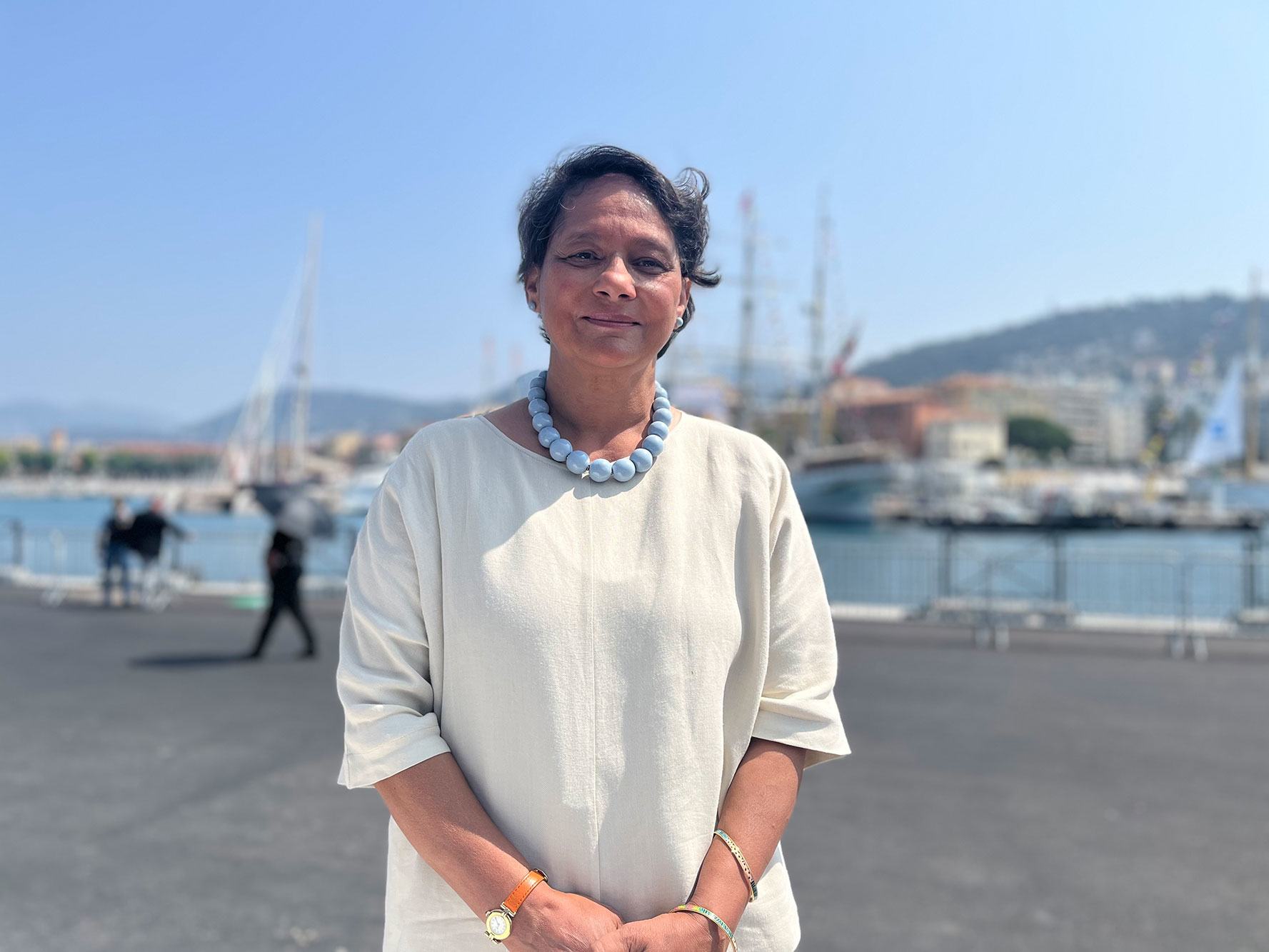
Jyoti Mathur-Filipp, Executive Secretary of the Intergovernmental Negotiating Committee (INC) on Plastic Pollution.

The final stretch in Geneva

The treaty process was launched in 2022, at the request of the UN Environment Assembly, the world’s highest decision-making body on environmental issues. Since then, the Intergovernmental Negotiating Committee (INC) has convened five times in less than two years – an unusually rapid timeline by UN standards.

“We have had five sessions very rapidly from December of 2022 to December of 2024,” said Ms. Mathur-Filipp, who serves as the INC’s Executive Secretary. She hopes the upcoming session this August in Geneva will mark the treaty’s conclusion.

A key breakthrough came six months ago at the last round of talks in Busan, South Korea, where delegates produced a 22-page “Chair’s text,” outlining the draft treaty’s basic structure.

“It has 32 or 33 articles in it, with names of articles, so countries can now start seeing what this treaty will look like,” she explained. “They have started speaking with article numbers for negotiation… and this is why my hope is that there would be a conclusion.”

A treaty with teeth – and flexibility

While the draft treaty is still under negotiation, it includes measures that would target the entire life cycle of plastic – from upstream production to downstream waste. It reflects both mandatory and voluntary provisions, in line with the original UN mandate.

The current draft also includes the institutional architecture of a typical multilateral treaty: the ratification process, governance rules, and proposed implementation bodies.

“It has an objective. It has a preamble,” said Ms. Mathur-Filipp. “It looks like a treaty.”

If all goes according to plan, the final text will be submitted to a diplomatic conference – later this year or in early 2026 – where governments can formally adopt it and begin the ratification process.

Unequal burdens, global stakes

Although plastic pollution is a global issue, some countries – especially small island developing states – bear a disproportionate burden.

“It is a fact that small island developing states are not the ones that are using plastic as much as what’s flowing onto their shores and therefore, they become responsible for beach clean-up, which is not their doing,” Mathur-Filipp said. “They are unfairly impacted.”

An estimated 18 to 20 per cent of global plastic waste ends up in the ocean.

One diplomat’s mission

Before leading the INC, Ms. Mathur-Filipp worked at the UN Convention on Biological Diversity, where she helped shape the landmark Kunming-Montreal Global Biodiversity Framework, the 2022 agreement to protect 30 per cent of the planet’s land and ocean by 2030. The challenge of managing a fast-moving, high-stakes negotiation is familiar terrain.

“I wasn’t tired enough there, so now I’m doing this,” she said.

As the Mediterranean UNOC3 host city plays its part in building momentum, all eyes will, in the weeks ahead, turn to Geneva. The outcome in August could determine whether the world takes a decisive step toward curbing the plastic crisis – or allows it to deepen, unchecked.

World Environment Day: UN sounds alarm on plastic pollution crisis

Between 19 and 23 million tonnes of plastic waste leak into aquatic ecosystems annually, and without urgent action, this figure is expected to rise by 50 per cent by 2040.

Plastic pollution is contaminating every corner of the planet, threatening ecosystems, wildlife, and human health. Microplastics are found in food, water and air, with the average person estimated to ingest over 50,000 plastic particles each year, and far more when inhalation is included.

If the climate crisis goes unaddressed, with plastic pollution as a major driver, air pollution levels exceeding safe thresholds could rise by 50 per cent within a decade. Meanwhile, plastic pollution in marine and freshwater environments may triple by 2040.

Global action day

To rally momentum, the UN Environment Programme (UNEP) is leading the 52nd annual World Environment Day on 5 June, the world’s largest platform for environmental outreach.

This year’s commemoration is hosted by Jeju, Republic of Korea, under the theme #BeatPlasticPollution. Since launching in 2018, the UNEP-led campaign has advocated for a just and inclusive transition away from plastic dependency.

The day brings together governments, businesses, communities, and individuals in a shared mission to protect and restore the planet, while advancing progress towards the Sustainable Development Goals (SDGs), especially those linked to climate action and sustainable consumption.

Towards a treaty

A major focus of the day is the ongoing push for a global treaty to end plastic pollution. Countries are currently negotiating an international, legally binding agreement, with the next round of talks scheduled for August.

UN Secretary-General António Guterres called for an “ambitious, credible and just agreement” that addresses the full lifecycle of plastics, reflects community needs, aligns with the SDGs and is implemented quickly and fully.

UNEP Executive Director Inger Andersen echoed the call, urging nations to unite around innovative solutions and alternatives to plastic use.

World Environment Day serves as a catalyst for action, driving attention toward the UN Environment Assembly later this year – where hopes are high that nations will finalise concrete steps to curb plastic pollution and address the broader climate emergency. 

Source link