
Nearly 40 per cent of cancer cases could be prevented, UN study finds

The study by the UN World Health Organization (WHO) and its International Agency for Research on Cancer (IARC) looks at 30 preventable causes, including tobacco, alcohol, high body mass index, physical inactivity, air pollution and ultraviolet radiation. 

Nine cancer-causing infections – such as human papillomavirus (HPV) which can cause cervical cancer – also are included for the first time. 

Examining patterns for prevention 

Cancer remains a leading cause of morbidity, responsible for nearly 10 million deaths worldwide in 2020, or nearly one in six.  

Projections point to a 50 per cent increase in new cases by 2040 if current trends continue, underscoring the urgent need for effective prevention strategies.

The study was released ahead of World Cancer Day, observed annually on 4 February.

The findings draw on data from 185 countries and 36 cancer types.  Estimates show that 37 per cent of all new cancer cases in 2022, around 7.1 million, were linked to preventable causes.

“By examining patterns across countries and population groups, we can provide governments and individuals with more specific information to help prevent many cancer cases before they start,” said Dr. André Ilbawi, WHO Team Lead for Cancer Control and author of the study. 

Tobacco top cause 

Tobacco is the leading preventable cause of cancer, responsible for 15 per cent of all new cases, followed by infections (10 per cent) and alcohol consumption (3 per cent). 

Lung, stomach and cervical cancer represented nearly half of all preventable cases in both men and women. 

Lung cancer was primarily linked to smoking and air pollution, while stomach cancer was largely attributable to Helicobacter pylori infection. Cervical cancer was overwhelmingly caused by HPV. 

Differences among men and women  

The burden of preventable cancer was substantially higher in men than in women. Among new cancer cases, 45 per cent occur in men compared with 30 per cent in women. 

In men, smoking accounted for an estimated 23 per cent of all new cancer cases, followed by infections (9 per cent) and alcohol (4 per cent).  

Among women, infections accounted for 11 per cent of all new cancer cases, followed by smoking at 6 per cent and high body mass index at 3 per cent. 

Regional picture, risk factors 

Preventable cancers also varied widely between the world’s regions. 

Among women, they ranged from 24 per cent in North Africa and West Asia, to 38 per cent in sub-Saharan Africa.  

Among men, East Asia accounted for the highest burden at 57 per cent, while the lowest incidence was found in Latin America and the Caribbean at 28 per cent.  

These differences are largely due to varying exposure to behavioral, environmental, occupational and infectious risk factors, as well as differences in socioeconomic development, national prevention policies, and health system capacity. 

Prevention strategies 

The report emphasised the need for “context-specific prevention strategies” such as strong tobacco control measures, alcohol regulation, and vaccination against HPV and other cancer-causing infections such as hepatitis B. 

Improved air quality, safer workplaces, healthier food and promoting physical activity are also important. 

Furthermore, “coordinated action across sectors, from health and education to energy, transport and labour, can prevent millions of families from experiencing the burden of a cancer diagnosis,” WHO said. 

The UN agency stressed that addressing preventable risk factors not only reduces cancer incidence but also lowers long-term healthcare costs and improves population health and well-being. 

Listen to an interview with WHO Kenya about the national action plan to eliminate cervical cancer by 2030:

Source link

DPR Korea: UN report finds human rights situation still dire, a decade on

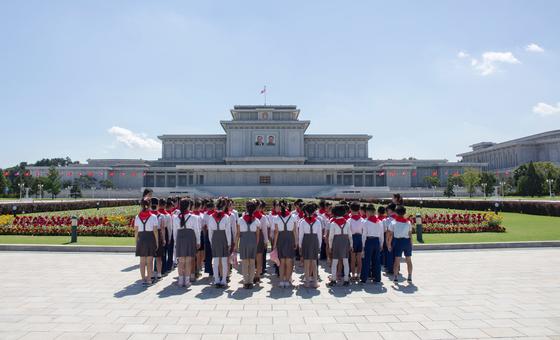
The rights office, OHCHR, interviewed 314 witnesses who left the DPRK – more commonly known as North Korea – and consulted with several organizations and experts to evaluate the human rights conditions there since 2014.

The situation has not improved, and in many cases has worsened, “bringing even more suffering to the population,” said Spokesperson Liz Throssell, briefing journalists in Geneva.

James Heenan, head of the office working on DPRK, highlighted the severity of the human rights violations, where even a minor offence can result in punishment.

Killed for sharing shows online

We do have credible evidence that individuals have been executed – not  just for watching K-dramas. The crime is for distributing at a certain level, foreign information, foreign media,” he said.

The report found that new laws, policies and practices have been leading to increased surveillance and control over citizens, some of whom have ended up in forced labour camps, as political prisoners.

Working in ‘shock brigades’

In a form of forced labour called “shock brigades,” Authorities in Pyongyang have reportedly used thousands of orphans and street children to work in coal mines and other environments, exposing them to hazardous materials and long working hours, the UN report said.

Mr. Heenan further added that school children are also used to do “backbreaking” work collecting harvests and while they were supposed to be in class.

“The Government says that this is sort of a curriculum to help them learn life skills. But the information we’ve had for many years now is that it meets the qualification of forced labour because the children have no choice,” he said.

The physically demanding and dangerous work of the brigades is also undertaken by people in the military or prison system, as well as by workers from mainly poor families who wish to become party members or improve their social status.

Deaths are reportedly frequent under these conditions but rather than increasing safety measures, the DPRK publicly glorifies deaths as a sacrifice to the leader, according to the report.

Death penalty widely used

In 2014 and 2015, many senior officials were reportedly executed for “anti-State acts,” the report says.

While this trend later decreased, escapees said that from 2020, execution has been used for the distribution of unauthorized media, drugs and economic crimes, prostitution, pornography, trafficking and murder.

Since 2015, there have been six new laws allowing the use of the death penalty for offenses such as a vaguely defined “anti-state” propaganda.

Interviewees said they also witnessed public executions over the last decade. The report explains that the government has organised public trials and executions to instil fear in the population and as a deterrent.

“To block the people’s eyes and ears, they strengthened the crackdowns,” one of the witnesses told OHCHR.

Not enough progress

Escapees expressed that some improvements had been made in the treatment of people in detention facilities. North Korea has also ratified two more human rights treaties, but the report ultimately concludes that it is far from adhering to its obligations under international law.

The DPRK remains more isolated than any other nation, further adding to the difficulty of monitoring and implementing fair human rights standards.

What we have witnessed is a lost decade,” said UN human rights chief Volker Türk. “And it pains me to say that if DPRK continues on its current trajectory, the population will be subjected to more of the suffering, brutal repression and fear that they have endured for so long.”
Source link

Haiti: More than 1,500 killed between April and June, UN report finds

These numbers are similar to those from the first quarter of 2025 when 1,617 people were killed and 580 were injured.  

“Gang attacks in the Artibonite and Centre departments, and in the capital, continue to cause serious human rights violations and exacerbate an already dire humanitarian crisis,” said Ulrika Richardson, the UN Resident and Humanitarian Coordinator in Haiti.  

Gangs within and beyond the capitol

President Jovenel Moïse’s assassination in 2021 triggered widespread gang violence in the capital of Port-au-Prince. Today, the UN estimates that gangs control at least 85 per cent of the city.  In the past few months, many have begun to expand their influence in the Centre and Artibonite departments.  

In June alone, 45,000 people were displaced in Centre and Artibonite, meaning that the total number of displaced people across these two departments totals over 240,000, according to the International Organization for Migration (IOM).  

Between April and June, security forces were able to slow down the gang’s expansion in the capital, but the UN office in Haiti, BINUH.  noted that the situation still remains exceptionally volatile.  

As they expand their territory, gangs have committed human rights violations, according to the UN, including gang rape, extrajudicial killings, child exploitations, trafficking and murder.

“Gang members continued to resort to murders, gang rapes, and kidnappings to maintain their control over populations living in areas under their influence,” BINUH said.  

Different perpetrators

The UN has long warned that gangs are not the only groups committing human rights abuses and violations in Haiti — government security forces and local self-defence groups have also committed violations.  

Of the 1,520 people killed and 609 injured between April and June, most were in the capital or the Centre and Artibonite departments, with 24 per cent of them killed or injured by gangs.  

Security operations against gangs accounted for 64 per cent of the deaths and injuries during this period, with 73 documented cases of summary executions and one-third of the deaths occurring as a result of explosive drones.  

Self-defence groups, which have formed as a reaction against the gangs and security force’s inability to contain them, were responsible for 12 per cent of those killed and injured.  

Respect human rights

The humanitarian situation in Haiti is increasingly dire, with over 1.3 million people displaced and half of the population facing food insecurity.  

With the humanitarian response plan only 8 per cent funded, the UN Office for the Coordination of Humanitarian Affairs (OCHA) is calling on the international community to step up financial support.  

The report also urged the international community to continue to increase support for Haiti’s fight against gangs.  

“The report calls on the Haitian government, with the support of the international community, to strengthen the fight against gangs while strictly respecting human rights and standards on the use of force,” the UN Mission in Haiti said.  

Source link

Tobacco control efforts protect three-quarters of the world’s population, WHO report finds

The World Health Organization (WHO) published its 2025 report on the Global Tobacco Epidemic on Monday, focusing on the six policies outlined in the WHO MPOWER tobacco control measures.

Since 2007, 155 countries have implemented at least one of those policy prescriptions which has resulted in over 6.1 billion people – that’s three-quarters of the world’s population – now benefitting: however, major gaps still remain.

Here are the six policy recommendations: 

  • Monitoring tobacco use and prevention policies;
  • Protecting people from tobacco smoke with smoke-free air legislation;
  • Offering help to quit tobacco use;
  • Warning about the dangers of tobacco with pack labels and mass media;
  • Enforcing bans on tobacco advertising, promotion and sponsorship; and
  • Raising taxes on tobacco.

Striking Gains

Some 110 countries now require graphic health warnings on tobacco packaging and WHO’s new report reveals the strategy has delivered striking gains in the fight against consumption.

As one of the key measures under the WHO Framework Convention on Tobacco Control (FCTC), graphic health warnings make the harms of tobacco visibly clear and difficult to ignore.

There has also been a growing trend to regulate the use of e-cigarettes or ENDS – Electronic Nicotine Delivery Systems – with the number of countries regulating or banning ENDS increasing from 122 in 2022, to 133 in 2024.

Major Gaps

Although very effective, 110 countries have failed to launch any anti-tobacco campaigns since 2022, despite the grim statistic that around 1.3 million people continue to die from second-hand smoke every year.

Forty countries still have not adopted a single MPOWER measure and over 30 countries are still allowing cigarette sales without mandatory health warnings. The UN health agency is calling for urgent action in areas where momentum is lagging.

Government must act boldly to close remaining gaps, strengthen enforcement, and invest in the proven tools that save lives,” said Ruediger Krech, WHO’s Director of Health Promotion. 

UN aviation council finds Russia responsible for downing of Malaysian Airlines flight

The council of the International Civil Aviation Organization (ICAO) voted on Monday that Russia failed to uphold its obligations under international air law which requires that States “refrain from resorting to the use of weapons against civil aircraft in flight.”

The case was brought by the Netherlands and Australia.

“This represents the first time in ICAO’s history that its Council has made a determination on the merits of a dispute between Member States under the Organization’s dispute settlement mechanism,” the UN agency said.

Caught in conflict

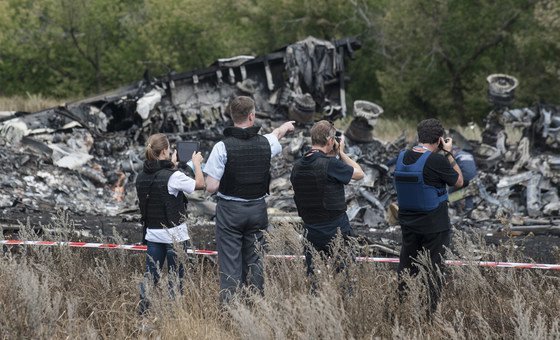
Flight MH17 was heading from Amsterdam to Kuala Lumpur when it was shot down over eastern Ukraine amid the armed conflict between pro-Russian rebels and Ukrainian military forces.

All 283 passengers and 15 crew members were killed.  They represented some 17 nationalities and included 196 Dutch citizens, 43 Malaysians and 38 Australian citizens or residents.

The Netherlands established a Joint Investigation Team (JIT) in August 2014 together with Australia, Malaysia and Belgium, as well as Ukraine.

The JIT determined that flight MH17 was shot down by a missile launched from a Buk TELAR installation that was transported from Russia to a farm field in eastern Ukraine in an area controlled by separatists.

In November 2022, a Dutch court convicted three men – two Russians and a Ukrainian – for murder.  They were tried in absentia and sentenced to life in prison. Another Russian man was acquitted.

Breach of civilian aviation treaty

That same year, the Netherlands and Australia launched the case with ICAO, the UN agency that develops and implements global aviation strategies and technical standards.

The case centered on allegations that Russia’s conduct in the downing of the aircraft by a surface-to-air missile over eastern Ukraine constituted a breach of Article 3 of the Convention on International Civil Aviation.

War in Ukraine has escalated since the crash following the start of Russia’s full-scale invasion of the country in February 2022.  

More than 13,000 civilians have been killed to date, and over 31,000 injured, according to the UN human rights office, OHCHR

Source link