Nuclear disarmament at breaking point as mistrust grows – but hope remains

Yet even as the architecture weakens, signs of progress – including nuclear-weapon-free zones and rising youth engagement – offer grounds for cautious hope, a UN researcher on nuclear non-proliferation has told UN News.

Gaukhar Mukhatzhanova, a fellow with the UN Institute for Disarmament Research (UNIDIR) – an autonomous institute studying disarmament and international security issues – said that decades of arms control built through painstaking negotiations are now at risk of unravelling.

“The situation right now is very difficult,” she added.  

“We are observing the disintegration of the arms control architecture that was built primarily through negotiations between [the then] Soviet Union – and subsequently Russia – and the United States.”

Gaukhar Mukhatzhanova, briefs the Security Council on nuclear disarmament and non-proliferation. (November 2025)

Arms control architecture under strain

That erosion has left the global non-proliferation regime increasingly fragile, with most Cold War-era agreements either abandoned or expired. The 2010 US-Russia New START accord – which capped deployed strategic nuclear warheads – expired this week without a successor in place.

While both American and Russian presidents acknowledged the dangers of a renewed nuclear arms race, no replacement for the New START is currently under negotiation.

This is a troubling backdrop for the next review conference of the Treaty on the Non-Proliferation of Nuclear Weapons (NPT), scheduled for April-May in New York, Ms. Mukhatzhanova said.

Opened for signature in 1968 and extended indefinitely in 1995, the NPT remains the only binding multilateral treaty requiring nuclear-weapon States to pursue disarmament.  

However, the political conditions that once made cooperation possible have deteriorated sharply, added Ms. Mukhatzhanova.

We are back to a period of severe mistrust between the major actors – arguably worse than during the Cold War,” she said.

We are back to a period of severe mistrust between the major actors – arguably worse than during the Cold War

Challenges and emerging risks

Statements by the US suggesting a possible resumption of certain forms of nuclear testing have raised alarm, even if limited to so-called “subcritical experiments” – highly explosive tests where no chain reaction is involved.

Such moves, Ms. Mukhatzhanova said, risk undermining the Comprehensive Nuclear-Test-Ban Treaty (CTBT) and reopening questions many hoped were settled.

“If full-scale explosive testing were to return,” she warned, “we are talking about a really drastic and very negative change – one that would open the door for others to resume nuclear testing.

New technology, new risks

Hypersonic weapons, autonomous systems and artificial intelligence are accelerating arms competition and increasing the risk of miscalculation.

The concern is that too much is left to the decision of a machine,” Ms. Mukhatzhanova said, warning that AI-driven early-warning systems could misinterpret data and trigger inadvertent escalation.

She noted recent UN resolutions calling for “meaningful human control” over nuclear-related technologies.

Hiroshima, shortly after a nuclear bomb was dropped on this city in August 1945.

Room for progress remains

Despite the grim outlook, she highlighted areas where progress continues.

Nuclear-weapon-free zones – covering Latin America and the Caribbean, Africa, Southeast Asia, the South Pacific and Central Asia – demonstrate how states can pursue security without nuclear weapons.

“They are a feel-good story,” she said, describing them as practical examples of cooperation even amid global tensions. The Central Asian zone stands out for its strong verification standards and links to broader non-proliferation commitments.

Young people engaging

Ms. Mukhatzhanova also pointed to growing engagement by younger generations, who increasingly question the long-standing narrative that nuclear weapons guarantee security.

They are ready to challenge that framing,” she said. “That gives me hope.

While the arms control system may be fraying, she argued that history shows it can be rebuilt.

Source link

‘When finance flows, ambition grows’: COP30’s call for action

At every negotiation table and in every diplomatic statement lies a stark truth shared by nations on the front lines of the climate crisis: without funding, there is no path to safety, justice, or survival.

Many urgent actions are required to secure a livable planet and protect millions of lives. But all of them – every breakthrough, every shield of resilience – depend on one essential driver: financing.

On Saturday, discussions at the UN climate change conference, as the annual COPs are formally known, revolved around financial mobilization, or what leaders called the engine of climate transition.

A question of survival

Convening the Third High-Level Ministerial Dialogue on Climate Finance, COP30 heard from representatives of nations deeply affected by climate impacts, many of whom described access to financial resources as “a matter of survival.”

UN General Assembly President Annalena Baerbock said in her opening remarks that COP30 should mark the beginning of implementing up to $1.3 trillion in annual climate finance – disbursements that “reach those most in need, quickly, transparently and fairly.”

She stressed that climate action and social justice are “inseparable,” noting:

“Climate insecurity fuels hunger and poverty, poverty drives migration and conflict; and conflict, in turn, deepens poverty and deters investment.”

Breaking this vicious cycle, she said, is essential to deliver on global climate goals.

Renewable energy takes the lead

Reflecting on the 10th anniversary of the Paris Agreement, Ms. Baerbock recalled that in 2015, many delegates had been moved to tears by the historic outcome that produced the first legally binding global climate treaty, involving more than 190 countries.

She noted that at the time, renewable energy was widely considered “unrealistic.” Today, it is the fastest-growing energy source on Earth.

In 2024, global investment in clean energy reached $2 trillion – about $800 billion more than in fossil fuels. Solar power has become the cheapest form of electricity in history.

Africa’s untapped potential

Yet Ms. Baerbock warned that “vast potential remains untapped because capital is still not flowing to where it is most needed,” particularly in Africa.

More than 600 million Africans still lack access to electricity, even though the continent’s renewable energy potential is 50 times greater than the world’s projected electricity demand for 2040.

She urged developed nations to fulfill their technological and financial commitments and to advance reform of global financial institutions.

The ‘lifeblood’ of climate action

UN Climate Change Executive Secretary Simon Stiell also addressed the meeting, underscoring the transformative power of climate finance.

He described finance as the “lifeblood of climate action,” capable of turning “plans into progress” and “ambition into implementation.”

Mr. Stiell stressed that the most vulnerable countries continue to face major challenges, accessing funds that have long been pledged.

‘When finance flows, ambition grows’

Despite billions invested worldwide in clean energy, resilience and just transitions, Mr. Stiell said the total volume remains “neither sufficient nor predictable enough,” and not equitably shared.

At COP30, the world is looking for proof that climate cooperation delivers.

“Real finance, flowing fast and fair, is central to that proof,” he said, urging delegates to not only demonstrate that climate cooperation is working, but that investments made now can shape the “growth story of the 21st century.”

The UN climate chief emphasized:

“When finance flows, ambition grows,” enabling implementation that creates jobs, lowers the cost of living, improves health outcomes, protects communities and secures a more resilient, prosperous planet for all.

UN News is reporting from Belém, bringing you front-row coverage of everything unfolding at COP30.

Guterres urges countries to ‘seize this historic opportunity’ as renewable energy use grows

The latest push follows the release of two reports on Tuesday which affirmed that the so-called “renewables revolution” is accelerating at unprecedented rates.

For the first time ever, renewable energy has generated more power than coal, according to new analysis by Ember, a global think tank working to speed up the clean energy transition.

Energy shift underway

Solar and wind outpaced the growth in global electricity demand in the first half of this year, resulting in a small decline in coal and gas when compared to the same period in 2024.

This represents “a crucial turning point,” according to Ember’s Senior Electricity Analyst, Małgorzata Wiatros-Motyka.

“Solar and wind are now growing fast enough to meet the world’s growing appetite for electricity. This marks the beginning of a shift where clean power is keeping pace with demand growth,” she said in a press release.

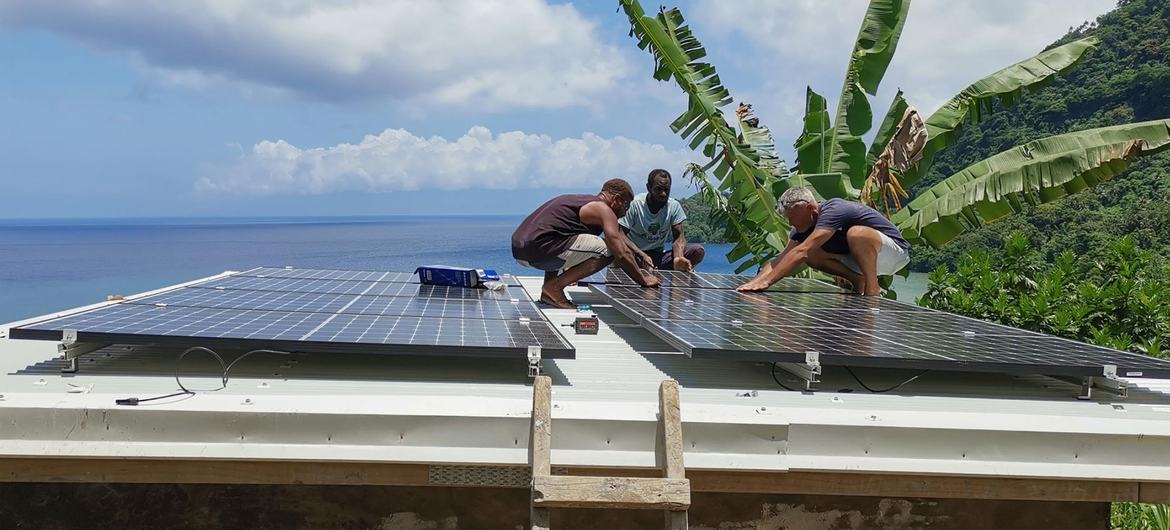
People in Vanuatu in the southwestern Pacific install solar panels on a roof.

Solar-powered success

In a separate report, the International Energy Agency (IEA) revealed how installed renewables power continues to grow and is expected to double by 2030.

Global renewable power capacity is projected to increase by 4,600 gigawatts (GW) – “roughly the equivalent of adding China, the European Union and Japan’s total power generation capacity combined,” the agency said.

Growth is being led by the rapid rise of solar PV (photovoltaic) technology, which converts sunlight into energy.  It will account for around 80 per cent of the increase, followed by wind, hydro, bioenergy and geothermal.

‘A better future for all’

In response to the news, UN Secretary-General António Guterres tweeted that “the clean energy future is no longer a distant promise – it’s here.” 

He urged the international community to “seize this historic opportunity and supercharge the global shift towards a better future for all.”

The reports echo the findings of the Secretary-General’s Moment of Opportunity report, issued in July.

They also reflect messages by world leaders attending his Climate Summit held last month during high-level week as part of the lead-up to the COP30 conference in Brazil this November. 

However, the UN chief has consistently stressed that whilst progress has been made, the energy transition is not yet fast or fair enough

Therefore, efforts need to be stepped up if the world is to meet the goal of limiting global temperature rise to 1.5 degrees Celsius above pre-industrial levels, as outlined in the Paris Agreement on climate change. 

Global collaboration grows to address crises in Gaza, Sudan, Afghanistan

Briefing the Security Council on Thursday, Khaled Khiari, Assistant Secretary-General for the Middle East, said the OIC remains an “indispensable” partner in efforts to promote peace, uphold international law and deliver durable political solutions in a range of crisis contexts.

Headquartered in Jeddah, Saudi Arabia, the OIC has 57 member states and five observers, representing significant political, economic cultural and religious constituency.

Its voice carries considerable weight in some of the world’s conflict-affected situations,” Mr. Khiari said.

The UN values this partnership, not only as a matter of institutional cooperation, but as an essential component of our efforts to promote durable peace, inclusive governance and respect for international and human rights law.

He emphasized that the cooperation aligns with Chapter VIII of the UN Charter, which encourages partnerships with regional organizations in maintaining peace and security, and with the Pact for the Future – adopted by Member States last September to revitalize multilateralism and tackle global challenges through collective action.

Helping resolve crises

Mr. Khiari outlined joint UN-OIC work in Gaza, including the recent endorsement by the bloc and the League of Arab States of a recovery and reconstruction plan, as well as collaboration on the question of Jerusalem through an annual conference held in Dakar, Senegal.

In Sudan, where over two years of war have brought devastating humanitarian consequences, he welcomed the OIC’s backing for international mediation, including support for the UN Secretary-General’s Personal Envoy, Ramtane Lamamra.

Turning to Afghanistan, Mr. Khiari praised the OIC’s role in the UN-led “Doha Process,” noting its continued engagement with the Taliban de facto authorities and advocacy for the rights of Afghan women and girls – an area where the OIC’s moral and religious standing carries particular influence.

On Myanmar, the OIC remains an essential voice in global efforts to ensure a safe, dignified and voluntary return of the Rohingya to Rakhine state. He noted sustained coordination between the UN Secretary-General’s Special Envoy and the OIC in pushing for accountability and citizenship rights.

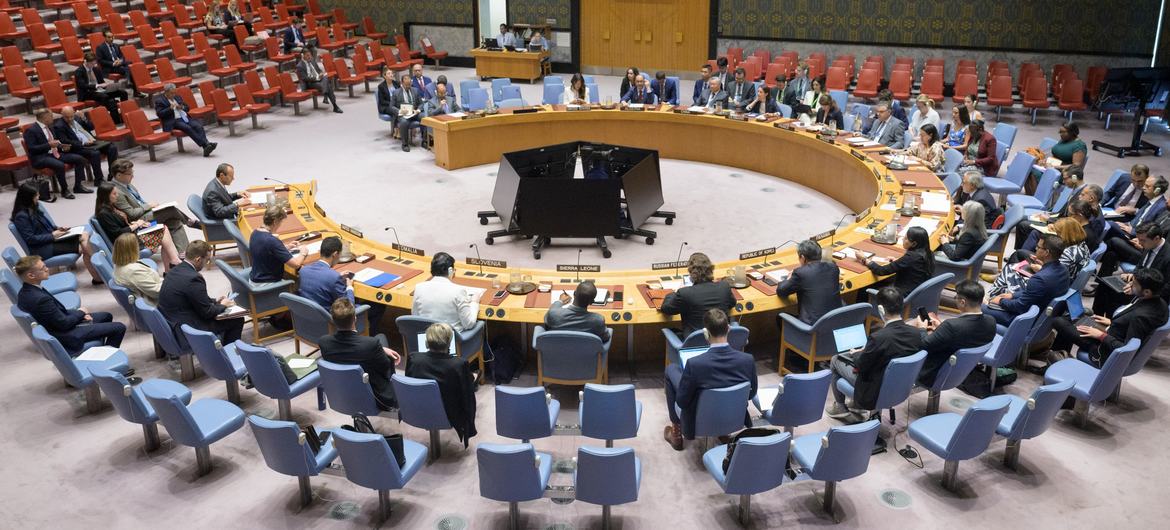
A wideview of the Security Council as ASG Khaled Khiari briefs members about cooperation between the UN and the Organisation of Islamic Cooperation.

Cooperation on global issues

Assistant Secretary-General Khiari also highlighted the growing collaboration between the two organizations on elections, including training on observation and women’s political participation. A new staff exchange programme is also helping to strengthen institutional ties.

He acknowledged the OIC’s leadership in countering Islamophobia and all forms of religious intolerance, an area where the UN has stepped up efforts, including through the appointment of a Special Envoy.

Counter-terrorism cooperation has also advanced, following a March 2024 memorandum of understanding. Joint initiatives include technical support, parliamentary engagement, and rights-based prevention strategies.

“As we move forward with the implementation of the Pact for the Future,” Mr. Khiari concluded, “the UN-OIC partnership will remain critical to defusing tensions, advancing sustainable peace, and reinforcing multilateral norms and principles.

Source link

UN-backed labour standards at risk as tariff uncertainty grows

Threatened or actual tariff increases are largely focused on taxing imports into the United States and will make the products made by factories outside the country more expensive – a situation which may drive down demand.

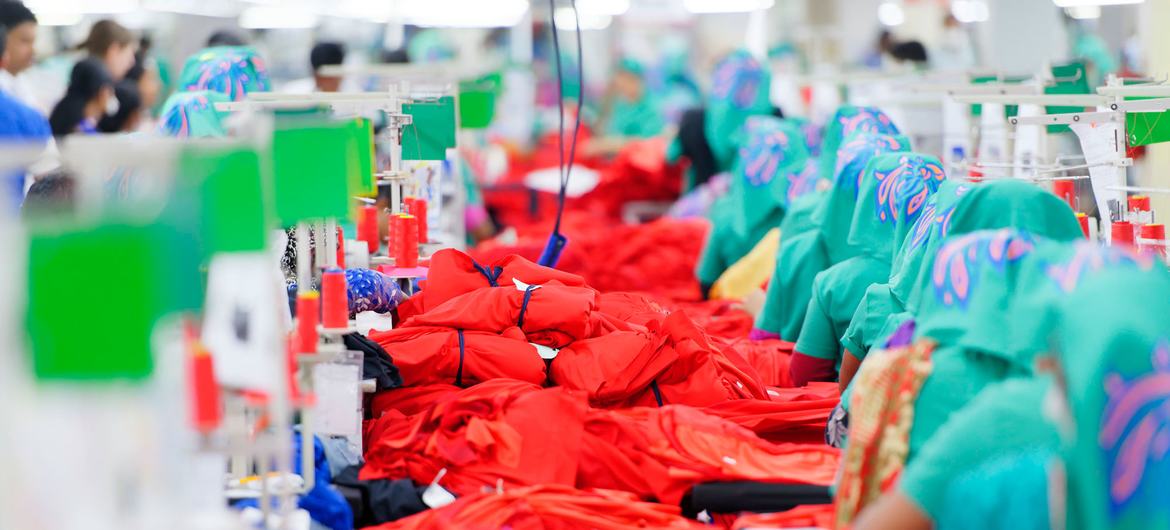
The ILO’s Better Work programme, a partnership with the International Finance Corporation (IFC), has supported garment factories, many of which export their products to the United States.

The ILO’s Sara Park explained to UN News what could happen next.

Sara Park: Better Work currently operates in the garment, textile and footwear sector in 13 countries around the world.

It was set up 24 years ago in Cambodia to monitor the working conditions in garment factories and since then has focused on improvement and capacity building of factories and our constituencies in the sector, for example occupational safety and health.

There are other elements that support the sector to promote social dialogue, safe and decent work which includes fair wages and working hours. The programme has also helped build productivity in those sectors.

UN News: How is the ILO involved?

Sara Park: The ILO is a tripartite organization, so we work with governments, employers, the unions who represent workers, usually Ministries of Labour, but also with ministries of trade or commerce because the programme focuses on exports.

© Better Work/Aron Simeneh

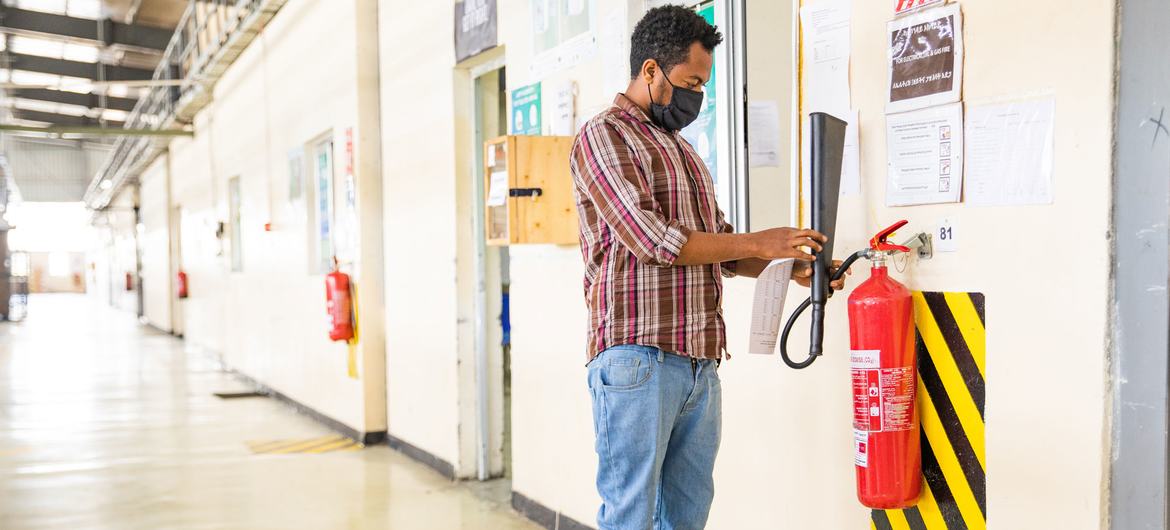
A worker at a factory in Ethiopia carries out an inspection on fire safety equipment.

But what maybe makes us different from other projects is that we have a very close collaboration with major brands from the US, UK, Europe and Japan to promote responsible business practices.

UN News: How successful has this programme been?

Sara Park: Our studies show that at the factory level we’ve made significant impact, for example by increasing wages and supporting gender-equality related issues, women’s empowerment and women getting more supervisory roles.

Over the quarter of a century of its existence, Better Work has lifted millions of people out of poverty and reduced the environmental impact of the apparel sector by creating decent work in sustainable enterprises.

It’s still hard for unions as freedom of association remains a big challenge.

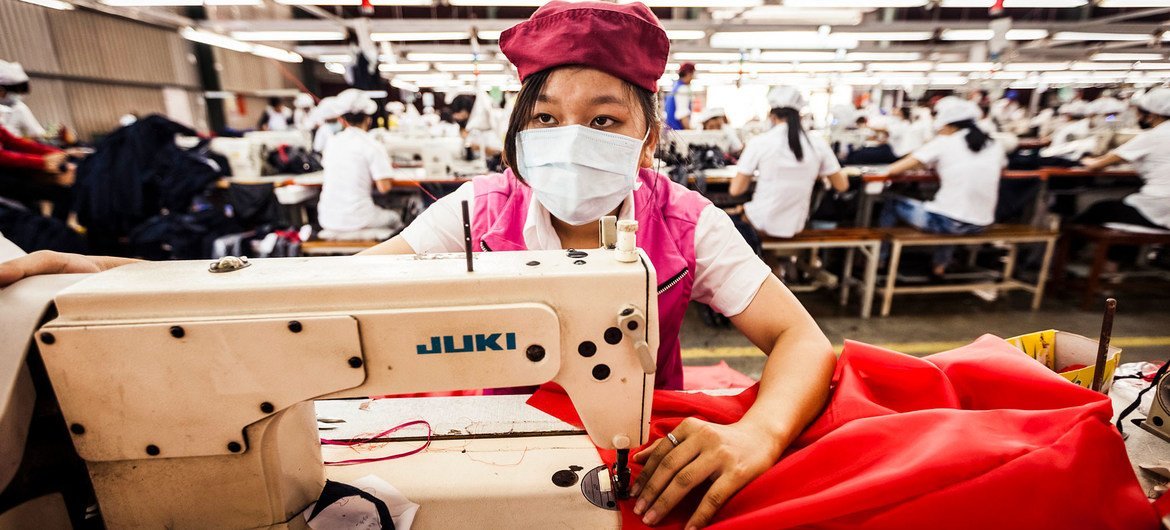
A woman works at a Better Work-affiliated factory in Viet Nam.

If you’re trying to develop a whole industry and make it competitive, it takes years if not decades; however, we have seen improvements in the factories where we work.

Better Work-enrolled factories have also reported an increase in orders from buyers.

UN News: So, this is good for business as well?

Sara Park: This is good for business, and productivity in individual factories. Governments also tell us that the programme supports confidence and thus growth of the industry as a whole in participating countries.

© Better Work/Marcel Crozet

Garment employees work on a production line of an exporting clothing plant in Jordan.

UN News: How has Better Work been affected by recent global changes in development funding?

Sara Park: As we know from recent developments, the US Government has cut funding and that has affected our programmes in Haiti and Jordan, which were almost fully funded by the US. The other countries have not been affected, as we are lucky to have very diverse funding.

UN News: Why is the ILO’s ongoing support needed once the relationship between factory and the buyer is set up?

Sara Park: The buyers, which are often well-known companies, require a sustainable way of monitoring working conditions to ensure they are in compliance with international labour standards; this is important to eliminate risk from the buyers’ perspective.

The Better Work programme supports improvements in factories, by conducting assessments, advisory and learning sessions and helps all parties to better understand compliance with the standards. It also works with governments, workers and employers to build capacity.

© Better Work/Feri Latief

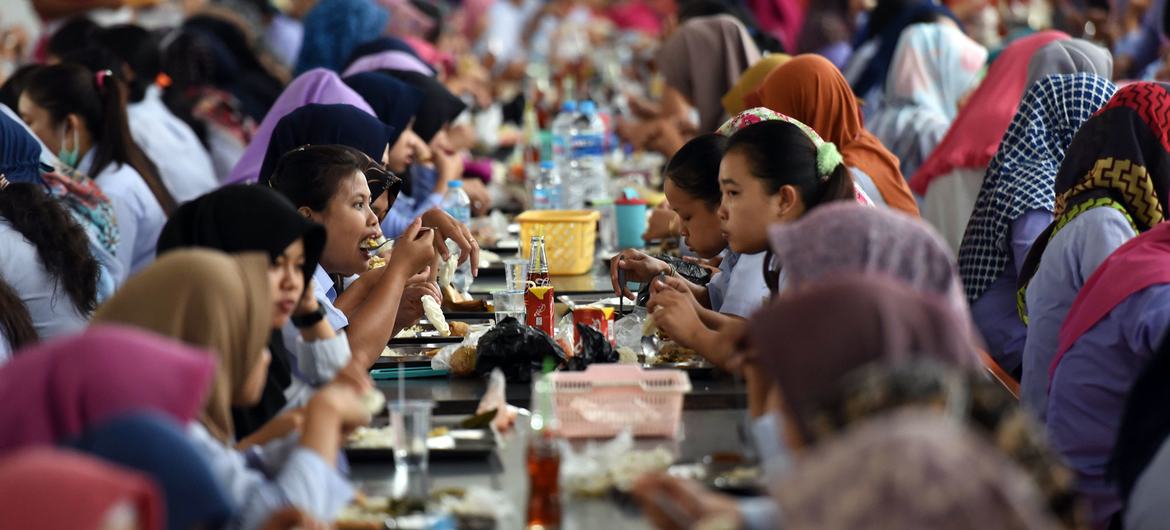
Workers take their lunch break at a garment factory in Indonesia.

UN News: Currently there is widespread uncertainty about tariffs, the taxing of imported goods particularly into the United States. How is the garment sector impacted?

Sara Park: At the moment, we don’t know what the impact will be. Governments are monitoring the situation. Employers and, of course, the unions are worried.

It is extremely challenging for factories as uncertainty means they cannot plan even for the short term, as they don’t know what orders they will have. They are also concerned about paying workers.

Better Work-enrolled factories are providing primarily jobs in the formal sector; if they close, then those jobs may move to the informal sector where workers have fewer protections.

In countries like Jordan for example, migrants make up the majority of the workforce in the garment industry, most of them come from South and Southeast Asia.

UN News: How is this uncertainty impacting investment in the global garment industry?

Sara Park: During periods of crisis or uncertainty, investment generally pauses. One concern is that factories stop investing in improving working conditions, which could affect occupational safety and health.

For example, heat stress is a serious issue. Recently, in Pakistan temperatures reached 50 degrees Celsius so action needs to be taken to protect workers. This may not happen if investment dries up.

UN News: What would you say to a garment worker who was worried about his or her job?

Sara Park: We understand this is a worry for many workers. Yet the work of the ILO is continuing to ensure that workers are protected and the ILO remains in those countries and is committed to improving conditions for all workers across different sectors.

We will continue to promote social dialogue because that’s how improvements can be made at factory, sectoral and national level.


Source link

MIDDLE EAST LIVE: Security Council meets on Gaza crisis as starvation threat grows

The Security Council will meet on Tuesday to discuss the situation in the Middle East, with French Foreign Minister Jean-Noël Barrot presiding. The UN Secretary-General is expected to brief ambassadors as the humanitarian crisis in Gaza deepens, with reports from the UN Palestine refugee relief agency (UNRWA) this morning that children are “going to bed starving” amid the two-month Israeli aid blockade and continuing bombardment. App users can follow coverage here.

Source link