India–U.S. Deal: What We Know, What We Don’t

The announcement by U.S. President Donald Trump and Prime Minister Narendra Modi that Washington will cut its “reciprocal” tariffs on Indian goods from 25% to 18% has brought immediate relief to Indian exporters and signalled a thaw after nearly a year of strained ties. The rollback also includes the removal of a punitive 25% penalty tariff imposed last August, which had pushed total U.S. tariffs on Indian exports to 50%, among the highest in the world, on par with Brazil.

Yet, beyond the headline tariff cut, the statements from Washington and New Delhi diverge sharply. While Mr. Trump has framed the move as part of a sweeping trade deal involving oil, investments and zero tariffs, Mr. Modi has confined himself to welcoming the tariff relief alone. This gap leaves several fundamental questions unanswered.

Is There Actually a US-India Trade Deal?

Mr. Trump’s repeated references to a “Trade Deal” have created ambiguity over whether the two sides have concluded a comprehensive agreement or merely agreed on a tariff rollback. One possibility is that he is referring to the long-discussed “first tranche” of an India–U.S. Free Trade Agreement (FTA), negotiations for which gathered pace after Mr. Modi’s visit to Washington in February 2025.

If so, the absence of detail is striking. Unlike the EU–India FTA concluded last week, where the negotiated text and scope were clearly outlined, neither Washington nor New Delhi has released any documentation, timelines or sectoral commitments for an India–U.S. FTA. Tariffs, non-tariff barriers, market access and investment rules were all meant to be part of this package, yet none of these elements has been formally disclosed.

Compounding the uncertainty is Mr. Trump’s claim that India has agreed to reduce “Tariffs and Non-Tariff Barriers against the United States, to ZERO”. New Delhi has not confirmed this, nor clarified which tariff lines would be reduced to zero. Sensitive sectors such as agriculture, particularly soyabean and dairy, which India has consistently opposed, remain conspicuously unaddressed.

The confusion is not new. In January, U.S. Commerce Secretary Howard Lutnick said a deal had been ready for months but stalled because, according to him, Mr. Modi did not make a phone call to clinch it, a claim the Ministry of External Affairs (MEA) firmly denied.

Does 18% Figure Indicate Level Playing Field for India?

The reduction to 18% is unquestionably an improvement from the earlier 25% rate imposed in April 2025. That earlier hike had left Indian exporters worse off than many regional competitors: Bangladesh and Vietnam faced tariffs of around 20%, Pakistan 19%, while China’s 34% rate was largely deferred until November 2026.

For labour-intensive sectors such as apparel, and for gems and jewellery exporters who were among the hardest hit, the new rate restores some competitiveness. However, Indian exporters are still not on equal footing. Many neighbouring and Asian economies continue to enjoy a Generalised System of Preferences (GSP) concession of about 5%, a benefit the U.S. withdrew from India in June 2019 during Mr. Trump’s first term.

As a result, Indian industry had hoped that any revised reciprocal tariff would land closer to 15%, not 18%. The current rate narrows the gap, but does not eliminate it.

What Is Actually Happening With Russian Oil?

Perhaps the most contentious claim from Washington is Mr. Trump’s assertion that Mr. Modi has “agreed to stop buying Russian Oil, and to buy much more from the United States and, potentially, Venezuela”, a move he linked to ending the war in Ukraine. The MEA has so far declined to comment on this assertion.

This silence matters because it cuts against India’s long-stated position. When the U.S. imposed a 25% penalty tariff last August over India’s Russian oil purchases, the MEA called the move “unfair, unjustified and unreasonable”, stressing that energy imports are driven by “market factors” and the need to ensure energy security.

In practice, however, India’s Russian oil imports have already been declining. After peaking in 2024, refiners began scaling back purchases. In October, imports of Russian Ural crude fell about 38% year-on-year. By December, the trend had deepened.

According to the European Centre for Research on Energy and Clean Air (CREA), “India’s Russian crude imports recorded a sharp 29% month-on-month reduction to the lowest volumes since the implementation of the price cap policy.” On January 6, 2026, Reliance Industries said it would not receive any Russian oil in January and had not taken Russian crude for the previous three weeks.

The key question is whether these reductions reflect commercial recalibration, or a political commitment now being formalised under U.S. pressure.

India Under US Sanctions Pressure?

There is historical precedent for concern. In 2019, India “zeroed out” imports of Iranian and Venezuelan oil after U.S. sanctions threats, with then U.S. Ambassador Nikki Haley publicly pressing New Delhi. Following the U.S. operation against Venezuelan President Nicolás Maduro in January this year, Mr. Trump has suggested that Washington would now “allow” imports of Venezuelan oil, a position that offers India flexibility, but also underscores how contingent its energy choices appear on U.S. approval.

The pressure extends beyond oil. The U.S. has warned of 25% tariffs on countries doing business with Iran and has withdrawn the sanctions waiver for Indian investment in Iran’s Chabahar port. Government sources indicate India is prepared to give up its “minimal levels” of trade with Iran to avoid further tariffs.

Significantly, the Union Budget presented on February 1 makes no allocation for Chabahar in the coming year. After 23 years of strategic investment, this omission suggests New Delhi may be preparing to pause or retreat from the project until the sanctions environment eases.

What’s $500 Billion Commitment?

Mr. Trump’s claim that Mr. Modi committed to “BUY AMERICAN” at a much higher level, including purchases of over $500 billion in U.S. energy, technology, agricultural products, coal and more, is one of the boldest assertions yet the least substantiated.

The MEA has declined to confirm any such commitment. Context matters here. India–U.S. bilateral trade in goods currently stands at about $131 billion. India’s cumulative investment in the U.S. has hovered around $40 billion.

A $500 billion figure, therefore, can only be meaningful if spread over many years and across multiple sectors, much like similar claims Mr. Trump has made about the European Union, Japan and others following their trade deals. Without timelines, sectoral break-ups or binding mechanisms, the number functions more as a political headline than a verifiable obligation.

The tariff cut to 18% is real, immediate and economically significant. Beyond that, much remains unresolved. The gulf between Washington’s expansive claims and New Delhi’s carefully limited confirmations raises fundamental questions about the scope of the agreement, India’s energy autonomy, and the true balance of concessions.

Until the fine print is released, the India–U.S. deal remains less a finished treaty and more a framework shaped as much by geopolitics and pressure as by trade economics.

UN-backed labour standards at risk as tariff uncertainty grows

Threatened or actual tariff increases are largely focused on taxing imports into the United States and will make the products made by factories outside the country more expensive – a situation which may drive down demand.

The ILO’s Better Work programme, a partnership with the International Finance Corporation (IFC), has supported garment factories, many of which export their products to the United States.

The ILO’s Sara Park explained to UN News what could happen next.

Sara Park: Better Work currently operates in the garment, textile and footwear sector in 13 countries around the world.

It was set up 24 years ago in Cambodia to monitor the working conditions in garment factories and since then has focused on improvement and capacity building of factories and our constituencies in the sector, for example occupational safety and health.

There are other elements that support the sector to promote social dialogue, safe and decent work which includes fair wages and working hours. The programme has also helped build productivity in those sectors.

UN News: How is the ILO involved?

Sara Park: The ILO is a tripartite organization, so we work with governments, employers, the unions who represent workers, usually Ministries of Labour, but also with ministries of trade or commerce because the programme focuses on exports.

© Better Work/Aron Simeneh

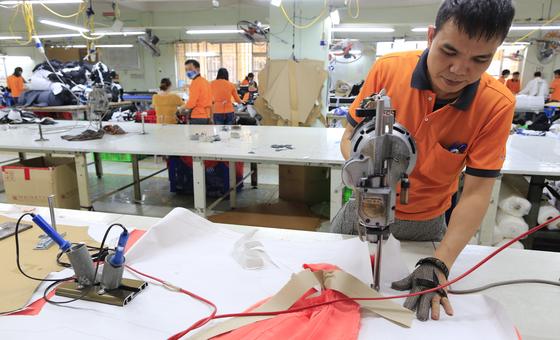
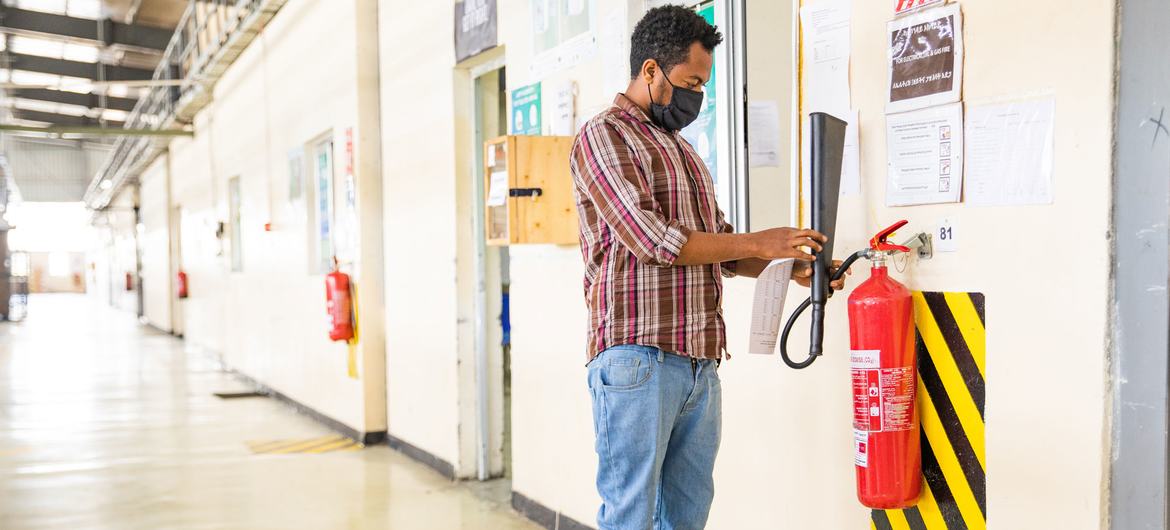
A worker at a factory in Ethiopia carries out an inspection on fire safety equipment.

But what maybe makes us different from other projects is that we have a very close collaboration with major brands from the US, UK, Europe and Japan to promote responsible business practices.

UN News: How successful has this programme been?

Sara Park: Our studies show that at the factory level we’ve made significant impact, for example by increasing wages and supporting gender-equality related issues, women’s empowerment and women getting more supervisory roles.

Over the quarter of a century of its existence, Better Work has lifted millions of people out of poverty and reduced the environmental impact of the apparel sector by creating decent work in sustainable enterprises.

It’s still hard for unions as freedom of association remains a big challenge.

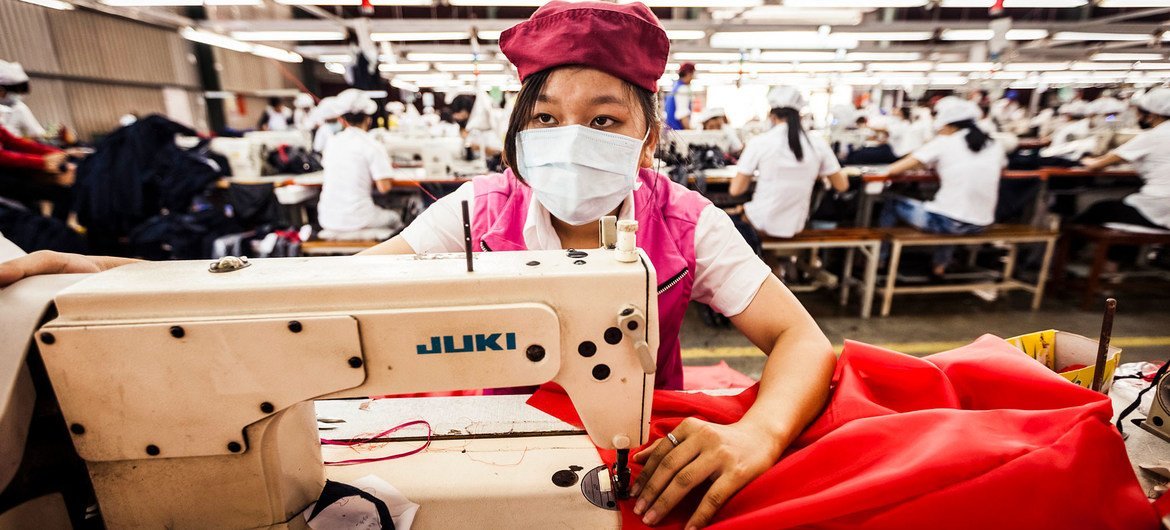
A woman works at a Better Work-affiliated factory in Viet Nam.

If you’re trying to develop a whole industry and make it competitive, it takes years if not decades; however, we have seen improvements in the factories where we work.

Better Work-enrolled factories have also reported an increase in orders from buyers.

UN News: So, this is good for business as well?

Sara Park: This is good for business, and productivity in individual factories. Governments also tell us that the programme supports confidence and thus growth of the industry as a whole in participating countries.

© Better Work/Marcel Crozet

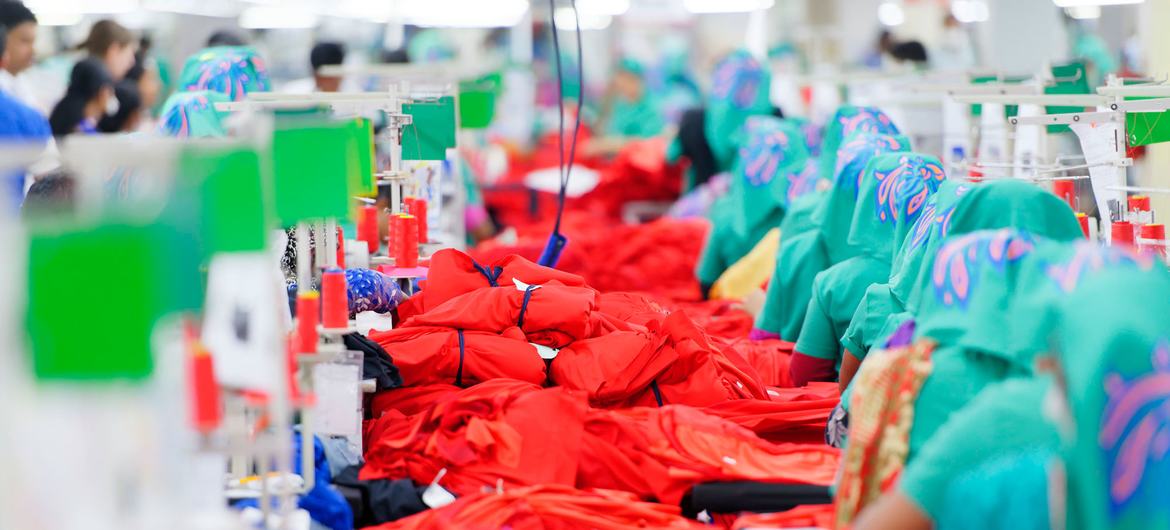
Garment employees work on a production line of an exporting clothing plant in Jordan.

UN News: How has Better Work been affected by recent global changes in development funding?

Sara Park: As we know from recent developments, the US Government has cut funding and that has affected our programmes in Haiti and Jordan, which were almost fully funded by the US. The other countries have not been affected, as we are lucky to have very diverse funding.

UN News: Why is the ILO’s ongoing support needed once the relationship between factory and the buyer is set up?

Sara Park: The buyers, which are often well-known companies, require a sustainable way of monitoring working conditions to ensure they are in compliance with international labour standards; this is important to eliminate risk from the buyers’ perspective.

The Better Work programme supports improvements in factories, by conducting assessments, advisory and learning sessions and helps all parties to better understand compliance with the standards. It also works with governments, workers and employers to build capacity.

© Better Work/Feri Latief

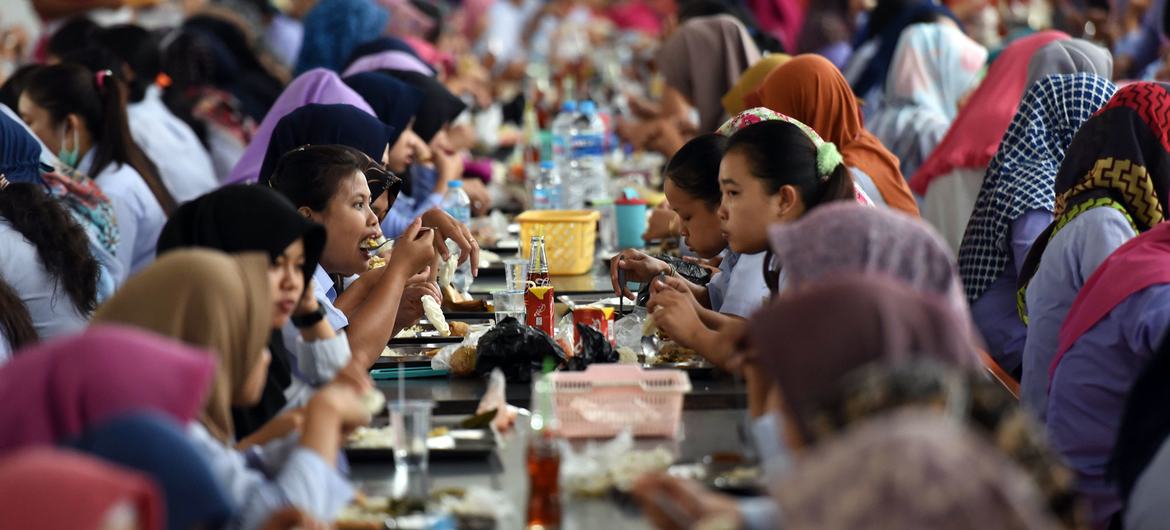
Workers take their lunch break at a garment factory in Indonesia.

UN News: Currently there is widespread uncertainty about tariffs, the taxing of imported goods particularly into the United States. How is the garment sector impacted?

Sara Park: At the moment, we don’t know what the impact will be. Governments are monitoring the situation. Employers and, of course, the unions are worried.

It is extremely challenging for factories as uncertainty means they cannot plan even for the short term, as they don’t know what orders they will have. They are also concerned about paying workers.

Better Work-enrolled factories are providing primarily jobs in the formal sector; if they close, then those jobs may move to the informal sector where workers have fewer protections.

In countries like Jordan for example, migrants make up the majority of the workforce in the garment industry, most of them come from South and Southeast Asia.

UN News: How is this uncertainty impacting investment in the global garment industry?

Sara Park: During periods of crisis or uncertainty, investment generally pauses. One concern is that factories stop investing in improving working conditions, which could affect occupational safety and health.

For example, heat stress is a serious issue. Recently, in Pakistan temperatures reached 50 degrees Celsius so action needs to be taken to protect workers. This may not happen if investment dries up.

UN News: What would you say to a garment worker who was worried about his or her job?

Sara Park: We understand this is a worry for many workers. Yet the work of the ILO is continuing to ensure that workers are protected and the ILO remains in those countries and is committed to improving conditions for all workers across different sectors.

We will continue to promote social dialogue because that’s how improvements can be made at factory, sectoral and national level.

Source link

US tariff delay deepens trade uncertainty, warns top UN economist

While the initial 90-day pause on so-called “reciprocal” tariffs offered some relief compared to planned increases of up to 50 per cent, the US imposed a 10 per cent baseline tariff instead, added on top of existing duties. This means many countries – especially developing economies – faced higher costs exporting goods to the US.

The tariff suspension, originally set to expire soon, has now been extended until August 1, further prolonging uncertainty, Pamela Coke-Hamilton, Executive Director of the International Trade Centre (ITC), told reporters at a regular news briefing at the UN Office in Geneva (UNOG).

She warned this move adds to a mounting “dual shock” of rising trade restrictions and deep cuts to development aid, which hit developing countries the hardest.

ITC is a joint United Nations-World Trade Organization (WTO) agency supporting businesses in developing countries.

Real-world consequences

Economic uncertainty has real-world consequences on countries and sectors,” Ms. Coke-Hamilton said, citing the volatility in gold and precious metals flows as a case in point.

After the US exempted those commodities from the new tariffs, trade volumes surged – with gold imports into Switzerland up 800 per cent year-on-year in May, based on US import data.

Ms. Coke-Hamilton said that since the beginning of the year, ITC has tracked more than 150 new restrictive trade measures globally.

Layered onto existing global trade disruptions since the start of the war in Ukraine, the resulting strain has disproportionately impacted least developed countries (LDCs), which often face the steepest tariffs and the narrowest fiscal space to respond.

A ‘perfect storm’ is brewing

Lesotho, for instance, faces a 50 per cent tariff on apparel exports to the US, threatening its largest industry and tens of thousands of jobs. Viet Nam, though having negotiated a lower tariff, faces a 20 per cent levy – double the current baseline rate – potentially reshaping its $937 million auto and auto-related trade with the US.

Ms. Coke-Hamilton also flagged concerns over cuts in development financing, noting that G7 countries are projected to reduce aid spending by 28 per cent next year – the largest drop in five decades.

A perfect storm is brewing – just as trade becomes more unpredictable, external support through aid is also shrinking,” she said.

Navigating the challenges

To respond, she urged developing countries to focus on three strategic responses: strengthening regional value chains, investing in value addition to reduce commodity dependence and prioritising small business resilience.

Stability can come from the ground up,” she said.

Although uncertainties lie ahead in both the trade and aid landscapes, developing countries can still find ways not only to navigate these challenges, but to take on an active role in bringing about greater stability.

Source link