World News in Brief: Floods in Syria, relief operations in Cuba at risk, ending child labour

According to the relief coordination office, OCHA, rainfall since Saturday caused widespread flooding across parts of Idleb and northern Latakia, damaging around 1,800 tents and destroying at least 150 in camps housing displaced families.

A local hospital was also forced to suspend operations, with patients having been evacuated and mobile medical teams deployed. Authorities have opened shelters and prepared additional housing for families in need.

Humanitarian partners are relocating displaced families, repairing damaged shelters and delivering emergency assistance, including food and non-food items, OCHA said.

In a separate incident linked to the response, a Syrian Arab Red Crescent staff member was killed and five others injured when their vehicle crashed while assisting flood-affected communities.

Displacement still widespread

The flooding comes as displacement persists in other parts of the country.

While fighting has subsided in the governorates of Aleppo, Al-Hasakeh and Ar-Raqqa following a 30 January accord, nearly 160,000 people remain displaced as of 3 February.

Humanitarian access has improved in some areas, but major challenges remain. Electricity outages continue to disrupt water systems, telecommunications are intermittent, food supplies are limited, explosive ordnance is still a threat and schools remain suspended.

Hurricane Melissa struck Cuba in late October 2025, causing massive devastation across the island nation.

Cuba: UN urges funding as fuel shortages strain essential services

The United Nations is calling for urgent funding to support humanitarian operations in Cuba, where fuel shortages following the suspension of supplies from Venezuela are disrupting essential services and hampering recovery efforts following last year’s Hurricane Melissa.

“The UN continues to monitor the situation in the country and is working with the Government to provide more support, including food, water and sanitation, and healthcare,” UN Spokesperson Stéphane Dujarric said at a regular news briefing in New York.

“We are concerned about the growing fuel shortages and their impact on people,” he added, noting that disruptions to the delivery of clean water, medical care, food and other critical aid.

UN action plan

In November 2025, the UN in Cuba launched a Plan of Action to support the national response to Hurricane Melissa, which affected more than two million people – roughly one in five residents nationwide.

The plan focuses on helping families recover and restoring essential services, while supporting longer-term recovery efforts led by national authorities.

The Plan of Action seeks $74 million but is currently only 23 per cent funded.

Global conference seeks renewed push to end child labour

An international effort to accelerate the elimination of child labour will get underway later this week in Morocco, as governments and partners meet to confront a crisis still affecting 138 million children worldwide.

From 11 to 13 February, Morocco will host the sixth Global Conference on the Elimination of Child Labour, led by the UN International Labour Organization (ILO) and bringing together governments, employers’ and workers’ organizations, civil society, the private sector and international partners.

The meeting comes at a critical moment.

According to UN estimates, 138 million children remain in child labour globally, including around 54 million engaged in hazardous work that threatens their health, safety and development. Africa accounts for 87 million of those children.

Agriculture remains the largest driver, accounting for 61 per cent of child labour globally, particularly in smallholder farming.

Child’s place is in school

ILO Director-General Gilbert Houngbo underscored the link between decent work and child protection, saying: “Children belong in school, not in labour. Parents must themselves be supported and have access to decent work so that they can afford to ensure that their children are in classrooms.”

While progress has been made – child labour has nearly halved since 2000 and declined by more than 20 million since 2020 – the world missed the Sustainable Development Goal target to eliminate child labour in all its forms by 2025.

Source link

UN-backed labour standards at risk as tariff uncertainty grows

Threatened or actual tariff increases are largely focused on taxing imports into the United States and will make the products made by factories outside the country more expensive – a situation which may drive down demand.

The ILO’s Better Work programme, a partnership with the International Finance Corporation (IFC), has supported garment factories, many of which export their products to the United States.

The ILO’s Sara Park explained to UN News what could happen next.

Sara Park: Better Work currently operates in the garment, textile and footwear sector in 13 countries around the world.

It was set up 24 years ago in Cambodia to monitor the working conditions in garment factories and since then has focused on improvement and capacity building of factories and our constituencies in the sector, for example occupational safety and health.

There are other elements that support the sector to promote social dialogue, safe and decent work which includes fair wages and working hours. The programme has also helped build productivity in those sectors.

UN News: How is the ILO involved?

Sara Park: The ILO is a tripartite organization, so we work with governments, employers, the unions who represent workers, usually Ministries of Labour, but also with ministries of trade or commerce because the programme focuses on exports.

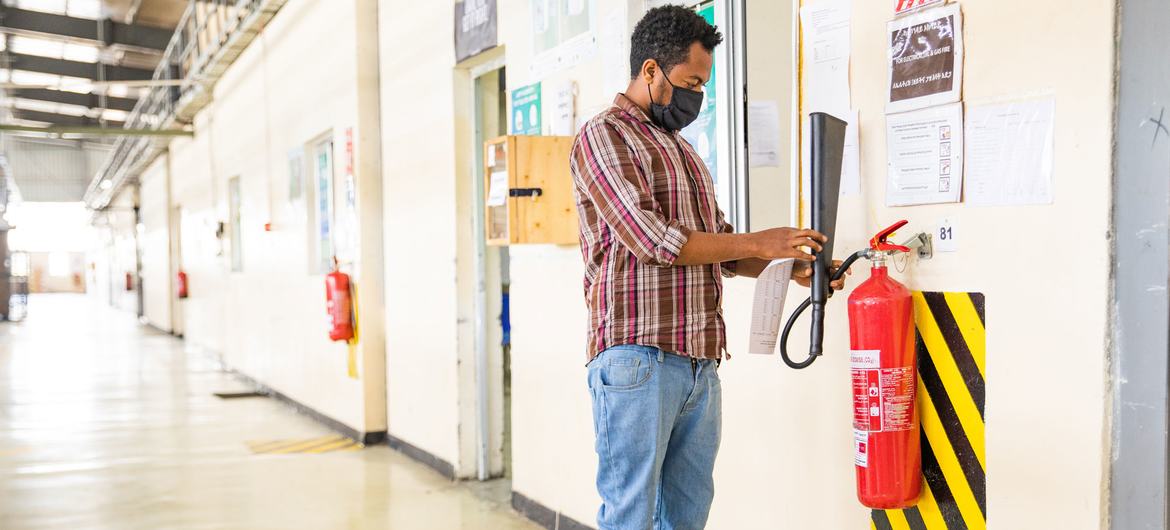
© Better Work/Aron Simeneh

A worker at a factory in Ethiopia carries out an inspection on fire safety equipment.

But what maybe makes us different from other projects is that we have a very close collaboration with major brands from the US, UK, Europe and Japan to promote responsible business practices.

UN News: How successful has this programme been?

Sara Park: Our studies show that at the factory level we’ve made significant impact, for example by increasing wages and supporting gender-equality related issues, women’s empowerment and women getting more supervisory roles.

Over the quarter of a century of its existence, Better Work has lifted millions of people out of poverty and reduced the environmental impact of the apparel sector by creating decent work in sustainable enterprises.

It’s still hard for unions as freedom of association remains a big challenge.

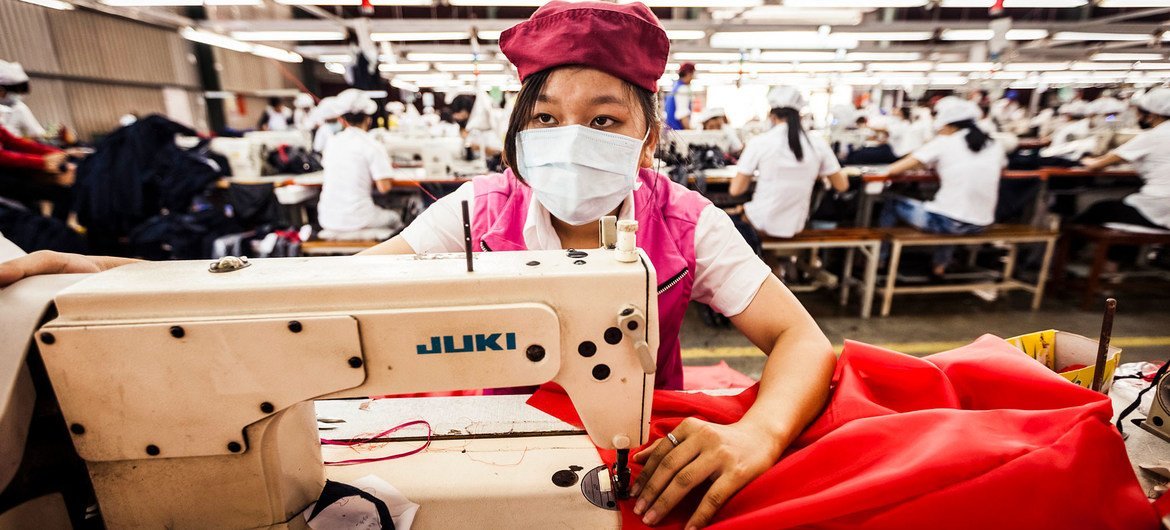
A woman works at a Better Work-affiliated factory in Viet Nam.

If you’re trying to develop a whole industry and make it competitive, it takes years if not decades; however, we have seen improvements in the factories where we work.

Better Work-enrolled factories have also reported an increase in orders from buyers.

UN News: So, this is good for business as well?

Sara Park: This is good for business, and productivity in individual factories. Governments also tell us that the programme supports confidence and thus growth of the industry as a whole in participating countries.

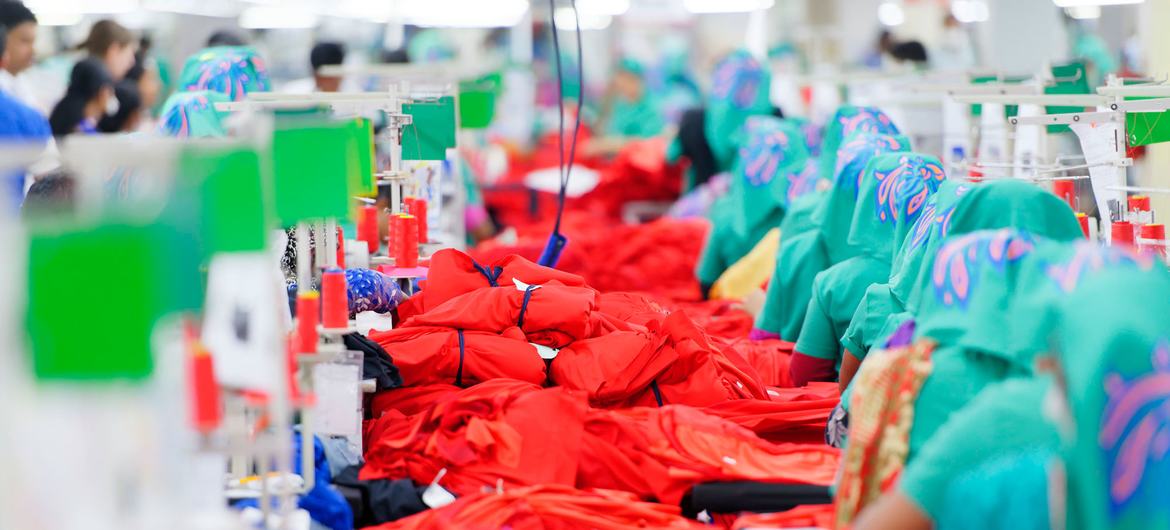
© Better Work/Marcel Crozet

Garment employees work on a production line of an exporting clothing plant in Jordan.

UN News: How has Better Work been affected by recent global changes in development funding?

Sara Park: As we know from recent developments, the US Government has cut funding and that has affected our programmes in Haiti and Jordan, which were almost fully funded by the US. The other countries have not been affected, as we are lucky to have very diverse funding.

UN News: Why is the ILO’s ongoing support needed once the relationship between factory and the buyer is set up?

Sara Park: The buyers, which are often well-known companies, require a sustainable way of monitoring working conditions to ensure they are in compliance with international labour standards; this is important to eliminate risk from the buyers’ perspective.

The Better Work programme supports improvements in factories, by conducting assessments, advisory and learning sessions and helps all parties to better understand compliance with the standards. It also works with governments, workers and employers to build capacity.

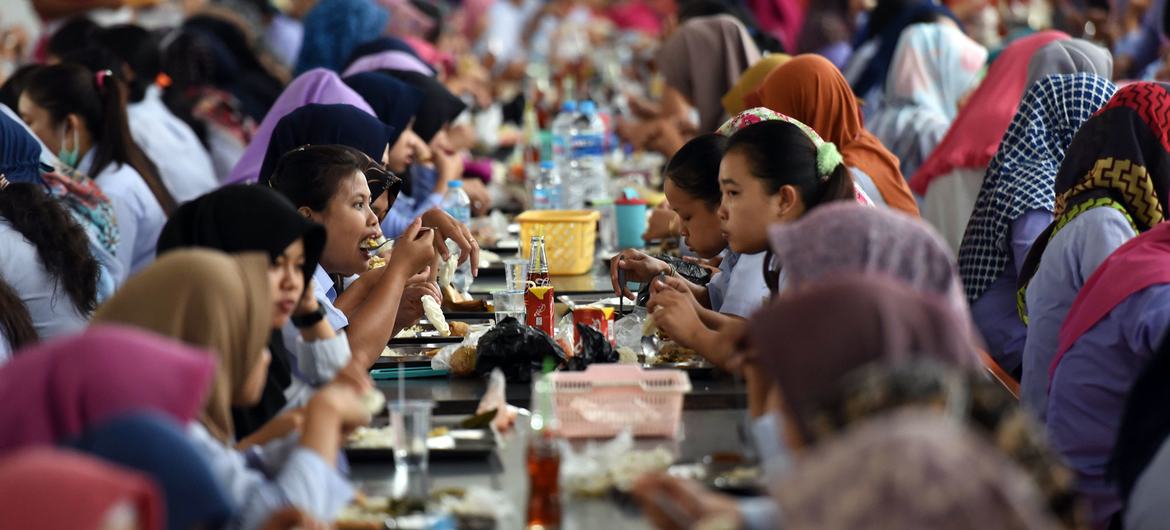
© Better Work/Feri Latief

Workers take their lunch break at a garment factory in Indonesia.

UN News: Currently there is widespread uncertainty about tariffs, the taxing of imported goods particularly into the United States. How is the garment sector impacted?

Sara Park: At the moment, we don’t know what the impact will be. Governments are monitoring the situation. Employers and, of course, the unions are worried.

It is extremely challenging for factories as uncertainty means they cannot plan even for the short term, as they don’t know what orders they will have. They are also concerned about paying workers.

Better Work-enrolled factories are providing primarily jobs in the formal sector; if they close, then those jobs may move to the informal sector where workers have fewer protections.

In countries like Jordan for example, migrants make up the majority of the workforce in the garment industry, most of them come from South and Southeast Asia.

UN News: How is this uncertainty impacting investment in the global garment industry?

Sara Park: During periods of crisis or uncertainty, investment generally pauses. One concern is that factories stop investing in improving working conditions, which could affect occupational safety and health.

For example, heat stress is a serious issue. Recently, in Pakistan temperatures reached 50 degrees Celsius so action needs to be taken to protect workers. This may not happen if investment dries up.

UN News: What would you say to a garment worker who was worried about his or her job?

Sara Park: We understand this is a worry for many workers. Yet the work of the ILO is continuing to ensure that workers are protected and the ILO remains in those countries and is committed to improving conditions for all workers across different sectors.

We will continue to promote social dialogue because that’s how improvements can be made at factory, sectoral and national level.


Source link

The world pledged to end child labour by 2025: So why are 138 million kids still working?

There are 10,000 children in Madagascar who, like Tenasoa, work in the largely unregulated mica industry. The silicate is used in paints, car parts, and cosmetics – to add a “shimmer” effect. 

Alongside parents and grandparents, these children toil in dangerous conditions, inhaling harmful dust particles and entering structurally unsound tunnels. Many of them have dropped out of school – if they ever went at all. 

If we don’t work, we don’t eat,” Soja, Tenasoa’s grandfather, said. “It’s very simple. Men, women and children must all work to survive.”

In 2015, the United Nations set a goal to end child labour worldwide by 2025 but progress has been slow and halting, according to the Child Labour Report released on Wednesday by the International Labour Organization (ILO) and the UN Children’s Fund (UNICEF).

The report estimates that 138 million children – a 12 million decrease from 2020 – are still engaged in child labour, leading both ILO and UNICEF to call for the rapid acceleration of progress.

The findings of our report offer hope and show that progress is possible … But we must not be blindsided by the fact that we still have a long way to go,” ILO Director-General Gilbert F. Houngbo said.

Hazardous work

Since 2000, the number of children in child labour has been reduced by over 100 million, a promising decrease which proves that the world has a “blueprint” to end child labour. Much work remains, however.

“Far too many children continue to toil in mines, factories or fields, often doing hazardous work to survive,” said Catherine Russell, Executive Director of UNICEF.

Child labour does not refer to all work done by children. Rather, it is work which deprives children of their childhood and is often dangerous to their health and development.

It is important to understand that [child labour] is not household chores, it is not children helping their parents around the house…We are talking about work that is oftentimes hazardous,” Benajamin Smith, an ILO child labour expert told UN News.

Of the 138 million children in child labour, 54 million work in hazardous conditions, including mines.

Honorine, aged 13, is one of these children. She works from 10am to 5pm every day in a gravel quarry in Benin. Paid by the number of buckets of gravel she collects, she is saving her wages, hoping to train to be a hairdresser one day.

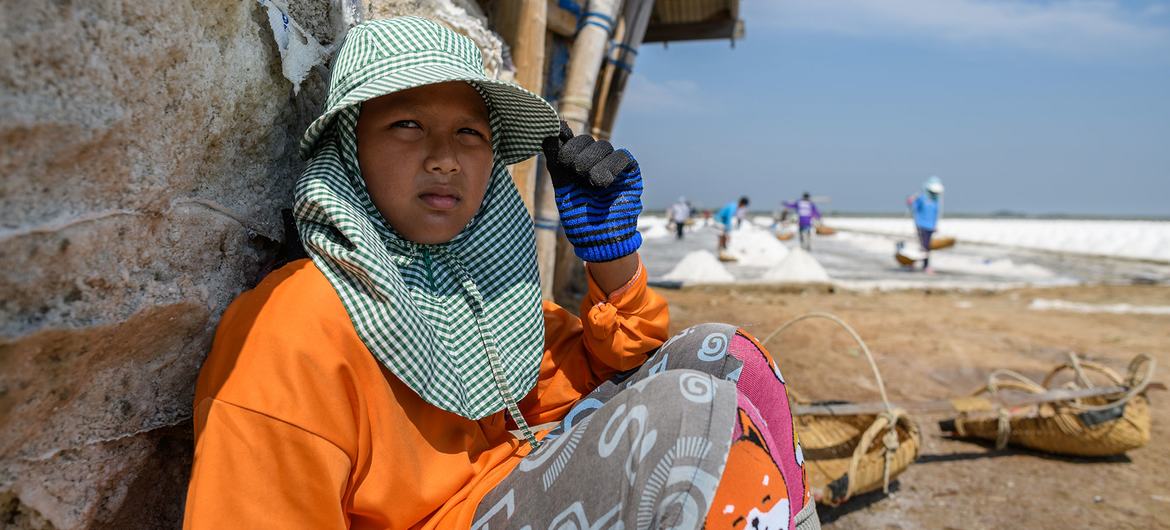
A young boy in Thailand takes a break while working in intense heat as a labourer.

Behind the statistics

The report notes that child labour is intergenerational. Children in child labour systems often struggle to access education, something which in turn compromises their future opportunities and creates a cycle of poverty and deprivation.

Federico Blanco, ILO expert and lead author of the Child Labour Report, noted that it is important to think of child labour as not just statistical.

“Behind every number, let’s remind ourselves that there is a child whose right to education, protection and decent future is being denied,” Mr Blanco said.

Nur, a 13-year-old Rohingya refugee in Bangladesh, was pulled out of school by his parents in order to help support his family financially. A case worker at a nearby UNICEF-funded centre identified Nur and convinced his family to put him back into school.

“I once dreamt of becoming a teacher. I thought I would never be able to become one. But now I feel that I can learn and become a teacher like I always wanted to,” Nur said.

‘A holistic approach’

In the report, UNICEF and ILO called for integrated policy solutions which work across governmental sectors, addressing the problem from an educational, economic and social perspective.

The report also highlighted that ending child labour cannot be accomplished without also thinking about the conditions that drive families to send their children to work – namely, poverty.

Upholding parents’ rights – including the right to collectively bargain, the right to safe work – is also key for ending child labour.

“The ILO looks at [child labour] in quite a holistic way because it is just as important [for] tackling child labour to make sure that the adults have good working conditions because poverty is really at the heart of child labour,” Mr Smith said.

Taking a country-driven approach is especially important due to regional disparities in child labour – the report noted that while all regions saw decreased numbers, Sub-Saharan Africa accounts for two-thirds of child labour worldwide.

Childhood dreams – underfunded and unfulfilled

Attempts to end child labour face significant headwinds as a result of funding shortages.

“Global funding cuts threaten to roll back hard-earned gains. We must recommit to ensuring that children are in classrooms and playgrounds, not at work,” Ms. Russell said.

Adwara, aged 10, dreams of being in class. He attended school for a few years and tried to balance work and school but with eight siblings, helping support his family was non-negotiable. Eventually, his teacher told him not to return – he was missing too much school.

Now, he works in a gold mine in Ethiopia, earning approximately $35 per day: “I’d like to go to school,” he said. “I’d like to become someone.”

Source link

AI lightens the workload – but risks remain, labour agency warns

In a new report highlighting the universal impact of the technological revolution now underway, the UN International Labour Organization (ILO) insisted that it offered a way out from so-called 3D jobs that are “dirty, dangerous and demeaning”.

Health and safety

But the ILO also warned that greater oversight is needed to prevent unexpected safety issues caused by the roll-out of AI and associated technology in the workplace.

“Digitalization offers immense opportunities to enhance workplace safety,” said Manal Azzi, Team Lead on Occupational and Safety Health Policy at the ILO.

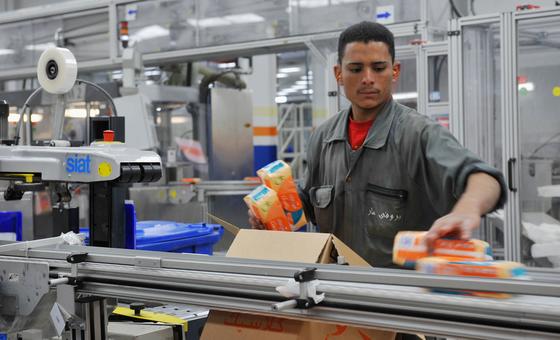
“Automation can reduce repetitive tasks, such as in factory production lines or in administrative work, allowing workers to take on more challenging tasks. But for us to fully benefit from these technologies, we must ensure they are implemented without incurring new risks.”

The ILO notes that these new tools are already revolutionizing how safety is managed across industries, from logistics to healthcare and construction. Even low-tech sectors are beginning to feel the benefits.

Here are some of the key unfamiliar risks associated with AI, robotics and digitalization:

  • Human-robot interaction: Workers who collaborate with or maintain robots may be exposed to injuries from malfunctions, unpredictable behaviour, or design flaws.
  • Cybersecurity threats: As workplaces become more connected, system failures or cyberattacks could compromise safety systems and endanger workers.
  • Ergonomic issues: Wearables and exoskeletons, if poorly designed or ill-fitting, can cause discomfort, strain, or injury rather than preventing them.
  • Mental health: Constant digital monitoring, algorithm-driven workloads and the pressure of always being connected can lead to stress, burnout, and other mental health problems.
  • Reduced human oversight: Over-reliance on automation and AI can decrease critical human judgement, potentially increasing safety risks when systems fail or make errors.
  • Digital supply chain hazards: Workers in parts of the tech supply chain, such as mining for materials in hostile environments or handling e-waste, face dangerous and often overlooked conditions.

Source link