Civilians and aid operations under fire as Sudan airstrikes intensify

Two children were reportedly killed and 13 others injured in a drone strike on a mosque in Al-Rahad, North Kordofan, where all the victims were students at the adjoining school. The attack came just hours after a primary school in Dilling, South Kordofan, was hit, with further injuries reported. 

WFP warehouse hit 

The warehouse of the UN World Food Programme (WFP) in the South Kordofan capital, Kadugli, also was struck by suspected rockets, significantly damaging buildings and mobile storage units.  

Recent days have also seen drone strikes reported in other parts of South Kordofan, North Kordofan and West Kordofan states, UN Spokesperson Stéphane Dujarric told journalists in New York. 

Strikes have occurred close to key supply routes linking the city of El Obeid in North Kordofan to Dilling and Kadugli in South Kordofan, and this is endangering civilians, including humanitarian workers. 

Not a target 

The fact that we have to reiterate almost every day that civilians and civilian infrastructure, places of worship, schools and hospitals cannot and should not be targeted is a tragedy into itself,” he said. 

“Yet, we have to remind the parties of this almost every day and that they need to respect international humanitarian law.”  

Meanwhile, the UN and partners continue their efforts to provide humanitarian assistance to the Sudanese people. 

The war between the national army and former allies-turned-rivals the Rapid Support Forces (RSF) – which erupted in April 2023 – has sparked the world’s worst humanitarian crisis, with some 30 million people in need of assistance. 

Aid convoy breakthrough 

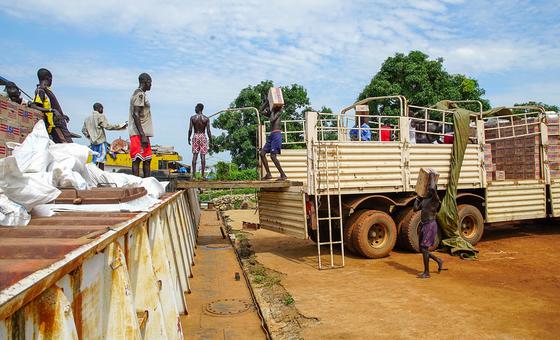
Mr. Dujarric said a multi-agency UN convoy made up of 41 trucks carrying nearly 800 metric tonnes of food and other essential supplies departed El Obeid for Kadugli on Tuesday, marking a significant breakthrough along a previously closed route. 

In South Kordofan, humanitarians have distributed nearly 600 metric tonnes of food to nearly 70,000 people, but the continued arrival of families fleeing their homes is depleting what limited stocks are available.  

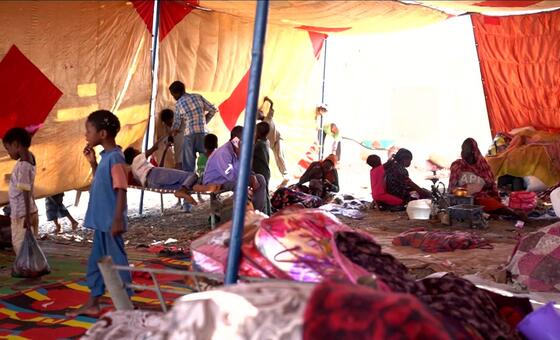
More than 115,000 people have been displaced across the Kordofan region since late October, according to the International Organization for Migration (IOM). 

Diplomatic concern 

The UN and four other organizations working to promote political dialogue in Sudan voiced grave concern at the continued escalation of the conflict in a statement issued on Wednesday. 

The Quintet – which comprises the African Union (AU), East African bloc IGAD, the League of Arab States (LAS), the European Union (EU) and the UN – expressed particular alarm over the rapidly deteriorating situation in the Kordofan region and Blue Nile state. 

The statement highlighted the urgent need for action, citing: 
• Deadly drone strikes and tightening sieges around population centres 
• Attacks on hospitals, schools and humanitarian assets 
• Widespread displacement and severe constraints on humanitarian access 
• Direct attacks on humanitarian aid convoys 

Protect civilians, allow aid access 

The Quintet recalled the horrors that occurred in El Fasher, capital of North Darfur state, “and the repeated warnings issued ahead of those atrocities that went unheeded with devastating consequences for civilians”. 

The city was under siege by the RSF for more than a year during which crimes such as rapes, executions, mass killings, attacks on displacement were committed. 

The Quintet insists that civilians must no longer bear the cost of ongoing hostilities,” the statement said. 

“Civilians and civilian infrastructure must be protected, international humanitarian law must be respected, and safe, rapid and unhindered humanitarian access to all areas in need must be ensured.” 

Ramadan plea 

The partners also emphasised the need for coordinated international efforts to de-escalate the conflict and halt the flow of weapons and fighters sustaining the violence. 

Ahead of Islam’s holy month of Ramadan, they urged all concerned “to seize the opportunity presented by ongoing efforts to broker a humanitarian truce and to immediately deescalate hostilities, to prevent further loss of life and enable life-saving assistance.” 

Source link

World News in Brief: Floods in Syria, relief operations in Cuba at risk, ending child labour

According to the relief coordination office, OCHA, rainfall since Saturday caused widespread flooding across parts of Idleb and northern Latakia, damaging around 1,800 tents and destroying at least 150 in camps housing displaced families.

A local hospital was also forced to suspend operations, with patients having been evacuated and mobile medical teams deployed. Authorities have opened shelters and prepared additional housing for families in need.

Humanitarian partners are relocating displaced families, repairing damaged shelters and delivering emergency assistance, including food and non-food items, OCHA said.

In a separate incident linked to the response, a Syrian Arab Red Crescent staff member was killed and five others injured when their vehicle crashed while assisting flood-affected communities.

Displacement still widespread

The flooding comes as displacement persists in other parts of the country.

While fighting has subsided in the governorates of Aleppo, Al-Hasakeh and Ar-Raqqa following a 30 January accord, nearly 160,000 people remain displaced as of 3 February.

Humanitarian access has improved in some areas, but major challenges remain. Electricity outages continue to disrupt water systems, telecommunications are intermittent, food supplies are limited, explosive ordnance is still a threat and schools remain suspended.

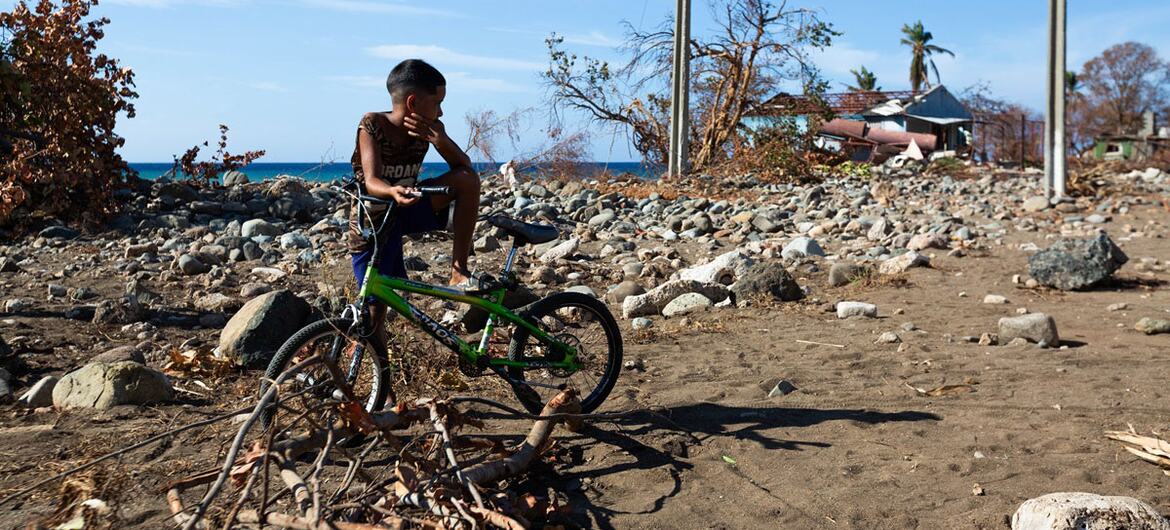
Hurricane Melissa struck Cuba in late October 2025, causing massive devastation across the island nation.

Cuba: UN urges funding as fuel shortages strain essential services

The United Nations is calling for urgent funding to support humanitarian operations in Cuba, where fuel shortages following the suspension of supplies from Venezuela are disrupting essential services and hampering recovery efforts following last year’s Hurricane Melissa.

“The UN continues to monitor the situation in the country and is working with the Government to provide more support, including food, water and sanitation, and healthcare,” UN Spokesperson Stéphane Dujarric said at a regular news briefing in New York.

“We are concerned about the growing fuel shortages and their impact on people,” he added, noting that disruptions to the delivery of clean water, medical care, food and other critical aid.

UN action plan

In November 2025, the UN in Cuba launched a Plan of Action to support the national response to Hurricane Melissa, which affected more than two million people – roughly one in five residents nationwide.

The plan focuses on helping families recover and restoring essential services, while supporting longer-term recovery efforts led by national authorities.

The Plan of Action seeks $74 million but is currently only 23 per cent funded.

Global conference seeks renewed push to end child labour

An international effort to accelerate the elimination of child labour will get underway later this week in Morocco, as governments and partners meet to confront a crisis still affecting 138 million children worldwide.

From 11 to 13 February, Morocco will host the sixth Global Conference on the Elimination of Child Labour, led by the UN International Labour Organization (ILO) and bringing together governments, employers’ and workers’ organizations, civil society, the private sector and international partners.

The meeting comes at a critical moment.

According to UN estimates, 138 million children remain in child labour globally, including around 54 million engaged in hazardous work that threatens their health, safety and development. Africa accounts for 87 million of those children.

Agriculture remains the largest driver, accounting for 61 per cent of child labour globally, particularly in smallholder farming.

Child’s place is in school

ILO Director-General Gilbert Houngbo underscored the link between decent work and child protection, saying: “Children belong in school, not in labour. Parents must themselves be supported and have access to decent work so that they can afford to ensure that their children are in classrooms.”

While progress has been made – child labour has nearly halved since 2000 and declined by more than 20 million since 2020 – the world missed the Sustainable Development Goal target to eliminate child labour in all its forms by 2025.

Source link

Guterres condemns escalating violence in South Sudan as aid operations come under fire

In a statement issued by his Deputy Spokesperson, Farhan Haq on Saturday, the UN chief said nearly 10 million people – “more than two thirds of the population” – now require life-saving humanitarian assistance and “continue to bear the brunt of the conflict”.

He expressed grave concern over fighting, attacks and looting affecting humanitarian and health facilities, as well as movement restrictions and insecurity along key supply routes. 

These conditions, the statement said, are “crippling humanitarian operations and shutting down essential services, placing civilians, including aid workers, at serious risk”.

Healthcare services attacked

Since late December, at least 11 healthcare facilities have been attacked in Jonglei State alone, disrupting critical services for communities already under severe strain. The assaults have also involved the seizure of 12 vehicles, including an ambulance.

“In the past week alone,” the statement noted, incidents have included “repeated attacks on a World Food Programme (WFP) convoy, an airstrike on a hospital run by the leading NGO Médecins Sans Frontières, and the burning of a Save the Children field office and destruction of its health centre”.

The Secretary-General said that “this clear disregard for medical and humanitarian operations is unacceptable and must stop”, stressing that such work “must be facilitated and respected”.

The violence has driven mass displacement, with more than 370,000 people reportedly forced from their homes so far this year, including over 280,000 in Jonglei State, amid a rapidly worsening cholera outbreak.

South Sudan, the world’s youngest nation, gained independence from Khartoum in 2011 but soon descended into a brutal civil conflict marked by political rivalry, ethnic violence and repeated peace deal breakdowns. 

‘Immediate and decisive’ end to fighting needed

Despite a 2018 agreement, insecurity and localised fighting have continued to undermine stability and recovery.

The UN chief called on all parties to “immediately and decisively halt all military operations”, de-escalate tensions through dialogue, uphold international law, protect civilians and ensure safe, sustained humanitarian access, including the security of aid workers and UN peacekeepers.

Source link