
World News in Brief: Floods in Syria, relief operations in Cuba at risk, ending child labour

According to the relief coordination office, OCHA, rainfall since Saturday caused widespread flooding across parts of Idleb and northern Latakia, damaging around 1,800 tents and destroying at least 150 in camps housing displaced families.

A local hospital was also forced to suspend operations, with patients having been evacuated and mobile medical teams deployed. Authorities have opened shelters and prepared additional housing for families in need.

Humanitarian partners are relocating displaced families, repairing damaged shelters and delivering emergency assistance, including food and non-food items, OCHA said.

In a separate incident linked to the response, a Syrian Arab Red Crescent staff member was killed and five others injured when their vehicle crashed while assisting flood-affected communities.

Displacement still widespread

The flooding comes as displacement persists in other parts of the country.

While fighting has subsided in the governorates of Aleppo, Al-Hasakeh and Ar-Raqqa following a 30 January accord, nearly 160,000 people remain displaced as of 3 February.

Humanitarian access has improved in some areas, but major challenges remain. Electricity outages continue to disrupt water systems, telecommunications are intermittent, food supplies are limited, explosive ordnance is still a threat and schools remain suspended.

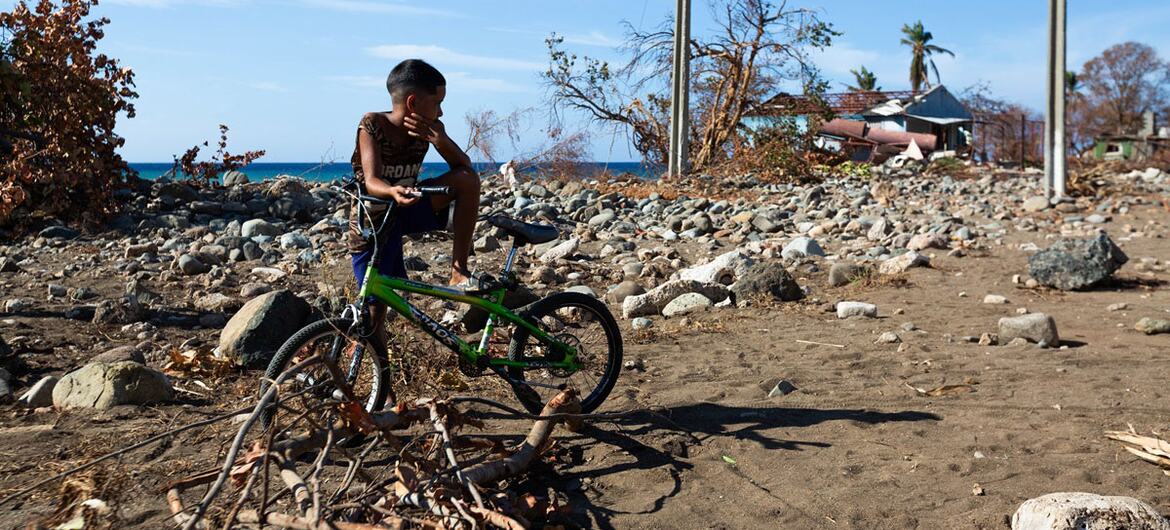
Hurricane Melissa struck Cuba in late October 2025, causing massive devastation across the island nation.

Cuba: UN urges funding as fuel shortages strain essential services

The United Nations is calling for urgent funding to support humanitarian operations in Cuba, where fuel shortages following the suspension of supplies from Venezuela are disrupting essential services and hampering recovery efforts following last year’s Hurricane Melissa.

“The UN continues to monitor the situation in the country and is working with the Government to provide more support, including food, water and sanitation, and healthcare,” UN Spokesperson Stéphane Dujarric said at a regular news briefing in New York.

“We are concerned about the growing fuel shortages and their impact on people,” he added, noting that disruptions to the delivery of clean water, medical care, food and other critical aid.

UN action plan

In November 2025, the UN in Cuba launched a Plan of Action to support the national response to Hurricane Melissa, which affected more than two million people – roughly one in five residents nationwide.

The plan focuses on helping families recover and restoring essential services, while supporting longer-term recovery efforts led by national authorities.

The Plan of Action seeks $74 million but is currently only 23 per cent funded.

Global conference seeks renewed push to end child labour

An international effort to accelerate the elimination of child labour will get underway later this week in Morocco, as governments and partners meet to confront a crisis still affecting 138 million children worldwide.

From 11 to 13 February, Morocco will host the sixth Global Conference on the Elimination of Child Labour, led by the UN International Labour Organization (ILO) and bringing together governments, employers’ and workers’ organizations, civil society, the private sector and international partners.

The meeting comes at a critical moment.

According to UN estimates, 138 million children remain in child labour globally, including around 54 million engaged in hazardous work that threatens their health, safety and development. Africa accounts for 87 million of those children.

Agriculture remains the largest driver, accounting for 61 per cent of child labour globally, particularly in smallholder farming.

Child’s place is in school

ILO Director-General Gilbert Houngbo underscored the link between decent work and child protection, saying: “Children belong in school, not in labour. Parents must themselves be supported and have access to decent work so that they can afford to ensure that their children are in classrooms.”

While progress has been made – child labour has nearly halved since 2000 and declined by more than 20 million since 2020 – the world missed the Sustainable Development Goal target to eliminate child labour in all its forms by 2025.

Source link

Cuba: UN warns of possible humanitarian ‘collapse’, as oil supplies dwindle

The United States has threatened to impose tariffs on any country providing oil to Cuba, increasing pressure on the island nation following a decades-long trade embargo and the US seizure of Venezuela’s leader Nicolás Maduro last month.

Venezuela had been the main supplier of oil to Havana but Washington has been ratcheting up pressure on Cuba in recent weeks, including an executive order last Thursday threatening to impose additional tariffs on countries that sell oil to Cuba, including Mexico.

“I can tell you that the Secretary-General is extremely concerned about the humanitarian situation in Cuba, which will worsen, and if not collapse, if its oil needs go unmet,” said UN Spokesperson Stéphane Dujarric. 

The UN chief noted that the General Assembly has been calling for an end to the US embargo for more than three decades: “The Secretary-General urges all parties to pursue dialogue and respect for international law.”

Fuel crisis

The fuel crisis has pushed up food prices for Cubans, led to severe fuel shortages and major power cuts throughout the country.

“Clearly what we see now, especially after the recent events in Venezuela, is a combination of emotions,” said Francisco Pichon, the most senior United Nations official in Cuba, describing “a mix of resilience, but also grief, sorrow and indignation, and some concern about the regional developments.” 

Thirty-two Cubans were killed in Venezuela on 3 January in the US operation to capture Mr. Maduro. 

The UN’s humanitarian work in Cuba

Mr. Pichon spoke to UN News from Havana last month, where the power had just gone out in his office. The UN team said that the vast majority of Cubans are being hit by rolling blackouts, at a time when the number of people in vulnerable situations has increased significantly. 

Even before the latest regional developments, the UN has been working with the Cuban Government to incubate ideas and support development, including ways to diversify the Cuban economy. 

The energy transition is a major priority due to reduced access to fuel and infrastructure challenges,” Mr. Pichon said, noting that investment needs remain a bottleneck.

Urgent changes needed

“The last two years have been quite tough,” he added, stressing that urgent changes are needed to sustain Cuba’s social model “in the midst of the severe economic, financial and trade sanctions”.

Cuba’s economy, which has historically relied on tourism as a key source of hard currency, was severely disrupted in the COVID pandemic and remains well under 2018 levels. 

As the Cuban economy has deteriorated, the country’s social indicators – such as universal healthcare, universal education, and extensive social safety nets like subsidised healthcare and food rations – are under strain. 

“All of this is happening in the context of the US embargo against Cuba,” said Mr. Pichon, noting that Cuba has also been relisted by the United States as a state sponsor of terrorism.

“From the UN perspective, our guiding principles remain unchanged: To be present. To support. To act based on cooperation, respected for international law, and the UN values.” 

Mr. Pichon, as UN Resident Coordinator, oversees the work of 23 UN agencies, funds and programmes. Here is a snapshot of some of the work underway.

Hurricane Melissa

Hurricane Melissa tore through Cuba as a Category 3 storm on 29 October. For the first time in the country, anticipatory action was taken through the release of funds from the UN Central Emergency Response Fund (CERF), enabling supplies, such as water purification units, food, hygiene kits, generators, medicines, medical and shelter supplies to be pre‑positioned.

The UN launched a $74 million Plan of Action to support national recovery and assist more than 2.2 million people affected by the storm’s destruction. So far, about $23 million has been mobilised targeting the one million most vulnerable. 

“No lives were lost directly due to the hurricane,” Mr. Pichon said, owing to the solid capabilities of Cuba’s civil defence, although recovery needs remain enormous, including rebuilding tens of thousands of homes.

Cooperation Framework

The UN’s long‑term engagement in Cuba is undergirded by a cooperation framework aligned with Cuba’s National Development Plan and the 2030 Agenda for Sustainable Development. This framework has four key pillars:

  • Institutional: The UN supported the development of around 30 laws following the 2019 constitutional reform, advancing equity, inclusion and rights for women, children, LGBTQ+ persons, people of African descent and persons with disabilities. 
  • Economic: Focuses on productive transformation and access to financing amid ongoing sanctions and the US listing of Cuba as a state sponsor of terrorism. Utilizing the Joint SDG Fund, which helps countries pay for projects related to the Sustainable Development Goals.
  • Environmental: Disaster risk management and climate resilience are central, especially given Cuba’s exposure to hurricanes, such as Melissa. UN support in anticipation and response seeks to protect lives and livelihoods.
  • Social: Social protection systems and attention to differentiated needs with a focus on leaving no one behind, including vulnerable groups vulnerable groups such as people living with AIDS, the LGBTI community, children, adolescents, women, and the elderly, who are a very relevant sector in an aging society.

Source link