Civilians and aid operations under fire as Sudan airstrikes intensify

Two children were reportedly killed and 13 others injured in a drone strike on a mosque in Al-Rahad, North Kordofan, where all the victims were students at the adjoining school. The attack came just hours after a primary school in Dilling, South Kordofan, was hit, with further injuries reported. 

WFP warehouse hit 

The warehouse of the UN World Food Programme (WFP) in the South Kordofan capital, Kadugli, also was struck by suspected rockets, significantly damaging buildings and mobile storage units.  

Recent days have also seen drone strikes reported in other parts of South Kordofan, North Kordofan and West Kordofan states, UN Spokesperson Stéphane Dujarric told journalists in New York. 

Strikes have occurred close to key supply routes linking the city of El Obeid in North Kordofan to Dilling and Kadugli in South Kordofan, and this is endangering civilians, including humanitarian workers. 

Not a target 

The fact that we have to reiterate almost every day that civilians and civilian infrastructure, places of worship, schools and hospitals cannot and should not be targeted is a tragedy into itself,” he said. 

“Yet, we have to remind the parties of this almost every day and that they need to respect international humanitarian law.”  

Meanwhile, the UN and partners continue their efforts to provide humanitarian assistance to the Sudanese people. 

The war between the national army and former allies-turned-rivals the Rapid Support Forces (RSF) – which erupted in April 2023 – has sparked the world’s worst humanitarian crisis, with some 30 million people in need of assistance. 

Aid convoy breakthrough 

Mr. Dujarric said a multi-agency UN convoy made up of 41 trucks carrying nearly 800 metric tonnes of food and other essential supplies departed El Obeid for Kadugli on Tuesday, marking a significant breakthrough along a previously closed route. 

In South Kordofan, humanitarians have distributed nearly 600 metric tonnes of food to nearly 70,000 people, but the continued arrival of families fleeing their homes is depleting what limited stocks are available.  

More than 115,000 people have been displaced across the Kordofan region since late October, according to the International Organization for Migration (IOM). 

Diplomatic concern 

The UN and four other organizations working to promote political dialogue in Sudan voiced grave concern at the continued escalation of the conflict in a statement issued on Wednesday. 

The Quintet – which comprises the African Union (AU), East African bloc IGAD, the League of Arab States (LAS), the European Union (EU) and the UN – expressed particular alarm over the rapidly deteriorating situation in the Kordofan region and Blue Nile state. 

The statement highlighted the urgent need for action, citing: 
• Deadly drone strikes and tightening sieges around population centres 
• Attacks on hospitals, schools and humanitarian assets 
• Widespread displacement and severe constraints on humanitarian access 
• Direct attacks on humanitarian aid convoys 

Protect civilians, allow aid access 

The Quintet recalled the horrors that occurred in El Fasher, capital of North Darfur state, “and the repeated warnings issued ahead of those atrocities that went unheeded with devastating consequences for civilians”. 

The city was under siege by the RSF for more than a year during which crimes such as rapes, executions, mass killings, attacks on displacement were committed. 

The Quintet insists that civilians must no longer bear the cost of ongoing hostilities,” the statement said. 

“Civilians and civilian infrastructure must be protected, international humanitarian law must be respected, and safe, rapid and unhindered humanitarian access to all areas in need must be ensured.” 

Ramadan plea 

The partners also emphasised the need for coordinated international efforts to de-escalate the conflict and halt the flow of weapons and fighters sustaining the violence. 

Ahead of Islam’s holy month of Ramadan, they urged all concerned “to seize the opportunity presented by ongoing efforts to broker a humanitarian truce and to immediately deescalate hostilities, to prevent further loss of life and enable life-saving assistance.” 

Source link

Attacks across Gaza intensify amid fear and hunger: ‘Leave me here,’ injured girl told fleeing family

A 14-year-old girl with cerebral palsy who depends on a wheelchair was among crowds fleeing Israeli military aircraft operations east of Rafah in Gaza on 13 October 2023, said committee member Muhannad Salah Al-Azzeh, who presented a report on the occupied Palestinian territories on Wednesday in Geneva. In the melee, she lost her wheelchair.

She was crawling on the sand and asking her family, telling them ‘you can leave me here’ because she felt that she was slowing them down,” he said.

Indeed, some people are unaware of evacuation orders being given in Gaza due to their disabilities since the start of the nearly two-year-long war triggered by the Hamas-led attack on Israel.

“This is one of the most serious issues because in regular situations, personal disabilities are excluded in emergencies, more excluded,” he said. “It’s more complicated for them.”

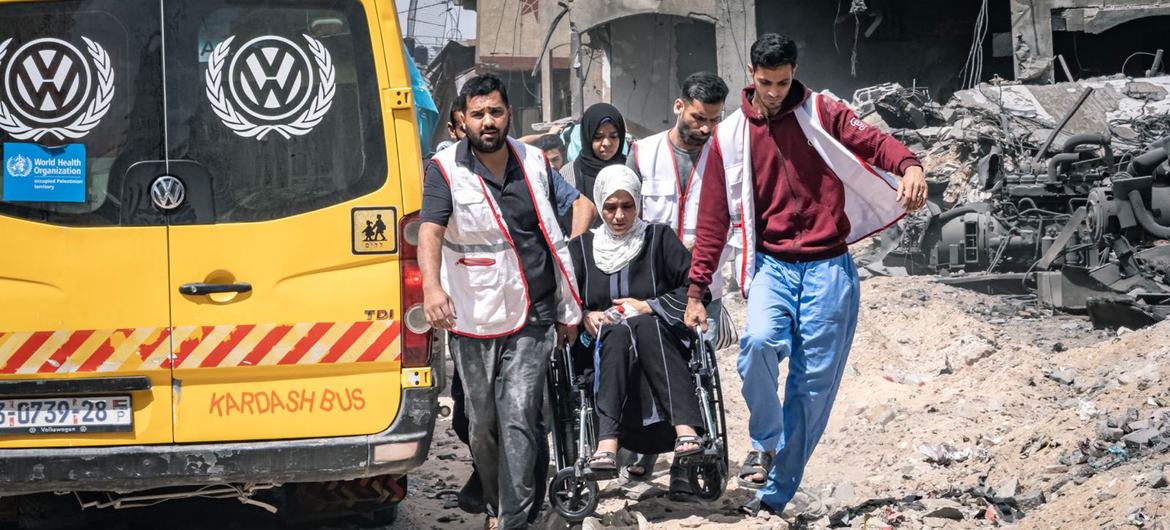
A woman in a wheelchair is carried across rubble.

States fail to protect rights of persons with disabilities

Following extensive interviews with individuals, delegations and organizations working in Gaza and the West Bank, the UN committee submitted a series of recommendations and serious concerns to Israel and the Palestinian Authority.

The situation in Gaza is a grave concern, Mr. Al-Azzeh stated.

“What we are witnessing there is highly concerning for us,” he warned. “We do believe that all the State parties to the Convention on the Rights of Persons with Disabilities, they really failed in one way or another to fulfill their obligations to protect and to ensure the minimum protection of persons with disabilities in the emergency situation.”

Citing grim cases reported to the committee since the start of war, he said in one instance, prolonged electricity shutdowns in Rafah left a mother unable to receive evacuation messages on her mobile phone, and she and her children subsequently died in an Israeli strike.

Nine-year-old Noor’s parents, who are deaf, have heavily relied on her to survive Israeli tank shelling and attacks. She has had to learn new signing vocabulary for the language of war, including tanks, armed quadcopters, shrapnel and aircraft, the committee representative said.

There are dozens of examples of people like Abdulrahman Al-Gharbawi, with cerebral palsy and a lower limb disability, he said. 

All nine times the 27-year-old graphic designer’s family has been forcibly displaced since the start of the war, his mother would carry his wheelchair while his father and brother would carry him.

‘Horrific’ situation in Gaza City

The UN Office for the Coordination of Humanitarian Affairs (OCHA) warned on Wednesday that further intensification of the continued offensive on Gaza City, amid ongoing famine, will push civilians – already battered and bereaved – into an even deeper catastrophe that world leaders must act decisively to prevent.

“Partners supporting displacement sites warned that the escalating hostilities in Gaza City are having horrific humanitarian consequences for people living at these sites, many of whom were previously displaced from North Gaza,” the UN agency said. “They say that many households are unable to move due to high costs and a lack of safe space to move to, with older people and those with disabilities especially affected.”

Partners report that between 14 and 31 August, more than 82,000 new displacements have been recorded, including nearly 30,000 movements from north to south, OCHA stated.

Chronic aid delivery obstacles

Meanwhile, humanitarian efforts continue to face chronic obstacles. While a trickle of aid is getting into the war-torn Gaza Strip, steep challenges remain, according to OCHA’s latest situation report.

Between 17 and 30 August, partners continued daily convoys to uplift humanitarian food aid from the Kerem Shalom and Zikim crossings, bringing more than 6,900 metric tonnes of wheat flour, food parcels and bulk food supplies into Gaza through the UN-coordinated aid mechanism, OCHA reported.

“However, nearly all of this aid was offloaded by hungry crowds or looted by organized groups along convoy routes, preventing targeted household distributions and delivery to partner warehouses,” the UN agency stated.

Since 20 July, when regular food cargo shipments from Gaza’s crossings resumed, less than 40 per cent of the 2,000 metric tonnes of food supplies required daily to meet basic humanitarian food assistance needs could enter the Strip, OCHA said.

Daily, civilians continue to be killed and injured by military forces or due to violence erupting among desperate crowds while trying to access aid, including in the militarised zone near checkpoints waiting for aid convoys and at non-humanitarian militarised distribution sites,” the UN agency reported.

‘Two per cent of food aid reached warehouses’

As of 30 August, 99 kitchens supported by 19 partners were preparing and distributing 468,000 meals daily across the Gaza Strip, with 155,000 in the north and 313,000 in central and southern Gaza, according to the OCHA report.

“Partners relied on the two per cent of food aid that safely reached warehouses, coupled with resources secured locally from markets,” the UN agency said.

“While representing an 80 per cent increase compared to the 260,000 daily meals prepared in early August, this remains far below the over one million meals produced in April with the humanitarian and commercial food stocks and cooking gas entered during the ceasefire.”
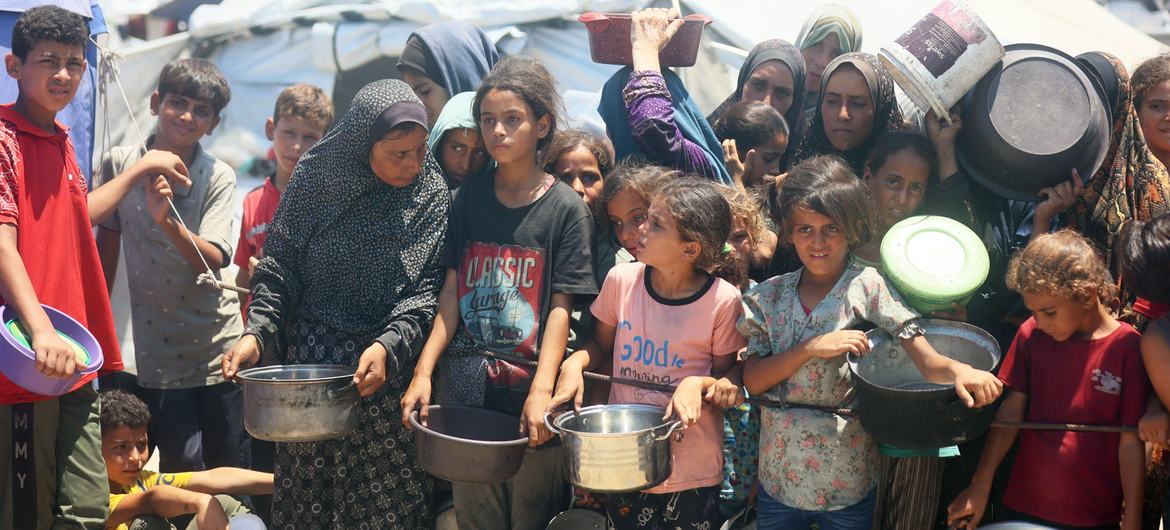
Families and children seeking food from a community kitchen in western Gaza City in late July. (file)

Famine response

The UN and partners continued integrated famine response efforts come on the heels of the UN-backed global hunger experts’ report finding famine conditions in parts of Gaza last month.

Efforts included scaling up cooked meal provision, promoting small-scale home gardening and community oven initiatives, expanding cash and voucher assistance and strengthening real-time monitoring and analysis systems.

“Intense advocacy continues with the Israeli authorities to increase the volume of humanitarian and commercial goods approved for entry, with a focus on fresh produce and fortified food, nutrition, health and cooking gas,” OCHA said in its report.
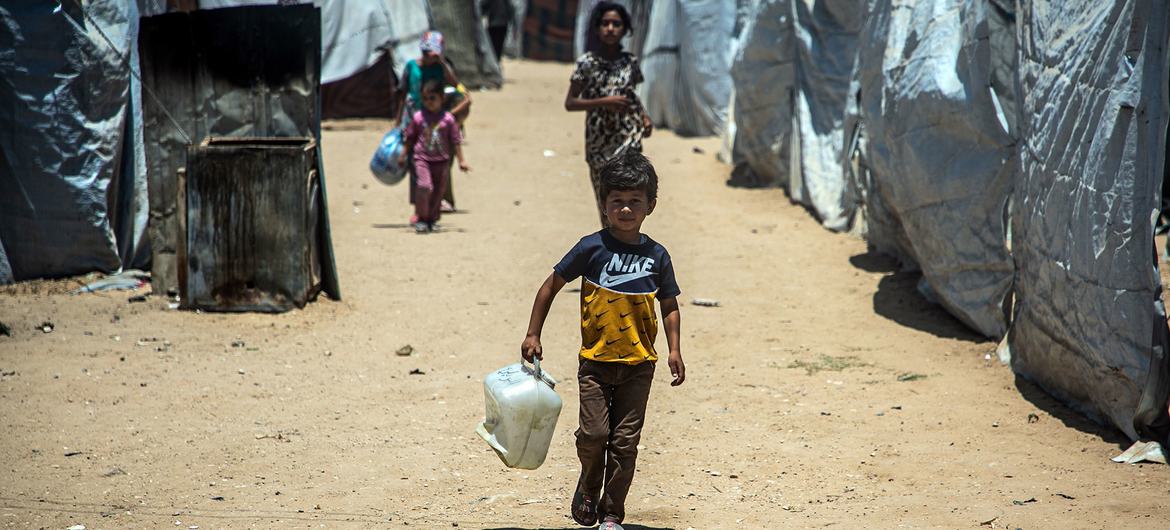
© UNICEF/Mohammed Nateel

Access to safe drinking water in the Gaza Strip has been severely compromised due to the ongoing war.

New supplies and critical shortages

For the first time in over five months, concentrated fodder for livestock owners entered Gaza. Approximately 60 metric tonnes were distributed to 600 livestock holders in Deir Al-Balah, OCHA said.

However, despite sustained advocacy, cooking gas has not entered Gaza for more than five months and is no longer available in markets, the UN agency stated.

“Firewood has also become increasingly unaffordable,” according to the agency. “Many people are reduced to using waste and scrap wood as alternative cooking sources, exacerbating health and environmental risks.”

Meanwhile, the UN relief agency for Palestine refugees’ (UNRWA) health facilities continue to serve around 132,000 patients with non-communicable diseases despite facing dire shortages of medical supplies. Insulin stocks will be exhausted within one to two weeks, leaving at least 16,000 diabetic patients without an essential part of their treatment, OCHA reported.

Access to clean water is severely limited. At the same time, hospitals remain lacking in essential supplies and continue to face overcrowding as daily attacks are seeing a rise in the numbers of dead and injured.

Source link

Sudan gripped by deadly crisis as hunger, disease and heat intensify

In El Fasher, the capital of North Darfur that has been under siege for 15 months, the catastrophic humanitarian situation is worsening. Food shortages and soaring prices have forced community-run kitchens to shut down. Widespread hunger and malnutrition have reportedly caused several deaths and driven some residents to eat animal feed.

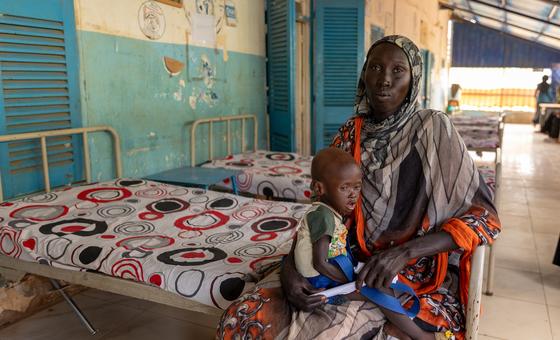
In the Tawila locality of North Darfur, humanitarian organizations have had to strengthen their responses to rising cholera cases. They have expanded the capacities of treatment centres, but needs remain dire. With medical supplies running low, clean water supplies and the construction of latrines are urgent necessities.

In East Darfur state, the Lagawa displacement site, hosting over 7,000 people, is facing severe food shortages and repeated armed attacks. Doctors are warning that the ongoing conflict continues to block the delivery of aid, so vulnerable families are left without access to food or healthcare.

Extreme heat and torrential rains

Meanwhile, floods and storms are displacing families and destroying homes across the country.  

In the Rahad locality of North Kordofan state, heavy rains on Monday displaced around 550 people and damaged or destroyed more than 170 homes.

Torrential rains in the eastern state of Kasssala have devastated the Gharb Almatar displacement site, affecting more than 6,000 people. Many tents were flooded, exposing children to cold, hunger and unsanitary conditions. Displaced families urgently need cash assistance, shelter and protection.

In the coastal city of Port Sudan, extreme heat continues to endanger lives, with three reported deaths and 50 cases of sunstroke this week amid soaring temperatures and widespread power outages.  

As temperatures reach 47 degrees Celsius (116.6 degrees Fahrenheit), overwhelmed hospitals are prompting health workers to call for urgent support, including cooling equipment, medical supplies and personnel.

Call for increased funding

With these crises compounding, international support is desperately needed. The 2025 response plan, which seeks $4.2 billion to assist 21 million of the most vulnerable people across Sudan, is only 23 per cent funded to date.

OCHA once again calls on international donors to scale up funding for the response. 

Source link

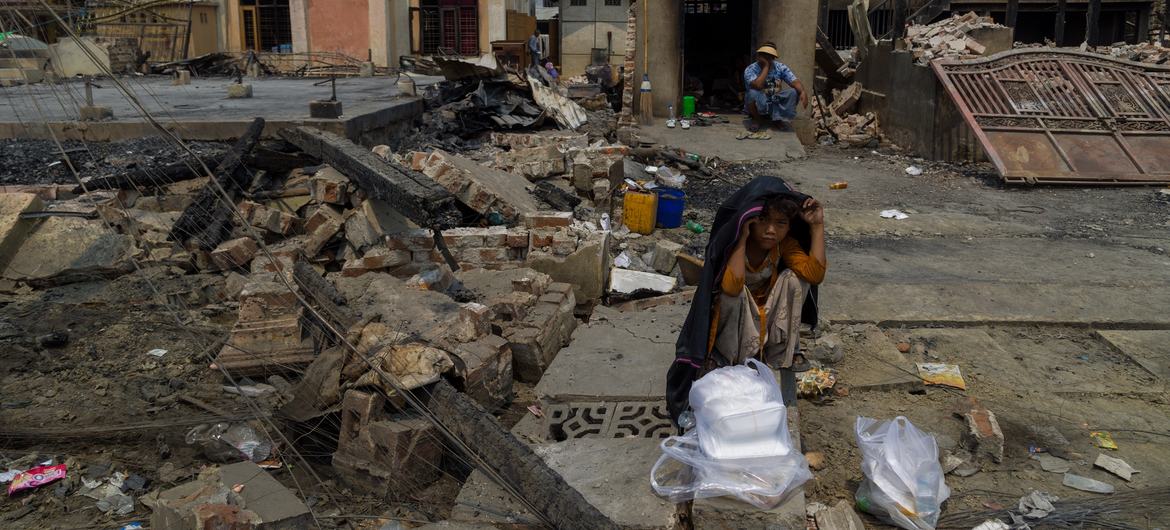
Myanmar human rights crisis deepens as aid collapses, attacks intensify

In a stark briefing to the Human Rights Council in Geneva, UN High Commissioner for Human Rights Volker Türk described a country gripped by war, repression and deepening suffering.

Since the military coup in February 2021, nearly 6,800 civilians have been killed and over 22,000 remain arbitrarily detained, he said. Humanitarian needs have soared, with nearly 22 million people in need of assistance and more than 3.5 million displaced by conflict.

“The report I am presenting today is about the people of Myanmar and their aspirations for a better future,” Mr. Türk said.

Despite massive challenges, people from across society are striving to build a peaceful, sustainable, democratic and diverse Myanmar, grounded in human rights.

A crisis worsened

However, conditions on the ground have only worsened.

Following a 28 March earthquake that killed nearly 4,000 people and left six million in urgent need, the military intensified attacks instead of facilitating relief, Mr. Türk said.

The UN human rights office, OHCHR, documented more than 600 military strikes since the quake – 94 per cent of them occurring during supposed ceasefires – with schools, religious sites and other protected locations frequently targeted.

Situation in Rakhine

The situation in Rakhine state remains particularly dire, with civilians – the minority Muslim Rohingya in particular – caught between the Myanmar military and the Arakan Army, an ethnic armed group. In addition, the military’s ongoing obstruction of humanitarian access has worsened an already acute crisis.

Throughout the country, economic collapse and the breakdown of public institutions have compounded the suffering.

Nearly four in five people now live below or just above the poverty line and an estimated 1.3 million have fled the country – many undertaking perilous journeys by land and sea. So far in 2025, nearly one in five people attempting sea crossings in the region have been reported dead or missing.

End violence, ensure accountability

The High Commissioner’s report outlined four key pathways to lay the groundwork for a transition toward a peaceful and democratic Myanmar: justice and accountability, democratic governance; economic reform to serve the people, and sustained international engagement.

Mr. Türk stressed that accountability must begin with the release of all political prisoners and prosecution of those responsible for grave human rights violations.

“It is imperative for the military to immediately end the violence, allow unhindered humanitarian access and release all arbitrarily detained people,” he said.

Amid the turmoil, planning for a future with human rights front and centre offers people a sense of hope. We owe it to the people of Myanmar to make that hope a reality.

Millions have lost their homes and livelihoods due to the earthquakes that struck Myanmar in late March.

Independent expert’s alarm

Tom Andrews, the UN Special Rapporteur on the situation in Myanmar, echoed the High Commissioner’s warnings, raising alarm over a collapse in international humanitarian support and the military’s repression.

“The junta has chosen to use aid as a weapon,” he told the Council.

“I have spoken with humanitarian workers physically blocked at checkpoints and received reports of earthquake survivors evicted from shelters with no place to go.”

Mr. Andrews, who has been appointed and mandated by the Human Rights Council and is not a UN staff member – also warned that drastic cuts in international funding have already had severe consequences.

As of 27 June, the $1.14 billion comprehensive humanitarian response plan for the country is only 12 percent funded and the $275 million addendum for the earthquake response is about 37 per cent.

At a time when the people of Myanmar need an enhanced level of support from the international community, they are getting the opposite, Mr. Andrews said, warning that the cost in human lives and human suffering will soon very likely get “significantly worse.”

This dangerous trend begs the question – do human rights matter?” he asked.

Because if human rights matter, if saving the lives of children in Myanmar matters, why are so many governments reluctant to invest even a modest amount of resources to save lives?

Source link

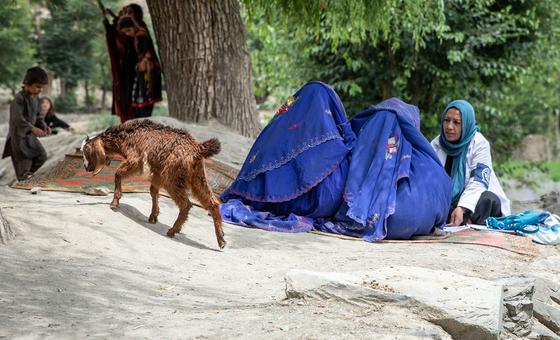
Afghanistan: Taliban restrictions on women’s rights intensify

The mission continued to receive reports that Afghan women are being denied the opportunity to join the workforce, are unable to access services without a male relative while girls are still deprived of their right to education.

Since the Taliban took over the country from the democratically-elected Government in August 2021, women and girls have been systemically excluded from equal participation in society, the report confirms.

UNAMA, whose mandate includes monitoring human rights, also reported public floggings, shrinking civic space, and brutal attacks on former government officials.

Beauty salons shuttered

Officials have reportedly shut down beauty salons run by women in their homes and women’s radio stations in various provinces, UNAMA said.

In the province of Kandahar, de facto inspectors asked shopkeepers in a market to report women unaccompanied by a guardian (mahram) and deny them entry into their shops.

At one hospital, authorities ordered staff not to provide care to unaccompanied female patients.

Forced conversions

Taliban authorities have also increased enforcement of repressive restrictions on media outlets, ramped up corporal punishment, and the clampdown on religious freedom and re-education.

Between 17 January and 3 February, in Badakhshan province in northeastern Afghanistan, at least 50 Ismaili men were taken from their homes at night and forced to convert to Sunni Islam under the threat of violence, the report details.

More than 180 people, including women and girls, have been flogged for the offences of adultery and practicing homosexuality during the reporting period, in public venues attended by Taliban officials.

Taliban claim support for women’s rights

Despite documented evidence from the report that de facto authorities are continuing to violate international norms and rights protections, Taliban officials disagree.

“Ensuring the dignity, honor, and Sharia-based entitlements of women remains a paramount priority for the Islamic Emirate,” Taliban spokesperson Zabihullah Mujahid said in a social media post on March 8, International Women’s Day.

“All fundamental rights afforded to Afghan women have been safeguarded in strict accordance with Islamic Sharia law, as well as the cultural and traditional frameworks of Afghan society,” he added.

International legal action

UNAMA has called for action to restore women’s and girls’ rights at the international level.

In January, the International Criminal Court (ICC) issued arrest warrants for Taliban Leader Haibatullah Akhundzada and Chief Justice Abdul Hakim Haqqan over persecution on gender grounds, a crime against humanity under the Rome Statute.

The Taliban rejected the ruling, citing national sovereignty and religious traditions.

Source link