Attacks across Gaza intensify amid fear and hunger: ‘Leave me here,’ injured girl told fleeing family

A 14-year-old girl with cerebral palsy who depends on a wheelchair was among crowds fleeing Israeli military aircraft operations east of Rafah in Gaza on 13 October 2023, said committee member Muhannad Salah Al-Azzeh, who presented a report on the occupied Palestinian territories on Wednesday in Geneva. In the melee, she lost her wheelchair.

She was crawling on the sand and asking her family, telling them ‘you can leave me here’ because she felt that she was slowing them down,” he said.

Indeed, some people are unaware of evacuation orders being given in Gaza due to their disabilities since the start of the nearly two-year-long war triggered by the Hamas-led attack on Israel.

“This is one of the most serious issues because in regular situations, personal disabilities are excluded in emergencies, more excluded,” he said. “It’s more complicated for them.”

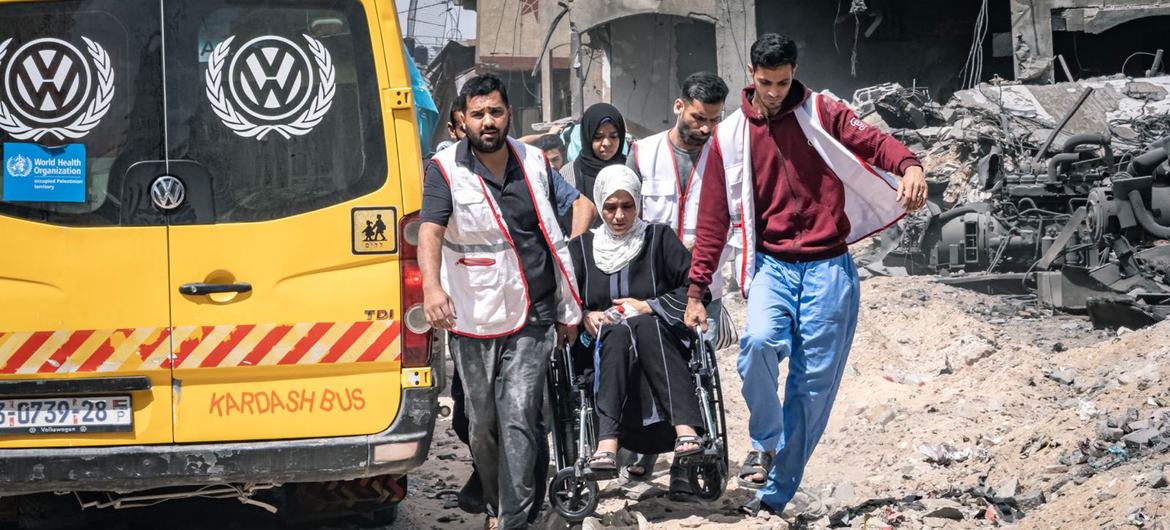
A woman in a wheelchair is carried across rubble.

States fail to protect rights of persons with disabilities

Following extensive interviews with individuals, delegations and organizations working in Gaza and the West Bank, the UN committee submitted a series of recommendations and serious concerns to Israel and the Palestinian Authority.

The situation in Gaza is a grave concern, Mr. Al-Azzeh stated.

“What we are witnessing there is highly concerning for us,” he warned. “We do believe that all the State parties to the Convention on the Rights of Persons with Disabilities, they really failed in one way or another to fulfill their obligations to protect and to ensure the minimum protection of persons with disabilities in the emergency situation.”

Citing grim cases reported to the committee since the start of war, he said in one instance, prolonged electricity shutdowns in Rafah left a mother unable to receive evacuation messages on her mobile phone, and she and her children subsequently died in an Israeli strike.

Nine-year-old Noor’s parents, who are deaf, have heavily relied on her to survive Israeli tank shelling and attacks. She has had to learn new signing vocabulary for the language of war, including tanks, armed quadcopters, shrapnel and aircraft, the committee representative said.

There are dozens of examples of people like Abdulrahman Al-Gharbawi, with cerebral palsy and a lower limb disability, he said. 

All nine times the 27-year-old graphic designer’s family has been forcibly displaced since the start of the war, his mother would carry his wheelchair while his father and brother would carry him.

‘Horrific’ situation in Gaza City

The UN Office for the Coordination of Humanitarian Affairs (OCHA) warned on Wednesday that further intensification of the continued offensive on Gaza City, amid ongoing famine, will push civilians – already battered and bereaved – into an even deeper catastrophe that world leaders must act decisively to prevent.

“Partners supporting displacement sites warned that the escalating hostilities in Gaza City are having horrific humanitarian consequences for people living at these sites, many of whom were previously displaced from North Gaza,” the UN agency said. “They say that many households are unable to move due to high costs and a lack of safe space to move to, with older people and those with disabilities especially affected.”

Partners report that between 14 and 31 August, more than 82,000 new displacements have been recorded, including nearly 30,000 movements from north to south, OCHA stated.

Chronic aid delivery obstacles

Meanwhile, humanitarian efforts continue to face chronic obstacles. While a trickle of aid is getting into the war-torn Gaza Strip, steep challenges remain, according to OCHA’s latest situation report.

Between 17 and 30 August, partners continued daily convoys to uplift humanitarian food aid from the Kerem Shalom and Zikim crossings, bringing more than 6,900 metric tonnes of wheat flour, food parcels and bulk food supplies into Gaza through the UN-coordinated aid mechanism, OCHA reported.

“However, nearly all of this aid was offloaded by hungry crowds or looted by organized groups along convoy routes, preventing targeted household distributions and delivery to partner warehouses,” the UN agency stated.

Since 20 July, when regular food cargo shipments from Gaza’s crossings resumed, less than 40 per cent of the 2,000 metric tonnes of food supplies required daily to meet basic humanitarian food assistance needs could enter the Strip, OCHA said.

Daily, civilians continue to be killed and injured by military forces or due to violence erupting among desperate crowds while trying to access aid, including in the militarised zone near checkpoints waiting for aid convoys and at non-humanitarian militarised distribution sites,” the UN agency reported.

‘Two per cent of food aid reached warehouses’

As of 30 August, 99 kitchens supported by 19 partners were preparing and distributing 468,000 meals daily across the Gaza Strip, with 155,000 in the north and 313,000 in central and southern Gaza, according to the OCHA report.

“Partners relied on the two per cent of food aid that safely reached warehouses, coupled with resources secured locally from markets,” the UN agency said.

“While representing an 80 per cent increase compared to the 260,000 daily meals prepared in early August, this remains far below the over one million meals produced in April with the humanitarian and commercial food stocks and cooking gas entered during the ceasefire.”
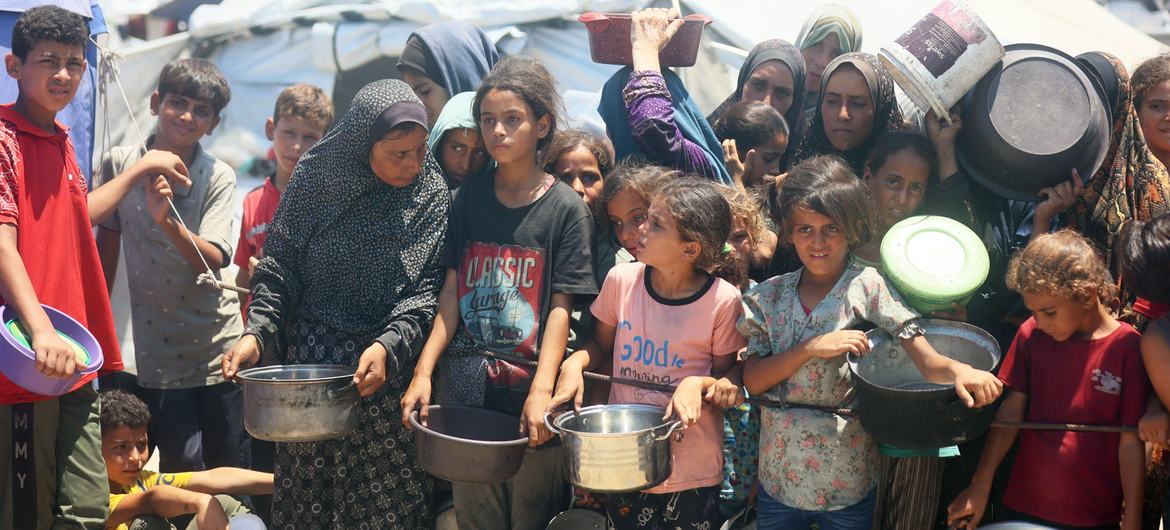
Families and children seeking food from a community kitchen in western Gaza City in late July. (file)

Famine response

The UN and partners continued integrated famine response efforts come on the heels of the UN-backed global hunger experts’ report finding famine conditions in parts of Gaza last month.

Efforts included scaling up cooked meal provision, promoting small-scale home gardening and community oven initiatives, expanding cash and voucher assistance and strengthening real-time monitoring and analysis systems.

“Intense advocacy continues with the Israeli authorities to increase the volume of humanitarian and commercial goods approved for entry, with a focus on fresh produce and fortified food, nutrition, health and cooking gas,” OCHA said in its report.
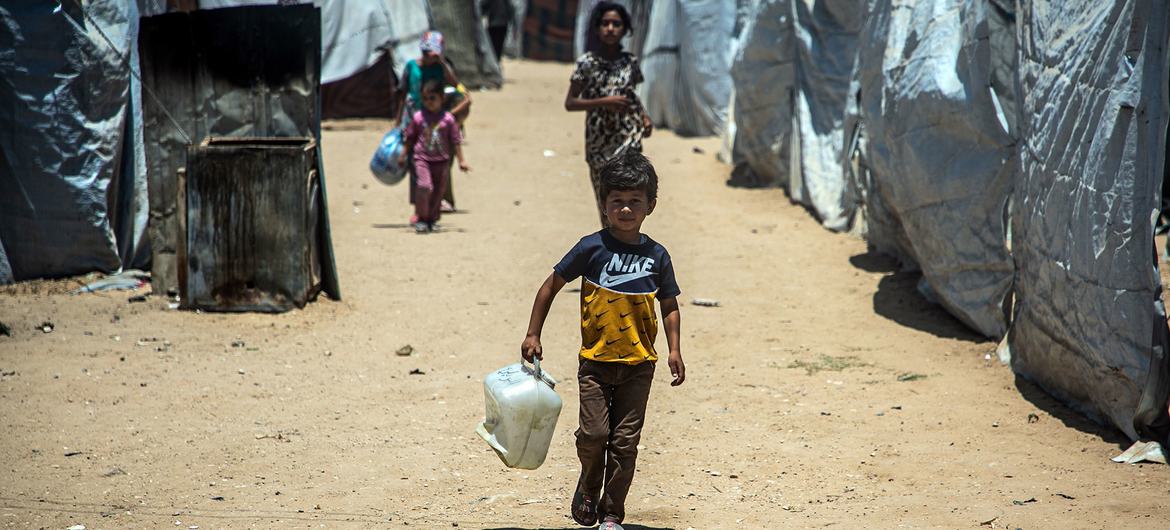
© UNICEF/Mohammed Nateel

Access to safe drinking water in the Gaza Strip has been severely compromised due to the ongoing war.

New supplies and critical shortages

For the first time in over five months, concentrated fodder for livestock owners entered Gaza. Approximately 60 metric tonnes were distributed to 600 livestock holders in Deir Al-Balah, OCHA said.

However, despite sustained advocacy, cooking gas has not entered Gaza for more than five months and is no longer available in markets, the UN agency stated.

“Firewood has also become increasingly unaffordable,” according to the agency. “Many people are reduced to using waste and scrap wood as alternative cooking sources, exacerbating health and environmental risks.”

Meanwhile, the UN relief agency for Palestine refugees’ (UNRWA) health facilities continue to serve around 132,000 patients with non-communicable diseases despite facing dire shortages of medical supplies. Insulin stocks will be exhausted within one to two weeks, leaving at least 16,000 diabetic patients without an essential part of their treatment, OCHA reported.

Access to clean water is severely limited. At the same time, hospitals remain lacking in essential supplies and continue to face overcrowding as daily attacks are seeing a rise in the numbers of dead and injured.
Source link

She fought for the girl the world left behind: Natalia Kanem’s UN legacy

She returns, over and over, to a single image: that of a ten-year-old girl – standing on the edge of adolescence, her future uncertain, and her rights still in grave doubt.

“Will she be able to stay in school, graduate, and make her way through the world?” Dr. Kanem wonders. “Or is she going to be derailed by things like child marriage, female genital mutilation, or abject poverty?”

That seismic question and that girl – not one child in particular, but an emblem of the millions worldwide whose future is at risk – have become the touchstone of Dr. Kanem’s nearly eight-year tenure as Executive Director of the UN’s sexual and reproductive health agency, formally known as the UN Population Fund (UNFPA).

From her early days working on the frontlines in East Africa to overseeing a $1.7 billion agency with operations in more than 150 countries, Dr. Kanem has shepherded UNFPA through global shifts, political headwinds, and ideological pushback.

Most of all, she has led a fierce revolution in the lives of millions of women and girls.

This month, she is stepping down from her post ahead of schedule. “It’s time to pass on the baton,” the 70-year-old told her staff – a 5,000-strong workforce – in a videotaped address earlier this year. “I have pledged to do everything in my capacity to keep positioning UNFPA to continue to do great things.”

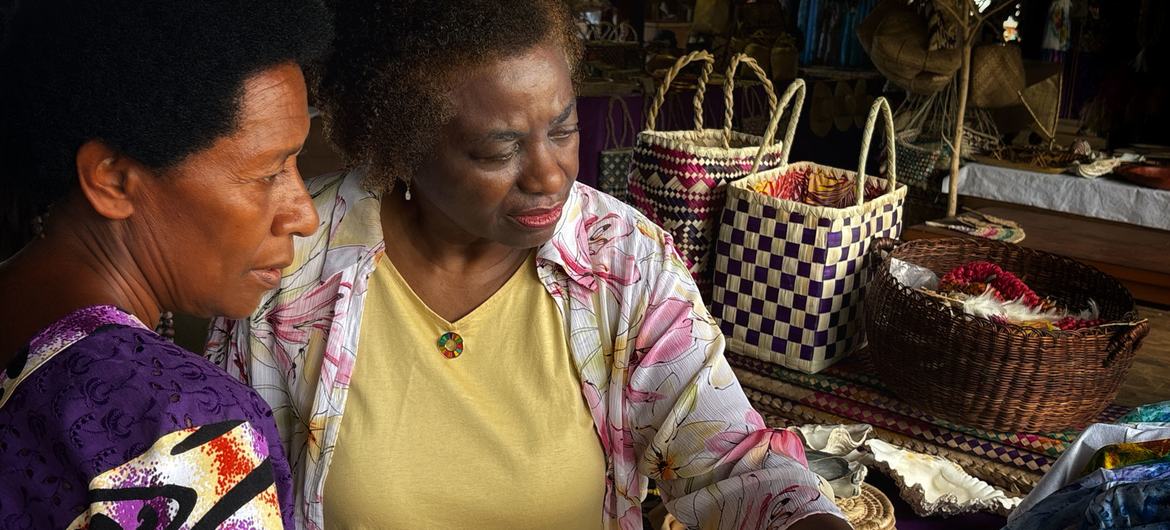
UNFPA Executive Director Natalia Kanem (centre) visits the Mamas Market in Port Vila, Vanuatu.

Roots and ascent

Born in Panama and trained as a medical doctor, Dr. Kanem joined UNFPA in 2014 after a career in philanthropy. Her decision to serve “the noble purpose of the United Nations” first led her to East Africa and Tanzania, where she was struck by the quiet heroism of field staff. “It’s really at the country level where we prove our worth,” she told UN News.

But the job was not easy. In 2017, when she took the reins of the agency, Dr. Kanem inherited an organization grappling with waning visibility, unstable funding, and persistent pushback from conservative viewpoints. Still, UNFPA grew – not just in budget, but in stature.

“When I came, the narrative was, ‘We’re a small organization, beleaguered, nobody understands what we do,’” she said. “Now, I think it’s clearer.”

That clarity came, in part, from what Dr. Kanem calls “thought leadership.”

Whether challenging misconceptions about fertility or confronting gender-based violence enabled by technology, she pushed UNFPA to the frontlines of global discourse. “We exist in a marketplace of ideas,” she explained. “And we have to tell the truth in a way that’s compelling enough so we can garner the allies this movement requires.”

Under her leadership, the agency trained hundreds of thousands of midwives, distributed billions of contraceptives, and expanded humanitarian operations to reach women and girls in the most fragile settings – from the Rohingya camps in Bangladesh’s Cox’s Bazar to war-scarred Ukraine and cholera-stricken Haiti.

UNFPA’s presence in crisis zones was not only logistical, but symbolic. In Sudan, Syria, and Gaza, a simple tent stocked with menstrual pads, a blanket, and a bar of soap could serve as sanctuary. “It represents the respite that a woman needs in a time of crisis,” she said. “You know, we call our kits ‘dignity kits’ for that reason.”

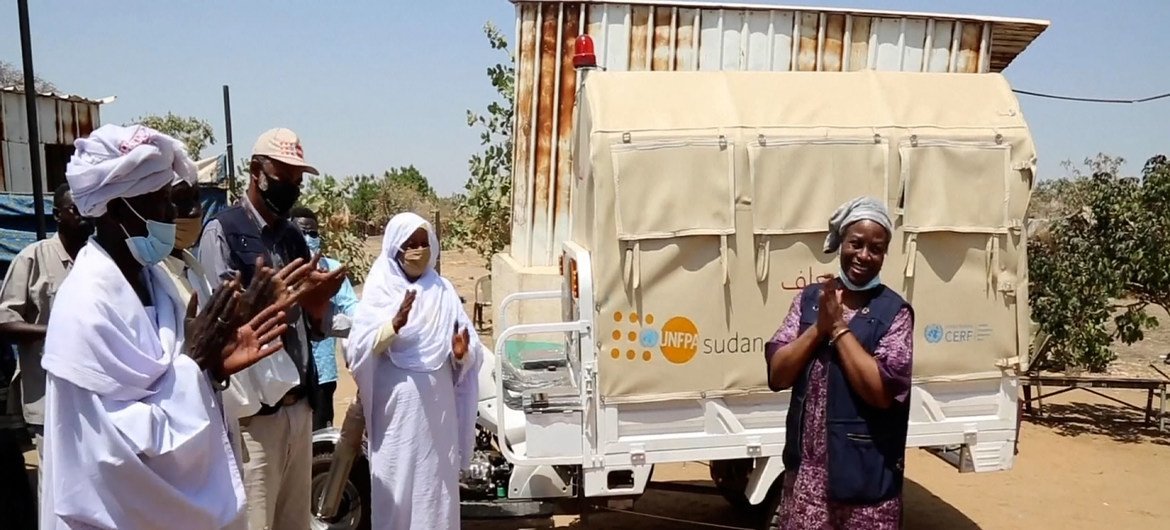
UNFPA Executive Director, Natalia Kanem (right), visits Sudan in March 2021.

Shifting the conversation

Beyond delivering services, Dr. Kanem elevated UNFPA’s role as a thought leader in a polarised world. She steered the agency into difficult public conversations – about teen pregnancy, climate anxiety, fertility rates, and online harassment – with an unflinching insistence on rights.

“The 10-year-old girl exists,” she said. “What her parents and her religious leaders and her community think is vital for her to be well prepared, for her to know what to do when she’s challenged by coercive practices.”

That leadership extended to data. Under Dr. Kanem, UNFPA invested heavily in supporting national censuses and building dashboards to help lawmakers shape reproductive health policy with real-time insight.

This year’s State of World Population report, the agency’s annual deep dive into demographic trends, reframed conventional narratives around so-called “population collapse” – noting that many women and men delay having children not out of ideology, but because they cannot afford to raise them.

Dr. Kanem praised the altruism of young people who say they’re choosing not to have children for fear of worsening the climate crisis. But that’s not what the data shows.

“The world replacement fertility rate is not endangering the planet,” she explained. “The facts really say: you can have as many children as you can afford.”

A rights-based compass in turbulent times

Dr. Kanem’s tenure coincided with mounting attacks on reproductive rights, rising nationalism, and growing scepticism of multilateral institutions. She faced years of US funding cuts – including under the current administration – even as demand for UNFPA’s services surged.

“UNFPA has more money than we’ve ever had,” she noted. “But it’s never going to be enough to stop the flow of need.”

Resources alone won’t secure the agency’s future – credibility and persistence are just as vital. “The multilateral system itself has come under question at a time when it is needed now more than ever,” she warned. “We do have to prove ourselves each and every day. And when we make mistakes, we’ve got to get up and rectify them and find partners who are going to be allies.”

One such partner has been the private sector. In 2023, UNFPA teamed up with tech firms to launch a development impact bond in Kenya, delivering mobile-based sexual health services to prevent teenage pregnancy and new HIV infections among adolescent girls.

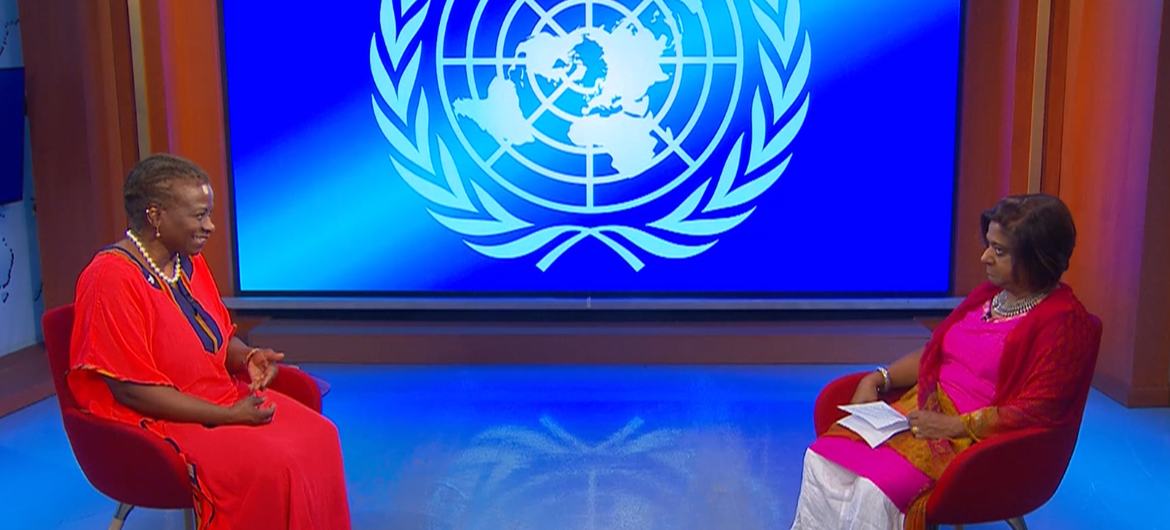
Dr. Natalia Kanem, head of the United Nations Population Fund (left) talks to UN News and Media Deputy Director Mita Hosali.

Changing mindsets

UNFPA has long worked to end harmful practices such as female genital mutilation (FGM) and child marriage. Under Dr. Kanem, that work became as much about shifting mindsets as changing laws.

“Yes, absolutely,” she said when asked if progress was real. “It’s been very important to see religious leaders and traditional leaders standing against certain practices… and to work with school systems so that the girls themselves will understand the risks and be able to take better decisions about their options.”

The coronavirus“>COVID-19 pandemic, she admitted, was a setback. With schools closed, some communities increased the number of weddings and FGM ceremonies. But in many countries – including populous Indonesia – UNFPA has seen the practice decline, in part thanks to youth advocates speaking out from within their own communities.

New generation, next chapter

Looking ahead, Dr. Kanem didn’t dwell on uncertainty. She spoke instead of possibility. “We’ve transformed ourselves, modernized ourselves,” she said. “There’s just unlimited possibility for UNFPA.”

Her own future includes what she calls a “mini-sabbatical” – more time for music, her family, and, finally, herself. But she won’t stay silent for long. “I know that my passion for issues of women and girls is not going to recede,” she said. “It’s been a labour of love.”

Her parting thought? One final return to the girl at the centre of it all.

“When that 10-year-old girl succeeds, everyone succeeds,” she said. “It is a better world.”

Source link