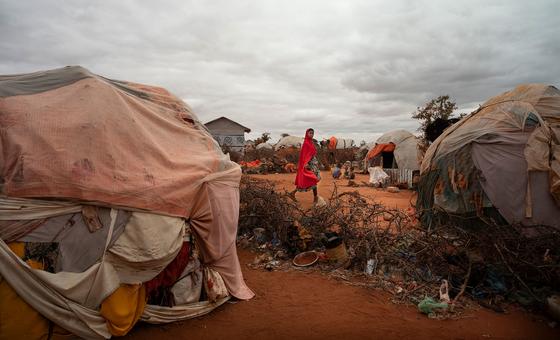
Droughts are causing record devastation worldwide, UN-backed report reveals

This is according to a new report from the UN Convention to Combat Desertification (UNCCD), the U.S. National Drought Mitigation Center (NDMC) and the International Drought Resilience Alliance on the global impacts of droughts from 2023 to 2025.

“Drought is a silent killer. It creeps in, drains resources, and devastates lives in slow motion. Its scars run deep,” said UNCCD Executive Secretary Ibrahim Thiaw.

“This is not a dry spell,” stressed Dr. Mark Svoboda, report co-author and NDMC Director. “This is a slow-moving global catastrophe, the worst I’ve ever seen. This report underscores the need for systematic monitoring of how drought affects lives, livelihoods, and the health of the ecosystems that we all depend on.” 

Record devastation in Africa

According to the report, as 90 million people face acute hunger across Eastern and Southern Africa, some areas in the region have been experiencing the worst drought ever recorded.

In Ethiopia, Zimbabwe, Zambia and Malawi, maize and wheat crops have suffered repeated failures. In Zimbabwe in particular, the 2024 corn crop was down 70 per cent year on year, maize prices doubled, and 9,000 cattle died of thirst and starvation.

Some 43,000 people in Somalia died in 2022 alone due to drought-linked hunger. The crisis continued through 2025, with a quarter of the population facing crisis-level food insecurity at the beginning of the year.

As a result of drought, Zambia is suffering one of the world’s worst energy crises: in April, the Zambezi River plummeted to 20 per cent of its long-term average, and the country’s largest hydroelectric plant, the Kariba Dam, fell to 7 per cent generation capacity, causing electricity blackouts of up to 21 hours a day. This has led to the shuttering of hospitals, bakeries, and factories, further compounding the devastation.

Worldwide impacts

But the effects of drought extend beyond Africa. For example, by September 2023 in Spain, two years of drought and record heat caused a 50 per cent drop in the olive crop, doubling olive oil prices nationwide.

In Türkiye, drought-accelerated groundwater depletion has triggered sinkholes, endangering communities and their infrastructure while reducing aquifer storage capacity.

In the Amazon Basin, record-low river levels in 2023 and 2024 led to mass deaths of fish and endangered dolphins, disrupted drinking water supplies and created transport challenges for hundreds of thousands. Ongoing deforestation and fires also threaten to shift the Amazon from a carbon sink to a carbon source.

Declining water levels in the Panama Canal slashed transit by more than one-third, leading to major global trade disruptions. Among the spillover effects were declines in American soybean exports and shortages and rising prices reported in UK grocery stores.

Call for cooperation and solutions

The report listed several recommendations to help combat this crisis, including stronger early warning systems, real-time drought and drought impact monitoring, and nature-based solutions such as watershed restoration and indigenous crop use.

It also called for more resilient infrastructure – including off-grid energy and alternative water supply systems – and global cooperation, particularly regarding transboundary river basins and trade routes. 

UN-backed labour standards at risk as tariff uncertainty grows

Threatened or actual tariff increases are largely focused on taxing imports into the United States and will make the products made by factories outside the country more expensive – a situation which may drive down demand.

The ILO’s Better Work programme, a partnership with the International Finance Corporation (IFC), has supported garment factories, many of which export their products to the United States.

The ILO’s Sara Park explained to UN News what could happen next.

Sara Park: Better Work currently operates in the garment, textile and footwear sector in 13 countries around the world.

It was set up 24 years ago in Cambodia to monitor the working conditions in garment factories and since then has focused on improvement and capacity building of factories and our constituencies in the sector, for example occupational safety and health.

There are other elements that support the sector to promote social dialogue, safe and decent work which includes fair wages and working hours. The programme has also helped build productivity in those sectors.

UN News: How is the ILO involved?

Sara Park: The ILO is a tripartite organization, so we work with governments, employers, the unions who represent workers, usually Ministries of Labour, but also with ministries of trade or commerce because the programme focuses on exports.

© Better Work/Aron Simeneh

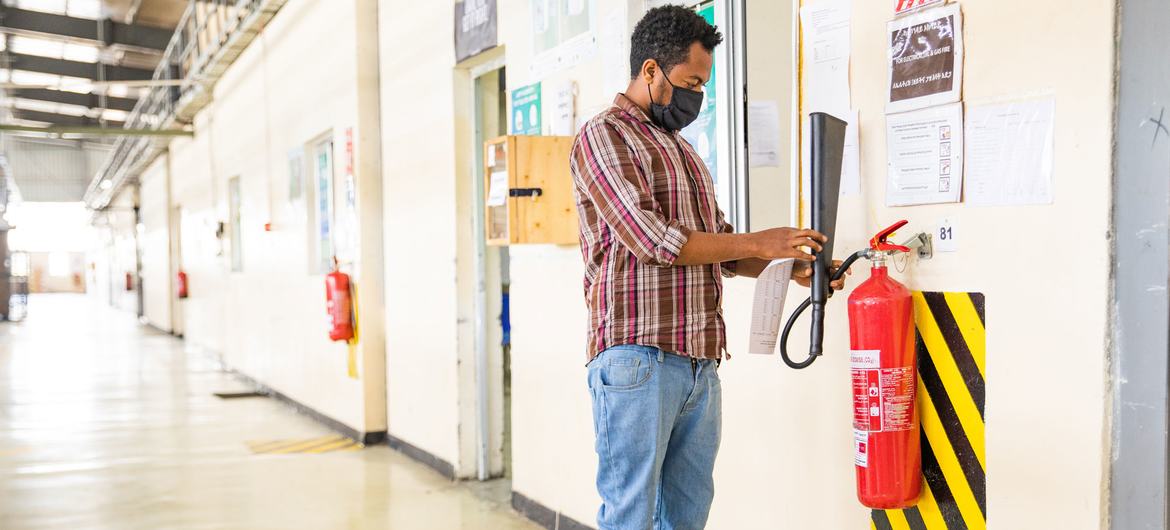
A worker at a factory in Ethiopia carries out an inspection on fire safety equipment.

But what maybe makes us different from other projects is that we have a very close collaboration with major brands from the US, UK, Europe and Japan to promote responsible business practices.

UN News: How successful has this programme been?

Sara Park: Our studies show that at the factory level we’ve made significant impact, for example by increasing wages and supporting gender-equality related issues, women’s empowerment and women getting more supervisory roles.

Over the quarter of a century of its existence, Better Work has lifted millions of people out of poverty and reduced the environmental impact of the apparel sector by creating decent work in sustainable enterprises.

It’s still hard for unions as freedom of association remains a big challenge.

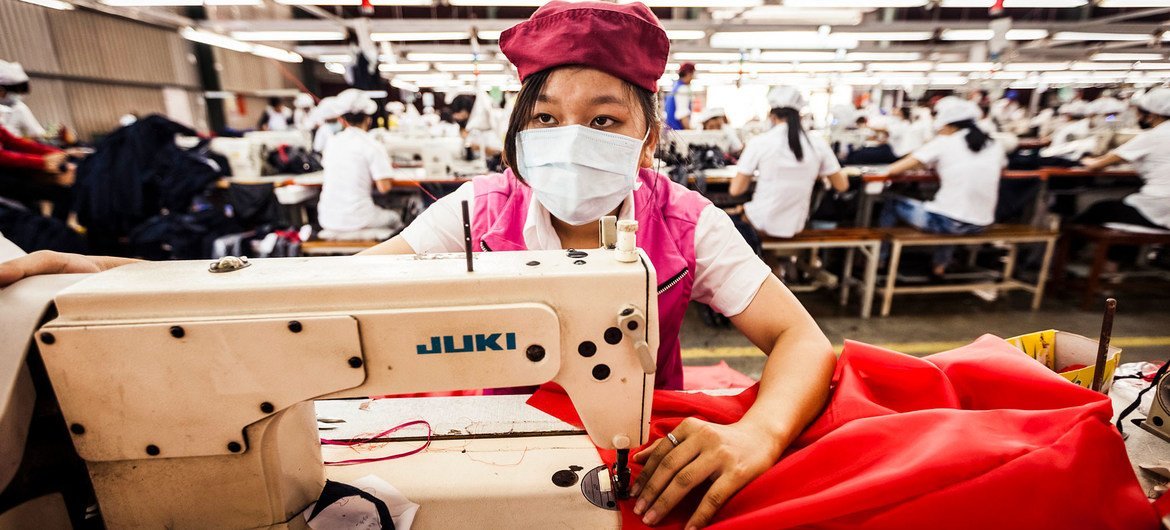
A woman works at a Better Work-affiliated factory in Viet Nam.

If you’re trying to develop a whole industry and make it competitive, it takes years if not decades; however, we have seen improvements in the factories where we work.

Better Work-enrolled factories have also reported an increase in orders from buyers.

UN News: So, this is good for business as well?

Sara Park: This is good for business, and productivity in individual factories. Governments also tell us that the programme supports confidence and thus growth of the industry as a whole in participating countries.

© Better Work/Marcel Crozet

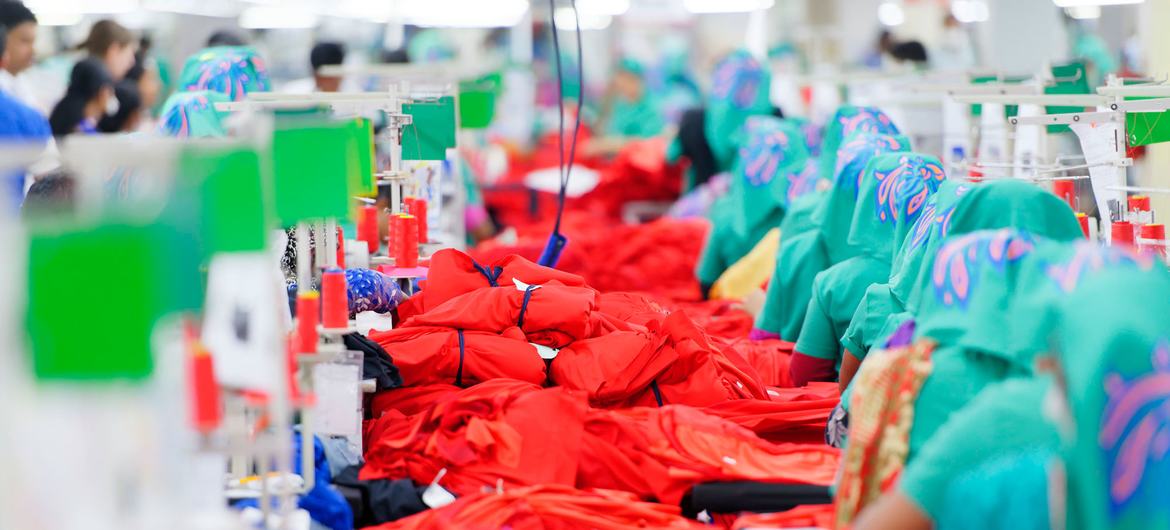
Garment employees work on a production line of an exporting clothing plant in Jordan.

UN News: How has Better Work been affected by recent global changes in development funding?

Sara Park: As we know from recent developments, the US Government has cut funding and that has affected our programmes in Haiti and Jordan, which were almost fully funded by the US. The other countries have not been affected, as we are lucky to have very diverse funding.

UN News: Why is the ILO’s ongoing support needed once the relationship between factory and the buyer is set up?

Sara Park: The buyers, which are often well-known companies, require a sustainable way of monitoring working conditions to ensure they are in compliance with international labour standards; this is important to eliminate risk from the buyers’ perspective.

The Better Work programme supports improvements in factories, by conducting assessments, advisory and learning sessions and helps all parties to better understand compliance with the standards. It also works with governments, workers and employers to build capacity.

© Better Work/Feri Latief

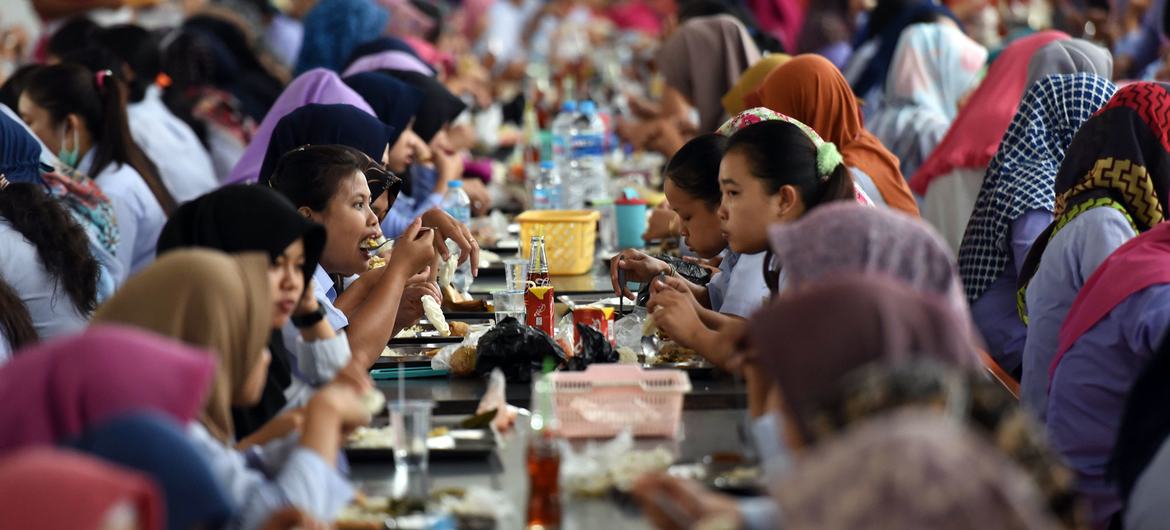
Workers take their lunch break at a garment factory in Indonesia.

UN News: Currently there is widespread uncertainty about tariffs, the taxing of imported goods particularly into the United States. How is the garment sector impacted?

Sara Park: At the moment, we don’t know what the impact will be. Governments are monitoring the situation. Employers and, of course, the unions are worried.

It is extremely challenging for factories as uncertainty means they cannot plan even for the short term, as they don’t know what orders they will have. They are also concerned about paying workers.

Better Work-enrolled factories are providing primarily jobs in the formal sector; if they close, then those jobs may move to the informal sector where workers have fewer protections.

In countries like Jordan for example, migrants make up the majority of the workforce in the garment industry, most of them come from South and Southeast Asia.

UN News: How is this uncertainty impacting investment in the global garment industry?

Sara Park: During periods of crisis or uncertainty, investment generally pauses. One concern is that factories stop investing in improving working conditions, which could affect occupational safety and health.

For example, heat stress is a serious issue. Recently, in Pakistan temperatures reached 50 degrees Celsius so action needs to be taken to protect workers. This may not happen if investment dries up.

UN News: What would you say to a garment worker who was worried about his or her job?

Sara Park: We understand this is a worry for many workers. Yet the work of the ILO is continuing to ensure that workers are protected and the ILO remains in those countries and is committed to improving conditions for all workers across different sectors.

We will continue to promote social dialogue because that’s how improvements can be made at factory, sectoral and national level.

Source link