
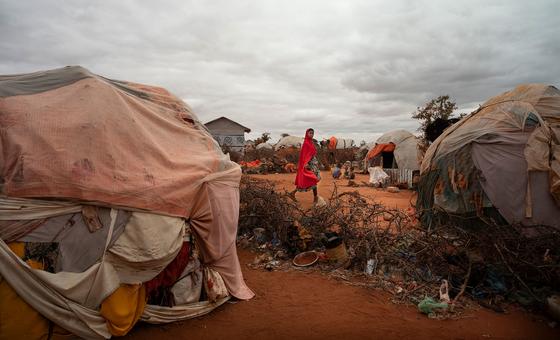
Droughts are causing record devastation worldwide, UN-backed report reveals

This is according to a new report from the UN Convention to Combat Desertification (UNCCD), the U.S. National Drought Mitigation Center (NDMC) and the International Drought Resilience Alliance on the global impacts of droughts from 2023 to 2025.

“Drought is a silent killer. It creeps in, drains resources, and devastates lives in slow motion. Its scars run deep,” said UNCCD Executive Secretary Ibrahim Thiaw.

“This is not a dry spell,” stressed Dr. Mark Svoboda, report co-author and NDMC Director. “This is a slow-moving global catastrophe, the worst I’ve ever seen. This report underscores the need for systematic monitoring of how drought affects lives, livelihoods, and the health of the ecosystems that we all depend on.” 

Record devastation in Africa

According to the report, as 90 million people face acute hunger across Eastern and Southern Africa, some areas in the region have been experiencing the worst drought ever recorded.

In Ethiopia, Zimbabwe, Zambia and Malawi, maize and wheat crops have suffered repeated failures. In Zimbabwe in particular, the 2024 corn crop was down 70 per cent year on year, maize prices doubled, and 9,000 cattle died of thirst and starvation.

Some 43,000 people in Somalia died in 2022 alone due to drought-linked hunger. The crisis continued through 2025, with a quarter of the population facing crisis-level food insecurity at the beginning of the year.

As a result of drought, Zambia is suffering one of the world’s worst energy crises: in April, the Zambezi River plummeted to 20 per cent of its long-term average, and the country’s largest hydroelectric plant, the Kariba Dam, fell to 7 per cent generation capacity, causing electricity blackouts of up to 21 hours a day. This has led to the shuttering of hospitals, bakeries, and factories, further compounding the devastation.

Worldwide impacts

But the effects of drought extend beyond Africa. For example, by September 2023 in Spain, two years of drought and record heat caused a 50 per cent drop in the olive crop, doubling olive oil prices nationwide.

In Türkiye, drought-accelerated groundwater depletion has triggered sinkholes, endangering communities and their infrastructure while reducing aquifer storage capacity.

In the Amazon Basin, record-low river levels in 2023 and 2024 led to mass deaths of fish and endangered dolphins, disrupted drinking water supplies and created transport challenges for hundreds of thousands. Ongoing deforestation and fires also threaten to shift the Amazon from a carbon sink to a carbon source.

Declining water levels in the Panama Canal slashed transit by more than one-third, leading to major global trade disruptions. Among the spillover effects were declines in American soybean exports and shortages and rising prices reported in UK grocery stores.

Call for cooperation and solutions

The report listed several recommendations to help combat this crisis, including stronger early warning systems, real-time drought and drought impact monitoring, and nature-based solutions such as watershed restoration and indigenous crop use.

It also called for more resilient infrastructure – including off-grid energy and alternative water supply systems – and global cooperation, particularly regarding transboundary river basins and trade routes. 
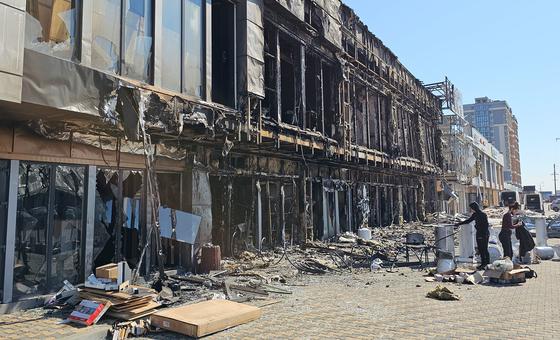
Report reveals significant rise in civilian casualties and rights violations in Ukraine

It covers the period from 1 December 2024 to 31 May 2025, during which 986 civilians were killed and 4,807 injured – a 37 per cent increase compared to the same period the previous year.

The war in Ukraine – now in its fourth year – is becoming increasingly deadly for civilians,” said Danielle Bell, Head of the UN Human Rights Monitoring Mission in Ukraine (HRMMU).

“We continue to document patterns of violence that are inconsistent with obligations under international humanitarian law.”

Concern over use of short-range drones

Most casualties occurred in areas under Ukrainian Government control, primarily due to Russian attacks using long-range explosive weapons in populated areas and short-range drones near frontline locations.

Nearly half of all casualties were caused by missiles, loitering munitions and air-dropped bombs in densely populated areas. At least three attacks involved the use of missiles with fragmentation warheads which detonated above ground and scattered fragments across large open areas, killing and injuring many civilians at once.

The use of short-range drones is driving the rise in civilian casualties, the report said. OHCHR verified that 207 civilians were killed and 1,365 injured in these attacks.

Among the deadliest incidents was a Russian drone strike on a civilian bus transporting employees of a mining company to work in the Dnipropetrovsk region. Eight women and two men were killed, and 57 people were injured.

“The high number of civilian casualties from the use of short-range drones, which allow operators to see their targets in real time, raises grave concerns,” Ms. Bell said.

Our findings strongly suggest a failure to distinguish between civilian and military targets, and to take all feasible precautions to verify the military nature of those targets – or worse, an intentional decision not to.

During the same period, Russian forces struck at least five hospitals directly. Some of the attacks used multiple loitering munitions, suggesting potential deliberate targeting of the hospitals in violation of international humanitarian law.

Prisoners of war

Serious violations against prisoners of war (POWs) also remain a major concern, according to the report. OHCHR documented credible allegations that at least 35 Ukrainian POWs and one Russian POW were executed during the reporting period.

Staff interviewed 117 recently released Ukrainian POWs and two detained medical personnel, nearly all of whom described being tortured and ill-treated in captivity. This included severe beatings, electric shocks, sexual violence, dog attacks, and deliberate humiliation, often carried out by personnel wearing balaclavas to conceal their identities.

Ms. Bell said the continued brutalization of Ukrainian prisoners of war is not only inhumane, but a serious violation of international law.

These are not isolated incidents – they point to well-documented patterns of widespread and systematic torture that demand urgent and unambiguous accountability, and measures toward prevention,” she said.

Meanwhile, more than half of the Russian POWs and third-country nationals held by Ukraine also reported abuse – including torture, ill-treatment, threats, and internment in unofficial facilities – which mostly occurred in transit places before arrival at official places of internment.

Rights concerns in Russian-occupied areas

The report highlights ongoing human rights concerns with Ukrainian civilians unlawfully detained by Russian authorities, predominantly in occupied territory. People who have been released described torture, ill-treatment, and dire conditions of detention.

Ukrainians in occupied territory faced increased coercion to adopt Russian citizenship. OHCHR documented over 16,000 homes listed by Russian occupation authorities as potentially “abandoned” and therefore at risk of being confiscated.

Displaced residents faced severe legal and logistical obstacles, as well as security risks, to reclaim their property.

Ukrainian children recruited

Another issue covered in the report is the recruitment and use of Ukrainian children “for sabotage activities of increasing gravity against Ukrainian military objectives.”

The children reportedly were recruited by unidentified actors, likely affiliated with Russia, according to Ukrainian law enforcement authorities. Some of these youngsters were killed or injured, while others are facing prosecution after being enticed via social media to commit arson or plant explosives.

“Using children to commit acts of sabotage or violence exploits their vulnerability and endangers their lives,” Ms. Bell said. “It compounds their suffering by exposing them to violence, coercion, and harsh legal consequences.

OHCHR also voiced concern over the situation of older people, mainly women, as well as persons with disabilities, who remain at disproportionate risk, particularly in frontline areas.

Many are unable to evacuate due to poverty and limited housing options, while those who can often face long stays in shelters that lack appropriate facilities, or they are placed in institutional settings due to the absence of suitable alternatives.

Source link

No Life Possible Due to UV Radiation on Mars, Finds New Study

When NASA scientists declared that finding alien organism on Mars surface is a possibility soon, they were not sure about the perchlorate effect.

Now that new research has found that the bacteria exposed to UV-activated perchlorate were killed within minutes, may change their perception about the possibility of life in the form of any organism, forget about the bacteria.

Perchlorate found in the Martian soil in 2008 can lower the freezing point of water substantially keeping it stable for several hours each summer day.

But the latest research by Jennifer Wadsworth and Charles Cockell from the University of Edinburgh, found that perchlorate gets activated by ultraviolet (UV) light, similar to the conditions which exist on the Martian surface, thus killing any form of living organism immediately.

When the researchers killed Bacillus subtilis, a form of bacteria with perchlorate at same concentration found on the Martian surface, within 30 seconds. Those which are exposed to non-UV radiation but only perchlorate were found to remain viable for at least an hour. Since bacteria died instantly when exposed to perchlorate and UV radiation, the support system for any life organism on Mars is ruled out, they argue.

“The mere presence of liquid water seeps, thought to be good locations to search for life, does not imply environments fit for life,” said researchers. The study was published in the journal Nature Scientific Reports.

Unless we find conditions which are not exposed to perchlorate and UV radiation, we cannot find alien life on Mars, concluded researchers dashing off any hope of NASA or other astro-physicists who had hoped to find one soon.

It remains to be seen whether SpaceX founder Elon Musk will change the schedule to send the first batch of enthusiasts to Mars next decade.