Independent experts alarmed by child rights violations in US immigration procedures

Thousands of children remain in custody without access to legal counsel; a situation the experts warn is forcing minors to navigate complex immigration proceedings alone and undermining their fundamental rights.  

The three Special Rapporteurs, appointed by the UN Human Rights Council, said they are in contact with the US Government on the issue. 

Duty to care 

They explained that under the 2008 Trafficking Victims Protection Reauthorization Act (TVPRA), the US Office of Refugee Resettlement is responsible for the care and custody of unaccompanied children.  

The law requires the Department of Homeland Security (DHS) to protect children from mistreatment, exploitation and trafficking in persons.  

It also guarantees that unaccompanied children in federal custody have access to legal counsel and should not be subjected to expedited removal – that is, deportation without a court hearing. 

Legal support ended 

The experts noted, however, that on 18 February 2025, the US Department of the Interior ordered nonprofit legal service providers to halt work and ended funding for attorneys representing unaccompanied children.  

Although the development has been challenged in the courts, many of the 26,000 affected children lost legal counsel and remain at risk of forced removal.  

Reports indicate that young migrants are being held in windowless cells, denied adequate medical care and separated from their parents or caregivers for long periods. 

In fact, between January and August 2025, average custody time rose from roughly one month to six, while releases to family caregivers dropped by more than half: from approximately 95 per cent to 45 per cent. 

Pressured or paid to self-deport 

“There have been consistent accounts of unlawful deportations of unaccompanied children, in breach of the obligation of non-refoulement, including child victims of trafficking, and children at risk of trafficking in persons,” the independent experts said.  

Children have been reportedly pressured to either accept a $2,500 cash payment to self-deport or face indefinite detention and transfer to US Immigration and Customs Enforcement (ICE) custody upon turning 18. 

 The experts stressed that children should have access to administrative and judicial remedies against decisions affecting their own situation, or that of their parents or caregivers. 

Measures should be taken also to avoid undue procedural delays that could negatively affect their rights. 

 “Expedited proceedings should only be pursued when they are consistent with the child’s best interests and without restricting any due process guarantees,” they said. 

Independent voices 

The three Special Rapporteurs receive separate mandates from the UN Human Rights Council to report on trafficking in persons, especially women and children; the human rights of migrants, and the independence of judges and lawyers. 

They are not UN staff and do not receive payment for their work. 

Source link

Report reveals significant rise in civilian casualties and rights violations in Ukraine

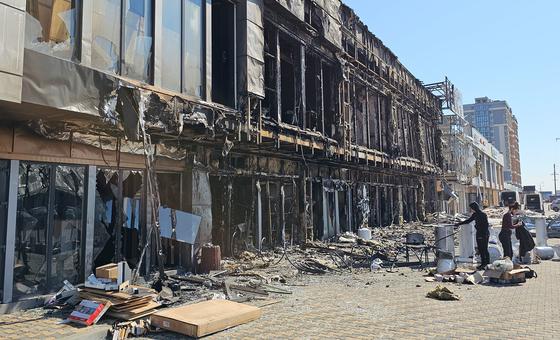
It covers the period from 1 December 2024 to 31 May 2025, during which 986 civilians were killed and 4,807 injured – a 37 per cent increase compared to the same period the previous year.

The war in Ukraine – now in its fourth year – is becoming increasingly deadly for civilians,” said Danielle Bell, Head of the UN Human Rights Monitoring Mission in Ukraine (HRMMU).

“We continue to document patterns of violence that are inconsistent with obligations under international humanitarian law.”

Concern over use of short-range drones

Most casualties occurred in areas under Ukrainian Government control, primarily due to Russian attacks using long-range explosive weapons in populated areas and short-range drones near frontline locations.

Nearly half of all casualties were caused by missiles, loitering munitions and air-dropped bombs in densely populated areas. At least three attacks involved the use of missiles with fragmentation warheads which detonated above ground and scattered fragments across large open areas, killing and injuring many civilians at once.

The use of short-range drones is driving the rise in civilian casualties, the report said. OHCHR verified that 207 civilians were killed and 1,365 injured in these attacks.

Among the deadliest incidents was a Russian drone strike on a civilian bus transporting employees of a mining company to work in the Dnipropetrovsk region. Eight women and two men were killed, and 57 people were injured.

“The high number of civilian casualties from the use of short-range drones, which allow operators to see their targets in real time, raises grave concerns,” Ms. Bell said.

Our findings strongly suggest a failure to distinguish between civilian and military targets, and to take all feasible precautions to verify the military nature of those targets – or worse, an intentional decision not to.

During the same period, Russian forces struck at least five hospitals directly. Some of the attacks used multiple loitering munitions, suggesting potential deliberate targeting of the hospitals in violation of international humanitarian law.

Prisoners of war

Serious violations against prisoners of war (POWs) also remain a major concern, according to the report. OHCHR documented credible allegations that at least 35 Ukrainian POWs and one Russian POW were executed during the reporting period.

Staff interviewed 117 recently released Ukrainian POWs and two detained medical personnel, nearly all of whom described being tortured and ill-treated in captivity. This included severe beatings, electric shocks, sexual violence, dog attacks, and deliberate humiliation, often carried out by personnel wearing balaclavas to conceal their identities.

Ms. Bell said the continued brutalization of Ukrainian prisoners of war is not only inhumane, but a serious violation of international law.

These are not isolated incidents – they point to well-documented patterns of widespread and systematic torture that demand urgent and unambiguous accountability, and measures toward prevention,” she said.

Meanwhile, more than half of the Russian POWs and third-country nationals held by Ukraine also reported abuse – including torture, ill-treatment, threats, and internment in unofficial facilities – which mostly occurred in transit places before arrival at official places of internment.

Rights concerns in Russian-occupied areas

The report highlights ongoing human rights concerns with Ukrainian civilians unlawfully detained by Russian authorities, predominantly in occupied territory. People who have been released described torture, ill-treatment, and dire conditions of detention.

Ukrainians in occupied territory faced increased coercion to adopt Russian citizenship. OHCHR documented over 16,000 homes listed by Russian occupation authorities as potentially “abandoned” and therefore at risk of being confiscated.

Displaced residents faced severe legal and logistical obstacles, as well as security risks, to reclaim their property.

Ukrainian children recruited

Another issue covered in the report is the recruitment and use of Ukrainian children “for sabotage activities of increasing gravity against Ukrainian military objectives.”

The children reportedly were recruited by unidentified actors, likely affiliated with Russia, according to Ukrainian law enforcement authorities. Some of these youngsters were killed or injured, while others are facing prosecution after being enticed via social media to commit arson or plant explosives.

“Using children to commit acts of sabotage or violence exploits their vulnerability and endangers their lives,” Ms. Bell said. “It compounds their suffering by exposing them to violence, coercion, and harsh legal consequences.

OHCHR also voiced concern over the situation of older people, mainly women, as well as persons with disabilities, who remain at disproportionate risk, particularly in frontline areas.

Many are unable to evacuate due to poverty and limited housing options, while those who can often face long stays in shelters that lack appropriate facilities, or they are placed in institutional settings due to the absence of suitable alternatives.
Source link

Syria: UN commission hails recent action to address past violations

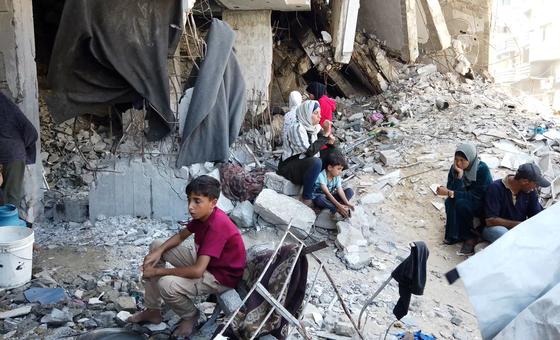
Paulo Sérgio Pinheiro highlighted the establishment of the National Transitional Authority and the National Authority for Missing Persons which are expected to help reveal the fate of the more than 100,000 Syrians estimated to have been forcibly disappeared or gone missing.

They are also expected to expose the truth about systematic violations like arbitrary detention, torture and ill-treatment, and about widespread attacks which killed hundreds of thousands of civilians and maimed millions during hostilities.

Syria continues along the path to transition following the overthrow of the Assad regime last December.

Wave of retaliatory attacks

Mr. Pinheiro said the security vacuum left after the dismissal of the armed forces and security services, together with a lack of clarity on the new framework for justice, contributed to an atmosphere where victims of past crimes and violations attempted to take the law into their own hands and settle scores.

Retaliatory attacks that took place in coastal areas in March, and on a smaller scale in other parts of the country, were “in part a response to five decades of systematic crimes perpetrated by security forces with impunity which affected all Syrians,” he said.

“More recently, sectarian fault lines have also been fuelled by widespread hate speech and incitement against Alawis, off and online, including posts with false information reportedly often originating from abroad.”

Eyewitness accounts

The Commission conducted its latest visit to Syria last week and travelled to several locations on the coast where killings and looting had occurred.  The team met with several civil and security authorities, as well as eyewitnesses and victims’ families.

“First-hand accounts by survivors of these events…revealed in detail how residential areas were raided by large groups of armed men, many of them members of factions now affiliated with the State. They told us how the assailants detained, ill-treated and executed Alawis,” he said.

He acknowledged the interim authorities’ establishment of a National Inquiry to investigate the violations as well as an additional High-Level Committee to Maintain Civil Peace.  Furthermore, dozens of alleged perpetrators have been arrested.

“Protection of civilians is essential to prevent further violations and crimes,” he said. 

“We welcome the commitment of President (Ahmed) al-Sharaa to hold those responsible accountable to restore confidence for State institutions amongst the affected communities.”

He also pointed to a deadly attack on a Greek Orthodox church in Damascus last Sunday, saying the authorities must ensure the protection of places of worship and threatened communities, and perpetrators and enablers must be held accountable.

Foreign intervention

Mr. Pinheiro told the Council that “the Syrian conflict has had no shortage of internal challenges and grievances, many of which were made worse by foreign interventions.”

In recent weeks, Israel has carried out a wave of airstrikes in and around Damascus, including near the presidential palace. Military bases and weapons depots in Daraa, Hama, Tartous and Latakia have also been targeted as part of its sustained military campaign in Syria. Several civilians were killed.

Civilian casualties were also reported in the context of Israeli operations in the buffer zone in Quneitra and southwestern Daraa monitored by the UN Disengagement Observer Force (UNDOF)

“These actions raise serious concerns of violations of international human rights and humanitarian law as UN Secretary-General (António) Guterres further stated recently,” he said.

Millions in need 

Mr. Pinheiro reported that more than two million Syrians have returned home since December, including nearly 600,000 from neighbouring countries and just under 1.5 million internally displaced persons (IDPs).

“For many of the over seven million Syrians who remain displaced, massive property-related challenges will need to be tackled in the wake of industrial-scale destruction, pillage and confiscation of homes and lands,” he said.

Moreover, he noted that “despite the recent encouraging steps towards lifting of sectoral sanctions and opening the country to new investments, nearly 16.5 million Syrians remain in need of humanitarian assistance.” Among them are nearly three million people facing severe food insecurity.

Mr. Pinheiro concluded his remarks, saying “the interim authorities’ repeated commitments to protect the rights of everyone and all communities in Syria without discrimination of any kind are encouraging” and “should be met with the necessary support from the international community.”

About the Commission

The Independent International Commission of Inquiry on the Syrian Arab Republic was by the Human Rights Council in August 2011 with a mandate to investigate all alleged violations of international human rights law since March 2011.

The members are Mr. Pinheiro and Commissioners Hanny Megally and Lynn Welchman.

They are not UN staff and do not receive any payment for their work.

‘A moral failure’: Security Council hears about grave violations against children caught in war

“From that day on, our home became a travel bag and our path became that of displacement … My childhood was filled with fear and anxiety and people I was deprived of,” she said, speaking via videoconference from Syria.  

Seema Sen Gupta, director of child protection and migration at UNICEF, briefs the Security Council. 

Sila, now 17, described her experiences during the Syrian Civil War to a meeting of the UN Security Council held on Wednesday to discuss the findings of the Secretary-General’s latest report on Children and Armed Conflict.

The report documented a 25 per cent increase in grave violations against children in 2024, the largest number ever recorded in its 20-year history. 

This year’s report from the Secretary-General once again confirms what too many children already know — that the world is failing to protect them from the horrors of war,” said Sheema Sen Gupta, director of child protection at the UN Children’s Fund (UNICEF).

“Each violation against children in every country around the globe represents a moral failure.”

The real scale of the harm

The report presented to the Security Council is published annually to document grave violations against children affected by war. It relies entirely on data compiled and verified by the UN, meaning that the real numbers are likely much higher than reported.  

In 2024, the report documented a record 41,370 grave violations — including killing and maiming, rape, abduction and the targeting of infrastructure such as schools which supports children.  

“Each child struck by these attacks carries a story, a stolen life, a dream interrupted, a future obscured by senseless violence and protracted conflict,” said Virginia Gamba, the Secretary-General’s Special Representative for Children and Armed Conflict, whose office produced the report.  

Virginia Gamba, the Secretary-General’s Special Representative for Children and Armed Conflict, briefs the Security Council. 

While many of these violations occurred during times of conflict — especially as urban warfare is on the rise — grave violations can persist even after a conflict ends. 

They persist in the unexploded ordinances which still pepper the ground.  

“Every unexploded shell left in a field, schoolyard, or alley is a death sentence waiting to be triggered,” said Ms. Sen Gupta.  

They persist in the spaces which remain destroyed, impeding children from accessing healthcare and education.  

And they persist in the trauma and injuries which never fully leave a child.  

Scars that never heal

Children who survive the grave violations do not escape unscathed — if they suffered violence, the injuries will stay with them for a lifetime. And even if they were not injured, the trauma remains.

“The physical and psychological scars borne by survivors last a lifetime, affecting families, communities and the very fabric of societies,” said Ms. Gamba.  

This is why UNICEF and its partners have worked to provide reintegration programmes and psychosocial support for children who are victims of grave violations.

Sila said that the trauma of her childhood is still with her, and has pushed her to become an advocate for children in conflicts.  

“From that moment on, nothing has felt normal in my life. I’ve developed a phobia of any sound that resembles a plane, of the dark, and even of silence,” she said.  

‘This cannot be the new normal’

Ms. Gamba called for “unwavering condemnation and urgent action” from the international community in order to reverse the worrying trends which the report details.  

We cannot afford to return to the dark ages where children were invisible and voiceless victims of armed conflict… Please do not allow them to slip back into the shadows of despair,” she said. 

Current funding cuts to humanitarian aid are impeding the work of UN agencies and partners to document and respond to grave violations against children.

In light of this, Ms. Sen Gupta’s call for the Security Council was simple: “Fund this agenda.”

She said that the international community cannot allow this to become “a new normal,” and reminded the members of the Security Council that children are not and should never be “collateral damage.”

Despite the devastation which the report detailed, there were “glimmers of hope” according to Ms. Sen Gupta. For example, the Syrian National Army signed an action plan which will prevent the recruitment, killing and maiming of children.  

Sila also spoke of hope — she hopes that hers is the last generation to suffer these grave violations.  

“I am from a generation that survived. Physically,” she said. “Our bodies survived but our hearts are still living in fear. Please help us replace the word displacement with return, the word rubble with home, the word war with life.” 

Source link

‘We are at a point of no return’: grave violations against children surge for third year

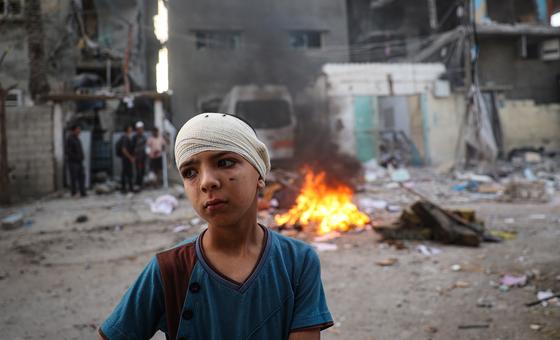
This number represents a 25 per cent increase from 2023, marking the third consecutive year that violations have increased. 22,495 violations were committed against children themselves while the remaining targeted infrastructure such as schools and humanitarian aid intended for and used by children.

“The cries of 22,495 innocent children who should be learning to read or play ball — but instead have been forced to learn how to survive gunfire and bombings — should keep all of us awake at night,” said the Special Representative of the UN Secretary-General for Children and Armed Conflict, Virginia Gamba.

The report only details violations which could be independently verified by the United Nations, meaning the actual number of grave violations and children affected are likely much higher.

‘Children should not be a casualty of war’

The report attributed the increase to indiscriminate attacks — especially urban warfare — in addition to disregard for peace agreements and deepening humanitarian crises worldwide.

“Children living amidst hostilities are being stripped of their childhood … When we allow this to happen, we are not just failing to protect children – we are taking away their chance to grow up safe, to go to school, and to live a life with dignity and hope,” Ms. Gamba said.

In addition to the broader increase, the number of children subjected to multiple grave violations increased by 17 per cent.

The highest number of violations, 8,554, occurred in Israel and the Occupied Palestinian Territories – more than double the number in the Democratic Republic of the Congo (DRC) which followed.

Governments ‘blatantly’ ignore international law

The report noted that while non-State actors played an out-sized role in violations against individual children, government actors were the main forces responsible for killing and maiming children, attacking schools and hospitals, and denying humanitarian access.

“Instead of recognizing the special protection afforded to children, governments and armed groups around the world blatantly ignore international law that defines a child as anyone under 18,” Ms. Gamba said.

The report listed eight countries whose government forces violated international law and committed grave violations against children — the DRC, Israel, Myanmar, Somalia, South Sudan, Sudan, Syria and Russia.

‘A wake-up call’

In 2024, 16,482 children formerly associated with armed forces or groups received protection or reintegration support, but numbers of violations against children still remain staggeringly high.

The Secretary-General called on all Member States to adhere to their obligations under international law by upholding the rights and special protections of children while also expanding services to treat children who are victims of conflict.

Ms. Gamba reiterated this call, saying that the increase in grave violations should be a “wake-up call” and reminding the international community that indifference to such violations will not bring peace.

“We face a choice that defines who we are: to care, or to turn away …  We all share the duty to act—with urgency, with determination—to bring this suffering to an end. Not tomorrow. Not someday. Today,” she concluded. 

Source link

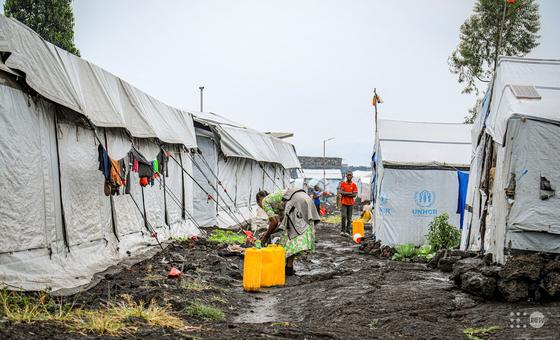
DR Congo: Human rights violations could amount to war crimes, UN experts say

Volker Türk told the Human Rights Council that the investigation and analysis undertaken by his office, OHCHR, had revealed “an apparent total disregard for the protection of civilians during and after military operations.”

The OHCHR’s Fact-Finding Mission in the eastern DRC is also investigating other alleged violations of international humanitarian law, “many of which may amount to war crimes,” he said.  

Arbitrary Arrests

After capturing cities and villages in early 2025, the M23 Rwanda-backed rebels arbitrarily arrested police officers and large numbers of other civilians, including children, the UN human rights office reported.  

According to witnesses, those captured were, and are, still being held in “inhumane conditions,” and many were forcibly recruited into the ranks of the M23.  

The Mission is also investigating alleged arbitrary arrests and enforced disappearances of suspected M23 supporters by the military intelligence arm of the DRC armed forces.  

Extrajudicial Killings

OHCHR also reported that members of the M23 carried out summary and extrajudicial executions, which likely amount to war crimes, said Mr. Türk.  

The Mission is also investigating alleged summary executions by members of the DRC armed forces and DRC-backed Wazalendo militias.  

UN human rights is also investigating reports of death threats, detention and other reprisals against human rights defenders, journalists, and members of civil society perceived as critical of the M23; including the alleged killings of at least two activists.  

Sexual Violence

The Mission received reports of “horrific” use of sexual violence by all parties as a means of reprisal against communities, relatives of perceived opponents, and people from other ethnic groups, said Mr. Türk.  

In North and South Kivu, nearly 40 per cent of survivors of sexual and gender-based violence are children. The UN International Children’s Emergency Fund (UNICEF) estimated that during the most intense phase of the conflict, a child was raped every 30 minutes.  

Mr. Türk called on “all parties to the conflict to commit immediately to a ceasefire and resume negotiations, and to respect international humanitarian and human rights law.” 

Source link