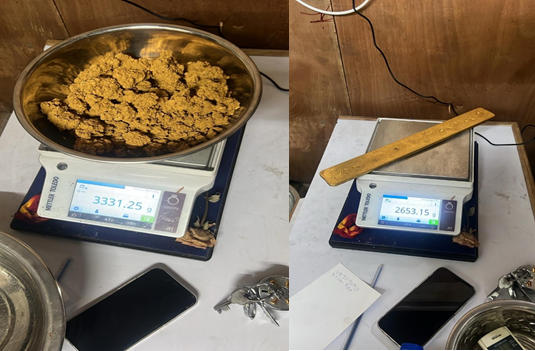
In a major crackdown against smuggling of foreign origin gold, the the Directorate of Revenue Intelligence (DRI) has successfully unearthed and dismantled a highly organised gold smuggling syndicate operating through Mumbai Airport. In this operation DRI detected and busted gold melting facility that was being used for melting of foreign origin smuggled gold.
(Seized gold from melting facility in Mumbai)
A total of nine persons involved across the entire smuggling chain, including the airport staff, her handler, three intermediaries, the melting facility operator, and three persons engaged in the melting process have been arrested. Further, about 6 kg foreign-origin smuggled gold recovered at the spot has been seized.
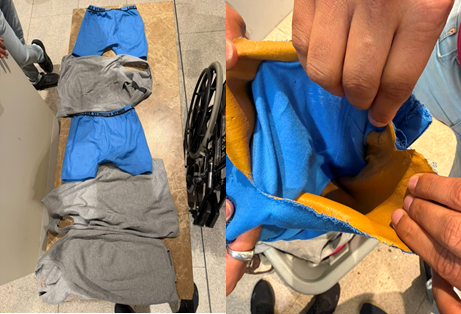
This case underscores the evolving sophistication of organised gold smuggling syndicates, which increasingly exploit insider access at airports and employ layered distribution networks to evade detection.In another operation at Bengaluru, DRI seized 1.8 kg 24 KT gold in paste form ingeniously concealed within the layers of garments of an international passenger. Subsequent follow up search at his residential premises led to seizure of around 1.5 kg gold jewellery, 45 kg silver, and Indian & foreign currencies. The person was arrested.
(Gold in paste form concealed in undergarments; Seized at Bengaluru)
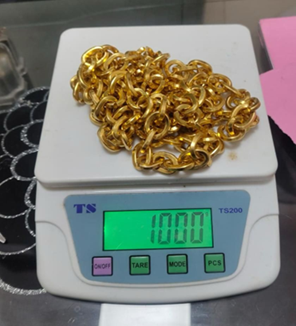
Earlier in this week, DRI has conducted a series of operations at other airports, railways station and land customs stations at Hyderabad, Rajkot, Calicut, Vishakhapatnam, Calicut, Guwahati and Petrapole, leading to the cumulative seizure of another 6 kg foreign-origin smuggled gold. Five persons have been arrested in these operations.
(Gold Seized at Vishakhapatnam)
Overall, with busting of gold smuggling syndicate, these operations resulted in seizure of about 15 kg gold, 45 kg silver, valued at around Rs. 23 crore, and arrest of 15 persons.
As thousands of protesters clashed with police in Geneva on Sunday ahead of the G7 summit in nearby Évian-les-Bains, France, one prominent voice was conspicuously absent: Greta Thunberg.
The Swedish climate activist, whose ‘Fridays for Future’ movement helped inspire global youth activism, has once again chosen not to join on-site demonstrations or engage directly with the elite gathering of world leaders. Her absence fits a consistent pattern across past G7 summits and underscores her strategic preference for high-impact public pressure over participation in what she has long portrayed as performative international forums.
Ongoing 2026 Protests Highlight the Contrast
Protests in Geneva turned tense over the weekend, with Swiss police deploying tear gas and water cannons against demonstrators opposing the G7’s agenda on issues including inequality, climate policy, and global conflicts. Environmental, feminist, and pro-Palestinian groups were among those marching, with some actions escalating into property damage and clashes.
While climate activists have been visible in the crowds, Thunberg has not been reported among them. This mirrors her approach in previous years: she comments from afar rather than traveling to the summits themselves.
2021 Critique on Social Media
Thunberg’s most direct public takedown of a G7 summit came in June 2021 after the Cornwall, UK, gathering. As leaders wrapped up meetings with photo-ops and pledges, she posted on social media: “The climate and ecological crisis is rapidly escalating. G7 pours fantasy amounts into fossil fuels as CO2 emissions are forecast for second biggest annual rise ever. But the G7 leaders really seem to be having a good time presenting their empty climate commitments and repeating old unfulfilled promises. Of course this calls for a steak-and-lobster-BBQ-celebration while jet planes perform aerobatics in the sky above the G7 resort!”
She did not attend the 2021 event. Youth groups inspired by her work protested on the ground, but Thunberg amplified her criticism remotely, highlighting what she saw as hypocrisy between fossil fuel spending and celebratory optics.
Why the Consistent Absence?
Thunberg has never publicly framed her non-attendance at G7 summits as a formal boycott, but her broader activism reveals clear priorities that explain the pattern persisting into 2026:
She has delivered landmark speeches at UN climate summits, including her 2019 “How dare you!” address, and participated in or led visible protests at multiple COP conferences. These platforms allow direct, high-visibility challenges to leaders.
Thunberg has repeatedly dismissed high-level summits as insufficient or focused on public relations rather than binding action. She boycotted COP27 in Egypt, labeling it a “greenwashing” exercise, and has applied similar scrutiny to other gatherings.
Her signature actions include school strikes that launched a global movement, coal mine blockades (such as in Germany’s Lützerath in 2023), and fossil fuel infrastructure protests. These prioritize mass mobilization and targeted pressure over insider access.
By staying outside elite venues, Thunberg maintains the ability to critique without appearing to legitimize outcomes. Her movement’s decentralized nature means local groups can act without her physical presence.
In the current 2026 context
Amid a backdrop of geopolitical tensions over Iran war, energy suppy disruptions, and climate urgency, her continued distance from the G7 reinforces this approach. While protests unfold in Geneva, Thunberg appears focused on sustaining long-term public pressure rather than engaging directly with the summit’s format.
Her strategy has proven effective at keeping climate issues in the global spotlight on her terms. As G7 leaders convene this week, Thunberg’s voice is likely to be heard through statements or social media rather than from the streets of Évian or Geneva.
As obesity rates rise across the U.S., new research from Joe C. Wen School of Population & Public Health at the University of California, Irvine scientists draws attention to an often-overlooked factor in children’s long-term health: fathers.
Published in Current Obesity Reports, the review examines how a father’s health before and during parenthood—including obesity, diet, stress, mental health and lifestyle habits—can influence a child’s risk for obesity and related health conditions, even before conception. The findings suggest that what is often dismissed as a “dad bod” may reflect health factors that can shape children’s long-term well-being, or in other words, not as harmless as it may seem.
“We found that fathers’ health as an important contributor to children’s health through biological, behavioral and environmental pathways,” said corresponding author Matthew Landry, assistant professor of population health & disease prevention and a registered dietitian nutritionist.
Current trends indicate that more than 250 million people in the U.S. will be overweight or obese by 2050, according to estimates cited by the researchers. While maternal health has long been the focus of efforts to understand childhood obesity, this study and other evidence suggest fathers also play a meaningful role in shaping children’s health.
“Obesity is not simply the result of individual choices,” Landry said. “This work highlights that obesity risk is 40 to 70 percent heritable and can be passed across generations through complex biological and environmental influences.”
Recent evidence collected in this review suggests that obesity can affect sperm quality and alter epigenetic markers – biological signals influenced by behaviors and environment that help regulate how genes function during early development. These changes can potentially affect appetite regulation, metabolism and long-term disease risk in children.
Encouragingly, though, there is evidence that suggests these effects may be reversible. Weight-loss interventions, including lifestyle changes and bariatric surgery, can improve sperm health and modify obesity-related epigenetic patterns, according to the researchers.
Beyond biology, fathers help shape family routines and behaviors that influence children’s health. Fathers’ eating habits, physical activity levels and approaches to parenting are closely associated with children’s diet quality, activity levels and obesity risk. Active involvement in meal preparation, eating meals together and shared physical activity has been linked to healthier outcomes for children.
The review also highlights the broader factors that affect fathers’ ability to support healthy lifestyles, including income, food insecurity, neighborhood conditions, workplace policies and mental health.
The authors argue that healthcare systems and public health programs should include fathers in obesity prevention efforts to a greater degree. Recommendations include father-inclusive prenatal care, expanded support for paternal mental health, paid parental leave and flexible workplace policies that support family well-being.
“Fathers have historically been overlooked in maternal and child health research and intervention efforts,” Landry said. “Recognizing fathers as active contributors to family health creates new opportunities to improve outcomes for future generations.”
The researchers conclude that addressing obesity requires a family-centered, multigenerational approach – one that recognizes fathers as essential partners in building healthier futures for children.
President Smt Droupadi Murmu conferred 07 Kirti Chakras, including 02 posthumous; 15 Vir Chakras, including 03 posthumous; and 29 Shaurya Chakras, including 01 posthumous, to the personnel of the Defence Forces, Central Armed Police Forces and State/Union Territory Police during Phase-I of Defence Investiture Ceremony 2026 at Rashtrapati Bhawan, New Delhi on June 08, 2026. These Gallantry awards were given to the personnel for displaying raw courage, unparalleled bravery and total disregard to personal safety in the line of duty. The list of awardees in the order of presentation is as follows:
LIVE: President Droupadi Murmu presents Gallantry Awards in Defence Investiture Ceremony – 2026 (Phase-1) https://t.co/GndtrI8rXl
— President of India (@rashtrapatibhvn) June 8, 2026
The President of India, Smt Droupadi Murmu presented Gallantry Awards at the Defence Investiture Ceremony-2026 (Phase-I) held at Rashtrapati Bhavan today (June 8, 2026).
Among the dignitaries present on the occasion were the Vice President of India, Prime Minister of India and Union Minister for Defence.
The Mission Olympic Cell (MOC), in its 174th meeting, has inducted multiple rowers into the Target Olympic Podium Scheme (TOPS) Development Group ahead of the 2026 Asian Games in Aichi-Nagoya and other upcoming events. The list has been finalised following the completion of annual national selection trials and crew finalisation by the Rowing Federation of India (RFI).
A total of 22 Rowers are now a part of the TOPS Development group across six boats. This crew will now prepare for major international competitions featuring Rowing, including the Asian Games and World Cup circuit. Among the prominent names inducted are Paris 2024 Olympian Balraj Panwar, Asian Games 2022 silver medalist Arvind Singh, Asian Games 2022 double medalist Jaswinder Singh, and more.
These 22 rowers have been grouped across different boats, including Men’s Single Sculls (M1X), Men’s Double Sculls (M2X), Men’s Quadruple Sculls (M4X), Lightweight Men’s Double Sculls (LM2X), Men’s Coxed Eight (M4-) and Women’s Coxless Fours (W4-). While the majority of the inducted athletes are being prepared with a direct focus on the Asian Games 2026 cycle, some crews are also part of India’s broader international development pathway targeting future competitions, like the Commonwealth Games 2030 set to be hosted in the country.
The induction of these multiple Indian rowers into the TOPS Development Group is another effort to build sustainable bench strength across several boat categories rather than focusing only on individual medal prospects. With India set to host the centenary edition of the Commonwealth Games in 2030, the strengthening of rowing infrastructure and athlete depth remains key. Rowing has not featured in the Commonwealth Games since the 1986 edition in Edinburgh, but can be set for a return in the centenary edition of the games.
The 2026 Asian Games will be held from September 19 to October 4, 2026, in Aichi and Nagoya, Japan.
The continental multi-sport event will bring together thousands of athletes from across Asia to compete in a wide range of disciplines.
The theme for the 12th International Day of Yoga (IDY), to be observed on June 21, 2026, has been announced as “Yoga for Healthy Ageing”, underscoring the growing global recognition of yoga as a holistic tool for enhancing physical, mental and emotional well-being.
Rooted in India’s ancient traditions and embraced worldwide, yoga has increasingly been viewed as an effective means of promoting healthy and active living. The theme highlights yoga’s role in fostering vitality, resilience and independence, while reinforcing its importance in preventive healthcare and overall wellness.
Speaking on the theme, Union Minister of State (Independent Charge) for Ayush and Minister of State for Health and Family Welfare, Shri Prataprao Jadhav, said, “The theme for this year’s IDY, ‘Yoga for Healthy Aging’, holds immense relevance today. As life expectancy continues to rise, it is vital that we learn the art of aging gracefully and healthily—a concept beautifully exemplified in India’s ancient civilization, where our sages and yogis sustained longevity and vibrant health through the power of yoga and spiritual discipline.”
Focus on Healthspan, Not Just Lifespan
The theme places emphasis on improving not only lifespan but also “healthspan”—the number of years a person lives in good health. Through physical postures, breathing exercises, meditation and mindfulness practices, yoga offers a comprehensive approach to maintaining mobility, emotional resilience and mental well-being throughout the ageing process.
The concept aligns with growing global efforts to promote healthy ageing amid rising life expectancy and changing demographic trends.
Scientific Interest Continues to Grow
The benefits of yoga in supporting healthy ageing are increasingly being backed by scientific research.
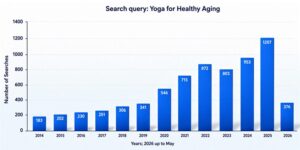
According to data available on PubMed Central, the number of scholarly publications focusing on “Yoga for Healthy Aging” has risen sharply over the past decade. Research papers on the subject increased from 183 in 2014 to 1,207 in 2025. The volume of publications crossed 500 in 2020 and has continued to expand steadily since then.
The growing body of evidence supports the long-standing view within India’s traditional knowledge systems that healthy ageing depends on maintaining a balance between physical, mental and social well-being.
Rising Opportunities in the Silver Economy
The focus on healthy ageing coincides with the rapid expansion of the global “silver economy,” which comprises products and services designed for senior citizens.
In India, the senior-focused economy—including healthcare, wellness services, rehabilitation, assisted living, digital health and elder care—is estimated at nearly ₹73,000 crore and is expected to grow significantly in the coming years.
With people in the 45-64 age group increasingly emerging as a major consumer segment worldwide, demand for preventive healthcare and wellness-oriented lifestyles is on the rise. Yoga is increasingly being viewed as an affordable and accessible solution that supports active and healthy ageing.
PIB
Ayush Ministry’s Yoga Initiatives
The Ministry of Ayush has launched several programmes to promote yoga as a year-round wellness practice and strengthen its role in preventive healthcare.
Among them is the Ministry’s evidence-based “10 Yoga Protocols for Non-Communicable Diseases (NCDs) and Target Groups,” which includes a dedicated protocol tailored for senior citizens. The programme aims to improve flexibility, balance, mobility, respiratory health and emotional well-being through age-appropriate yoga practices.
The Ministry is also advancing its “Yoga 365” initiative, which seeks to encourage daily yoga practice beyond the annual International Day of Yoga celebrations. The programme leverages technology-driven platforms and home-based practice modules to make yoga more accessible.
Another initiative, “Yoga Samavesh,” focuses on extending the benefits of yoga to vulnerable and underserved communities. Through chair yoga, low-impact exercises and community wellness sessions, the programme aims to help senior citizens maintain independence, social engagement and overall well-being.
Innovation Supporting Elder Care
The IDY 2026 theme complements broader government efforts to address the needs of India’s ageing population.
Programmes such as the Seniorcare Ageing Growth Engine (SAGE) are promoting innovation, entrepreneurship and start-up participation in the development of elderly care solutions.
The increasing awareness of yoga’s health benefits is also creating new opportunities for wellness professionals, caregivers, digital health providers and community organisations involved in senior care. Experts expect growing demand for trained personnel capable of supporting holistic and non-clinical aspects of ageing.
A Timely Message for an Ageing World
As countries around the world adapt to changing demographic realities, the theme “Yoga for Healthy Ageing” carries a timely and relevant message.
By encouraging preventive healthcare, active lifestyles and holistic wellness, yoga offers a practical pathway to improving quality of life across age groups. As the world prepares to mark International Day of Yoga 2026, the theme reaffirms India’s commitment to sharing a time-tested practice that promotes healthy, active and graceful ageing.