Global alliance meets in Doha to confront hunger crisis

Addressing heads of state, ministers and international partners, President of the UN General Assembly Annalena Baerbock said today’s hunger crisis is not the result of scarcity, but of inequality, conflict and policy choices.

Last year, more than 670 million people experienced hunger, and 2.3 billion faced moderate or severe food insecurity. “That is billions wondering where their next meal will come from. Parents having to see their children go to bed hungry,” she said.

This is occurring in a world that wastes over one billion meals every day.

“The crisis of hunger is not lack of food. It is entirely preventable,” she stressed, pointing to failures in access, affordability and social protection.

The meeting took place as Doha hosts the Second World Summit for Social Development, where nearly 14,000 attendees are discussing how to strengthen social systems, expand opportunity and reduce inequality.

As the planet heats, hunger spreads

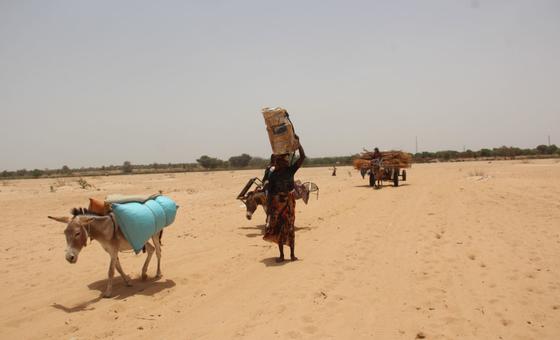
Ms. Baerbock highlighted climate change as a rapidly accelerating driver of hunger. Recalling a recent visit to the Sahel, she described fertile land turned to dust as heat rises and rains fail. “This is the new frontline of food insecurity,” she said.

If global warming continues unchecked, as many as 1.8 billion additional people could face food insecurity, she warned. But limiting warming to 1.5°C, backed by investment in adaptation and resilience, could prevent millions from falling deeper into poverty.

Launched under Brazil’s G20 Presidency in 2024, the Global Alliance Against Hunger and Poverty now includes nearly 200 members – over 100 countries, regional organizations, international agencies and civil society groups. Monday’s meeting was its first at leaders’ level, aimed at accelerating practical cooperation, from scaling up social protection to strengthening climate-resilient agriculture.

“In a world of plenty – where there should be more than enough to go around – ensuring that everyone, everywhere has enough to eat is entirely possible,” Ms. Baerbock said. “A world free from hunger and poverty is not a distant aspiration. It is within reach, if we reach for it together.”


Gaza: Security Council meets on hostage crisis amid ‘unbearable’ conditions facing Palestinian civilians

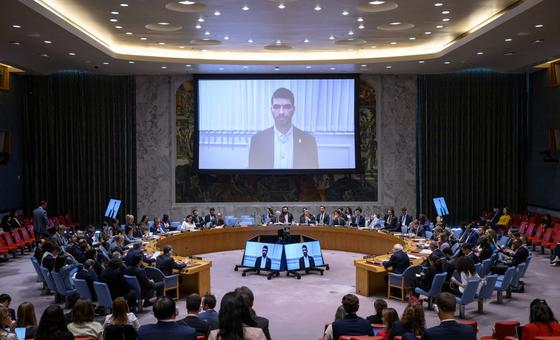
Assistant Secretary-General Miroslav Jenča briefed a Security Council meeting on Tuesday called by Israel to discuss the plight of hostages still being held in the war-ravaged enclave.

It comes after Hamas and Palestinian Islamic Jihad released images and videos of two emaciated hostages, Evaytar David and Rom Braslavsky, sparking outrage and condemnation. 

‘An affront to humanity itself’

The scenes of Evaytar apparently being forced to dig his own grave are appalling,” he said.

“These images, and their own accounts of their treatment, have horrified us all. They are an affront to humanity itself.”

Mr. Jenča acknowledged the presence of Mr. David’s brother, Ilay, who participated in the meeting via videoconference, saying the UN recognises “the profound pain and hardship endured by the families and loved ones of those who remain in captivity.”

He recalled that this week the Jewish community commemorated Tisha B’Av, a day of mourning and remembrance of tragedies endured throughout its history.

“I pay tribute to your courage and determination, and I share your dearest wish: for your brother, and all hostages held in Gaza, to be immediately and unconditionally released,” he said.

A war crime

Currently, 50 hostages continue to be held by Hamas and other Palestinian armed groups in horrific conditions and 28 are thought to be deceased, while freed hostages “have relayed distressing accounts of deprivation, ill-treatment, and abuse.”

Since the conflict began, Hamas and other armed groups have circulated dozens of videos of hostages, including statements made under duress and while clearly suffering, including the most recent footage of the two men.

“International law is clear,” said Mr. Jenča.  “Hostage-taking is prohibited – it is a war crime.”

He stressed that people deprived of their liberty must be treated humanely and with dignity and allowed to be visited by the International Committee of the Red Cross (ICRC). 

“They must never be subject to ill-treatment, abuse, or humiliation, as these would also constitute violations of relevant rules of international law,” he added, before reiterating UN Secretary-General António Guterres’s call on Hamas and other Palestinian armed groups for the immediate and unconditional release of all hostages. 

Gaza situation ‘unbearable’

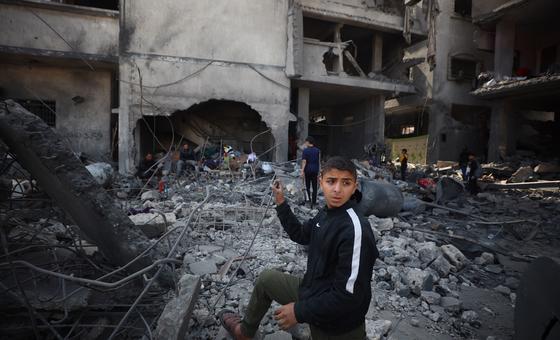
Meanwhile, “the situation in Gaza is horrifying – it is unbearable,” he continued, noting that “Palestinians are subjected to squalid, inhumane conditions on a daily basis.”

More than 60,000 Palestinians have been killed since the conflict began, according to local health authorities.

Since the end of May, over 1,200 Palestinians have been killed and over 8,100 injured while trying to access food supplies, including in the vicinity of militarized aid distribution sites,” said Mr. Jenča.

“The deaths and injuries continue to mount, day by day, with no end in sight to the suffering.”

This is happening as Israel continues to severely restrict humanitarian assistance entering Gaza, while the aid that is allowed to enter “is grossly inadequate.”

‘Hunger is everywhere’

He told the Council that “hunger is everywhere in Gaza, visible in the faces of children and in the desperation of parents risking their lives to access the most basic supplies.”

Here, he echoed the Secretary-General’s condemnation of the ongoing violence in Gaza, including the shooting, killing, and injuring of people trying to get food. 

“International law is clear. Civilians must be respected, protected and never targeted or deliberately deprived of food or access to other lifesaving aid – doing so is a war crime,” he said.

“Israel must immediately allow and facilitate rapid and unimpeded passage of sufficient amounts of humanitarian relief for civilians in need, to avert further suffering and loss of life.”

Potential military expansion ‘deeply alarming’

Mr. Jenča also addressed latest reports regarding Israeli Prime Minister Benjamin Netanyahu’s possible decision to expand military operations through the entire Gaza Strip.

If true, they are “deeply alarming,” he said, as “this would risk catastrophic consequences for millions of Palestinians and could further endanger the lives of the remaining hostages in Gaza.”

He again turned to international law, which is clear that Gaza is and must remain an integral part of a future Palestinian State.

He cited the July 2024 Advisory Opinion by the International Court of Justice (ICJ) which declared that Israel is under an obligation to immediately cease all new settlement activities, evacuate all settlers from the Occupied Palestinian Territory, and to bring an end to its unlawful presence there as rapidly as possible.

No military solution

Mr. Jenča concluded his briefing by underlining the UN’s position that the only way to end the violence and humanitarian catastrophe in Gaza is through a full and permanent ceasefire, the immediate and unconditional release of all hostages and allowing aid to enter at scale and without obstruction.  

Civilians also must be guaranteed safe, unhindered access to assistance.

He stressed that there is no military solution to the conflict in Gaza or the broader Israel-Palestine conflict. 

“We must establish political and security frameworks that can relieve the humanitarian catastrophe in Gaza, start early recovery and reconstruction, address the legitimate security concerns of Israelis and Palestinians, and secure an end to Israel’s unlawful occupation and achieve a sustainable two-State solution,” he said.

This would mean “Israel and a fully independent, democratic, contiguous, viable and sovereign Palestinian State, of which Gaza is an integral part – living side by side in peace and security within secure and recognized borders, on the basis of the pre-1967 lines, with Jerusalem as the capital of both States.” 

Source link

LIVE: UN Security Council meets on crisis in Ukraine

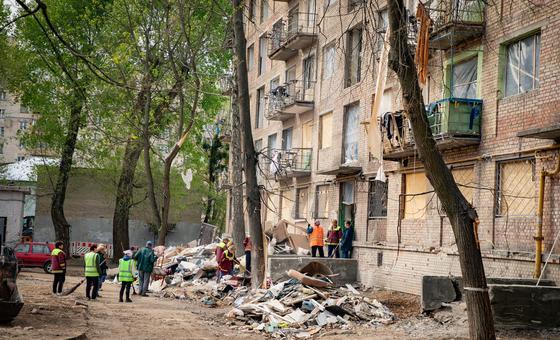
The UN Security Council meets Friday afternoon to discuss the ongoing crisis in Ukraine, where recent attacks have left dozens dead or injured. A senior UN political affairs official is expected to brief on the situation. Follow our live coverage from UN News, in coordination with UN Meetings Coverage, for real-time updates and key developments from the chamber. UN News App users can follow the coverage here.

Source link

UN urges restraint as Thailand-Cambodia clashes displace thousands; Security Council meets

The clashes, which began on 24 July, reportedly involved exchanges of gunfire, artillery shelling and rocket fire, with Thailand having conducted airstrikes inside Cambodian territory.

UN humanitarian officials confirmed civilian casualties, including children.

More than 131,000 people in Thailand and over 4,000 in Cambodia have been displaced, according to relief partners. Temporary shelters, including schools and temples, are overcrowded, and food, shelter and medical assistance are urgently needed.

The United Nations stands ready to support humanitarian efforts if requested, spokesperson Stephanie Tremblay said at a regular briefing in New York.

Protect children at all times

The UN Children’s Fund (UNICEF) also appealed for “maximum restraint”.

June Kunugi, Regional Director for East Asia and the Pacific – based in Bangkok – urged both countries to protect children and the critical services they depend on, in line with their obligations under international law, including the Convention on the Rights of the Child.

Children must be protected at all times and their safety and wellbeing must be prioritised, while schools must remain safe spaces for learning,” she said.

Security Council private meeting

At UN Headquarters in New York, ambassadors convened for an emergency private meeting of the Security Council to discuss the situation.

Representatives of Thailand and Cambodia were said to be in attendance, with Khaled Khiari, Assistant Secretary-General for the Asia and the Pacific at the UN Department of Political Affairs (DPPA), briefing.

Private meetings of the Security Council are closed to the public, but considered a formal meeting.

A longstanding dispute

The last major flare-up between the two countries occurred in 2011, when days of border fighting near the historic Preah Vihear temple – a UNESCO World Heritage Site – left multiple casualties on both sides.

Then-Secretary-General Ban Ki-moon had called for an immediate, verifiable ceasefire and urged both countries to resolve their dispute through dialogue, not military means.

That escalation followed a 2008 troop build-up around the 11th-century Hindu temple, which sits on the Cambodian side of the border.

Source link

Bearing the brunt of war: UNICEF chief meets some of Sudan’s 700,000 child refugees crossing into Chad

In neighbouring Chad, children make up 61 per cent of the 860,000 Sudanese refugees and a staggering 68 per cent of the 274,000 Chadian returnees – that’s over 700,000 young lives uprooted by violence.

Chad, already one of the world’s poorest countries, has the fourth-highest child mortality rate in the world, despite significant progress in recent years.

The Government of Chad and humanitarian partners have been providing support, but the migration crisis remains overwhelming: measles and malnutrition are spreading, the risk of Sudan’s cholera outbreak spilling into Chad remains high.

Only one in three children are enrolled in school and essential services are stretched to the brink.

Horrific memories 

UN Children’s Fund (UNICEF) Executive Director Catherine Russell concluded a three-day visit to Chad on Monday, where she met with refugee children and families displaced by the fighting and chaos across the Sudanese border.

Hundreds of thousands of the most vulnerable children are bearing the brunt of both the war in Sudan and the lack of essential services for those who have fled to Chad,” Russell said.

In eastern Chad, Ms. Russell “met women and children who arrived with little but the horrific memories they carry” and heard their stories of killings, mass rapes and homes burned to the ground.

She visited families newly arrived in Adré, an overwhelmed border town now hosting six refugees for every resident.

Russell also met President Mahamat Idriss Déby Itno to reaffirm UNICEF’s long-term commitment to Chad and discuss support for the country’s newly launched National Development Plan 2030.

The people of Chad have shown extraordinary generosity,” she said. “But they cannot face this crisis alone. We must stand in solidarity with them – and with the children of Sudan – by strengthening national systems and communities on the frontlines.”

Ramping up response

In Adré and surrounding areas, UNICEF-supported teams have vaccinated thousands of children, provided safe drinking water to tens of thousands, established child-friendly spaces and set up services for survivors of gender-based violence.

The agency is also working closely with Chadian authorities to scale up system-wide investments in health, including polio vaccination campaigns, as well as education and social protection.

But urgent funding gaps remain. Of the $114 million required for UNICEF’s 2025 humanitarian response in Chad, only 34 per cent has been secured.

Source link

Security Council meets in emergency session over Iran-Israel conflict, amid strikes and counterstrikes

The Council cleared its original schedule to address the rapidly evolving crisis, also hearing from the head of the UN-backed international nuclear watchdog, who warned of the grave risks to regional stability and nuclear safety.

Overnight from Thursday into Friday, Israeli military strikes targeted nuclear facilities across Iran, including the Natanz enrichment site. Media reports indicate that Hossein Salami, the head of the Islamic Revolutionary Guard Corps (IRGC), as well as several prominent nuclear scientists, were among those killed.

The strikes also caused significant damage, including reportedly dozens of civilian casualties. Airspace in the region has been largely closed and security forces are on high alert.

Additional Israeli strikes were reported late Friday local time as well as ballistic missile launches by Iran which have reportedly struck parts of Israel, including Tel Aviv.

Avoid conflagration at all costs: DiCarlo

Rosemary DiCarlo, UN Under-Secretary-General for political affairs told ambassadors that the repercussions of the attacks were already reverberating.

“I reaffirm the Secretary-General’s condemnation of any military escalation in the Middle East,” she said, urging both Israel and Iran to exercise maximum restraint and “avoid at all costs a descent into deeper and wider regional conflict”.

She also noted that the military escalation came just as “some significant diplomatic developments” were unfolding, including the planned resumption of United States-Iranian talks in Oman at the weekend. Latest reports indicate that Iran will no longer attend.

Ms. DiCarlo urged parties to stay the diplomatic course.

A peaceful resolution through negotiations remains the best means to ensure the peaceful nature of Iran’s nuclear programme,” she said.

“We must at all costs avoid a growing conflagration which would have enormous global consequences.”

Nuclear watchdog head urges protection of atomic sites

Also briefing the Council, Rafael Grossi, Director General of the International Atomic Energy Agency (IAEA), said his agency was in constant contact with the Iranian Nuclear Regulatory Authority to assess the status of affected facilities and determine broader impacts on nuclear safety and security.

Rafael Grossi (on screen), IAEA Director General briefs the Security Council.

He stressed that nuclear sites must never be targeted – under any circumstances.

Such attacks have serious implications for nuclear security, nuclear safety and safeguards, as well as regional and international peace and security,” Mr. Grossi said.

He stands ready to travel to the region at the earliest opportunity, he added, to assess the situation and support safety, security and non-proliferation efforts in Iran.

“It is clear that the only sustainable path forward for Iran, for Israel, the entire region and the international community is one grounded in dialogue and diplomacy to ensure peace, stability and cooperation.”

Mr. Grossi concluded by offering the IAEA as a neutral platform where “facts prevail over rhetoric” and where technical engagement replace escalation.

“I reaffirm my personal and the agency’s readiness to facilitate dialogue and support efforts that promote transparency, security and the peaceful resolution of nuclear issues in Iran.”

Broadcast of the Security Council meeting.

More to follow on this developing story…

MIDDLE EAST LIVE: Security Council meets on Gaza crisis as starvation threat grows

The Security Council will meet on Tuesday to discuss the situation in the Middle East, with French Foreign Minister Jean-Noël Barrot presiding. The UN Secretary-General is expected to brief ambassadors as the humanitarian crisis in Gaza deepens, with reports from the UN Palestine refugee relief agency (UNRWA) this morning that children are “going to bed starving” amid the two-month Israeli aid blockade and continuing bombardment. App users can follow coverage here.

Source link