In a statement released on 19 July, MONUSCO said that the Declaration of Principles, signed in Doha under the mediation of Qatar, “reflects the parties’ resolve to prioritise peaceful means, establish a ceasefire, and set up a joint mechanism to define its practical implementation.”
“This important declaration marks a shift towards easing tensions and protecting civilians seriously affected by the conflict,” declared Mr. Bruno Lemarquis, Deputy Special Representative of the UN Secretary-General in the DRC and Acting Head of MONUSCO. “We commend the commitments made and call for their timely and good-faith implementation.”
These commitments include measures to facilitate the voluntary, safe, and dignified return of internally displaced persons and refugees to their places or countries of origin, and the encouragement of inclusive dialogue, seen as vital to addressing the root causes of the conflict and achieving lasting peace.
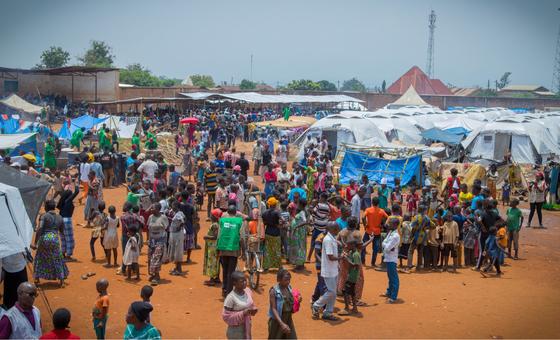
Earlier this year, the M23 launched an offensive in North and South Kivu provinces, capturing cities and villages, including provincial capitals Goma and Bukavu. Thousands of civilians were killed, hundreds of thousands more were displaced, and serious human rights violations were committed.
The Declaration of Principles comes less than a month after a peace agreement signed by Congo and Rwanda, long accused by the Congolese Government of supporting the M23.
The Mission’s statement highlighted the Declaration’s emphasis on civilian protection and support for the ceasefire, with assistance from MONUSCO and other partners, and reaffirmed its readiness to support the cessation of hostilities, particularly through the establishment of a credible and jointly agreed verification mechanism.
MONUSCO’s statement concluded by urging all parties to honour their commitments, act in good faith throughout the process, and prioritise human rights, security, and the aspirations of the Congolese people in all decisions.
The International Longshoremen’s Association (ILA), a major US union representing around 45,000 dockworkers, has ended its strike after reaching a tentative agreement with the United States Maritime Alliance (USMX), which represents ocean carriers and port operators. The strike, which began on October 1, 2024, was the first large-scale strike by the ILA since 1977, affecting 36 ports and the tentative agreement reached on October 4, 2024 enabled work to resume immediately.
The strike had disrupted the supply chain, economy, inflation, and even the US election. Panic buying was reported in big-box stores and supermarkets in multiple states, and over 40 container ships were backed up outside US ports due to the strike. The strike also drew concern over its potential impact on the automotive aftermarket industry, which risked losing up to nearly $340 million each day.
The ILA’s key demands during the strike included a $5 per hour wage increase for each of the six years of a new master contract, assurance against automation or semi-automation of jobs, and a guarantee that all Container Royalty monies would go to the ILA. The union’s demand for higher wages translated into 77% growth in the next six years, while the USMX agreed to a nearly 50% increase in wages.
Tentative Agreement and Wage Increase
The breakthrough came after the USMX offered a 62% increase in wages over the next six years. The details of the agreement on wage increase have not been disclosed so far. However, the tentative deal has been celebrated by the strikers, who are set to see their pay increase significantly over the next six years.
US President Joe Biden expressed support for the workers and did not invoke the Taft-Hartley Act to end the strike. Instead, he directed high-ranking officials to advance negotiations between the parties. The White House stated that both Biden and Vice President Kamala Harris were closely monitoring potential supply chain impacts and assessing ways to address them.
The strike also had a significant impact on the shipping industry. The strike ended sooner than investors had expected, weakening shipping stocks across Asia. Pricing platform Xeneta said it was likely to take two to three weeks for the normal flow of goods to be reestablished.
Impact on Industries and Controversies
The strike also had implications for the roofing industry. Companies installing roofing systems that rely on critical components coming over in these ports were expected to feel the effects first. The industry as a whole, especially companies that import materials and goods from Europe, could be affected.
The strike was not without controversy. In 2005, the U.S. Justice Department accused ILA President Harold Daggett of being an associate of the prominent Genovese crime family. He was, along with fellow ILA member Arthur Coffey, charged with extortion conspiracy and mail and wire fraud conspiracy, according to the Journal of Commerce. Both were later acquitted.
Last time, in 1977 the ILA strike, driven by demands for higher wages and better working conditions, had similar impact on the US economy. The recent strike further highlighted the growing concern among workers about the impact of automation on their jobs as well with the AI taking over operations at the airports soon.
The Indian Cabinet has given ex-post facto approval to the Memorandum of Understanding (MoU) between India and Vietnam in the field of Cyber Security that was signed between Indian Computer Emergency Response Team (CERT-In) and the Cyber Security Department, Ministry of Public Security, Vietnam on 3rd September 2016 at Hanoi.
The MoU intends to promote closer cooperation for exchange of knowledge and experience in detection, resolution and prevention of cyber security-related incidents between India and Vietnam.
“Implementation of the MoU will result in significant mutual benefits in the cyber security sector, through institutional and capacity-building in the field of cyber security in the Socialist Republic of Vietnam,” said a statement.
India and Vietnam, both neighbours to China, have been facing several issues related to hacking of the websites and compromising with the loss of crucial intelligence data for over a decade. A cooperation between the two will entail building a safety network between the two countries which are making headway in terms of information technology.
Earlier, both India and Vietnma had signed an MoU on Cooperation in the field of IT, through institutional and capacity-building in the field of IT and Human Resource Development for a period of five years to be renewed with mutual written consent. A Joint Working Group on IT with representatives from both the countries was also set up.
India signed an MoU with Mauritius on Monday to cooperate in fisheries and cooperatives in agro industry, fisheries and dairy sector.
India’s Union Minister of Agriculture Radha Mohan Singh and Minister of Business, Enterprise and Cooperatives, Govt. of Mauritius, Mr. Soomilduth Bholah signed on MoU for Cooperation in the field of Cooperatives, in New Delhi on Monday.
The MoU will enable the two countries to collaborate in this vital sector and can significantly benefit thousands in Mauritius. India has also offered to exchange its expertise and technology with Mauritius in agro industry, fisheries and dairy sector.
The two ministers expressed satisfaction at the historic, time-tested relationship between India and Mauritius which is anchored in linkages of culture and ancestry has grown from strength to strength over the years, adding that frequent high level visits have added significant momentum to the bilateral relationship between the two countries.
India is enhancing ties with Mauritius and alst year, INS Tabar, a stealth frigate visited Port Louis, Mauritius from 10-13 March. The primary aim of the visit was to participate in the Mauritius National Day celebrations and strengthen the existing bonds of friendship.
In May-June 2016, Indian Naval Sailing Vessel Mhadei (INSVMhadei) with an all-women crew undertook two voyages to Port Louis, Mauritius as part of the first two open-ocean voyages of the Navy’s all-women crew of Mhadei, who are currently training to undertake a circumnavigation of the globe in 2017.
The Indian Cabinet, chaired by Prime Minister Narendra Modi has given its ex-post facto approval to the proposal of Ministry of New & Renewable Energy (MNRE) for ratification of ISA’s Framework Agreement by India.
ISA was launched jointly by the Prime Minister of India and the President of France on 30th November, 2015 at Paris on the side-lines of the 21st CoP meeting of the United Nations Framework Convention on Climate Change.
The ISA will strive to bring together more than 121 solar resource rich nations for coordinated research, low cost financing and rapid deployment.
The foundation stone of the ISA Headquarters was laid at Gwal Pahari, Guragaon in Haryana. India has already committed the required support of operationalization of ISA. ISA will put India globally in a leadership role in climate and renewable energy issues. It will also give a platform to showcase its solar programmes.
The Agreement was opened for signature on the sidelines of 22nd CoP meeting at Marrakesh, Morocco. The Agreement invokes the Paris Declaration on ISA and encapsulates the vision of the prospective member nations. UNDP and World Bank have already announced their partnership with the ISA. Till now, 25 nations have signed the Framework Agreement.
In a new report analyzing the global climate between 2011-2015, the World Meteorological Organization – the United Nations system’s weather agency – found an increasingly visible human footprint on extreme weather and climate events with dangerous and costly impacts.
This “hot and wild” weather meant that global ocean temperatures rose at unprecedented levels, Arctic sea ice coverage and mountain glaciers declined and surface melting of the Greenland ice sheet continued at above-average levels.
The extreme weather also meant that people around the world suffered from high-impact climate events such as severe droughts in Africa, devastating floods in South-East Asia, terrible heatwaves in India and Pakistan, and catastrophic hurricanes and typhoons in the United States and the Philippines.
Against this backdrop, and within the context of the ongoing 22nd Conference of the Parties (COP22) to the UN Framework Convention on Climate Change (UNFCCC), in Marrakech, Morocco (07-18 November 2016), the United Nations News Centre spoke with Petteri Taalas, Secretary-General of World Meteorological Organization (WMO), on the state of the Earth’s weather and what it means to the people who inhabit the planet.
UN News Centre: The global climate report 2011-2015 confirms that the average global temperature in 2015 has already reached the 1 degree Celsius mark. What does this 1 degree Celsius really mean to people on the ground, say for an office worker in South-East Asia or a farmer in South Africa?
Petteri Taalas: One degree does not sound like a big number if you compare the temperate over a couple of days but globally [over a long period of time] it means that we have seen an increase in the amount of disasters related to the weather. It means that we have observed more heat waves, for example, in Kuwait, the temperature hit 54 degrees Celsius limit last summer and there have been devastating heat waves in many continents.
We have also seen changes in the pattern of rainfall, which means that some areas are now seeing flooding – when it rains, it rains much more — and that led to problems for human beings and also for economies. And then in some parts of the world we have seen more droughts, caused by the heat waves, and leading to forest fires and difficulties in agriculture. For example, at the moment, the southern part of Africa is suffering because of a drought that was partly caused by El Nino last year but also by a drying trend behind it. In tropical zones we have observed more intense tropical storms and they have been devastating for countries like Vanuatu. We also observed the first hurricane hitting Cabo Verde on the African coast.
So this one degree change means that the amount of disasters related to weather and hydrology have been increasing and if it goes beyond that one degree limit – which seems to be the case according to this year’s observations – we can expect to see more of these kind of disasters. And it will have a negative impact on the economies of the countries, and it will also impact the lives and wellbeing of all humans.
Temperature in Kuwait hits 54 Celsius, sets possible record amid Middle East heatwave – UN
26 July 2016 – The World Meteorological Organization (WMO), a United Nations specialized agency, will set up a committee to examine whether a 54 degrees Celsius temperature recently recorded in Kuwait, has set the new highest temperature for Asia, as well as for the entire Eastern hemisphere.
UN underscores readiness to assist South-East Asian countries hit by floods
18 October 2011 – The United Nations voiced deep concern over the devastating floods in Thailand, Cambodia and Viet Nam and offered to assist the affected countries to respond to the disaster that has claimed hundreds of lives and caused heavy damage to property and infrastructure.
UN News Centre: What has caused this dramatic change in temperatures?
Petteri Taalas: The main reason behind it is that we are using much more fossil fuel: coal, gas, and oil. We have changed the composition of the atmosphere. Therefore, we have seen a very dramatic increase of the carbon dioxide (CO2) concentration in the atmosphere. And we have also seen an increase in the amount of methane (CH4) in the atmosphere and an increase of the nitrous oxide (N2O). And all these are contributing to this warming that we have seen.
UN News Centre: Earlier WMO had said that this 1 degree rise – already halfway to the 2 degree threshold – and that the national climate change plans adopted so far may not be enough to prevent even a 3 degree rise. Do you think this is something that could have been foreseen before the Paris agreement?
Petteri Taalas: In our field we have known about this problem for 30 years. So about 30 years ago, we established the Intergovernmental Panel on Climate Change (IPCC), and then years later we established the United Nations Framework Convention on Climate Change (UNFCCC) to start mitigating climate change. So this problem has been around for a long time, but the good news is that governments now understand the need to mitigate climate change, and that’s why they adopted the Paris Agreement on climate change last year, and it has very recently entered into force. This gives us a good basis for moving forward, and to mitigate the effects of climate change. And the key issue is whether we are acting quickly enough to avoid a 1.5 or 2 degree warming or are we going to go beyond that. So far the pledges behind the Paris Agreement indicate about a 3 degree warming level, which would mean that we might have a larger amount of disasters related to the weather. So it would be a smart thing for the governments to start reducing the emissions, and that would also be good for the coming generations.
There is optimism in the fight against climate change, but the best time to act is now, according to Petteri Taalas, Secretary-General of the World Meteorological Organization (WMO). The head of the UN weather agency was speaking to UN News Centre, shortly after releasing a report on global greenhouse gases and climate change, which categorised 2011 to 2015 as the hottest five-year period on record. Mr. Taalas also noted that the world is now better equipped with technologies to mitigate the levels of greenhouse gas emissions and their impact on the global climate.
UN News Centre: In this context, what other messages would you like to give to the leaders attending the COP22 in Morocco?
Petteri Taalas: I would like to thank them for ratifying the Paris Agreement, which gives us hope. And we also now have better technological means for mitigation. And those means are also cheaper than they used to be. For example, solar and wind energy sources are cheaper than they used to be ten years ago. And we also have possibilities to convert our transport systems to use more electric cars. In the case of diet, we can go to more vegetarian diet; which could also reduce emissions.
So we have all the means available, and now it’s time to act and prevent these negative impacts of climate change, and it’s important that we start acting very soon, because if we wait, the problem will become more severe. I am very optimistic that we have all the means to be successful, but we should start changing our behavior very soon.
MARRAKECH: ‘The eyes of the world are upon us,’ chair of UN Conference says as new round of climate talks opens
7 November 2016 – The United Nations Climate Change Conference, known as ‘COP 22,’ opened today in Marrakech, Morocco, just days after the entry into force of the landmark Paris Agreement which has now been ratified by 100 countries.
UN News Centre: What is something that society, as a whole, can do to mitigate these impacts?
Petteri Taalas: All normal consumers now have big powers – they can decide what kind of sources of energy they use in their houses, what kind of means of transport they use, and what kind of diet they are eating. For example, a vegetarian diet is better for climate than a meat-based diet. Consumers have big power here and if they decide to go to these low emission solutions, they are the ones who have power to do that. And also the policy-makers are watching very closely what the opinion of the ordinary people is, and I believe that they are able to change the consumption behaviour in the coming years.