

Arab region pushed to limits by climate extremes as 2024 smashes heat records

The World Meteorological Organization’s (WMO) first State of the Climate in the Arab Region report paints a stark picture of a region under constant pressure from rising temperatures and increasingly extreme weather.

The UN agency noted that “a number of countries [in the Arab region] reported temperatures of above 50°C (122°F) last year, while average regional temperatures for 2024 were 1.08°C higher than from 1991 to 2020.

Highlighting the significance of this data, WMO Secretary-General Celeste Saulo noted that scorching temperatures marked by intense and longer-lasting heatwaves “are pushing society to the limits…it is simply too hot to handle,” she said.

“Human health, ecosystems and economies can’t cope with extended spells of more than 50°C,” the WMO chief continued. “Droughts are becoming more frequent and severe in one of the world’s most water-stressed regions. And at the same time, we have seen some disruptive and dangerous deluges.”

Hostile climate

The UN report indicates an 83 per cent rise in recorded disasters in Arab nations between 1980-1999 and from 2000-2019. 

In addition to record-breaking heat, the region – which encompasses 15 of the world’s most water-scarce countries – has endured dust storms, prolonged drought and destructive floods.

Drought worsened in 2024 in western North Africa after six consecutive failed rainy seasons, especially over Morocco, Algeria and Tunisia, WMO said. Whereas in otherwise arid countries including Saudi Arabia, Bahrain and the United Arab Emirates, extreme rainfall and flash floods caused death and destruction. 

These weather shocks have deepened pressure on communities already grappling with conflict, rapid population growth, urbanisation and economic fragility. WMO warned that without stronger adaptation measures, these pressures will only intensify as temperatures continue their rapid upward trajectory.

2024 was the Arab region’s hottest year on record
• Temperatures rising nearly twice global average
• Heat, drought and extreme rain all intensified last year
• Nearly 60 per cent of Arab countries now have early warning systems
• WMO urges greater coordination on climate action

These rising extremes are already reshaping daily life across the Arab region where water shortages are worsening as higher temperatures accelerate evaporation and strain groundwater reserves.

Daily life imperilled

Urban centres face growing threats to energy provision, transport networks and public health, particularly for people working outdoors or living in informal housing. In rural areas, prolonged drought is eroding food production and forcing difficult trade-offs between agriculture, domestic water use and environmental protection.

Claire Ransom, Associate Scientific Officer at WMO’s Climate Monitoring & Policy Section, stressed that extreme heat is only of many extreme weather threats. “Dust storms, severe flooding, and other climate extremes placed immense pressure on communities all across the region in 2024, disrupting lives and impacting millions of people,” she said.

These events have inflicted major economic losses, displacing families, damaging crops and overwhelming emergency response systems, which are unevenly distributed across the region.

Coordinated action

Despite these challenges, the WMO assessment identifies areas of progress. Many countries have expanded preparedness systems and begun investing more strategically in adaptation. “There is progress; nearly 60 per cent of Arab countries now have multi-hazard early warning systems in place, and many are prioritizing water security strategies to cope with the mounting climate risks that we’ve seen in 2024 and beyond,” Ms. Ransom said.

While adaptation efforts are growing, the report concludes that only swift, sustained and collaborative action will be enough to prevent the harsh climate of 2024 from becoming the new normal.

Pressure for coordinated solutions is mounting as temperatures climb. The combination of extreme heat, water scarcity and fast-growing populations is amplifying existing vulnerabilities and threatening development goals across multiple countries. Many governments already struggle to maintain essential services during heatwaves, while poorer communities face the greatest risks from both rising temperatures and worsening storms.

“The key message from the report is clear. The Arab region really stands on the front lines of climate change, and timely information and coordinated action are no longer optional. They’re absolutely essential,” Ms. Ransom said.

The report was produced by the UN agency in partnership with the Economic and Social Commission for Western Asia and the League of Arab States. It is the first climate assessment dedicated entirely to the Arab region and aims to provide actionable science-based information to support decision-makers in the water-scarce region.
Ukraine Records Highest Toll From Cluster Munitions for Third Year Running

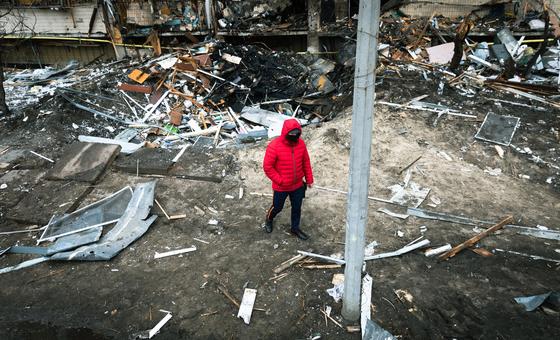
The latest Cluster Munitions Monitor reports that over 1,200 people have been killed or injured in Ukraine since Russia’s full-scale invasion in February 2022. The actual toll is likely far higher, but it may take years to establish, said Loren Persi, team lead for the report.

Drawing parallels with conflicts in Syria and Yemen, where casualty figures emerged only years later, Persi told journalists in Geneva that a similar pattern could unfold in Ukraine.

Lao legacy

Equally, in Lao People’s Democratic Republic, which Mr. Persi described as the most contaminated country by cluster munitions, “it took decades” before surveys confirmed estimates that many thousands of people had been killed or injured by strikes from cluster munitions, which are generally understood to be a container from which submunitions are scattered.

The civil society publication, backed by UN disarmament research agency UNIDIR, notes Israeli allegations that cluster munitions were used in a ballistic missile attack by Iran in June 2025, and of reported but unverified use of the weapons in Gaza and southern Lebanon.

The report’s other findings note that the de facto forces in Myanmar have used “domestically produced”, air-delivered cluster bombs since around 2022, amid the ongoing civil war.

“Schools have been among the targets in rebel-held areas,” said the Monitor research specialist Michael Hart, highlighting their use in Chin state, Rakhine state, the Saigon region and Kachin state, among others.

Mistaken for toys

Submunitions – or bomblets, as they are also known – cause casualties and damage through blast impact, their incendiary effect and fragmentation. According to UNIDIR, a single attack can involve thousands of individual explosive units which are usually spread over hundreds of square metres.

“These munitions can be air-delivered or surface-launched, and can be used against armour, materiel and personnel,” UNIDIR explained, although it is “very clear…that civilians continue to bear the brunt” of suffering from the cluster emission remnants, Mr. Persi insisted.

As in previous years, children accounted for a high proportion (42 per cent) of casualties from the weapons in 2024, “which they often find interesting, think are toys or come across in play or on the way to school or when working in fields”, Mr. Persi continued.

Funding cuts impact

Funding cuts for humanitarian work have had a negative impact on countries impacted by the explosive weapons.

These include Afghanistan, Iraq and Lebanon, which had “made good progress” in clearing contaminated land, but who now “really struggle with funding…to get the clearance done, hence they slow down”, said Katrin Atkins, senior researcher at Cluster Munitions Monitor.

“Whole programmes” supported by USAID in the past including one in Lau have been discontinued, Mr. Persi noted.

“For decades, [the programme] was essential in providing both first aid in remote areas where there are cluster mine victims, which was clearly there to address the legacy of the bombings of the 60s and 70s,” he explained. “But also, the entire rehabilitation programme, including prosthetics… that was cut and as far as we know, not reestablished in any way.”

In the last 15 years since the Convention on Cluster Munitions, just 10 countries have used the weapons and “all of those are States not party to the international accord”, the Cluster Munition Monitor states.

A total of 18 countries have now ceased production of cluster munitions. All former producers are now States Parties to the Convention, aside from Argentina.

The report notes that 17 countries still produce cluster munitions or reserve the right to do so and none is a State Party to the Convention. They are: Brazil, China, Egypt, Greece, India, Iran, Israel, Myanmar, North Korea, Pakistan, Poland, Romania, Russia, Singapore, South Korea, Türkiye and the United States.

Extreme heat is breaking records worldwide: UN weather agency

Extreme temperatures caused approximately 489,000 heat-related deaths annually between 2000 and 2019, with 36 per cent occurring in Europe and 45 per cent in Asia.

The health impacts of heat are especially severe in cities due to the so-called ‘urban heat island effect’ – the over-heating of dense city areas compared with their rural surroundings – which is magnifying problems as urbanisation continues.  

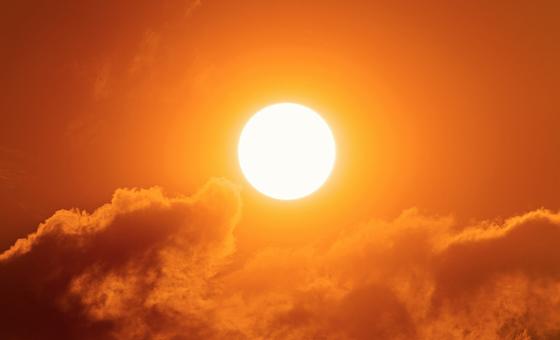
Amid rising 21st-century temperatures, the WMO underscored that July 2025 was the third-warmest July ever recorded, behind those in 2023 and 2024.  

European heat streak

In this record-breaking July, heatwaves especially impacted Sweden and Finland, which experienced unusually long spells of temperatures above 30 degrees Celsius (86 degrees Fahrenheit).

Southeast Europe also faced heatwaves and wildfire activity, with Türkiye recording an extreme new national high of 50.5 degrees Celsius (122.9 degrees Fahrenheit).

Asia, North Africa, United States

In Asia, temperatures soared above average the most across the Himalayas, China and Japan in July, with extreme heat continuing into August.

In the week leading up to 5 August, temperatures surpassed 42 degrees Celsius (107 degrees Fahrenheit) across West Asia, southern Central Asia, the southwestern US, much of North Africa and southern Pakistan – with some areas exceeding 45 degrees Celsius (114 degrees Fahrenheit).

Parts of southwestern Iran and eastern Iraq saw particularly severe temperatures above 50 degrees Celsius (122 degrees Fahrenheit), disrupting electricity and water supplies, education and labor.

For the week of 4 August, Morocco issued heat warnings for temperatures up to 47 degrees Celsius (116 degrees Fahrenheit).

Korea also issued widespread heat warnings, as station temperature records were broken across parts of China.

In Japan, a new national temperature record of 41.8 degrees Celsius (107.2 degrees Fahrenheit) was set on 5 August, breaking the previous record of 41.2 degrees Celsius set a week prior.

Looking ahead

Looking to next week, the World Meteorological Centre in Beijing forecasts that heatwaves will persist across the same regions as well as the Iberian Peninsula and northern Mexico.

These regions are expected to see maximum temperatures between 38 and 40 degrees Celsius (100.4 to 104 degrees Fahrenheit), with parts of Saudi Arabia, Iraq, Iran, North Africa and the southwestern U.S. likely to exceed 45 degrees Celsius (113 degrees Fahrenheit).

Canadian wildfires

As Canada experiences one of its worst wildfire seasons on record, with 6.6 million hectares burned, smoke has polluted skies and caused poor air quality across several provinces and northern states of the US in late July and early August.

Twice this summer, smoke from Canadian fires crossed the Atlantic, affecting skies over Western Europe from 5–7 August and over Central and Southern Europe in late June.

Elsewhere, Cyprus, Greece and Türkiye have battled wildfires that forced evacuations and caused fatalities. In the US, a wildfire in Arizona’s Grand Canyon National Park disrupted tourism at the iconic site.

‘No longer an excuse’

Extreme heat is sometimes called the silent killer, but with today’s science, data and technologies, silence is no longer an excuse. Every single death from extreme heat is preventable,” said WMO Deputy Secretary-General Ko Barrett.  

The WMO is working to strengthen heat early warning systems under the Early Warnings for All initiative. In collaboration with global and local partners, it is also helping countries develop heat-health action plans and ensure at-risk populations receive timely alerts.

WMO is also one of ten UN agencies supporting the Secretary-General’s Call to Action on Extreme Heat, which aims to boost global cooperation to reduce heat impacts through economic and social policy. A key focus is limiting global warming to 1.5 degrees Celsius above pre-industrial levels, in line with the 2015 Paris Agreement.

According to estimates from WMO and the World Health Organization (WHO), scaling up heat-health warning systems in 57 countries alone could save nearly 100,000 lives annually.

Our Network is connecting science, policy, and action so that no community is left behind in the race to adapt to climate change that will continue to worsen extreme heat for years to come,” said Joy Shumake-Guillemot, lead of the WHO-WMO Climate and Health Joint Programme and co-lead of the Global Heat-Health Information Network (GHHIN).

“This is not just a climate issue, it’s a public health emergency,” she concluded.