

Nuclear disarmament at breaking point as mistrust grows – but hope remains

Yet even as the architecture weakens, signs of progress – including nuclear-weapon-free zones and rising youth engagement – offer grounds for cautious hope, a UN researcher on nuclear non-proliferation has told UN News.

Gaukhar Mukhatzhanova, a fellow with the UN Institute for Disarmament Research (UNIDIR) – an autonomous institute studying disarmament and international security issues – said that decades of arms control built through painstaking negotiations are now at risk of unravelling.

“The situation right now is very difficult,” she added.  

“We are observing the disintegration of the arms control architecture that was built primarily through negotiations between [the then] Soviet Union – and subsequently Russia – and the United States.”

Gaukhar Mukhatzhanova, briefs the Security Council on nuclear disarmament and non-proliferation. (November 2025)

Arms control architecture under strain

That erosion has left the global non-proliferation regime increasingly fragile, with most Cold War-era agreements either abandoned or expired. The 2010 US-Russia New START accord – which capped deployed strategic nuclear warheads – expired this week without a successor in place.

While both American and Russian presidents acknowledged the dangers of a renewed nuclear arms race, no replacement for the New START is currently under negotiation.

This is a troubling backdrop for the next review conference of the Treaty on the Non-Proliferation of Nuclear Weapons (NPT), scheduled for April-May in New York, Ms. Mukhatzhanova said.

Opened for signature in 1968 and extended indefinitely in 1995, the NPT remains the only binding multilateral treaty requiring nuclear-weapon States to pursue disarmament.  

However, the political conditions that once made cooperation possible have deteriorated sharply, added Ms. Mukhatzhanova.

We are back to a period of severe mistrust between the major actors – arguably worse than during the Cold War,” she said.

We are back to a period of severe mistrust between the major actors – arguably worse than during the Cold War

Challenges and emerging risks

Statements by the US suggesting a possible resumption of certain forms of nuclear testing have raised alarm, even if limited to so-called “subcritical experiments” – highly explosive tests where no chain reaction is involved.

Such moves, Ms. Mukhatzhanova said, risk undermining the Comprehensive Nuclear-Test-Ban Treaty (CTBT) and reopening questions many hoped were settled.

“If full-scale explosive testing were to return,” she warned, “we are talking about a really drastic and very negative change – one that would open the door for others to resume nuclear testing.

New technology, new risks

Hypersonic weapons, autonomous systems and artificial intelligence are accelerating arms competition and increasing the risk of miscalculation.

The concern is that too much is left to the decision of a machine,” Ms. Mukhatzhanova said, warning that AI-driven early-warning systems could misinterpret data and trigger inadvertent escalation.

She noted recent UN resolutions calling for “meaningful human control” over nuclear-related technologies.

Hiroshima, shortly after a nuclear bomb was dropped on this city in August 1945.

Room for progress remains

Despite the grim outlook, she highlighted areas where progress continues.

Nuclear-weapon-free zones – covering Latin America and the Caribbean, Africa, Southeast Asia, the South Pacific and Central Asia – demonstrate how states can pursue security without nuclear weapons.

“They are a feel-good story,” she said, describing them as practical examples of cooperation even amid global tensions. The Central Asian zone stands out for its strong verification standards and links to broader non-proliferation commitments.

Young people engaging

Ms. Mukhatzhanova also pointed to growing engagement by younger generations, who increasingly question the long-standing narrative that nuclear weapons guarantee security.

They are ready to challenge that framing,” she said. “That gives me hope.

While the arms control system may be fraying, she argued that history shows it can be rebuilt.

Source link

Haiti crisis at breaking point as gangs tighten grip ahead of transition deadline

With the political transition set to expire on 7 February, officials cautioned that escalating violence, entrenched criminal networks and mounting humanitarian needs risk pushing Haiti further into instability unless security and political efforts are urgently sustained.

Carlos Ruiz-Massieu, the head of the UN Integrated Office in Haiti (BINUH), said the country had entered a “critical phase” in efforts to restore democratic institutions, calling on Haitian actors to contain political fragmentation and prioritise elections.

“Let us be clear: the country no longer has time to waste on prolonged internal struggles,” he said, stressing the need for continuity of governance arrangements beyond the February deadline and sustained coordination to bring the transition to a close.

Mr. Ruiz-Massieu said recent steps toward elections were encouraging, citing the adoption of an electoral decree on 1 December and the publication of an calendar for going to the polls later that month.  

New provisions on voter registration, overseas voter participation and women’s representation could boost inclusivity if effectively implemented, he added.

Security still fragile

But progress on the political front is unfolding against a deteriorating security landscape.

Gangs continue to mount coordinated attacks, control key economic corridors and agricultural regions, and force mass displacement – stretching police and humanitarian capacity to the limit.

The murder rate in 2025 rose by nearly 20 per cent compared with 2024, he said.

Some security gains have been made. Police operations, supported by the Security Council-authorised Gang Suppression Force, have reopened roads in parts of Port-au-Prince and the Artibonite Department, while state presence around the capital’s Champ de Mars has been gradually restored.

Mr. Ruiz-Massieu cautioned, however, that such gains remain fragile and risk reversal without sustained pressure and basic service delivery.

Read our explainer on the situation in Hait: Why the crisis is deepening, and what comes next

Gangs reorganising and restructuring

The evolving violence reflects a deeper transformation of Haiti’s criminal landscape, according to John Brandolino, Acting Executive Director of the UN Office on Drugs and Crime (UNODC).

Once-fragmented gangs have reorganised into structured criminal networks with defined leadership, territorial ambitions and diversified revenue streams.

Coalitions such as Viv Ansanm have coordinated large-scale attacks on police, prisons and economic infrastructure, he said, allowing gangs to consolidate control over Port-au-Prince and strategic corridors into Artibonite and Plateau Central.

Extortion has become a core revenue source, alongside trafficking in drugs, weapons and ammunition.

Implications for regional security

UNODC said the crisis is increasingly regional, driven by adaptive arms-trafficking routes, illicit financial flows and corruption. Despite enforcement efforts, traffickers continue to shift routes through weaker ports and offshore transfers to evade embargo controls.

Both officials underscored the importance of the transition of the Multinational Security Support Mission into the Gang Suppression Force and the establishment of the UN Support Office in Haiti, calling for predictable funding and continued international backing.

Beyond security, the humanitarian situation remains dire. Around 6.4 million people require assistance, with Haiti among the least-funded humanitarian responses globally.

Source link

Extreme heat is breaking records worldwide: UN weather agency

Extreme temperatures caused approximately 489,000 heat-related deaths annually between 2000 and 2019, with 36 per cent occurring in Europe and 45 per cent in Asia.

The health impacts of heat are especially severe in cities due to the so-called ‘urban heat island effect’ – the over-heating of dense city areas compared with their rural surroundings – which is magnifying problems as urbanisation continues.  

Amid rising 21st-century temperatures, the WMO underscored that July 2025 was the third-warmest July ever recorded, behind those in 2023 and 2024.  

European heat streak

In this record-breaking July, heatwaves especially impacted Sweden and Finland, which experienced unusually long spells of temperatures above 30 degrees Celsius (86 degrees Fahrenheit).

Southeast Europe also faced heatwaves and wildfire activity, with Türkiye recording an extreme new national high of 50.5 degrees Celsius (122.9 degrees Fahrenheit).

Asia, North Africa, United States

In Asia, temperatures soared above average the most across the Himalayas, China and Japan in July, with extreme heat continuing into August.

In the week leading up to 5 August, temperatures surpassed 42 degrees Celsius (107 degrees Fahrenheit) across West Asia, southern Central Asia, the southwestern US, much of North Africa and southern Pakistan – with some areas exceeding 45 degrees Celsius (114 degrees Fahrenheit).

Parts of southwestern Iran and eastern Iraq saw particularly severe temperatures above 50 degrees Celsius (122 degrees Fahrenheit), disrupting electricity and water supplies, education and labor.

For the week of 4 August, Morocco issued heat warnings for temperatures up to 47 degrees Celsius (116 degrees Fahrenheit).

Korea also issued widespread heat warnings, as station temperature records were broken across parts of China.

In Japan, a new national temperature record of 41.8 degrees Celsius (107.2 degrees Fahrenheit) was set on 5 August, breaking the previous record of 41.2 degrees Celsius set a week prior.

Looking ahead

Looking to next week, the World Meteorological Centre in Beijing forecasts that heatwaves will persist across the same regions as well as the Iberian Peninsula and northern Mexico.

These regions are expected to see maximum temperatures between 38 and 40 degrees Celsius (100.4 to 104 degrees Fahrenheit), with parts of Saudi Arabia, Iraq, Iran, North Africa and the southwestern U.S. likely to exceed 45 degrees Celsius (113 degrees Fahrenheit).

Canadian wildfires

As Canada experiences one of its worst wildfire seasons on record, with 6.6 million hectares burned, smoke has polluted skies and caused poor air quality across several provinces and northern states of the US in late July and early August.

Twice this summer, smoke from Canadian fires crossed the Atlantic, affecting skies over Western Europe from 5–7 August and over Central and Southern Europe in late June.

Elsewhere, Cyprus, Greece and Türkiye have battled wildfires that forced evacuations and caused fatalities. In the US, a wildfire in Arizona’s Grand Canyon National Park disrupted tourism at the iconic site.

‘No longer an excuse’

Extreme heat is sometimes called the silent killer, but with today’s science, data and technologies, silence is no longer an excuse. Every single death from extreme heat is preventable,” said WMO Deputy Secretary-General Ko Barrett.  

The WMO is working to strengthen heat early warning systems under the Early Warnings for All initiative. In collaboration with global and local partners, it is also helping countries develop heat-health action plans and ensure at-risk populations receive timely alerts.

WMO is also one of ten UN agencies supporting the Secretary-General’s Call to Action on Extreme Heat, which aims to boost global cooperation to reduce heat impacts through economic and social policy. A key focus is limiting global warming to 1.5 degrees Celsius above pre-industrial levels, in line with the 2015 Paris Agreement.

According to estimates from WMO and the World Health Organization (WHO), scaling up heat-health warning systems in 57 countries alone could save nearly 100,000 lives annually.

Our Network is connecting science, policy, and action so that no community is left behind in the race to adapt to climate change that will continue to worsen extreme heat for years to come,” said Joy Shumake-Guillemot, lead of the WHO-WMO Climate and Health Joint Programme and co-lead of the Global Heat-Health Information Network (GHHIN).

“This is not just a climate issue, it’s a public health emergency,” she concluded. 
Guterres: ‘Breaking point’ reached in Israel-Palestine conflict, urgent action needed on two-State solution

Speaking Monday morning at the high-level conference on the peaceful settlement of the question of Palestine and the implementation of the two-State solution, the UN chief painted a stark picture of a conflict that continues to “take lives, destroy futures, and destabilise the region and our world.”

“We know that the Israeli-Palestinian conflict has endured for generations – defying hopes, defying diplomacy, defying countless resolutions, defying international law,” Mr. Guterres said. “But we also know its persistence is not inevitable. It can be resolved. That demands political will and courageous leadership. And it demands truth.”

The truth is: we are at a breaking point. The two-State solution is farther than ever before.

The Secretary-General denounced the 7 October Hamas attacks on Israel and hostage-taking as acts of terror he has “repeatedly condemned.” At the same time, he said “nothing can justify the obliteration of Gaza that has unfolded before the eyes of the world.”

He also spoke out against the starvation of civilians, the killing of tens of thousands, mass displacement, settler violence and the “creeping annexation” of the occupied West Bank – a move he called “illegal”.

Stop undermining two-State solution

Unilateral actions that would forever undermine the two-State solution are unacceptable and they must stop,” he said. “These are not isolated events. They are part of a systemic reality that is dismantling the building blocks of peace in the Middle East.”

The three-day conference is mandated by the General Assembly through resolutions ES-10/24 and 79/81, is co-organized by France and Saudi Arabia. It includes plenary sessions and thematic roundtables on issues such as security arrangements, humanitarian needs, reconstruction, and the economic viability of a future Palestinian state.

A group photograph of senior UN officials and ministers attending the high-level international conference.

Move beyond ‘well-meaning rhetoric’

In his speech, Mr. Guterres urged Member States not to let the event become “another exercise in well-meaning rhetoric.”

“It can and must serve as a decisive turning point – one that catalyses irreversible progress towards ending the occupation and realising our shared aspiration for a viable two-State solution,” he said.

Reiterating the long-standing UN position, the Secretary-General said the two-State solution remains the only viable path to peace – with Israel and Palestine living side-by-side within secure, recognised borders, based on the pre-1967 lines, with Jerusalem as the capital of both States.

It is the sine qua non [Latin for indispensable or absolutely essential] for peace across the wider Middle East,” he concluded.

More to follow…

Jean-Noël Barrot, Minister for Europe and Foreign Affairs of France; Faisal bin Farhan Al Saud, Minister of Foreign Affairs of Saudi Arabia; and Mohammad Mustafa, Prime Minister of the State of Palestine also spoke at the meeting.

The meeting continues with wrap-up sessions of the thematic roundtables. 

A plenary meeting in the General Assembly Hall will take place at 3 PM New York time.

You can follow the live coverage of the conference here.

Yemen at breaking point as UN envoy urges action to end suffering

Speaking via videoconference, UN Special Envoy for Yemen Hans Grundberg said the country remains trapped in a prolonged political, humanitarian and development crisis.

Yemen is so much more than the containment of a threat,” he said. “The cost of inaction is high.”

Mr. Grundberg stressed the urgent need for progress towards a sustainable political solution, calling on all parties to show the will to move beyond the current deadlock.

Meanwhile, over 17 million people, nearly half of Yemen’s population, are estimated to be suffering acute malnutrition.

Without sustained humanitarian support, six million more could face emergency levels of food insecurity, said Joyce Msuya, Assistant Secretary-General of UN humanitarian wing (OCHA), speaking on behalf of Humanitarian Affairs chief Tom Fletcher.

Economic hardships

Yemeni citizens continue to shoulder the impact of an economy in freefall,” said Mr. Grundberg, calling for more international support to alleviate the humanitarian and economic hardships they face.

Despite operating under extremely difficult conditions, humanitarian efforts in Yemen continue, but the UN’s response remains constrained and far from meeting the scale of need, according to OCHA.

Still, there are signs of progress. “There is real scope to make progress on the economy,” said Special Envoy Hans Grundberg, pointing to the reopening last May of a key road between Aden and Sana’a, closed for nearly seven years, which has restored a faster and more direct route for civilians and commercial traffic.

“With trust and the right tools, there remains hope,” said Deputy Emergency Relief Coordinator Joyce Msuya.

Fragile frontlines

Marking one year since the arbitrary detention by Houthi rebels – or Ansar Allah – of dozens of aid workers, civil society representatives and diplomatic personnel, Mr Grundberg urged Security Council members to use their “powerful voices” to exert maximum pressure on the group for the unconditional release of the detainees.

While attacks on shipping in the Red Sea and counter measures by Western forces have largely abated since a cessation of hostilities agreement between the United States and the Houthi leadership, the group has launched several recent attacks targeting Israel, in solidarity with the Palestinian cause in Gaza.

With multiple frontlines still fragile and the risk of renewed fighting ever-present, the UN continues to work on a roadmap to help Yemen move beyond its divisions, secure a comprehensive ceasefire, implement critical economic measures and advance an inclusive political process.

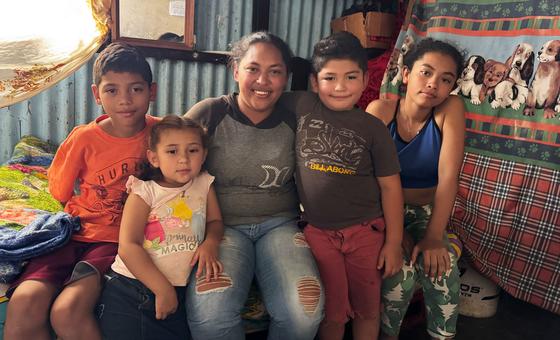
Costa Rica’s refugee lifeline at breaking point amid funding crisis

“Without funding, asylum seekers are left in limbo – undocumented, unsupported and increasingly desperate,” said Ruvendrini Menikdiwela, Assistant High Commissioner for Protection.

Her comments follow a 41 per cent budget cut to the UN agency’s operations in the country that have had devastating consequences. “This is not about luxuries; the assistance we’re cutting is critical and lifesaving,” she insisted.

The Central American nation today hosts more than 200,000 refugees and asylum seekers – adding up to nearly four per cent of its population.

More than eight in every 10 are from Nicaragua, fleeing deepening political and social turmoil linked to serious allegations of “systemic repression”, according to independent rights experts reporting to the Human Rights Council.

Despite economic constraints, Costa Rica has continued to offer safety and hope to those escaping persecution, UNHCR said.

Safe spaces at risk

On a recent official tour of Costa Rica, Ms. Menikdiwela described meeting indigenous Miskito women who had fled gender-based violence and established safe spaces, despite language and cultural barriers. “Their courage is humbling,” she said. “But the loss of services threatens everything they’ve tried to rebuild.”

The UN agency  has warned that legal support, mental health services, education, job training and child protection initiatives have already been scaled back or suspended.

Many were tailored to vulnerable women and children in remote areas.

No right to a job, school or healthcare

Because of the cuts, the capacity to register new arrivals has plummeted by 77 per cent. But without documentation, refugees cannot legally work, attend school or access healthcare. With over 222,000 claims backlogged, some cases may now take up to seven years to process.

“The Government’s plea to me was simple,” Ms. Menikdiwela said. “‘Help us to help these people.’”

Costa Rica has long played a leadership role in regional and global refugee protection frameworks. But this solidarity is now stretched to breaking point, the UN agency said, in an appeal for $40.4 million to maintain its operations in the country Rica through 2025.

“This is a stark reminder that protection must be backed by resources,” Ms. Menikdiwela warned. “If the international community does not step up, the consequences will be severe – not just for those already in Costa Rica – but for stability in the wider region as well.”

Source link