France Joins UK, Canada, Australia and Portugal in Recognising Palestinian Statehood

France joins UK, Canada, Australia and Portugal in recognising Palestinian statehood at UN-backed conference

United Nations/New York: UN Secretary-General António Guterres on Monday reiterated that nothing can justify the October 7, 2023 Hamas attacks on Israel, nor the “collective punishment” inflicted on the Palestinian people in their aftermath. Calling for an “immediate” ceasefire in Gaza, he urged the release of all hostages and the opening of safe, unconditional and unhindered humanitarian corridors.

Speaking at the resumed international conference on Palestine, co-chaired with Saudi Arabia, Guterres warned that the viability of a two-state solution is being undermined by “relentless” settlement expansion, the “creeping threat of annexation” and a surge in settler violence in the West Bank.

“The time for peace has come because we are just a few moments away from no longer being able to seize peace,” he told delegates. “Let’s be clear: statehood for the Palestinians is a right, not a reward. Denying it would be a gift to extremists everywhere.”

France Backs Palestinian Statehood

The conference, held after the General Assembly overwhelmingly endorsed the first phase outcome declaration in July, saw fresh diplomatic momentum. The United Kingdom, Canada, Australia and Portugal formally recognised the State of Palestine on Sunday. French President Emmanuel Macron announced that Paris would follow suit, a declaration that drew lengthy applause.

“The recognition of the legitimate rights of the Palestinian people takes nothing away from the rights of the people of Israel, which France has supported from Day One,” Macron said. “This recognition is the only solution that will allow Israel to live in peace.”

Saudi Foreign Minister Faisal bin Farhan Al Saud praised the countries that had recognised Palestine and urged others to “take a similar historic step.” Such recognition, he said, would “support efforts towards the implementation of the two-State solution, achieve permanent and comprehensive peace in the Middle East, and create a new reality of stability and prosperity.”

ALSO READ: London’s Far-Right Rally Sends Shockwaves Through South Asian Communities

UN General Assembly President Annalena Baerbock acknowledged scepticism around the two-state formula, noting that the UN’s earliest resolutions on the issue date back to its founding years. But she stressed that pursuing the alternative would mean conceding to “evil” and risk “the end of this institution.”

“This is not a naïve wish,” Baerbock insisted. “The international community is committed not only to the principle of two states but to identifying tangible, timebound and irreversible steps for its realisation, backed by decisive measures and international guarantees.”

The conference underscored a growing shift among Western powers towards recognising Palestinian statehood, even as conditions on the ground remain volatile. For Guterres and other leaders, the message was clear: without urgent steps, the two-state solution risks slipping out of reach, with grave consequences for peace and security in the Middle East and beyond.

Guterres calls for an end to ocean ‘plunder’ as UN summit opens in France

“The ocean is the ultimate shared resource,” he told delegates gathered at the port of Nice. “But we are failing it.”

Oceans, he warned, are absorbing 90 per cent of the excess heat from greenhouse gas emissions and buckling under the strain: overfishing, rising temperatures, plastic pollution, acidification. Coral reefs are dying. Fish stocks are collapsing. Rising seas, he said, could soon “submerge deltas, destroy crops, and swallow coastlines — threatening many islands’ survival.”

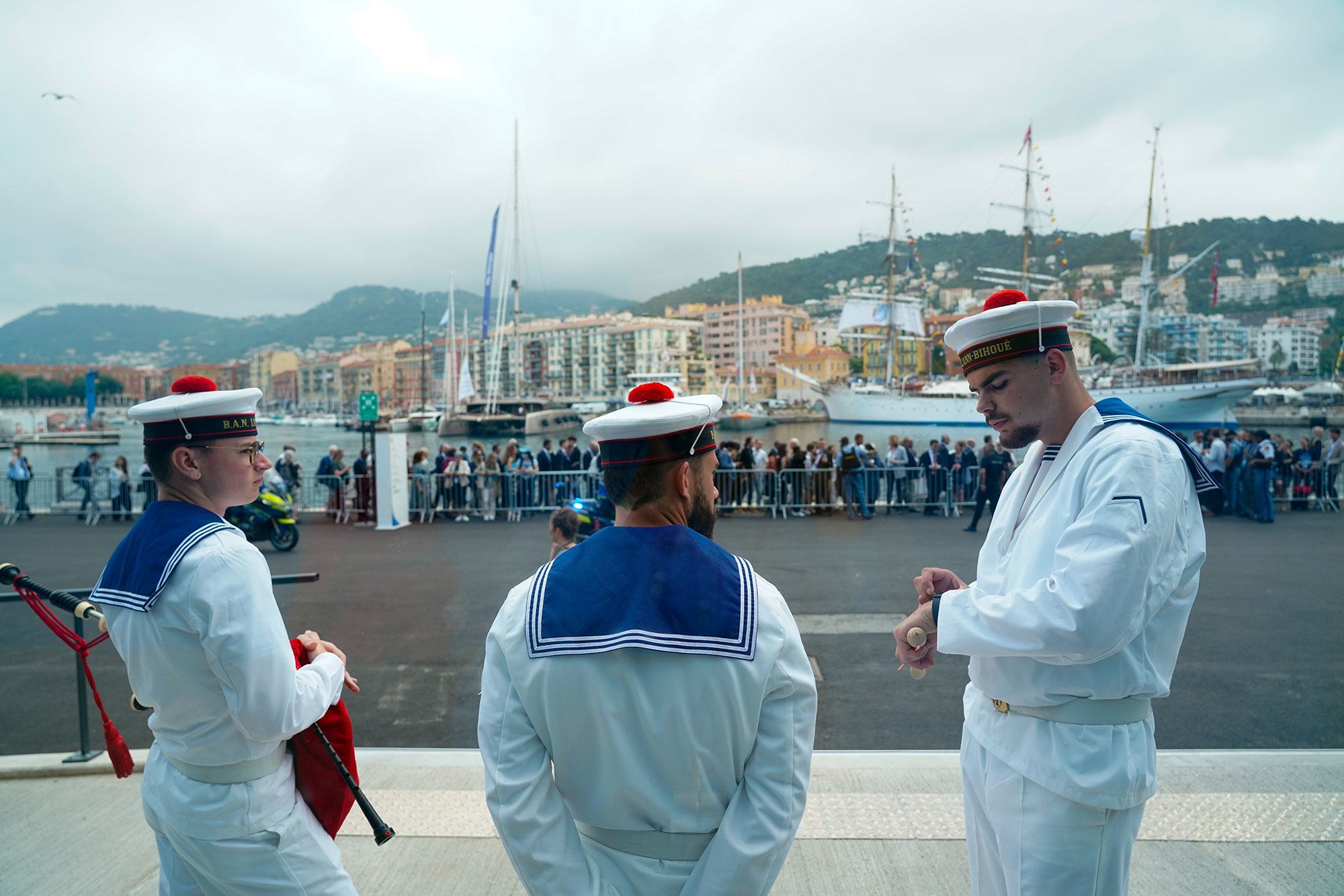
Port Lympia, Nice’s historic marina, now transformed into a secured diplomatic zone known as the Blue Zone for UNOC3.

Call for stewardship

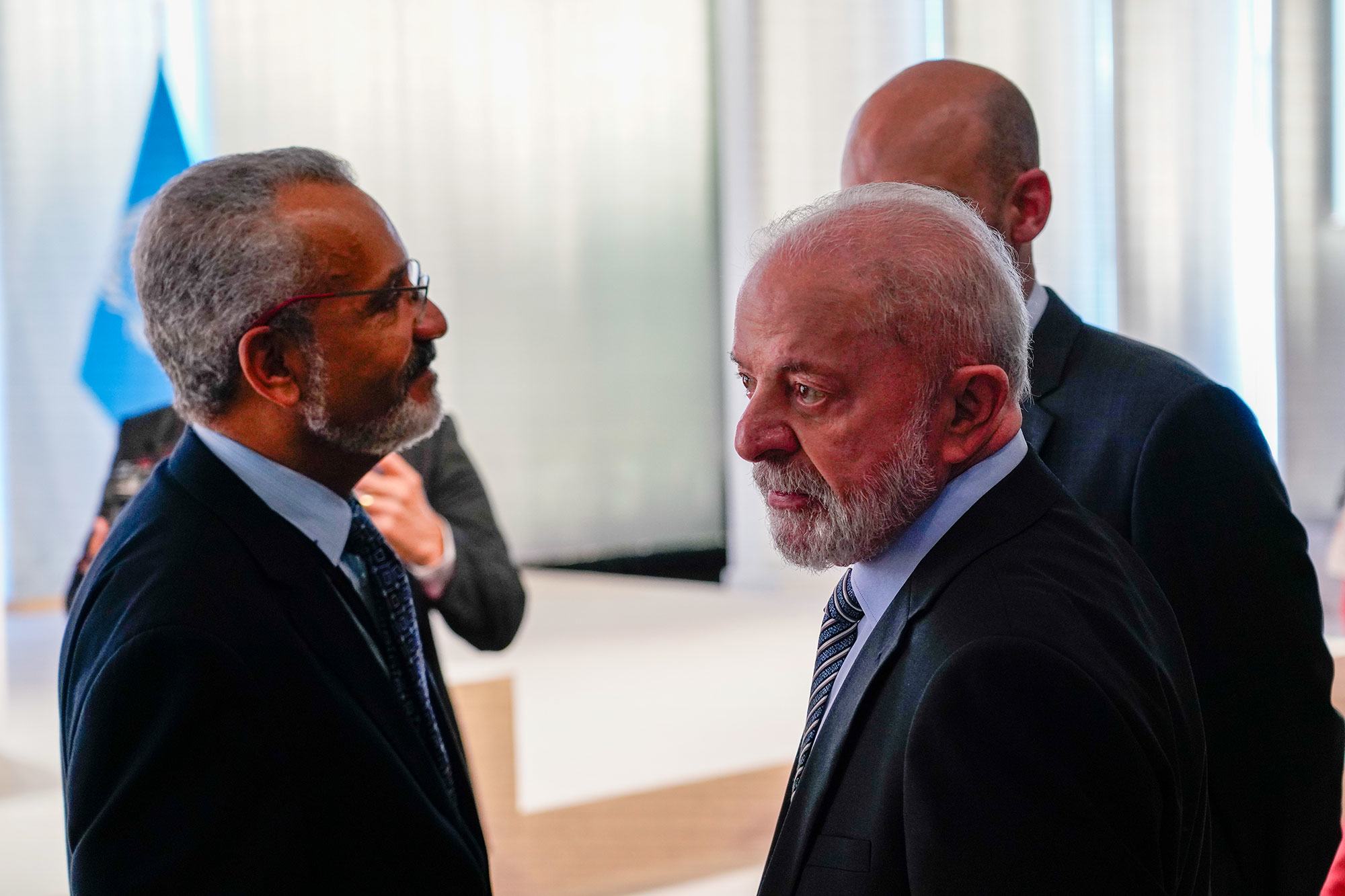
More than 50 Heads of State and Government took part in the opening ceremony, including Brazilian President Luiz Inácio Lula da Silva and European Commission President Ursula von der Leyen — a show of political force underscoring the summit’s weight.

In total, over 120 countries are participating in the five-day gathering, signaling a growing recognition that ocean health is inseparable from climate stability, food security, and global equity.

French President Emmanuel Macron, whose country is co-hosting the summit alongside Costa Rica, followed with a forceful appeal for science, law, and multilateral resolve.

Brazilian President Luiz Inácio Lula da Silva, at the opening ceremony of UNOC3

“The abyss is not for sale, any more than Greenland is for sale, any more than Antarctica or the high seas are for sale,” he declared. “If the Earth is warming, the ocean is boiling.”

He insisted the fate of the seas could not be left to markets or opinion. “The first response is therefore multilateralism,” Mr. Macron said. “The climate, like biodiversity, is not a matter of opinion; it is a matter of scientifically established facts.”

Costa Rican President Rodrigo Chaves Robles took the podium next, thanking Mr. Guterres for elevating the ocean on the global agenda, then shifting to a stark warning.

“The ocean is speaking to us — with bleached coral reefs, with storms, with wounded mangroves,” he said. “There’s no time left for rhetoric. Now is the time to act.”

Condemning decades of treating the ocean as an “infinite pantry and global waste dump,” Mr. Chaves urged a shift from exploitation to stewardship.

“Costa Rica is a small country, but this change has started,” he said. “We are now declaring peace with the ocean.”

Most notably, the Costa Rican leader called for a moratorium on deep-sea mining in international waters until science can adequately assess the risks — a position already backed by 33 countries, he noted.

A treaty within reach

One of the summit’s core objectives is to help bring into force the landmark High Seas Treaty — known as the BBNJ accord — adopted in 2023 to safeguard life in international waters. Sixty ratifications are required for the treaty to become binding international law. Emmanuel Macron announced that this milestone is now within reach.

“In addition to the 50 or so ratifications already submitted here in the last few hours, 15 countries have formally committed to joining them,” he said. “This means that the political agreement has been reached, which allows us to say that this [Treaty] will be properly implemented.”

Whether the legal threshold is crossed this week or shortly after, the French President added, “it’s a win.”

The plenary hall of the third UN Ocean Conference (UNOC3) in Nice.

High-stakes negotiations in the ‘Blue Zone’

The tone set by the opening speeches made clear that Nice will be the stage for high-stakes negotiations — on finalizing a global treaty on plastic pollution, scaling up ocean finance, and navigating the controversy surrounding seabed mining.

Hundreds of new pledges are expected to be announced, building on more than 2,000 voluntary commitments made since the first UN Ocean Conference in 2017. The week-long talks will culminate in the adoption of a political declaration and the unveiling of the Nice Ocean Action Plan, a blueprint aligned with the landmark Kunming-Montreal Global Biodiversity Framework, a 2022 agreement to protect 30 per cent of marine and terrestrial ecosystems by 2030.

“The deep sea cannot become the Wild West,” António Guterres warned, urging that decisions be “grounded in science, guided by precaution, and in line with the rights and obligations enshrined in the UN Convention on the Law of the Sea.”

The summit is being held in a purpose-built venue overlooking Port Lympia, Nice’s historic marina, now transformed into the secured diplomatic ‘Blue Zone.’ On Sunday, a symbolic ceremony led by Li Junhua, head of the UN Department of Economic and Social Affairs and Secretary-General of the conference, saw the French and UN flags raised above the harbor.

“This ceremony marks not only the formal transfer of this historic port into the hands of the United Nations, but also the beginning of a week of shared commitment, responsibility, and hope,” said Mr. Li.

Ludovic Burns Tuki marked the start of the summit by blowing a pu, a traditional conch shell

Culture, science, and collective memory

Before the negotiations began in earnest, Monday’s opening turned to ritual and reflection. Polynesian climate activist Ludovic Burns Tuki marked the start of the summit by blowing a pu, a traditional conch shell.

“It’s a way to call everyone,” he told UN News after the ceremony. “I blow with the support of our ancestors.” In Polynesian navigation, the conch is sounded upon arrival at a new island to signal peaceful intent. Mr. Tuki, born in Tahiti to parents from the Tuamotu and Easter Islands, sees the ocean as both boundary and bond.

“We are not only countries,” he said. “We need to think like a collective system, because this is one ocean, one people, a future for all.”

The cultural segment also included a blessing by Tahitian historian Hinano Murphy, a martial arts performance by French taekwondo master Olivier Sicard, a scientific reflection by deep-sea explorer Antje Boetius, and a poetic testimony by Mauritanian filmmaker Abderrahmane Sissako, accompanied by kora musician Wassa Kouyaté.

What was lost can return

The goals of the conference are clear — but ambitious: to advance the ‘30 by 30’ pledge, promote sustainable fisheries, decarbonize maritime transport, and unlock new streams of “blue finance,” including ocean bonds and debt-for-nature swaps to support vulnerable coastal states.

In addition to plenary sessions, Monday will feature two high-level action panels: one on conserving and restoring marine ecosystems — including deep-sea habitats — and another on strengthening scientific cooperation, technology exchange, and education to bridge the gap between science and policy.

In his opening statement, António Guterres stressed that Sustainable Development Goal 14 , on ‘Life Below Water’, remains the least funded of the 17 UN’s global goals.

“This must change,” he said. “We need bold models to unlock private capital.”

“What was lost in a generation,” he concluded, “can return in a generation. The ocean of our ancestors — teeming with life and diversity — can be more than legend. It can be our legacy.”

Source link

Flight services to reduce in France: Passengers advised to postpone their trips

Air traffic in France will be severely disrupted this Friday due to a strike over wages, the French Civil Aviation Authority (DGAC) has warned. French air traffic controllers are taking action to demand higher wages due to soaring inflation.

The national strike will last from 6 a.m. on Friday to 6 a.m. on Saturday, DGAC announced on Tuesday.

In addition to calling for higher wages, air traffic controllers will also use this strike to force authorities to open up employment in aviation, especially in air traffic control, Xinhua news agency reported.

flight services

“From 2029 to 2035, a third of the body will be retiring, it is imperative to anticipate and plan recruitment,” the National Union of Air Traffic Controllers (SNCTA) said, adding that “failure to do so will have inevitable consequences in terms of public service, working conditions and mobility”.

The SNCTA and the DGAC have called on airlines to reduce their flight services by 50 per cent on Friday, both in Metropolitan France and in the French overseas territories. Passengers are being advised to postpone their trips.

Meanwhile, SNCTA said on Tuesday that a second strike could be expected between September 28 and 30.

India to assume G20 Presidency for a year from Dec 1; Sets priorities

New Delhi, Sep 13 (IANS) India has listed its priorities ahead of assuming the G20 Presidency for a year from December 1, 2022 to November 30, 2023.

In a statement on Tuesday, the Ministry of External Affairs said: “Our G20 priorities are in the process of being firmed up, ongoing conversations inter alia revolve around:

  • Inclusive, equitable and sustainable growth;
  • LiFE (Lifestyle For Environment);
  • women’s empowerment;
  • digital public infrastructure and tech-enabled development in areas ranging from health, agriculture and education to commerce,
  • skill-mapping,
  • culture and tourism;
  • climate financing;
  • circular economy;
  • global food security;
  • energy security;
  • green hydrogen;
  • disaster risk reduction and resilience;
  • developmental cooperation;
  • fight against economic crime; and multilateral reforms”.

    Under the role, India is expected to host over 200 G20 meetings across the country, beginning from this December.

    The G20 Leaders’ Summit at the level of Heads of State Government is scheduled to be held on September 9-10, 2023 in New Delhi, said the Ministry statement.

    The G20 is an inter-governmental forum of the world’s major developed and developing economies.

    G20 comprises 20 countriesIndia, Argentina, Australia, Brazil, Canada, China, France, Germany, India, Indonesia, Italy, Japan, South Korea, Mexico, Russia, Saudi Arabia, South Africa, Turkey, the UK, the US — and the European Union (EU).

    Collectively, the G20 accounts for 85 per cent of the global GDP, 75 per cent of international trade and two-thirds of the world population, making it the premier forum for international economic cooperation.

  • G20 flags

    India is part of the G20 Troika (current, previous and incoming G20 Presidencies), which includes Indonesia and Italy.

    “During our Presidency, India, Indonesia and Brazil would form the Troika. This would be the first time when the Troika would consist of three developing countries and emerging economies, providing them a greater voice,” the statement said.

    The G20 currently comprises Finance Track, with eight workstreams (Global Macroeconomic Policies, Infrastructure Financing, International Financial Architecture, Sustainable Finance, Financial Inclusion, Health Finance, International Taxation, Financial Sector Reforms)

    Sherpa Track, with 12 workstreams — Anti-corruption, Agriculture, Culture, Development, Digital Economy, Employment, Environment and Climate, Education, Energy Transition, Health, Trade and Investment, Tourism.

    Ten Engagement Groups of private sector/civil society/independent bodies (Business 20, Civil 20, Labour 20, Parliament 20, Science 20, Supreme Audit Institutions 20, Think 20, Urban 20, Women 20 and Youth 20).

    In addition to G20 members, there has been a tradition of the G20 Presidency inviting some guest countries and international organizations to its meetings and summit.

    Accordingly, in addition to regular international organizations (UN, IMF, World Bank, WHO, WTO, ILO, FSB and OECD) and Chairs of Regional Organizations (AU, AUDA-NEPAD and ASEAN).

    India, as G20 Presidency, will be inviting Bangladesh, Egypt, Mauritius, the Netherlands, Nigeria, Oman, Singapore, Spain and UAE as guest countries, as well as the International Solar Alliance, Coalition for Disaster Resilient Infrastructure and the Asian Development Bank as guest international organizations.

New Year’s Eve Celebrated Around the World

Come New Year’s Eve, display of fireworks to revelers displaying the joyous mood mark the night of December 31 every year. Throughout the world the celebration begin with New Zealand and Australia reporting it first and New York or California joining the party much later in the day.

New Zealand:

A giant digital clock on Auckland’s landmark Sky Tower will show the countdown to New Year with people joining the spree shouting the seconds down to midnight. This is the first New Year Celebration every year to report with horns blared and crowds cheered as the tower goes up in lights varying from green to red to white in colour accompanied by fireworks.

Australia:

In Australia, Sydney’s famed harbour hosts pyrotechnics followed by waterfall of multicoloured fireworks in the sky, witnessed more than a million people off the Harbour Bridge.

Japan:

It’s holiday mood in Japan with most of the offices empty and cities virtually deserted. The New Year’s eve is celebrated by Tokyoites with children by releasing balloons from the top of the Tokyo Tower. Otherwise, millions of people leave cities for hometowns in trains. Temple ceremonies come to life on the New Year’s eve with the bronze bells ringing in the new year.

South Korea:

South Koreans too mark New Year’s Eve with traditional bell ringing ceremonies in Buddhist temples, with fireworks and music accompanied by pubic shows and performances in cities. On this day, several North Korean refugees, usually gather near the border to wish for a united Korea one day.

Malaysia

It is the fireworks time and celebrations on top of Kuala Lumpur’s landmark, Petronas Twin Towers, make the New Year’s Eve celebration in Malaysia comparable with the ‘Ball Drop’ at Times Square in New York.

China

China celebrates New Year’s Eve hosting performances and fireworks near Beijing’s Forbidden City in the Imperial Ancestral Temple in Beijing. Those at home are usually glued to TV broadcast of a gala from the National Stadium, known to most as the iconic Bird’s Nest.

Philippines

Fireworks mark both the revelry and tragedy of Filipinos on New Year Eve over the years. Traditionally Filipinos eat “media noche” on the midnight as others try thier hands at fireworks to make the loudest noise possible in Manila. After 2015 New Year Eve tragedy that injured about 850, shopping malls are holding the fireworks display to discourage individuals firing crackers in the city. Even the annual procession called the Black Nazarene, or carrying a black wooden statue of Jesus Christ, is being held a day earlier now to avoid injuries due to left over crackers on the streets.

Thailand

Following the demise of King Bhumbol, the New Year Eve will not be held in Thailand, which is observing one year mourning. Some of the canceled events include the Central World’s New Year Countdown Party & Beer Garden, the annual Patong Carnival, no fireworks at Wat Arun (Temple of Dawn) this year, and the New Year celebrations in Pattaya.

India:

Delhi, known for its showcase culture, will see many youngsters celebrating the New Year’s Eve on the streets dancing in an inebriated status while the police try to keep an eye on motorcyclists and drunk vehicle drivers. Usually Rashtrapati Bhavan is illuminated on the New Year’s Eve and 5-star hotels hold special events with live bands, dancing and plenty of drinks.

United Arab Emirates

In Dubai, the world’s second tallest building Burj Khalifa will be fitted with 400,000 LED lights and 1.6 tons of fireworks planned on every New Year’s Eve.

Gaza Strip

Palestinia hardly celebrates the New Year as Gaza’s Islamist Hamas rulers have banned New Year celebrations in the Palestinian territory and hotels and restaurants were not allowed to hold parties for three days, a day before the New Year and a day after the New Year.

France

The Champs Elysee in Paris is usually the centre of New Year’s Eve celebrations every year though last year it was not held due to November terrorist attacks in the city. It is likely that the Elysee may bring back the revelry of the New Year this time.

Belgium

Brussels, the capital of Belgium, canceled last year’s New Year’s Eve fireworks due to fear of terrorist attack but this year, it may be resumed though at a scaled down level.

United Kingdom

Fireworks in London are the most watched scenes around the world over the New Year’ Eve until the New York Ball drop takes place. Spectacular fireworks in London, Edinburgh and other big cities mark the event but police keep a tab on those without tickets.

Brazil

Remember the Copacabana beach in Rio de Janeiro, Brazil? It’s here the giant Christ statue will be lighted to say goodbye to 2016 and welcome 2017. Last year’s New Year’s Eve show was illuminated by 24 tons of fireworks spanning over 16 minutes. Music shows, samba dances and revelers mark the day with their performance.

US – New York

Come to New York on New Year’s Eve and watch the historic Ball Drop at Times Square at the midnight. Nearly one million people watch the event every year and big music bands including Luke Bryan, Charlie Puth, Demi Lovato and Carrie Underwood would perform. The descent of a glittering crystal ball from a rooftop flagpole marks the fireworks.