Chile and Argentina among coldest places on Earth as polar anticyclone grips region

On 30 June, both Chile and Argentina ranked among the coldest places on Earth, outside the polar regions.

Governments in both countries issued early warnings and cold-weather alerts in response to the “polar-origin anticyclone” behind the extreme conditions, WMO said.

The cold snap in South America contrasts blistering heat in the northern hemisphere, especially in Europe, putting lives at risk and further underscores the worsening impacts of climate change.

Heating systems affected

In Mar del Plata, Argentina – about 380 kilometres (240 miles) south of Buenos Aires – where winters are “cool” and temperatures seldom drop below freezing, the unusual cold snap has affected natural gas distribution, primarily used for heating.  

A UN staff member in the city reported that businesses were asked to remain closed to conserve gas supplies for homes. Schools and public buildings were also shut on Thursday and possibly Friday.

Across much of central and southern Argentina, temperatures were 10°C to 15°C – 50°F to 59°F – below seasonal averages.

Unusual weather conditions

The cold spell began on 26 June and peaked on 30 June, bringing record lows to large parts of the continent.  

“Although the Andean mountains and Patagonia are no strangers to cold temperatures in winter, the severity of this event was exceptional and even affected low-lying areas,” WMO said in a news release.

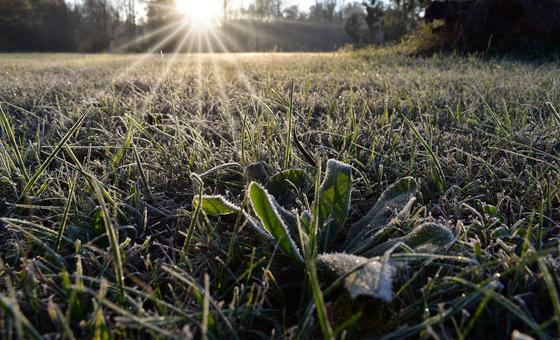
The high-pressure system brought atmospheric stability, resulting in clear skies and widespread severe frost.  

In Chilean cities of Santiago, Rancagua and Talca, stagnant cold air led to a buildup of pollutants and deteriorating air quality.

National meteorological services in both Chile and Argentina reported record low temperatures at multiple weather stations.  

Remarkably, snow blanketed parts of the Atacama Desert – the driest place on Earth – for the first time in over a decade. Snow also fell in unusual locations such as Mar del Plata, the Calamuchita Valley in Córdoba, and the hilly regions of northern Patagonia.  

Far-reaching impacts

Concerns are growing over the broader societal and economic impacts of the extreme cold.

Farmers in central Chile and northern Patagonia have reported crop damage due to early frosts, threatening fruit and winter harvests.

Meanwhile, transport and schooling were disrupted in towns unaccustomed to such severe winter weather. 

India to assume G20 Presidency for a year from Dec 1; Sets priorities

New Delhi, Sep 13 (IANS) India has listed its priorities ahead of assuming the G20 Presidency for a year from December 1, 2022 to November 30, 2023.

In a statement on Tuesday, the Ministry of External Affairs said: “Our G20 priorities are in the process of being firmed up, ongoing conversations inter alia revolve around:

  • Inclusive, equitable and sustainable growth;
  • LiFE (Lifestyle For Environment);
  • women’s empowerment;
  • digital public infrastructure and tech-enabled development in areas ranging from health, agriculture and education to commerce,
  • skill-mapping,
  • culture and tourism;
  • climate financing;
  • circular economy;
  • global food security;
  • energy security;
  • green hydrogen;
  • disaster risk reduction and resilience;
  • developmental cooperation;
  • fight against economic crime; and multilateral reforms”.

    Under the role, India is expected to host over 200 G20 meetings across the country, beginning from this December.

    The G20 Leaders’ Summit at the level of Heads of State Government is scheduled to be held on September 9-10, 2023 in New Delhi, said the Ministry statement.

    The G20 is an inter-governmental forum of the world’s major developed and developing economies.

    G20 comprises 20 countriesIndia, Argentina, Australia, Brazil, Canada, China, France, Germany, India, Indonesia, Italy, Japan, South Korea, Mexico, Russia, Saudi Arabia, South Africa, Turkey, the UK, the US — and the European Union (EU).

    Collectively, the G20 accounts for 85 per cent of the global GDP, 75 per cent of international trade and two-thirds of the world population, making it the premier forum for international economic cooperation.

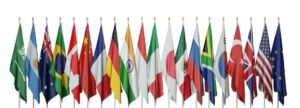
  • G20 flags

    India is part of the G20 Troika (current, previous and incoming G20 Presidencies), which includes Indonesia and Italy.

    “During our Presidency, India, Indonesia and Brazil would form the Troika. This would be the first time when the Troika would consist of three developing countries and emerging economies, providing them a greater voice,” the statement said.

    The G20 currently comprises Finance Track, with eight workstreams (Global Macroeconomic Policies, Infrastructure Financing, International Financial Architecture, Sustainable Finance, Financial Inclusion, Health Finance, International Taxation, Financial Sector Reforms)

    Sherpa Track, with 12 workstreams — Anti-corruption, Agriculture, Culture, Development, Digital Economy, Employment, Environment and Climate, Education, Energy Transition, Health, Trade and Investment, Tourism.

    Ten Engagement Groups of private sector/civil society/independent bodies (Business 20, Civil 20, Labour 20, Parliament 20, Science 20, Supreme Audit Institutions 20, Think 20, Urban 20, Women 20 and Youth 20).

    In addition to G20 members, there has been a tradition of the G20 Presidency inviting some guest countries and international organizations to its meetings and summit.

    Accordingly, in addition to regular international organizations (UN, IMF, World Bank, WHO, WTO, ILO, FSB and OECD) and Chairs of Regional Organizations (AU, AUDA-NEPAD and ASEAN).

    India, as G20 Presidency, will be inviting Bangladesh, Egypt, Mauritius, the Netherlands, Nigeria, Oman, Singapore, Spain and UAE as guest countries, as well as the International Solar Alliance, Coalition for Disaster Resilient Infrastructure and the Asian Development Bank as guest international organizations.