Secretary Rubio briefs PM on the sustained progress in bilateral cooperation.
Secretary Rubio shares US perspective on various regional and global issues.
PM reaffirms India’s consistent support for peace efforts and reiterates the call for peaceful resolution of the conflicts.
PM conveys warm greetings to President Trump.
The U.S. Secretary of State, H.E. Mr. Marco Rubio, called on Prime Minister Shri Narendra Modi today.
Secretary Rubio briefed Prime Minister on the sustained progress in bilateral cooperation across a wide range of sectors, including defence, strategic technologies, trade and investment, energy security, connectivity, education and people-to-people ties.
Secretary Rubio shared U.S. perspective on various regional and global issues, including the situation in West Asia.
Prime Minister reaffirmed India’s consistent support for peace efforts and reiterated the call for peaceful resolution of the conflicts through dialogue and diplomacy.
Prime Minister requested Secretary Rubio to convey his warm greetings to President Trump and said that he looked forward to their continued exchanges.
U.S. Secretary of State Marco Rubio calls on Prime Minister @narendramodi
Secretary Rubio briefs PM on the sustained progress in bilateral cooperation
Secretary Rubio shares the US perspective on various regional and global issues
The IEA is reacting to the effects of the conflict in the Middle East on the energy market. The Strait of Hormuz holds significant effects on the world economy and the energy security and affordability through the disruption of oil and gas flows through the Strait of Hormuz, and energy infrastructure in the region.
The conflict in the area which started on 28 February has disrupted the streams of energy trade across the Strait causing the biggest supply shock in the history of the global oil market. The situation has also decreased the supply of liquefied natural gas (LNG) in the world by approximately 20%.
On 11 March, the IEA Member countries had unanimously agreed to conduct the largest ever emergency release of their oil stocks as a measure to contain the market shocks.
Current market backdrop
The prices of oil and natural gas have upsurged owing to the war. By 11 March, Brent crude futures have increased more than 25 per cent since the hostilities began on 28 February, and Dutch TTF, the European natural gas market, has increased by nearly 60 per cent. Oil products markets have also been especially hit such as the diesel and the jet fuel markets. The effects are being experienced worldwide.
Flows of crude and oil products via the Strait of Hormuz have fallen to a mere trickle of approximately 20 million barrels per day (mb/d) prior to the war and currently. Traffic paralyzed, little ability to circumvent the waterway of the crucible, and storage is filling, the Gulf Countries have reduced the overall production of oil by no less than 10 mb/d, as we have reported in our latest Oil Market Report, released on 12 March. Unless shipping traffic is quickly restored, loss of supply will continue to expand.
The gulf region is one of the major exporters of the refined oil products to world markets, especially to the middle distillates, used as diesel and jet fuel. In 2025, the gulf producers sold 3.3 mb/d of refined oil products and 1.5 mb/d of liquefied petroleum gas (LPG). Already more than 3 mb/d of refining capacity in the region has been shut down as a result of attacks and non-existent viable outlets to export.
The middle distillates markets globally have not been very tight in comparison with other products. Consequently, the refineries outside the area seem to have limited scope to pump more diesel and jet fuel to offset such losses in case of losses in supply on a lasting basis.
Global Markets(Wikipedia)
The oil consuming nations have large reserves of oil to overcome short time losses in supply. The international recorded stocks of crude and products are at present estimated to dominate above 8.2 billion barrels, the maximum amount since February 2021. Approximately 50 of these are in the advanced economies with 1.25 billion barrels of these in government emergency stock with an additional 600million barrels of industry stocks obligated by the government. These stocks are the foundation of the emergency collective action which IEA has declared on 11 March to provide more oil supply into the market.
The war has also greatly affected the LNG production in the Gulf region. The global natural gas markets were slowly rebalancing after a massive shock occurred after the invasion of Russia in Ukraine in February 2022. It is projected that a new wave of LNG capacity will be introduced between now and the end of this decade and this will change the dynamics of the markets. But the tightness in gas markets in the first two months of 2026, and empty storage at the end of the heating season in the Northern Hemisphere is poised to drive up the demand on LNG in much of the next few months.
A prolonged outage of production in the Ras Laffan plant in Qatar may further create a serious issue in this market tightness. On 2 March, an attack on the facilities brought about production shutdown. Ras Laffan delivered 112 billion cubic metres (bcm) of LNG, also 300 000 barrels per day of liquefied petroleum gas (LPG), and 180 000 barrels per day of condensate, making it by far the largest LNG plant in the world.
What is so special about the Strait of Hormuz?
Strait of Hormuz is a slender sea passage, which is located between the Arabian Peninsula and Iran, and, which links the Persian Gulf to the Gulf of Oman and the Arabian Sea. It is an important trade route and is the main outlet of oil and natural gas that are manufactured in Saudi Arabia, UAE, Kuwait, Qatar, Iraq, Bahrain and Iran.
It was estimated that in 2025 around 25% of the world seaborne oil trade passed through the Strait, and there are few alternatives to oil flows avoiding the Strait of Hormuz. Crude pipelines only exist in Saudi Arabia and the UAE, which would potentially allow the rerouting to avoid the Strait with a capacity of 3.5 mb/d to 5.5 mb/d. Countries such as Iran, Iraq, Kuwait, Qatar and Bahrain are also dependent on the Strait to export the large percentage of their oil products.
In 2025, approximately 80 percent of the oil and oil products passing through the Strait was bound to Asia.
Besides that, more than 110 bcm of LNG went through the Strait of Hormuz in 2025. Approximately 93 percent of Qatar and 96 percent of the UAE LNG exports went across the Strait, which constitutes nearly a fifth of the entire LNG trade in the world. It does not have any other option of distributing these volumes to the market.
The majority of the LNG in the UAE and Qatar is shipped to Asia. In 2025, approximately 90 percent of the total amounts that get exported through the Strait of Hormuz was allocated to the Asian market. Just over 10% went to Europe.
The FBI Las Vegas Field Office wants to educate the public about the dangers of swatting. Swatting is a form of harassment to deceive an emergency service provider into sending a police and emergency service response team to another person’s address due to the false reporting of a serious law enforcement emergency. The individuals who engage in this activity use technology, such as caller ID spoofing, social engineering, TTY, and prank calls to make it appear that the emergency call is coming from the victim’s phone. Traditionally, law enforcement has seen swatters directing their actions toward individuals and residences. Increasingly, the FBI sees swatters targeting public places such as airports, schools, and businesses. Another recent trend is so-called celebrity swatting, where the targeted victims are well-known personalities.
swatting
These calls are dangerous to first responders and to the victims. The callers often tell tales of hostages about to be executed or bombs about to go off. The community is placed in danger as responders rush to the scene, taking them away from real emergencies, and the officers are placed in danger as unsuspecting residents may try to defend themselves. If you receive a swatting threat or information that an individual is planning to engage in swatting, report it to local law enforcement and the FBI at 1-800-CALL-FBI immediately.
In a move to boost exports of unique agricultural processed food products, the centre through apex export promotion body — Agricultural and Processed Food Products Export Authority (APEDA) — facilitated the export of first consignment of plant-based meat products under Vegan food category from Nadiad in Kheda district in Gujarat to California,the United States of America (USA).
With the growing popularity of vegan food products in developed countries, the plant-based food products have a huge export potential in the international market due to the high nutrient value of the vegan food products. Due to its rich fiber and lesser cholesterol contents, vegan food products are becoming alternative food products across the globe.
The first shipment that was exported to the USA from Nadiad has vegan food products like momos, mini samosas, patties, nuggets, spring rolls, burgers, etc. The logistics support was provided by the Kheda district administration.
Stressing on exploring new foreign destinations, APEDA Chairman, Dr M Angamuthu said that APEDA is working towards promotion of plant-based meat products in a big way without disturbing the conventional animal-based meat export market.
Millets
On the occasion, Kheda district magistrate Shri K.L. Bachani assured all needed support to APEDA for export-related activities in future. “It has become possible with the efforts of Regional Head, APEDA Gujarat that first consignment of plant-based food products is being shipped to U.S.A from Nadiad,” Bachani said.
The APEDA has planned to promote a variety of vegan foods products, including pancake, snacks, cheese, etc, to the countries of Australia, Israel, New Zealand and others in coming months.
On the occasion, APEDA, Gujarat’s Regional Head stressed on adding more plant-based meat products in APEDA’s export basket.The first consignment of plant-based food products were exported by Greennest and Wholesome Foods.
APEDA has taken number of export promotion activities and initiatives, by way of development of virtual portals for organizing Virtual Trade Fairs, Farmer Connect Portal, e-office, HortiNet Traceability system, Buyer Seller Meets, Reverse Buyer Seller Meets, product specific campaigns etc. APEDA has been closely working with the state government for creating infrastructure and promotion of export from the state.
food
APEDA assists in upgradation and strengthening of recognized laboratories for export testing and residue monitoring plans. APEDA also provides assistance under the financial assistance schemes of infrastructure development, quality improvement and market development for boosting export of agricultural products.
APEDA organizes participation of exporters in the International Trade Fairs, which provides a platform to the exporters to market their food products in the global marketplace. APEDA also organizes national events like AAHAR, Organic World Congress, BioFach India etc. to promote agri-exports.
In order to ensure seamless quality certification of products to be exported, APEDA has recognized 220 labs across India to provide services of testing a wide range of products to exporters.
New Delhi, Sep 13 (IANS) India has listed its priorities ahead of assuming the G20 Presidency for a year from December 1, 2022 to November 30, 2023.
In a statement on Tuesday, the Ministry of External Affairs said: “Our G20 priorities are in the process of being firmed up, ongoing conversations inter alia revolve around:
Inclusive, equitable and sustainable growth;
LiFE (Lifestyle For Environment);
women’s empowerment;
digital public infrastructure and tech-enabled development in areas ranging from health, agriculture and education to commerce,
skill-mapping,
culture and tourism;
climate financing;
circular economy;
global food security;
energy security;
green hydrogen;
disaster risk reduction and resilience;
developmental cooperation;
fight against economic crime; and multilateral reforms”.
Under the role, India is expected to host over 200 G20 meetings across the country, beginning from this December.
The G20 Leaders’ Summit at the level of Heads of State Government is scheduled to be held on September 9-10, 2023 in New Delhi, said the Ministry statement.
The G20 is an inter-governmental forum of the world’s major developed and developing economies.
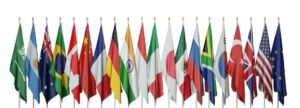
G20 comprises 20 countries — India, Argentina, Australia, Brazil, Canada, China, France, Germany, India, Indonesia, Italy, Japan, South Korea, Mexico, Russia, Saudi Arabia, South Africa, Turkey, the UK, the US — and the European Union (EU).
Collectively, the G20 accounts for 85 per cent of the global GDP, 75 per cent of international trade and two-thirds of the world population, making it the premier forum for international economic cooperation.
G20 flags
India is part of the G20 Troika (current, previous and incoming G20 Presidencies), which includes Indonesia and Italy.
“During our Presidency, India, Indonesia and Brazil would form the Troika. This would be the first time when the Troika would consist of three developing countries and emerging economies, providing them a greater voice,” the statement said.
The G20 currently comprises Finance Track, with eight workstreams (Global Macroeconomic Policies, Infrastructure Financing, International Financial Architecture, Sustainable Finance, Financial Inclusion, Health Finance, International Taxation, Financial Sector Reforms)
Sherpa Track, with 12 workstreams — Anti-corruption, Agriculture, Culture, Development, Digital Economy, Employment, Environment and Climate, Education, Energy Transition, Health, Trade and Investment, Tourism.
Ten Engagement Groups of private sector/civil society/independent bodies (Business 20, Civil 20, Labour 20, Parliament 20, Science 20, Supreme Audit Institutions 20, Think 20, Urban 20, Women 20 and Youth 20).
In addition to G20 members, there has been a tradition of the G20 Presidency inviting some guest countries and international organizations to its meetings and summit.
Accordingly, in addition to regular international organizations (UN, IMF, World Bank, WHO, WTO, ILO, FSB and OECD) and Chairs of Regional Organizations (AU, AUDA-NEPAD and ASEAN).
India, as G20 Presidency, will be inviting Bangladesh, Egypt, Mauritius, the Netherlands, Nigeria, Oman, Singapore, Spain and UAE as guest countries, as well as the International Solar Alliance, Coalition for Disaster Resilient Infrastructure and the Asian Development Bank as guest international organizations.
The attacks of Sept. 11, 2001 were a national tragedy that resulted in a staggering loss of life and a significant change in American culture. Each year, we pause and remember. Beyond honoring the Americans who died that day, NASA also assisted FEMA in New York in the days afterward, and remembered the victims by providing flags flown aboard the Space Shuttle to their families.
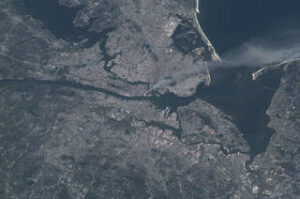
Expedition 3 Commander Frank Culbertson was aboard the International Space Station at the time of the attacks, and the only American on the crew. As soon as he learned of the attacks, he began documenting the event in photographs because the station was flying over the New York City area. He captured incredible images in the minutes and hours following the event. From his unique vantage point in space, he recorded his thoughts of the world changing beneath him.
The following day, he posted a public letter that captured his initial thoughts of the events as they unfolded. “The world changed today. What I say or do is very minor compared to the significance of what happened to our country today when it was attacked.”
Visible from space, a smoke plume rises from the Manhattan area after two planes crashed into the towers of the World Trade Center. This photo was taken of metropolitan New York City (and other parts of New York as well as New Jersey) the morning of September 11, 2001. Credits: NASA
Upon further reflection, Culbertson said, “It’s horrible to see smoke pouring from wounds in your own country from such a fantastic vantage point. The dichotomy of being on a spacecraft dedicated to improving life on the earth and watching life being destroyed by such willful, terrible acts is jolting to the psyche, no matter who you are.”
NASA science programs were called into action after Sept. 11, 2001, as the agency worked with FEMA to fly sensors over the affected areas on aircraft looking for aerial contaminants and used satellite resources to monitor from above.
Flags for Heroes and Families
NASA flew nearly 6,000 4 by 6 inch flags on Endeavour’s flight during STS-108 to honor the victims of the terrorist attacks in New York, Washington, D.C. and Pennsylvania. Students working at Johnson Space Center in Houston, Texas assembled the commemorative packages, including the U.S. flags flown in space, to be presented to relatives of the victims. Distribution began on June 14, 2002, National Flag Day, at a ceremony held at the American Museum of Natural History’s Rose Center for Earth and Space in New York.
“The ‘Flags for Heroes and Families’ campaign is a way for us to honor and show our support for the thousands of brave men and women who have selflessly contributed to the relief and recovery efforts,” said then-NASA Administrator Dan Goldin. “The American flags are a patriotic symbol of our strength and solidarity, and our Nation’s resolve to prevail.”
NASA/Photo: Nasa.gov
“NASA wanted to come up with an appropriate tribute to the people who lost their lives in the tragic events of September 11,” added Goldin. “America’s space program has a long history of carrying items into space to commemorate historic events, acts of courage and dramatic achievements. ‘Flags for Heroes and Families’ is a natural extension of this ongoing outreach project.”
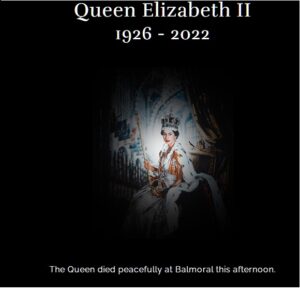
Queen Elizabeth II, Britain’s longest-reigning monarch, died on Sept. 8, 2022 at age 96. Her reign spanned all of spaceflight, predating both Sputnik and Explorer 1.
As NASA joins the planet in marking her passing, we are moved by the curiosity The Queen showed our explorers over the years.
Queen Elizabeth II passed away, Charles III becomes UK’s new King
In this photo, Queen Elizabeth II greets employees on her walk from NASA’s Goddard Space Flight Center mission control to a reception in the center’s main auditorium, Tuesday, May 8, 2007, in Greenbelt, Md. Queen Elizabeth II and her husband, Prince Philip, Duke of Edinburgh, visited the NASA Goddard Space Flight Center as one of the last stops on their six-day United States visit.