The ‘clean revolution is unstoppable’ but will it arrive too late?

In recent years, one of the bright spots amid gloomy predictions about the climate has come from the International Renewable Energy Agency (IRENA) – an Abu Dhabi-based intergovernmental body – which has consistently pointed out the plummeting costs and soaring efficiency of clean energy sources, such as solar and wind power.

On Tuesday, IRENA launched its latest progress report, which reiterated the impressive rise of renewables – 2024 saw a record-breaking additional 582 Gigawatts of renewable energy capacity – but warned that this is still far from the annual increase necessary to wean us off the fossil fuels which are accelerating global warming.

“The clean energy revolution is unstoppable,” said Mr. Guterres in reaction to the study.

Renewables are deployed faster and cheaper than fossil fuels – driving growth, jobs, and affordable power. But the window to keep the 1.5°C limit within reach is rapidly closing. We must step up, scale up and speed up the just energy transition – for everyone, everywhere.”

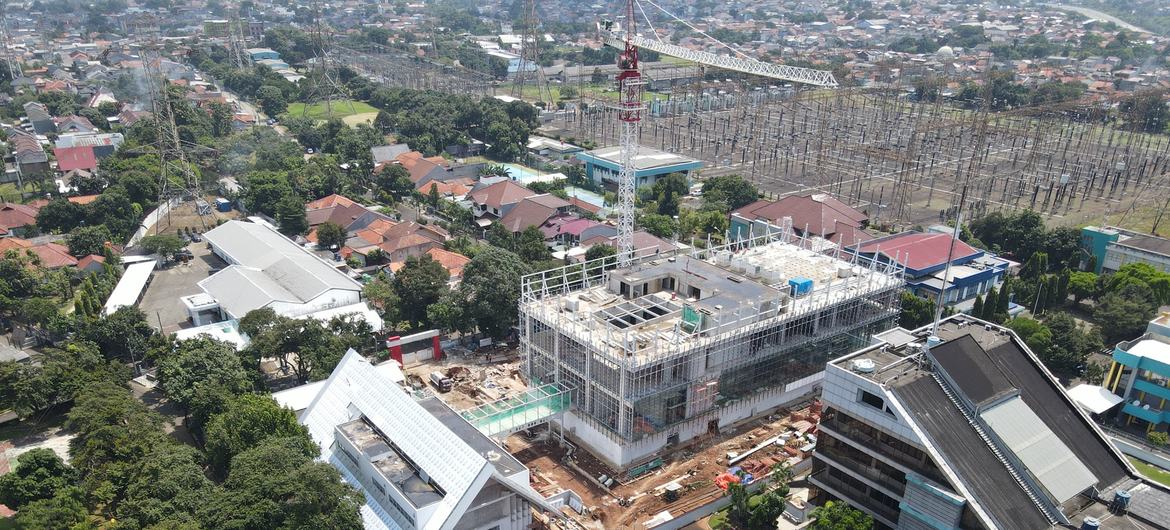
Indonesia is modernizing its electricity grid.

Still off track

At the COP28 UN climate conference, governments committed to produce 11.2 Terawatts of energy from renewable sources by 2030.

So, whilst the 2024 figure is impressive, it’s still way off the 1,122 GW of capacity that needs to be added every year, if that goal is to be reached in time.

The report calls on the world’s richest countries to take the lead in turning away from polluting energy sources such as coal and oil and raise their share of renewables to around 20 per cent of global capacity by the end of the decade.

A major increase in investment for the transition is urgently needed, the reports states, to fund upgrades to electricity grids, supply chains, and clean-tech manufacturing for solar, wind, batteries and hydrogen.

France Joins UK, Canada, Australia and Portugal in Recognising Palestinian Statehood

France joins UK, Canada, Australia and Portugal in recognising Palestinian statehood at UN-backed conference

United Nations/New York: UN Secretary-General António Guterres on Monday reiterated that nothing can justify the October 7, 2023 Hamas attacks on Israel, nor the “collective punishment” inflicted on the Palestinian people in their aftermath. Calling for an “immediate” ceasefire in Gaza, he urged the release of all hostages and the opening of safe, unconditional and unhindered humanitarian corridors.

Speaking at the resumed international conference on Palestine, co-chaired with Saudi Arabia, Guterres warned that the viability of a two-state solution is being undermined by “relentless” settlement expansion, the “creeping threat of annexation” and a surge in settler violence in the West Bank.

“The time for peace has come because we are just a few moments away from no longer being able to seize peace,” he told delegates. “Let’s be clear: statehood for the Palestinians is a right, not a reward. Denying it would be a gift to extremists everywhere.”

France Backs Palestinian Statehood

The conference, held after the General Assembly overwhelmingly endorsed the first phase outcome declaration in July, saw fresh diplomatic momentum. The United Kingdom, Canada, Australia and Portugal formally recognised the State of Palestine on Sunday. French President Emmanuel Macron announced that Paris would follow suit, a declaration that drew lengthy applause.

“The recognition of the legitimate rights of the Palestinian people takes nothing away from the rights of the people of Israel, which France has supported from Day One,” Macron said. “This recognition is the only solution that will allow Israel to live in peace.”

Saudi Foreign Minister Faisal bin Farhan Al Saud praised the countries that had recognised Palestine and urged others to “take a similar historic step.” Such recognition, he said, would “support efforts towards the implementation of the two-State solution, achieve permanent and comprehensive peace in the Middle East, and create a new reality of stability and prosperity.”

ALSO READ: London’s Far-Right Rally Sends Shockwaves Through South Asian Communities

UN General Assembly President Annalena Baerbock acknowledged scepticism around the two-state formula, noting that the UN’s earliest resolutions on the issue date back to its founding years. But she stressed that pursuing the alternative would mean conceding to “evil” and risk “the end of this institution.”

“This is not a naïve wish,” Baerbock insisted. “The international community is committed not only to the principle of two states but to identifying tangible, timebound and irreversible steps for its realisation, backed by decisive measures and international guarantees.”

The conference underscored a growing shift among Western powers towards recognising Palestinian statehood, even as conditions on the ground remain volatile. For Guterres and other leaders, the message was clear: without urgent steps, the two-state solution risks slipping out of reach, with grave consequences for peace and security in the Middle East and beyond.

First Person: ‘Tomorrow is too late’ to scale up humanitarian aid in Haiti

Women and girls face the brunt of this crisis. Gender-based violence (GBV) such as gang rape is rampant, particularly in the capital Port-au-Prince, and is exacerbated by precarious conditions in displacement camps.

Yet, recent funding cuts have shut down centres for sexual and reproductive health and GBV services. Displacement and insecurity make the services that do exist often too difficult to access.

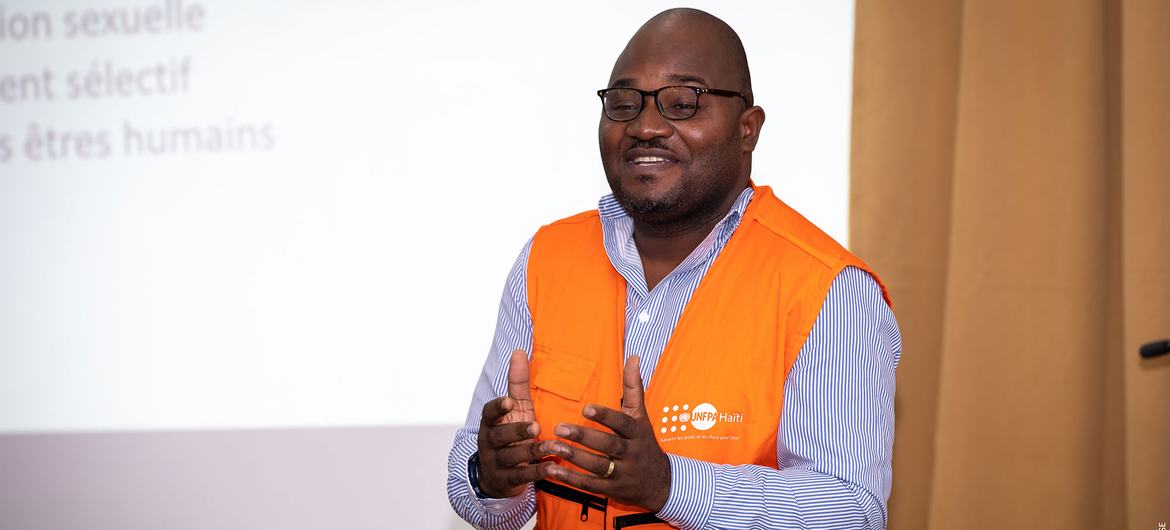
Christian Vovi, the UN reproductive health agency’s (UNFPA) Humanitarian Coordinator in Haiti, has been working in the Caribbean island nation since 2022.

He sat down with UN News ahead of World Humanitarian Day to discuss this crisis and his perspective as a humanitarian on the ground.

© Christian Vovi Lubanzadio

Christian Vovi, UNFPA Humanitarian Coordinator in Haiti.

Remote work

“Sometimes there is the possibility of an attack, so we are obliged to work from home.

This situation has limited our capacity to go to the field to see the affected people, to meet with women, to observe the situation in the camps and communities, so security is a barrier for us sometimes.

We can organize meetings virtually, meet with women online and with the partners to follow up and monitor activities.

Increase in GBV cases

Continued displacement creates new GBV needs that humanitarian actors must respond to, despite the limited financial capacities. There is a continuous increase in the number of reported cases of GBV.

In some of the cases we manage, we hear about how gang members arrive in the community, burn houses and then rape a mother or father in front of the family.

When you talk with women, they are desperate as they struggle to secure even the most basic necessities.

Because women don’t have access to financial resources, there has been an increase in the cases of prostitution.

© PAHO/WHO/David Lorens Mentor

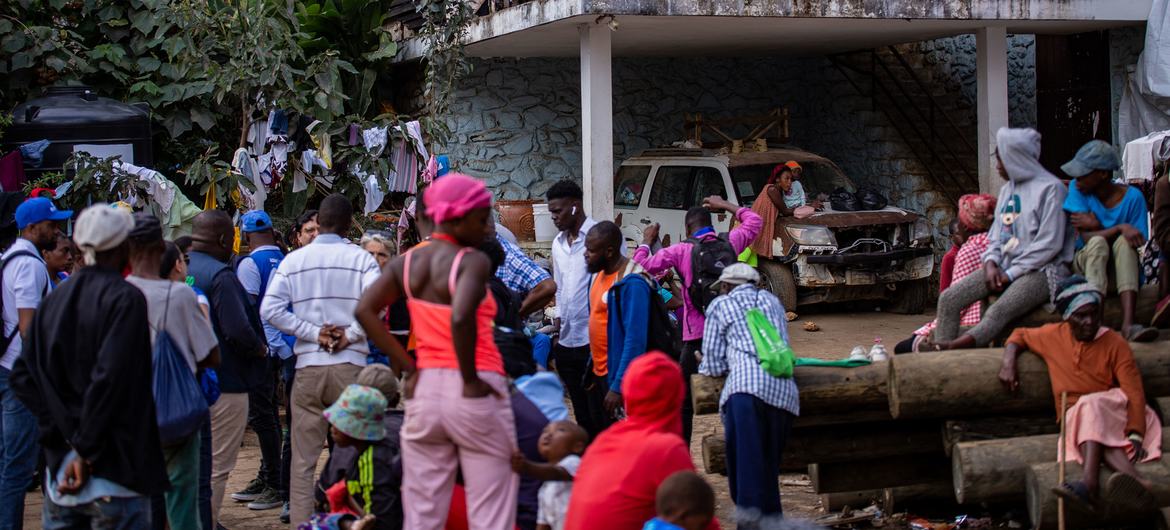
People gather at a site for displaced people in Port-au-Prince, Haiti.

Desperate for services

Protection services are urgently needed. We have more than 100 sites for displaced people, but only 11 or 12 sites are covered with the GBV protection services.

There is also the issue in terms of shelter, because when we have many families living together in a small room, there is a larger risk of GBV.

Urgent funding needs

UNFPA distributes dignity kits, which contain items that women need, and provides other goods and services, but it’s not enough, we need more.

In Haiti, there are now over one million displaced people. Since 26 per cent are women of reproductive age, we need to mobilise millions of dollars so we can meet their urgent needs.

In 2020, the US provided around 65 per cent of the humanitarian funding for the response plan in Haiti. But with the US funding cuts, we are no longer able to provide services to 25,000 women and girls in certain displacement sites.

The US also funded 100 per cent of the post-rape kit procured since 2023, so now, our stocks of these kits are very low.

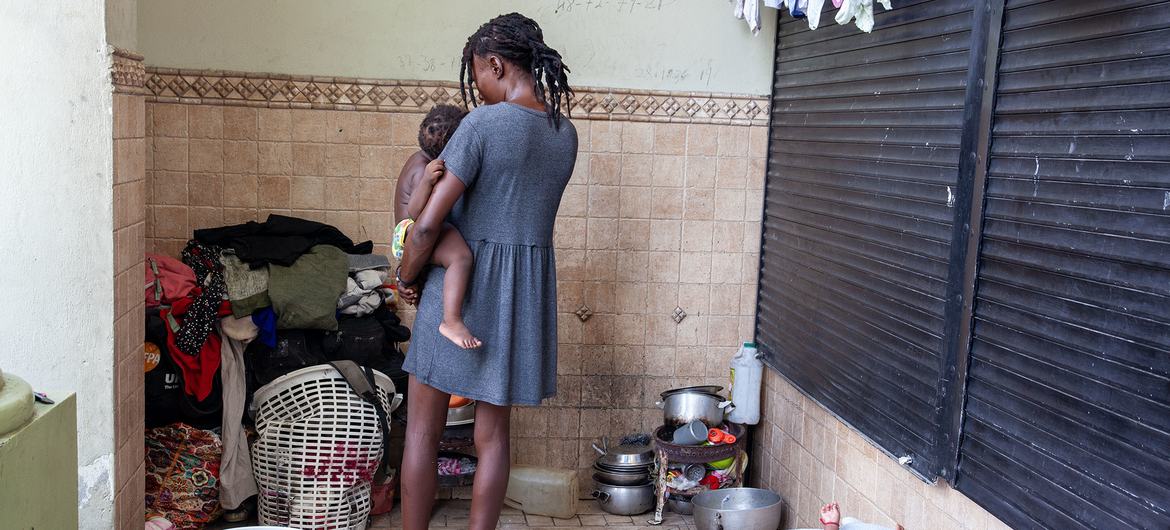
A woman says she was raped while fleeing from gang violence with her six children and while she was four months pregnant.

Work of UNFPA despite limitations

Despite these funding and access limitations, UNFPA and its partners continue to stay in Haiti.

UNFPA leads the GBV coordination mechanism. We continue to provide remote support for the GBV cases through the hotline to ensure that the cases can access services despite the security limitations.

We continue to ensure that if movement is limited, the affected people can access the services, psychosocial support and information on available services through the telephone hotline.

Call to action

The international community and donors must fill the large funding gap in the Haitian humanitarian response plan.

The Haitians think that their situation is neglected because they believe that the humanitarian international community has all the assets and funding to stop the violence and assist the affected people.

The government, diplomats and the international community should advocate now for a clear end to the current violence and to stop the retaliation against women and girls in Haiti.

It is important to act now because for me, tomorrow is too late regarding the humanitarian need and the living conditions of the women in the displacement sites.”


Source link