Healing the ozone layer: ‘Guided by science, united in action’

Last century, scientists confirmed the alarming reality of a significant depletion in the ozone layer – an invisible shield of gas which surrounds the earth and protects it from the sun’s UV rays.

The collection of ozone-depleting substances included CFCs, or chlorofluorocarbons, which in the mid-1980s were commonly found in everyday products such as air conditioners, fridges and aerosol cans.

Science led to global action. Realising that harmful UV radiation was entering the atmosphere through what was potentially a damaged ozone layer, countries made a commitment under the Vienna Convention in 1985, to do what was needed for the protection of the people and the planet.

The Vienna Convention and its Montreal Protocol became a landmark of multilateral success,” said the UN Secretary General António Guterres in a message for this year’s World Ozone Day.

“Today, the ozone layer is healing,” he said.

What is the Vienna Convention?

Forty years ago, countries came together to take the first step in protecting the ozone layer, “guided by science, united in action,” the UN chief continued.

The Vienna Convention for the Protection of the Ozone Layer, adopted and signed by 28 countries on 22 March 1985, formalised universal cooperation over the protection of the fragile ozone layer.

It is the first treaty to be signed by every country in the world and the precursor to the Montreal Protocol.

The objective of the Montreal Protocol is to monitor the global production and consumption of substances that deplete the ozone layer – and eventually eliminate them.

Multilateralism at its best

In a video message, Inger Andersen, Executive Director of the UN Environment Programme (UNEP), highlighted that through action under the conventions “ozone depleting substances have now been virtually eradicated and the hole in ozone layer is closing.”

After scientists sounded the alarm, countries, nations, and businesses came together and took action for the planet.

“That is multilateralism at its very, very best,” she added.

The Montreal Protocol has been progressing well in both developed and developing countries with most phase-out schedules – the time given for each country to gradually stop the production of harmful substances – adhered to or even surpassed.

This achievement reminds us that when nations heed the warnings of science, progress is possible,” remarked Mr. Guterres.

Next in line, the Kigali Amendment

In his message, Mr. Guterres urged governments to ratify and implement the Kigali Amendment to the Montreal Protocol, which commits to phase down, or reduce, hydrofluorocarbons (HFCs), greenhouse gases used mainly in cooling technologies.

“Implementing the Kigali Amendment could avoid up to 0.5 degrees Celsius of warming by the end of the century,” he said. “Paired with energy-efficient cooling, we could double these gains.”

As outlined in the Paris Agreement, countries have agreed to try and limit the rise of global temperature to 1.5 degrees Celsius.

“On this World Ozone Day, let’s recommit to preserving our ozone layer and to protecting people and planet for generations to come,” the UN chief said. 

Yemen: How acts of compassion light the way for healing

Her journey into humanitarian work began after years of serving in hospitals in Aden, where she witnessed firsthand the struggles vulnerable communities face in accessing healthcare services.

“In Aden, I worked at a private hospital,” she recalled. “I found that many people couldn’t afford treatment. That reality pushed me to find a way to help those left behind.”

She decided to relocate to Ma’rib, a city sheltering hundreds of thousands of people displaced by the conflict and a key transit hub for migrants making the perilous journey from the Horn of Africa through Yemen, with a clear goal in mind: to serve those who could not afford medical treatment.

‘Migrants who reach us are traumatised’

Dr. Nouf said she found her calling at the centre, which provides primary healthcare services to vulnerable groups, especially those on the move.

“Migrants who reach us are traumatised,” she explained. “Whether it’s hunger, fear of death or the unknown, it results in physical, psychological or neurological shocks.”

Dr. Nouf conducts an initial examination to assess her patient’s health condition.

Many arrive with serious, sometimes permanent, injuries. Women in particular often carry visible and invisible scars from abuse suffered along irregular migration routes into the country.

“There are times when I emotionally struggle with what I see and hear,” she said. “But, helping these people and watching them recover fuels my passion and determination to continue.”

Listening to their stories filled with pain, fear and resilience, Dr. Nouf does everything she can to help, assessing each case, providing emergency support and when needed, referring patients to specialised services. From treatment for contagious diseases to care for physical and psychological traumas, MRP also offers protection services for survivors and victims who experienced violence, exploitation and abuse.”

From young migrant to aid worker

Dr. Nouf is not alone in this mission of delivering lifesaving assistance to migrants and Yemenis in need. She works together with a dedicated team of colleagues from diverse backgrounds who tirelessly attend to numerous patients each day, among them Khalid, a 22-year-old Ethiopian whose own migration journey to Ma’rib is a testament to resilience and compassion.

Khalid arrived in Yemen in 2021, heartbroken after his school in Ethiopia refused to let him return due to illness-related absence. Frustrated, he left Ethiopia with smugglers, enduring a grueling 10-day trek through the desert and surviving on shared biscuits. Upon reaching Aden, he found no comfort or assistance, so he continued his journey to Ma’rib where some of his relatives live.

Once in Ma’rib, Khalid was welcomed by his community, who brought him clothes and hosted him. A month later, he began working as a cleaner at a local hospital, a job he held for three years.

‘I’ve been through the same experience’

At the hospital, Khalid encountered other migrants seeking treatment and advocated for their care. He spoke with administrators, urging them to treat these vulnerable individuals for free. His reputation grew, and soon, anyone in need turned to Khalid for help.

“I help other migrants because I’ve been through the same experience,” he said. “I know how support can make the suffering less.”

Eventually, Khalid received the opportunity to work in the MRP, where he can help migrants access services and provide translation support.

“People arrive here suffering from poor nutrition, amoebiasis and malaria. Some bear physical injuries caused during torture for ransom at the hands of traffickers,” he said. “I am thankful to the donors who keep this facility running. It saves lives every day through vital healthcare services.”

Lured by hope, trapped by lies: Healing after being trafficked

Eight years ago, Maria left Caracas, Venezuela, driven by dwindling opportunities and the hope of completing her veterinary studies. At just 21, she accepted an offer from an acquaintance who promised work in Trinidad and Tobago, cleaning homes, waiting tables. It seemed like a lifeline, a way to support herself and her family back home.

She didn’t know then that she was stepping into a well-laid trap.

“I believed in the promise of a better future,” Maria recalled, “but found myself trapped in a nightmare I couldn’t escape.”

Forced into labour and sexual exploitation, she lived in fear, rarely seeing sunlight, with her freedom stripped away.

Maria has found stability and strength, determined to turn her story into one of resilience and healing.

Held captive for months

After eight months in captivity, Maria managed to escape. It wasn’t the end of her struggles, but the start of a slow, determined journey toward healing. 

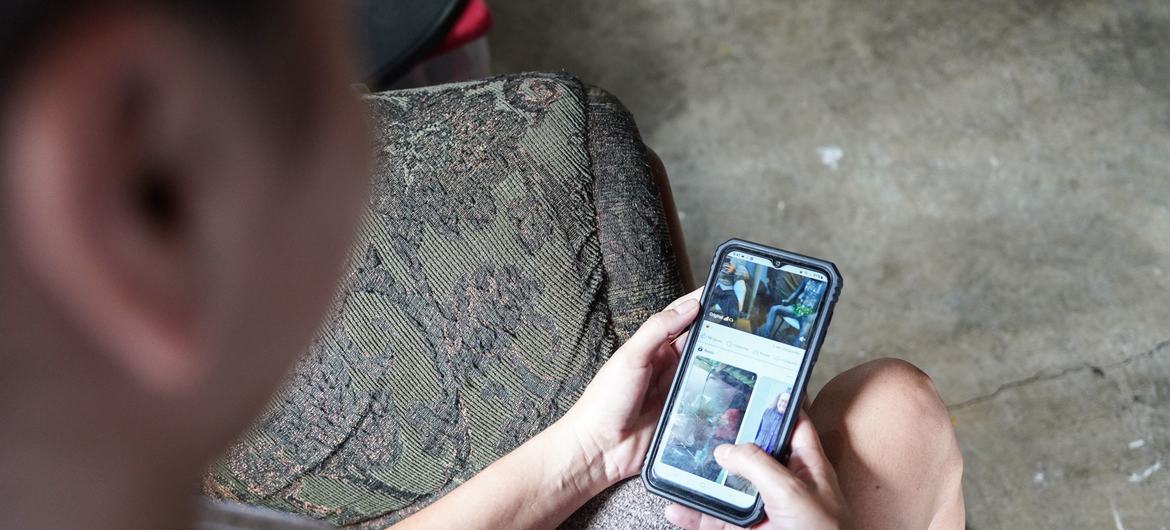
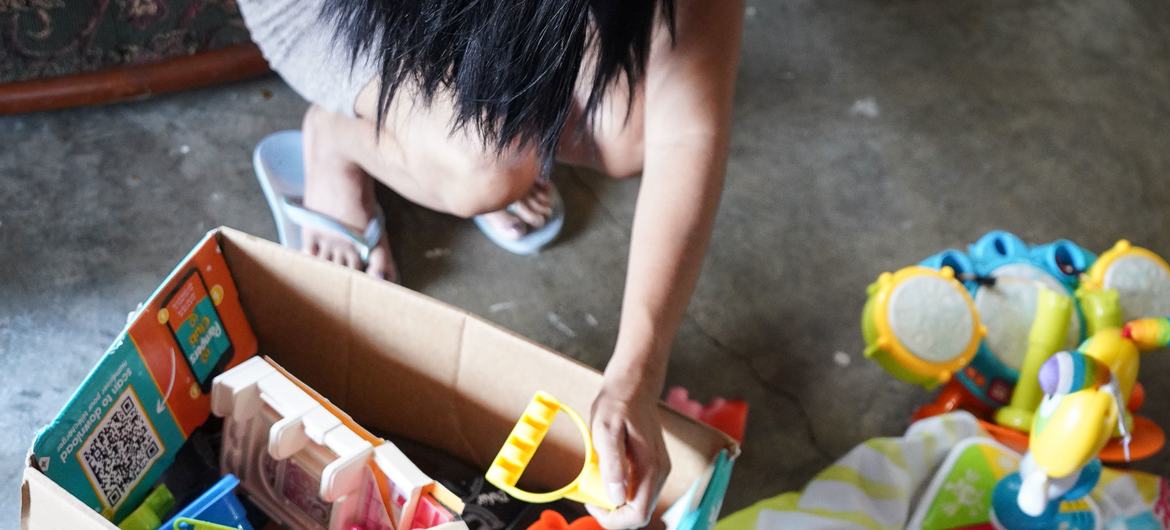
Now 29, she lives in Trinidad and Tobago with her partner and their two young children, aged one and five. Though her days are now filled with school runs and shared meals, the trauma still lingers. She smiles when she speaks of them, but her voice carries the weight of everything she has survived.

“It hasn’t been easy,” she said, her voice shaking. “But, I am building a new life, step by step.”

Back in Venezuela, her family knows nothing of what she endured. Shame and fear have kept her silent. It’s been seven years since she last saw her parents and siblings. Although she misses them deeply, the weight of what happened still feels too heavy to put into words.

Maria draws strength from her two young children, now aged one and five, as she rebuilds her life.

Combatting human trafficking

Like many survivors of human trafficking, Maria has had to rebuild more than just her physical safety. The emotional wounds run deep, and the stigma surrounding trafficking makes recovery even harder.

The International Organization for Migration (IOM) has been by her side, offering psychosocial support, helping her find safe housing and providing the tools to rebuild her life. 

“We work tirelessly to combat human trafficking,” says Desery Jordan-Whiskey, reporting project assistant in Trinidad and Tobago. “Our commitment is to provide critical assistance to survivors while advocating for stronger policies to prevent exploitation and ensure justice.”

SDG 8

SDG 8: ENSURE DECENT WORK

  • Take immediate measures to eradicate forced labour, modern slavery and human trafficking
  • Protect labour rights, and promote safe, secure environments for all workers
  • Sustain per capita economic growth and at least seven per cent gross domestic product growth per annum in least developed countries
  • Achieve higher levels of economic productivity through diversification, technology and innovation
  • Improve global resource efficiency in consumption and production
  • Decouple economic growth with environmental degradation


Global unemployment is expected to fall below pre-pandemic levels, although not in low-income countries

Maria is one of many women across the region who have been lured by false promises and found themselves in situations of exploitation.

She knows there’s a long road ahead, but she refuses to be defined by her past.

“I want other women to know they are not alone. There is life after this, there is strength.”

Her story sheds light on the wider human trafficking crisis, where women and girls are disproportionately affected. According to the 2024 UNODC Global Report on Trafficking in Persons, 52 per cent of victims in Central America and the Caribbean are girls under the age of 18, and 62 per cent are trafficked for sexual exploitation.

Behind every statistic is a human being, a daughter, a sister, a mother, trying to survive and recover.

But, numbers cannot capture the courage it takes to begin again.

“I am living proof that you can rebuild your life,” Maria says, her voice steady now. “It takes time, but it’s possible.”

*The name has been changed to protect their identity

Source link