Trapped in Gaza: Palestinians with disabilities cannot reach aid

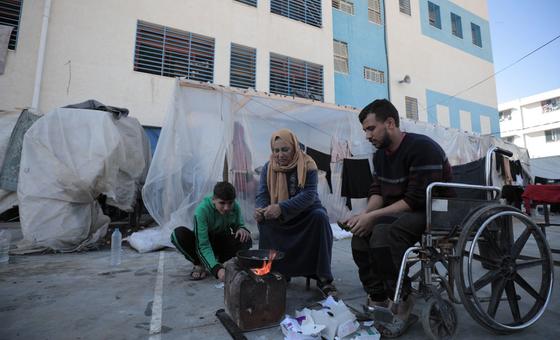
But for an increasing number of Palestinians, including those who cannot hear the orders or whose mobility is impaired, following these orders may be impossible. Yet, failure to do so, could cost them their lives.  

“In a normal situation, people with disabilities suffer the most. And in wartime, of course, the situation is heightened further,” said Muhannad Salah Al-Azzeh, member of the UN Committee on the Rights of Persons with Disabilities at a public dialogue this week in Geneva.  

With the number of disabled people in Gaza increasing every day, Mr. Al-Azzeh said that the minimum level of safety for people with disabilities is not being upheld.  

No replacements for a broken hearing aid

Over 83 per cent of people with disabilities in Gaza do not have the assistive devices they need, including wheelchairs, hearing aids and other tools. And for those that do, the batteries which enable these devices to work are in very short supply.   

This makes it exponentially more difficult – if not impossible – for them to access healthcare and food.  

This shortage comes amidst an increasing number of people with disabilities. The UN Relief and Works Agency in Palestine (UNRWA) estimates that one in four Gazans has a new disability as a result of the war between Israeli forces and Hamas, which requires treatment and rehabilitation.

At least 35,000 people have “significant hearing damage” as a result of repeated explosions. And Ammar Dwaik, director-general of the Palestinian Independent Commission for Human rights, said that an average of 15 children are newly disabled each day. According to some rights groups, Gaza has the largest number of child amputees in modern history.  

But with over 134,000 people having sustained conflict-related injuries – 40,500 of whom are children – the besieged and under-resourced healthcare system cannot keep up.  

“Hospitals, ambulances, and medical and humanitarian personnel have been systematically targeted, with over 1,580 health workers and 467 humanitarian staff killed,” UNRWA noted.

Aid out of reach

Seeking life-saving aid has become a life-threatening prospect for even the healthiest in Gaza. But for people with disabilities, is almost impossible, according to Hector Sharp, a representative from UNRWA at the meeting in Geneva.  

“Reaching [the distribution points] and needing to physically compete for this aid is difficult for all Palestinians, but all the more so for people with disabilities to whom aid is being effectively placed out of reach,” Mr. Sharp said.  

The US and Israel-backed Gaza Humanitarian Fund, for example, has only a handful of distribution points throughout the Gaza Strip since it bypasses all established UN and NGO operations, forcing people to walk long distances in the hopes of receiving meagre amounts of food.  

If people with mobility impairments do not have families or friends willing to retrieve aid for them, they may simply be unable to reach it, according to Mr. Al-Azzeh.

Key infrastructure destroyed

Since 1962, UNRWA has operated a rehabilitation centre for the visually impaired in the Gaza Strip. It was the only one of its kind and served, at any given time, over 500 children.  

Today [the centre] lies in rubble,” Mr. Sharp said.  

The destruction of other civilian infrastructure throughout the Strip – including schools and hospitals – is impeding rehabilitation efforts for people with disabilities and further entrenching societal exclusion.  

The UNRWA representative in Geneva noted the impact that shuttered schools will have on children with disabilities.  

“For children with disabilities the loss of inclusive education deepens the systematic inequalities and places them at a heightened risk of lifelong social and economic exclusion,” he said.  

Peace, the only answer 

Despite the challenges, UNRWA has continued to provide services to people with disabilities, including over 53,000 sessions of physiotherapy and assistive devices or rehabilitation services to 8,500 people since the beginning of the year.  

Tedros Adhanom Ghebreyesus, Director-General of the World Health Organization (WHO), has called on the Israeli authorities to allow in more assistive devices and technology both for people with existing disabilities and those who are sustaining new ones amidst the ongoing conflict.  

He also called for medical evacuations to be expanded in order to allow people with disabilities to obtain vital, specialised care. But ultimately, he said, the only lasting solution is to end the conflict.  

“Peace is the only way to stop the suffering of Palestinians, including those with disabilities.” 

Source link

Lured by hope, trapped by lies: Healing after being trafficked

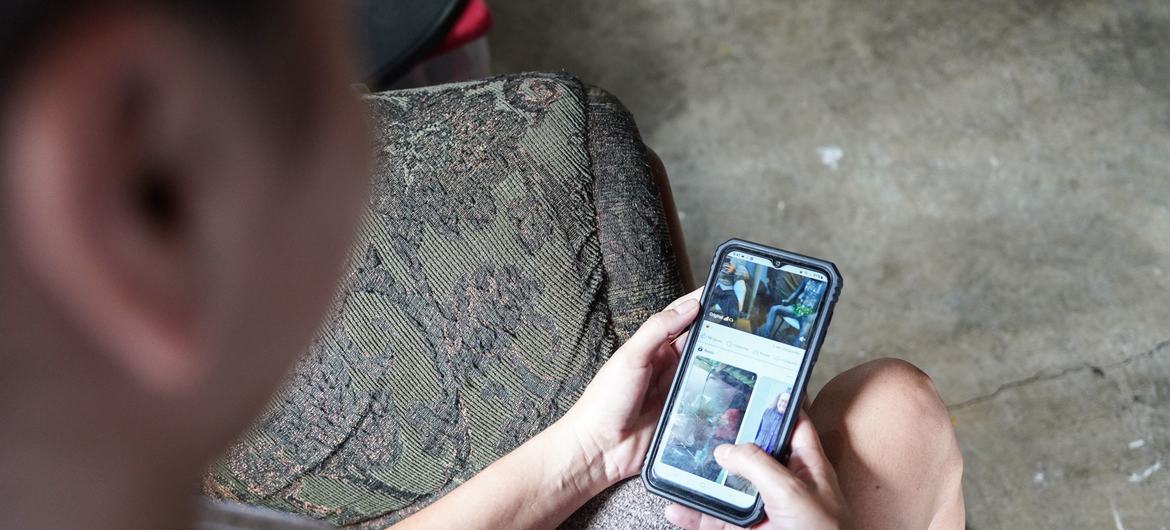
Eight years ago, Maria left Caracas, Venezuela, driven by dwindling opportunities and the hope of completing her veterinary studies. At just 21, she accepted an offer from an acquaintance who promised work in Trinidad and Tobago, cleaning homes, waiting tables. It seemed like a lifeline, a way to support herself and her family back home.

She didn’t know then that she was stepping into a well-laid trap.

“I believed in the promise of a better future,” Maria recalled, “but found myself trapped in a nightmare I couldn’t escape.”

Forced into labour and sexual exploitation, she lived in fear, rarely seeing sunlight, with her freedom stripped away.

Maria has found stability and strength, determined to turn her story into one of resilience and healing.

Held captive for months

After eight months in captivity, Maria managed to escape. It wasn’t the end of her struggles, but the start of a slow, determined journey toward healing. 

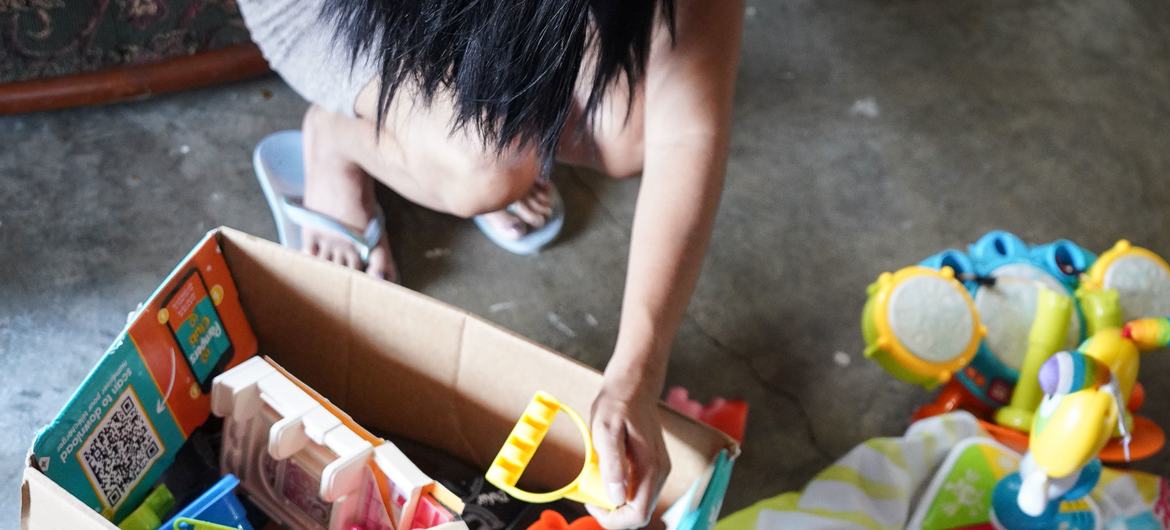
Now 29, she lives in Trinidad and Tobago with her partner and their two young children, aged one and five. Though her days are now filled with school runs and shared meals, the trauma still lingers. She smiles when she speaks of them, but her voice carries the weight of everything she has survived.

“It hasn’t been easy,” she said, her voice shaking. “But, I am building a new life, step by step.”

Back in Venezuela, her family knows nothing of what she endured. Shame and fear have kept her silent. It’s been seven years since she last saw her parents and siblings. Although she misses them deeply, the weight of what happened still feels too heavy to put into words.

Maria draws strength from her two young children, now aged one and five, as she rebuilds her life.

Combatting human trafficking

Like many survivors of human trafficking, Maria has had to rebuild more than just her physical safety. The emotional wounds run deep, and the stigma surrounding trafficking makes recovery even harder.

The International Organization for Migration (IOM) has been by her side, offering psychosocial support, helping her find safe housing and providing the tools to rebuild her life. 

“We work tirelessly to combat human trafficking,” says Desery Jordan-Whiskey, reporting project assistant in Trinidad and Tobago. “Our commitment is to provide critical assistance to survivors while advocating for stronger policies to prevent exploitation and ensure justice.”

SDG 8

SDG 8: ENSURE DECENT WORK

  • Take immediate measures to eradicate forced labour, modern slavery and human trafficking
  • Protect labour rights, and promote safe, secure environments for all workers
  • Sustain per capita economic growth and at least seven per cent gross domestic product growth per annum in least developed countries
  • Achieve higher levels of economic productivity through diversification, technology and innovation
  • Improve global resource efficiency in consumption and production
  • Decouple economic growth with environmental degradation


Global unemployment is expected to fall below pre-pandemic levels, although not in low-income countries

Maria is one of many women across the region who have been lured by false promises and found themselves in situations of exploitation.

She knows there’s a long road ahead, but she refuses to be defined by her past.

“I want other women to know they are not alone. There is life after this, there is strength.”

Her story sheds light on the wider human trafficking crisis, where women and girls are disproportionately affected. According to the 2024 UNODC Global Report on Trafficking in Persons, 52 per cent of victims in Central America and the Caribbean are girls under the age of 18, and 62 per cent are trafficked for sexual exploitation.

Behind every statistic is a human being, a daughter, a sister, a mother, trying to survive and recover.

But, numbers cannot capture the courage it takes to begin again.

“I am living proof that you can rebuild your life,” Maria says, her voice steady now. “It takes time, but it’s possible.”

*The name has been changed to protect their identity

Source link

Civilians ‘trapped and terrorised’: UN sounds alarm over collapse of critical protections

Speaking at a high-level open debate in the Security Council on protection of civilians in armed conflict on Thursday, UN Emergency Relief Coordinator Tom Fletcher described a grim picture of accelerating harm, disintegrating norms and growing impunity.

The scaffolding built last century to protect us from inhumanity is crumbling,” he said.

“Those who will die as a result need us to act.”

Chilling numbers

According to UN figures, civilians accounted for most of the deaths in 14 armed conflicts last year, while displacement reached a record 122 million people globally.

Attacks on hospitals, schools, water systems and power grids also surged, leaving millions without essential services.

UN staff members and aid workers were caught in the crossfire, with over 360 aid workers killed – at least 200 in Gaza and at least 54 in Sudan – mostly national staff.

Warfare transforming

Mr. Fletcher warned that new technologies, including artificial intelligence (AI), are transforming warfare in ways that could further erode human oversight and legal accountability, while proliferation of misinformation is costing lives.

“False narratives and disinformation have undermined humanitarian operations and eroded trust in humanitarian actors…while those trying to report on the plight of civilians were also harmed,” he said.

According to UNESCO, the UN focal agency on protection of the press, at least 53 journalists were killed in armed conflict last year.

We are witnessing, therefore, an unravelling of the protection of civilians and respect for international humanitarian law.”

Women’s bodies are battlegrounds

UN Women Executive Director Sima Bahous expanded on the gendered dimensions of civilian harm, saying over 612 million women and girls are living in conflict zones today.

They are not simply collateral damage but direct targets of bombs, missiles and policies.

“Conflict-related sexual violence is a protection crisis that warrants its own attention,” she said, describing a growing pattern of “reproductive violence” and pointing to blockades on medical supplies, bombed maternity wards and skyrocketing maternal death.

In Gaza, over 28,000 women and girls have been killed since October 2023 – an average of one every hour, she said.

Tens of thousands have given birth under bombardment and siege, without anaesthetics, without postpartum care or clean water, and while being malnourished, displaced and traumatised.”

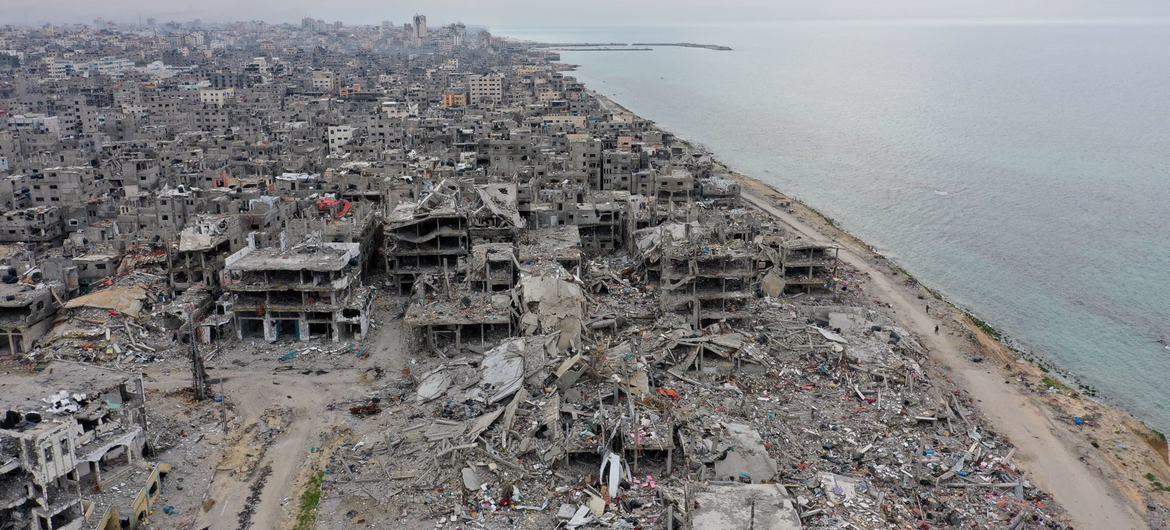
Destruction in northern Gaza.

Hold perpetrators accountable

Ms. Bahous urged the Security Council to recognise reproductive violence as a distinct category of harm and bring those responsible to justice.

She also highlighted the mental health impacts of conflict on women and girls – from depression and trauma to domestic violence and suicidal thoughts.

The threats extend into the digital sphere, where women activists and journalists are being pushed out of public life by online abuse, deepfakes and disinformation campaigns.

Enforce compliance with law

Both Mr. Fletcher and Ms. Bahous called for urgent action.

UN Member States must enforce compliance with international humanitarian law, fight impunity, and empower civilians – especially women – as agents of their own protection and bringing change.

Mr. Fletcher emphasised that even lawful military actions can cause disproportionate civilian suffering.

“[We need a] more comprehensive and people-centred approach,” he said, urging strong policy and operational measures to protect civilians and a deeper understanding of patterns of life and harm.

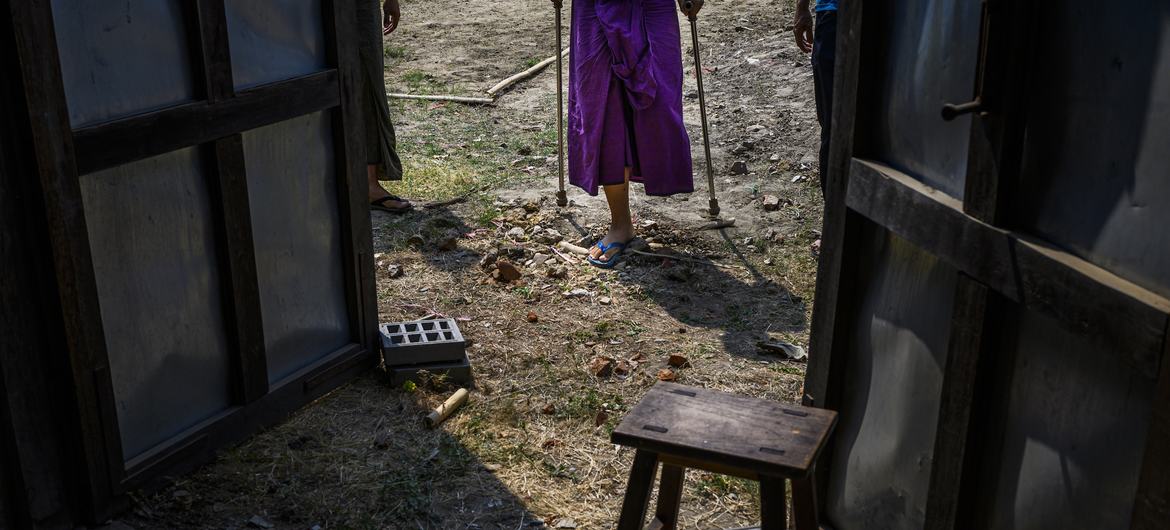
A child who lost his left leg after accidentally stepping on a landmine in his family’s paddy fields in central Myanmar.

Protection and peace inseparable

Recalling Security Council resolution 1325 on women, peace and security, Ms. Bahous called for sustained investment in women’s organizations, which are on the frontlines – protecting civilians – men, women, children and the elderly alike.

“Yet, they are under siege,” she said, noting that continued funding cuts will cost us the very women driving peace and recovery in the world’s most fragile contexts.

She concluded stressing that protection of women and their participation in peace “are inseparable”.

“The most effective shield we can offer women and girls is their own power, their own voices, and their own leadership…there is no pathway to peace that does not begin with the protection of women and girls.

Source link