UN peacekeeping mandate in Lebanon faces scrutiny ahead of Security Council vote

As members of the UN Security Council negotiate the renewal of the UN peacekeeping force in Lebanon (UNIFIL) ahead of a 31 August deadline, the mission’s future role and capacity are under intense debate.

UNIFIL has long been a stabilising presence in southern Lebanon, working alongside the Lebanese armed forces, mediating between parties, and supporting local communities.

A key part of its mandate is to implement Security Council resolution 1701, which brought an end to the 2006 hostilities between Israel and Hezbollah militants.

Yet challenges remain, from Israeli military positions inside Lebanon to Hezbollah’s arsenal and the broader question of how resolution 1701 – which calls for a complete end to hostilities – can be fully implemented.

According to media reports, last-ditch negotiations are underway over the mission’s future, with some diplomats warning of risks to border stability and others voicing tepid support or pressing for full withdrawal.

Earlier this week, Andrea Tenenti, spokesperson for UNIFIL, sat down with UN News’s Nancy Sarkis to discuss the mission’s effectiveness, the risks of a non-renewal, and what is at stake for Lebanon, Israel, and regional stability.

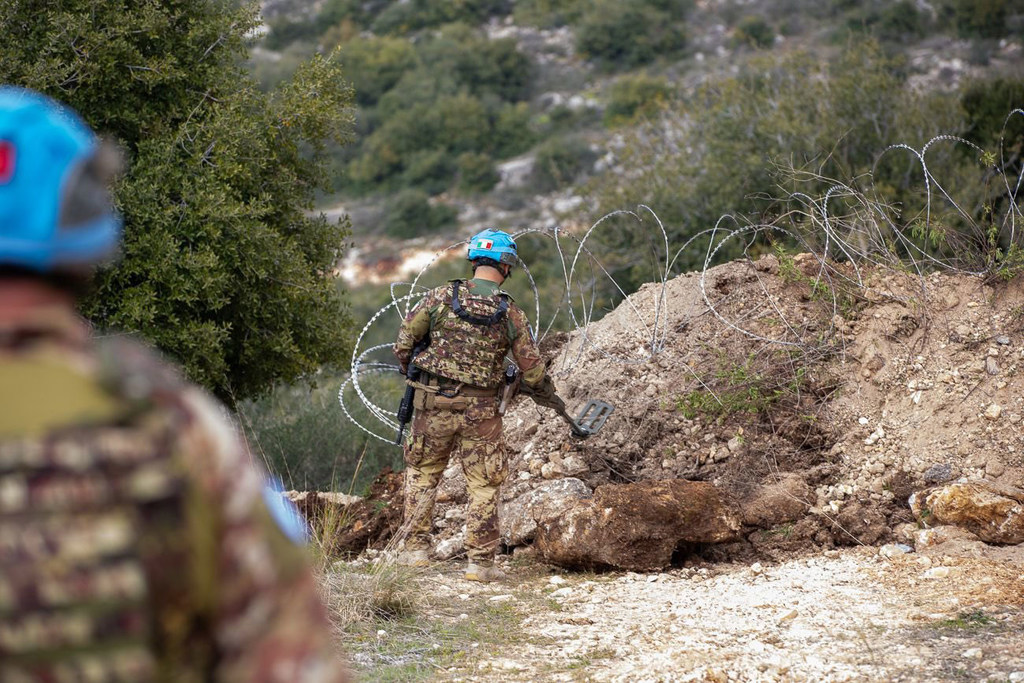
UNIFIL peacekeepers on patrol (file)

This interview has been edited for clarity

UN News: UNIFIL’s mandate, which expires at the end of August, needs to be renewed by the UN Security Council. Why is this renewal important, and how do you assess UNIFIL’s effectiveness so far?

Andrea Tenenti: The renewal comes after a long crisis that has devastated the region and destroyed most of the areas close to the Blue Line. It would show the importance of maintaining an international peacekeeping operation to assist the Lebanese army [Lebanese Armed Forces, or LAF] in their full deployment.

That’s what we have been doing from the very beginning, and in the last several months since November, after the cessation of hostilities, the LAF has brought more troops to the south, and we have been working with them in being deployed in all these positions, although the real challenge at the moment is that we still have Israeli Defense Forces [IDF] positions present in the south of the country.

UN News: To what extent are the Lebanese armed forces ready to assume full responsibility in southern Lebanon without the support of peacekeepers, and what challenges do they face in doing so?

Andrea Tenenti: Right now, the Lebanese army don’t have the capacities and capabilities to be fully deployed. There is a financial crisis in the country, and they need capacity and capability support from UNIFIL, and the financial support of the international community to have a sustainable presence and to bring State authority to the south.

The Lebanese army and authorities have demonstrated their full commitment to resolution 1701. However, they cannot be fully deployed if the IDF are still present; the presence of the IDF in the south is a violation of Lebanese sovereignty and resolution 1701. There needs to be commitment from both sides.

UN News: If the UNIFIL mandate is not renewed, what are the potential consequences for regional stability?

Andrea Tenenti: The situation is much better than before, but very, very fragile. Anything could jeopardise the situation in the south. A lack of renewal would create a real vacuum for stability of the region. It would create a very dangerous precedent and situation for the stability of the country, and it would make impartial monitoring very difficult.

UN News: UNIFIL has faced criticism from Lebanon, Israel, and internationally. How do you respond to these criticisms, and what step can be taken to strengthen trust and credibility?

Andrea Tenenti: Criticism goes with the job of any peacekeeping mission. In order to be impartial, staying in the middle and trying to assist the parties in the implementation of the mission’s mandate, you will be criticised by both sides.

Sometimes, the criticism is driven by a misconception of the mission’s mandate. For example, resolution 1701 does not call for UNIFIL to disarm Hezbollah. This is not our mandate. We are to support the Lebanese army to do it, and that’s what we are doing right now.

On the Lebanese side, we have been criticised for patrolling without the Lebanese army, but as part of 1701 we are tasked to operate either with the Lebanese army or independently.

This is something that the Lebanese army and Lebanese authorities know very well. Sometimes it’s a matter of disinformation and misinformation about the role of the mission, and we are trying to counter that as much as we can.

UN News: What is your vision for UNIFIL’s role in the coming years, and do you see it as a short-term necessity or as a part of a long-term regional security framework?

Andrea Tenenti: At the moment, UNIFIL is very much needed to support the stability of the region, bring back the Lebanese army to the south – and return State authority that has been not present for a very long time. But it has to be a south free from occupation – that’s the only way to move forward.

The goal of the mission has always been to leave and hand over all our capabilities and tasks to the Lebanese authorities, but a lot needs to be done. To ensure stability in the region, we have to be pragmatic on the timetable.

Source link

A mandate for change: UN releases proposals for streamlining of tasks as part of major reform agenda

Mandates – requests or directives for action issued by the General Assembly, the Security Council and the Economic and Social Council – have multiplied significantly since 1945. Today, there are more than 40,000 active mandates, serviced by around 400 intergovernmental bodies. Together, they require more than 27,000 meetings a year and generate roughly 2,300 pages of documentation every day, at an estimated annual cost of $360 million.

A growing challenge

Mandates guide the UN’s work in over 190 countries and territories, from peacekeeping to humanitarian response and development. But many are outdated or overlapping, and their complexity is increasing. Since 2020, the average word count of General Assembly resolutions has risen by 55 per cent, while Security Council resolutions are now three times longer than they were 30 years ago.

“Let’s face facts,” said Secretary-General António Guterres during a briefing to the General Assembly on Friday, “we cannot expect far greater impact without the means to deliver. By spreading our capacities so thin, we risk becoming more focused on process than on results.”

A lack of coordination adds to the strain. Several UN entities cite the same mandates to justify separate programmes and budgets, leading to duplication and reduced impact. More than 85 per cent of mandates contain no provisions for review or termination. “Effective reviews are the exception, not the rule,” Mr. Guterres said. “The same mandates are discussed year after year – often with only marginal changes to existing texts.”

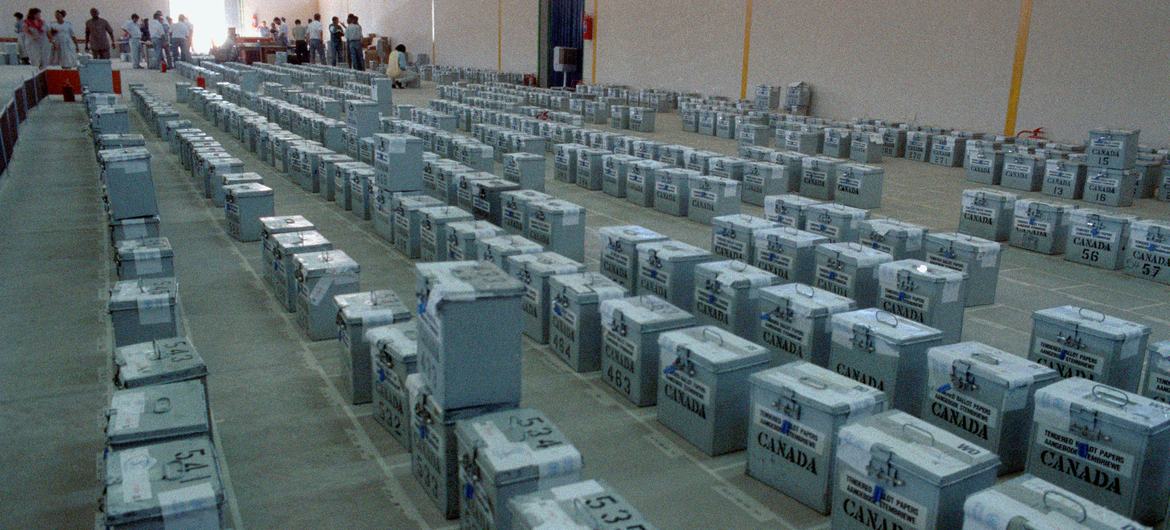
The UN has carried out mandates across the world including certifying the election in Namibia in 1989.

The UN80 Initiative: a systemic approach

The Report of the Mandate Implementation Review, released on 31 July, is part of the Secretary-General’s broader UN80 Initiative – a multi-year effort to modernize how the UN works. Rather than assess mandates individually, the report takes a “lifecycle” approach, looking at how mandates are created, implemented and reviewed, and proposing ways to improve each stage.

“Let me be absolutely clear: mandates are the business of Member States,” Mr. Guterres told the General Assembly. “They are the expression of your will. And they are the sole property and responsibility of Member States. The vital task of creating, reviewing or retiring them lies with you – and you alone. Our role is to implement them – fully, faithfully, and efficiently.”

“This report respects that division,” he added. “It looks at how we carry out the mandates you entrust to us.”

From creation to delivery

To address duplication and complexity, the report calls for digital mandate registries that make it easier to track what has been adopted across different bodies. It also encourages shorter, clearer resolutions with realistic resource requirements. “We cannot expect far greater impact without the means to deliver,” Mr. Guterres said.

The report also highlights the growing operational burden of meetings and reports. Last year, the UN system supported 27,000 meetings and produced 1,100 reports – three out of five on recurring topics. “Meetings and reports are essential,” Mr. Guterres said. “But we must ask: Are we using our limited resources in the most effective way?”

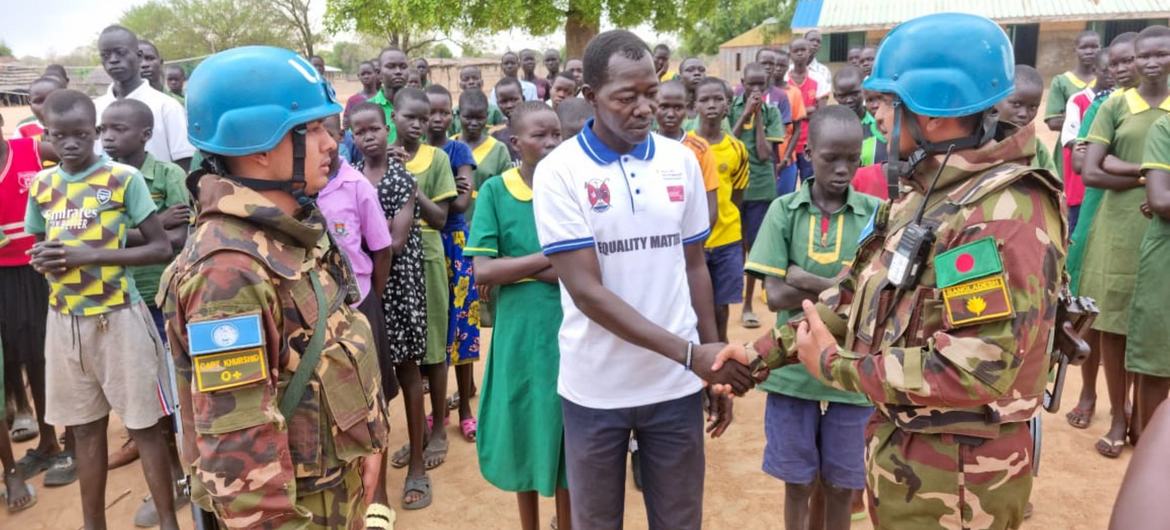
The UN peacekeeping mission in South Sudan, UNMISS, was mandated by the Security Council.

Funding and impact

Proposals include reducing the number of reports and meetings, streamlining formats and monitoring report usage to ensure relevance. The Secretary-General is also calling for stronger coordination among UN entities to avoid overlap and ensure each mandate is linked to clear deliverables.

The report warns that fragmented funding is undermining coherent delivery. In 2023, 80 per cent of the UN’s funding came from voluntary contributions, 85 per cent of which were earmarked. “Fragmented funding, combined with fragmented implementation, leads to fragmented impact,” said Mr. Guterres. “Each of us has a role to play to address this. And each of us must act on the levers within our control.”

Putting people first

For the Secretary-General, reforms are not only about process but about impact. “Mandates are not ends in themselves,” he said. “They are tools – to deliver real results, in real lives, in the real world.”

He praised UN staff as central to this effort. “None of the work in implementing mandates is possible without our staff – the women and men of the United Nations,” Mr. Guterres said. “Their expertise, dedication and courage are indispensable to this endeavor. If we are to improve how we implement mandates, we must also support and empower the people who carry them out.”

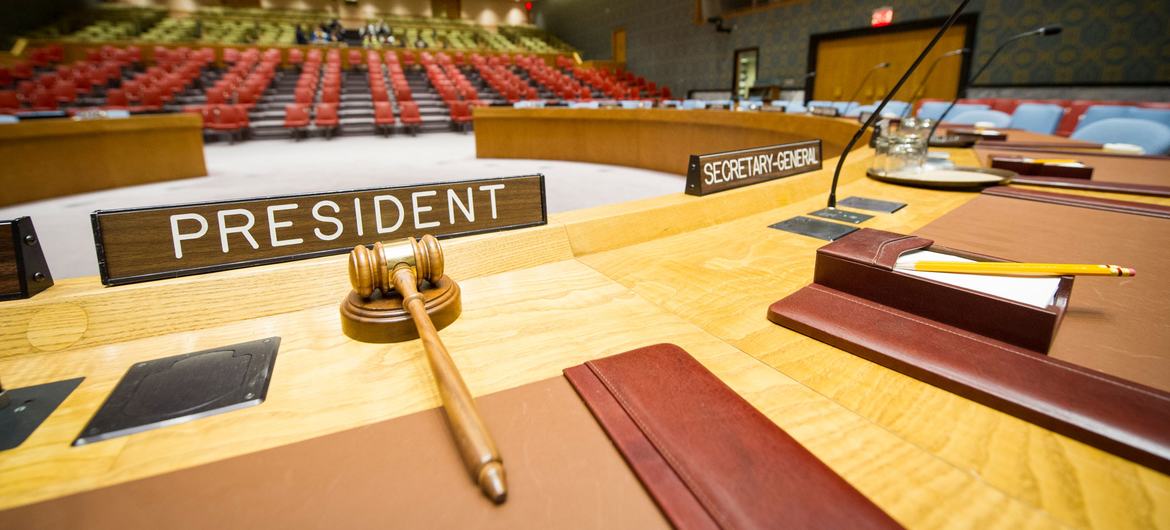
Many of the UN’s mandates are agreed at the Security Council at UN Headquarters in New York.

A call to Member States

In his concluding remarks, the Secretary-General underscored that the next steps must come from Member States. “The path forward is yours to decide,” he said. “My responsibility is to ensure that the Secretariat provides the capacities and inputs required by the course of action that you choose.”

The report invites Member States to consider a time-bound intergovernmental process to carry proposals forward and ensure that this effort succeeds where earlier ones have fallen short. The upshot, the report says, would be a more agile, coherent and impactful UN that is better at delivering programmes and services. 

Source link