
UN peacekeeping mandate in Lebanon faces scrutiny ahead of Security Council vote

As members of the UN Security Council negotiate the renewal of the UN peacekeeping force in Lebanon (UNIFIL) ahead of a 31 August deadline, the mission’s future role and capacity are under intense debate.

UNIFIL has long been a stabilising presence in southern Lebanon, working alongside the Lebanese armed forces, mediating between parties, and supporting local communities.

A key part of its mandate is to implement Security Council resolution 1701, which brought an end to the 2006 hostilities between Israel and Hezbollah militants.

Yet challenges remain, from Israeli military positions inside Lebanon to Hezbollah’s arsenal and the broader question of how resolution 1701 – which calls for a complete end to hostilities – can be fully implemented.

According to media reports, last-ditch negotiations are underway over the mission’s future, with some diplomats warning of risks to border stability and others voicing tepid support or pressing for full withdrawal.

Earlier this week, Andrea Tenenti, spokesperson for UNIFIL, sat down with UN News’s Nancy Sarkis to discuss the mission’s effectiveness, the risks of a non-renewal, and what is at stake for Lebanon, Israel, and regional stability.

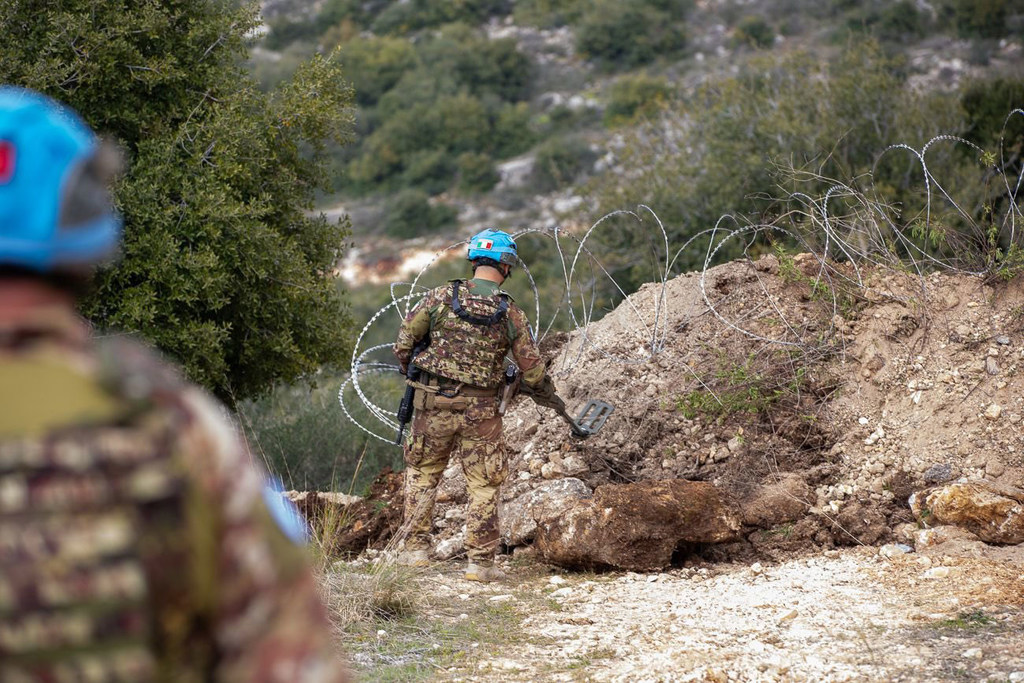
UNIFIL peacekeepers on patrol (file)

This interview has been edited for clarity

UN News: UNIFIL’s mandate, which expires at the end of August, needs to be renewed by the UN Security Council. Why is this renewal important, and how do you assess UNIFIL’s effectiveness so far?

Andrea Tenenti: The renewal comes after a long crisis that has devastated the region and destroyed most of the areas close to the Blue Line. It would show the importance of maintaining an international peacekeeping operation to assist the Lebanese army [Lebanese Armed Forces, or LAF] in their full deployment.

That’s what we have been doing from the very beginning, and in the last several months since November, after the cessation of hostilities, the LAF has brought more troops to the south, and we have been working with them in being deployed in all these positions, although the real challenge at the moment is that we still have Israeli Defense Forces [IDF] positions present in the south of the country.

UN News: To what extent are the Lebanese armed forces ready to assume full responsibility in southern Lebanon without the support of peacekeepers, and what challenges do they face in doing so?

Andrea Tenenti: Right now, the Lebanese army don’t have the capacities and capabilities to be fully deployed. There is a financial crisis in the country, and they need capacity and capability support from UNIFIL, and the financial support of the international community to have a sustainable presence and to bring State authority to the south.

The Lebanese army and authorities have demonstrated their full commitment to resolution 1701. However, they cannot be fully deployed if the IDF are still present; the presence of the IDF in the south is a violation of Lebanese sovereignty and resolution 1701. There needs to be commitment from both sides.

UN News: If the UNIFIL mandate is not renewed, what are the potential consequences for regional stability?

Andrea Tenenti: The situation is much better than before, but very, very fragile. Anything could jeopardise the situation in the south. A lack of renewal would create a real vacuum for stability of the region. It would create a very dangerous precedent and situation for the stability of the country, and it would make impartial monitoring very difficult.

UN News: UNIFIL has faced criticism from Lebanon, Israel, and internationally. How do you respond to these criticisms, and what step can be taken to strengthen trust and credibility?

Andrea Tenenti: Criticism goes with the job of any peacekeeping mission. In order to be impartial, staying in the middle and trying to assist the parties in the implementation of the mission’s mandate, you will be criticised by both sides.

Sometimes, the criticism is driven by a misconception of the mission’s mandate. For example, resolution 1701 does not call for UNIFIL to disarm Hezbollah. This is not our mandate. We are to support the Lebanese army to do it, and that’s what we are doing right now.

On the Lebanese side, we have been criticised for patrolling without the Lebanese army, but as part of 1701 we are tasked to operate either with the Lebanese army or independently.

This is something that the Lebanese army and Lebanese authorities know very well. Sometimes it’s a matter of disinformation and misinformation about the role of the mission, and we are trying to counter that as much as we can.

UN News: What is your vision for UNIFIL’s role in the coming years, and do you see it as a short-term necessity or as a part of a long-term regional security framework?

Andrea Tenenti: At the moment, UNIFIL is very much needed to support the stability of the region, bring back the Lebanese army to the south – and return State authority that has been not present for a very long time. But it has to be a south free from occupation – that’s the only way to move forward.

The goal of the mission has always been to leave and hand over all our capabilities and tasks to the Lebanese authorities, but a lot needs to be done. To ensure stability in the region, we have to be pragmatic on the timetable.

Source link

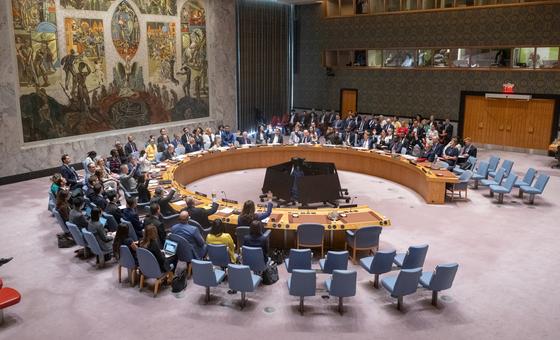
Security Council, in unanimous vote, presses nations to resolve disputes peacefully

The text, sponsored by Pakistan and adopted unanimously, reiterated that all States “shall settle their international disputes by peaceful means through dialogue, diplomatic engagement and cooperation in such a manner that international peace and security, and justice, are not endangered.”

It also reiterated that nations must “refrain in their international relations from the threat or use of force against the territorial integrity or political independence of any state, or in any other manner inconsistent with the Purposes of the United Nations.”

Highlighting the need to prevent disputes from arising and escalating, the resolution further called on Member States to take “necessary measures for the effective implementation of Security Council resolutions for peaceful settlement of disputes.”

Mediation and preventive diplomacy

The text encouraged the Secretary‑General to ensure that the United Nations can “lead and support mediation and preventive diplomacy efforts,” while continuing to deploy his good offices.

It also took note “with appreciation” of the work of the UN’s Mediation Support Unit (MSU) and urged the Secretariat to ensure the availability of “well-trained, experienced, independent, impartial, and geographically and linguistically diverse mediation experts at all levels.”

The MSU is the UN system-wide focal point on mediation expertise and support, providing tailored operational support to peace and dialogue processes globally.

Participation of women and youth

The resolution also underscored the importance of integrating inclusive approaches to peaceful settlement of disputes; ensuring the full, equal and meaningful participation of women, and meaningful participation of youth in conflict prevention and dispute resolution efforts.

It also highlighted the role of regional and subregional organizations in complementing UN efforts, calling for enhanced information-sharing and cooperation.

The Council further requested that the Secretary‑General present “concrete recommendations for further strengthening the mechanisms for peaceful settlement of disputes” within one year, alongside plans for an open debate to review progress.

Source link

GAZA LIVE: UN General Assembly to vote on resolution demanding immediate, unconditional and permanent ceasefire

The General Assembly meets at 3pm in New York on Thursday in emergency session following the Security Council’s failure to adopt a resolution on 4 June calling for an immediate and permanent ceasefire in Gaza, which was vetoed by permanent member the United States. As starvation looms across the Strip, mass casualties continue to be reported of desperate civilians trying to access food at Israel and US-backed distribution sites. App users can follow our live coverage here.

World Health Assembly opens amid high-stakes pandemic treaty vote, global funding crisis

Tedros Adhanom Ghebreyesus, Director-General of the World Health Organization, urged Member States to remain focused on shared goals even amid global instability.

We are here to serve not our own interests, but the eight billion people of our world,” he said in his keynote address at the Palais des Nations. “To leave a heritage for those who come after us; for our children and our grandchildren; and to work together for a healthier, more peaceful and more equitable world. It’s possible.”

The Assembly, WHO’s highest decision-making body, runs through 27 May and brings together delegations from 194 Member States under the theme One World for Health.

This year’s agenda includes a vote on the intensely negotiated Pandemic Agreement, a  reduced budget proposal, and discussions on climate, conflict, antimicrobial resistance, and digital health.

Pandemic prevention focus

A central item on the Assembly’s agenda is the proposed WHO pandemic accord, a global compact aimed at preventing the kind of fragmented response that marked the early stages of COVID-19.

The treaty is the result of three years of negotiations between all WHO Member States.

“This is truly a historic moment,” Dr Tedros said. “Even in the middle of crisis, and in the face of significant opposition, you worked tirelessly, you never gave up, and you reached your goal.”

A final vote on the agreement is expected on Tuesday.

If adopted, it would mark only the second time countries have come together to approve a legally binding global health treaty under WHO’s founding rules. The first was the Framework Convention on Tobacco Control, adopted in 2003 to curb the global tobacco epidemic.

2024 health check

In his address, Tedros presented highlights from WHO’s 2024 Results Report, noting both progress and persistent global health gaps.

On tobacco control, he cited a global one-third reduction in smoking prevalence since the WHO Framework Convention entered into force two decades ago.

He praised countries including Côte d’Ivoire, Oman, and Viet Nam for introducing stronger regulations last year, including plain packaging and restrictions on e-cigarettes.

On nutrition, he pointed to new WHO guidelines on wasting and the expansion of the Tobacco-Free Farms Initiative in Africa, which has supported thousands of farmers in transitioning to food crops.

He also emphasised WHO’s growing work on air pollution and climate-resilient health systems, including partnerships with Gavi and UNICEF to install solar energy in health facilities across multiple countries.

On maternal and child health, Tedros noted stalled progress and outlined new national acceleration plans to reduce newborn mortality. Immunisation coverage now reaches 83 per cent of children globally, compared to less than 5 per cent when the Expanded Programme on Immunisation was launched in 1974.

We are living in a golden age of disease elimination,” he said, citing the certification of Cabo Verde, Egypt, and Georgia as malaria-free; progress in neglected tropical diseases; and Botswana’s recognition as the first country to reach gold-tier status in eliminating mother-to-child transmission of HIV.

WHO has been supporting Universal Health Coverage in Rwanda.

WHO budget strain

Turning to WHO’s internal operations, Tedros offered a stark assessment of the organisation’s finances.

We are facing a salary gap for the next biennium of more than US$ 500 million,” he said. “A reduced workforce means a reduced scope of work.”

This week, Member States will vote on a proposed 20 per cent increase in assessed contributions, as well as a reduced Programme Budget of $ 4.2 billion for 2026–2027, down from an earlier proposal of $ 5.3 billion. The cuts reflect an effort to align WHO’s work with current funding levels while preserving core functions.

Tedros acknowledged that WHO’s long-standing reliance on voluntary earmarked funding from a small group of donors had left it vulnerable. He urged Member States to see the budget shortfall not only as a crisis but also as a potential turning point.

“Either we must lower our ambitions for what WHO is and does, or we must raise the money,” he said. “I know which I will choose.”

He drew a sharp contrast between WHO’s budget and global spending priorities: “US$ 2.1 billion is the equivalent of global military expenditure every eight hours; US$ 2.1 billion is the price of one stealth bomber – to kill people; US$ 2.1 billion is one-quarter of what the tobacco industry spends on advertising and promotion every single year. And again, a product that kills people.”

It seems somebody switched the price tags on what is truly valuable in our world,” he said.

Emergencies and appeals

The Director-General also detailed WHO’s emergency operations in 2024, which spanned 89 countries. These included responses to outbreaks of cholera, Ebola, mpox, and polio, as well as humanitarian interventions in conflict zones such as Sudan, Ukraine, and Gaza.

In Gaza, he said, WHO had supported more than 7,300 medical evacuations since late 2023, but over 10,000 patients remained in urgent need of care.

Looking ahead: a transformed WHO?

The WHO chief closed with a look at the agency’s future direction, shaped by lessons from the COVID-19 pandemic. He highlighted new initiatives in pandemic intelligence, vaccine development, and digital health, including expanded work on artificial intelligence and support for mRNA technology transfer to 15 countries.

WHO has also restructured its headquarters, reducing management layers and streamlining departments.

Our current crisis is an opportunity,” Dr Tedros concluded. “Together, we will do it.”