

In Washington, Fletcher presses for action as Sudan war grinds on

Speaking at a donor conference in Washington, DC, UN Emergency Relief Coordinator Tom Fletcher warned that the brutal conflict, famine and mass displacement are pushing millions of civilians deeper into crisis, while aid access remains severely constrained.

Fighting erupted between the once-allied Sudanese Armed Forces and paramilitary Rapid Support Forces (RSF) in mid-April 2023, spreading quickly through a country already undergoing political turmoil, increased ethnic tensions, and climate extremes.

Move from words to action

There have been “too many days of famine, of brutal atrocities, of lives uprooted and destroyed,” Mr. Fletcher said, while women and girls have been forced to endure “terrifying sexual violence.”

He stressed that the international community must move beyond expressions of concern to deliver more support and political pressure on combatants for a ceasefire. With that must come extensive humanitarian access.

Mr. Fletcher said the United Nations fully supports diplomatic efforts led by the “Quad” – the United States, Egypt, Saudi Arabia and the United Arab Emirates – aimed at securing a humanitarian truce, including the demilitarization of key areas to allow life-saving aid to reach civilians.

The guns must fall silent and a path to peace must be charted,” he said.

UN ready to deliver

Under its comprehensive 2026 humanitarian response plan, UN agencies aim to reach more than 20 million people across Sudan with emergency assistance. To achieve that target, the Organization requires about $2.9 billion.

Alongside funding, safe and unhindered access for humanitarians and civilians are critical to ensure aid reaches those in need.

Civilians and aid workers must be protected, Mr. Fletcher stressed, urging donors to respond quickly and decisively.

Let today be at last the signal that the world is uniting in solidarity for practical impact,” he said.

Crisis deepens on the ground

Meanwhile, fighting rages on the ground in Sudan.

According to media reports, Government forces on Tuesday entered South Kordofan’s capital, Kadugli, which was under a months-long siege by the RSF. The army had also recently broken the blockade of Dilling, a major town about 110 kilometres north of Kadugli.

The fighting continues to drive thousands from their homes into IDP camps and makeshift settlements, facing critical shortages of food, healthcare, water, sanitation, shelter and education.

According to the Office of the UN High Commissioner for Refugees (UNHCR), nearly 11.7 million people have been forcibly displaced by the conflict, including seven million internally displaced and 4.5 million who have fled to neighbouring countries.

Source link

In Southeast Asia, Guterres presses the case for climate action

Addressing a joint summit between the UN and Southeast Asian nations in Kuala Lumpur on Monday, Secretary-General António Guterres described the region as “a beacon of cooperation” and a vital pillar of global stability.

With Timor-Leste’s accession, he said, the collective spirit of the regional organization known as ASEAN had “grown stronger,” making the bloc an essential partner in shaping “a more balanced and interlinked world.”

The Association of Southeast Asian Nations now has 11 full members, alongside partners which include China, India, the European Union, Russia and Australia.

The UN, for its part, has a comprehensive partnership framework with the bloc as well as plans for joint action.

Peace, Myanmar and regional stability

Mr. Guterres outlined four areas of deepening collaboration – peace and prevention; sustainable development and financial justice; climate action and digital transformation.

He commended ASEAN countries for their strong contributions to peacekeeping and regional mediation efforts.

The UN chief praised Malaysia for helping to facilitate a ceasefire between Cambodia and Thailand, and reiterated the importance of dialogue and restraint in the South China Sea to uphold international law and freedom of navigation.

Turning to Myanmar, the Secretary-General condemned ongoing violence, describing the humanitarian situation as “appalling.”

“Thousands are dead. Millions displaced. Humanitarian needs are soaring,” he said, calling for an immediate halt to hostilities, protection of civilians, and “the release of those arbitrarily detained, including democratically elected leaders.”

He reaffirmed the UN’s support for ASEAN’s 2021 Five-Point Consensus to resolve Myanmar’s protracted conflict following the coup – and the Security Council resolution demanding a ceasefire that same year.

A fairer financial system

The Secretary-General also made a strong call for overhauling what he described as an “outdated and unfair” global financial architecture that leaves developing nations “locked out of prosperity.”

“It is high time for reform,” he said, noting that ASEAN economies remain underrepresented in global financial institutions despite their growing economic weight.

Climate change target ‘on life support’

In his keynote address, the Secretary-General warned that the target on limiting global warming to 1.5 degrees Celsius above pre-industrial levels “is on life support,” urging both developed and developing nations to step up climate ambition ahead of COP30 in Brazil next month.

On digital transformation, he underscored the UN’s commitment to ensuring artificial intelligence serves humanity.

Standing together

At a press conference following the Summit, Mr. Guterres said ASEAN “offers a vision of hope” amid global uncertainty.

“The United Nations is proud to be ASEAN’s partner,” he said, “as we work to ensure a better, more peaceful future for people across the southeast Asian region and around the world.”
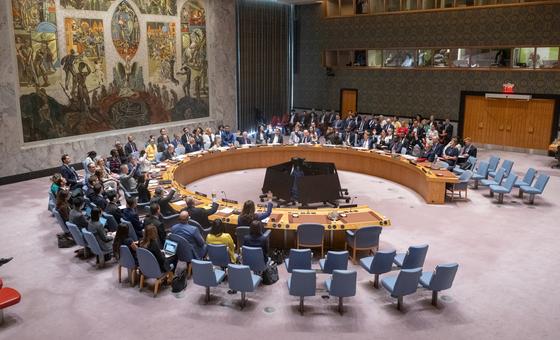
Security Council, in unanimous vote, presses nations to resolve disputes peacefully

The text, sponsored by Pakistan and adopted unanimously, reiterated that all States “shall settle their international disputes by peaceful means through dialogue, diplomatic engagement and cooperation in such a manner that international peace and security, and justice, are not endangered.”

It also reiterated that nations must “refrain in their international relations from the threat or use of force against the territorial integrity or political independence of any state, or in any other manner inconsistent with the Purposes of the United Nations.”

Highlighting the need to prevent disputes from arising and escalating, the resolution further called on Member States to take “necessary measures for the effective implementation of Security Council resolutions for peaceful settlement of disputes.”

Mediation and preventive diplomacy

The text encouraged the Secretary‑General to ensure that the United Nations can “lead and support mediation and preventive diplomacy efforts,” while continuing to deploy his good offices.

It also took note “with appreciation” of the work of the UN’s Mediation Support Unit (MSU) and urged the Secretariat to ensure the availability of “well-trained, experienced, independent, impartial, and geographically and linguistically diverse mediation experts at all levels.”

The MSU is the UN system-wide focal point on mediation expertise and support, providing tailored operational support to peace and dialogue processes globally.

Participation of women and youth

The resolution also underscored the importance of integrating inclusive approaches to peaceful settlement of disputes; ensuring the full, equal and meaningful participation of women, and meaningful participation of youth in conflict prevention and dispute resolution efforts.

It also highlighted the role of regional and subregional organizations in complementing UN efforts, calling for enhanced information-sharing and cooperation.

The Council further requested that the Secretary‑General present “concrete recommendations for further strengthening the mechanisms for peaceful settlement of disputes” within one year, alongside plans for an open debate to review progress.

Source link

UN’s Guterres declares fossil fuel era fading; presses nations for new climate plans before COP30 summit

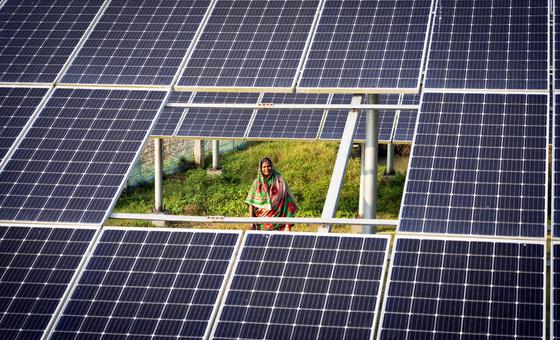
In a special address at UN Headquarters in New York, Mr. Guterres cited surging clean energy investment and plunging solar and wind costs that now outcompete fossil fuels.

The energy transition is unstoppable, but the transition is not yet fast enough or fair enough,” he said.

The speech, A Moment of Opportunity: Supercharging the Clean Energy Age – a follow‑up to last year’s Moment of Truth – was delivered alongside a new UN technical report drawing on global energy and finance bodies.

“Just follow the money,” Mr. Guterres said, noting that $2 trillion flowed into clean energy last year, $800 billion more than fossil fuels and up almost 70 per cent in a decade.

Key points from the address

  • Point of no return – The world has irreversibly shifted towards renewables, with fossil fuels entering their decline
  • Clean energy surge – $2 trillion invested in clean energy last year, $800 billion more than fossil fuels
  • Cost revolution – Solar now 41 per cent cheaper and offshore wind 53 per cent cheaper than fossil fuel alternatives.
  • Global challenge – Calls on G20 nations to align new national climate plans with the 1.5°C target of the Paris Agreement
  • Energy security – Renewables ensure “real energy sovereignty”
  • Six opportunity areas – Climate plan ambition, modern grids, sustainable demand, just transition, trade reform, and finance for emerging markets.

A shift in possibility

He noted new data from the International Renewable Energy Agency (IRENA) showing solar, once four times costlier, is now 41 per cent cheaper than fossil fuels.

Similarly, offshore wind is 53 per cent cheaper, with more than 90 per cent of new renewables worldwide beating the cheapest new fossil alternative.

This is not just a shift in power. It is a shift in possibility,” he said.

Renewables nearly match fossil fuels in global installed power capacity, and “almost all the new power capacity built” last year came from renewables, he said, noting that every continent added more clean power than fossil fuels.

Clean energy is unstoppable

Mr. Guterres underscored that a clean energy future “is no longer a promise, it is a fact”. No government, no industry and no special interest can stop it.

Of course, the fossil fuel lobby will try, and we know the lengths to which they will go. But, I have never been more confident that they will fail because we have passed the point of no return.

He urged countries to lock ambition into the next round of national climate plans, or NDCs, due within months. Mr. Guterres called on the G20 countries, which are responsible for 80 per cent of emissions, to submit new plans aligned with the 1.5°C limit and present them at a high‑level event in September.

Targets, he added, must “double energy efficiency and triple renewables capacity by 2030” while accelerating “the transition away from fossil fuels”.

Real energy sovereignty

The Secretary-General also highlighted the geopolitical risks of fossil fuel dependence.

“The greatest threat to energy security today is fossil fuels,” he said, citing price shocks after Russia’s invasion of Ukraine.

There are no price spikes for sunlight, no embargoes on wind. Renewables mean real energy security, real energy sovereignty and real freedom from fossil-fuel volatility.

Six opportunity areas

Mr. Guterres mapped six “opportunity areas” to speed the transition: ambitious NDCs, modern grids and storage, meeting soaring demand sustainably, a just transition for workers and communities, trade reforms to broaden clean‑tech supply chains, and mobilising finance to emerging markets.

Financing, however, is the choke point. Africa, home to 60 per cent of the world’s best solar resources, received just 2 per cent of global clean energy investment last year, he said.

Only one in five clean energy dollars over the past decade went to emerging and developing economies outside China. Flows must rise more than five-fold by 2030 to keep the 1.5-degree limit alive and deliver universal access.

Mr. Guterres urged reform of global finance, stronger multilateral development banks and debt relief, including debt‑for‑climate swaps.

The fossil fuel age is flailing and failing. We are in the dawn of a new energy era,” he said in closing.

That world is within reach, but it won’t happen on its own. Not fast enough. Not fair enough. It is up to us. This is our moment of opportunity.

Source link