UN chief warns of ‘grave moment’ as final US-Russia nuclear arms treaty expires

In a statement issued as the treaty expired at midnight GMT Thursday, he said the world was entering uncharted territory, with no remaining legally binding constraints on the nuclear arsenals of the United States and the Russia – the two countries that together hold the vast majority of the world’s nuclear weapons.

For the first time in more than half a century, we face a world without any binding limits on the strategic nuclear arsenals” of the two countries, he said.

The New START treaty – formally known as the Treaty on Measures for the Further Reduction and Limitation of Strategic Offensive Arms – was signed in 2010 and entered into force the following year.

It capped each side’s deployed strategic nuclear warheads at 1,550 and imposed limits on delivery systems such as intercontinental ballistic missiles and heavy bombers.

The agreement also included verification measures, including data exchanges, notifications and on-site inspections, designed to reduce mistrust and prevent miscalculation.

Tools for stability

Mr. Guterres said decades of nuclear arms control agreements – from the Cold War-era Strategic Arms Limitation Talks to New START – played a crucial role in preventing catastrophe and reducing global nuclear stockpiles.

Throughout the Cold War and in its aftermath, nuclear arms control between these governments helped prevent catastrophe,” he said, adding that such frameworks “built stability” and “prevented devastating miscalculation.”

The Secretary-General warned that the collapse of this system of restraint comes at a particularly dangerous time, as geopolitical tensions rise and the risk of nuclear weapon use is “the highest in decades.”

Reimagine arms control

But he added that the watershed also provides an opportunity to reimagine arms control for a changing security environment, welcoming statements from both US and Russian presidents acknowledging the dangers of a renewed nuclear arms race.

The world now looks to the Russian Federation and the United States to translate words into action,” Mr. Guterres said, urging both sides to return to negotiations “without delay” and to agree on a successor framework that restores verifiable limits, reduces risks and strengthens global security.

Source link

Game-changing international marine protection treaty comes into force

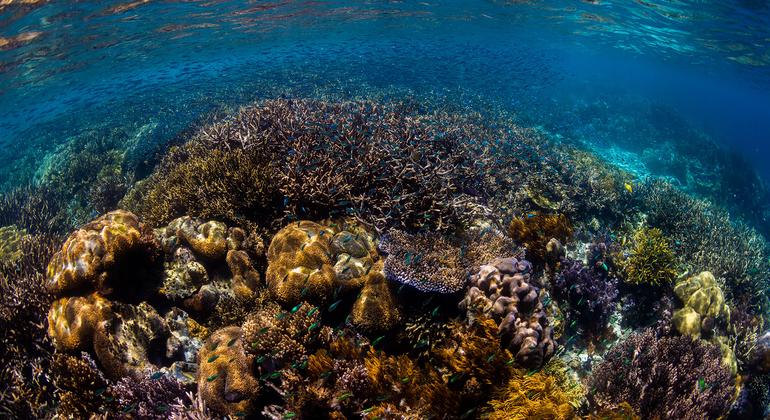
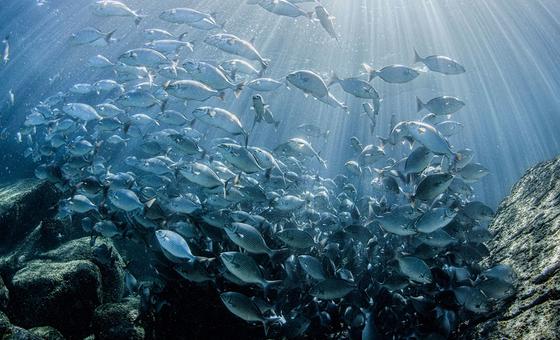
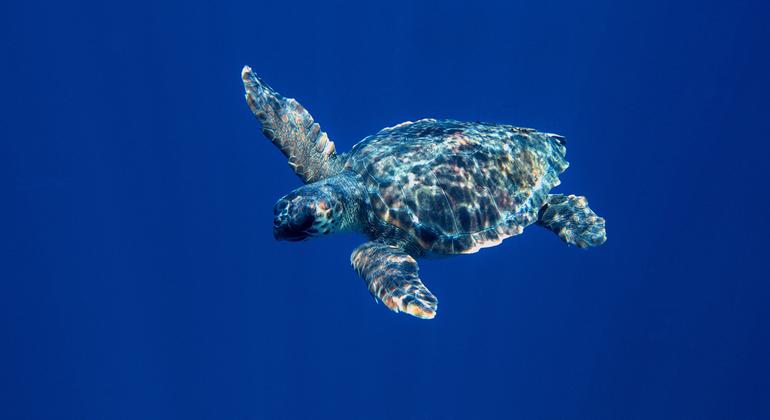
Officially known as the Biodiversity Beyond National Jurisdiction (BBNJ) Agreement, the legally binding UN treaty covers the ocean zones that lie beyond national waters (the “high seas”) and the international seabed area. 

These regions make up over two-thirds of the ocean’s surface, representing over 90 per cent of Earth’s habitat by volume. This is because the ocean is deep, and most living space on Earth is underwater.

Here are some of the key things to know: 

Why it matters

The BBNJ is designed to transform the “high seas” and international seabed into an environment to be managed sustainably for the benefit of all humanity. 

It is also the first legally binding ocean instrument to provide for inclusive ocean governance, with provisions on the engagement of Indigenous Peoples and local communities and on gender balance.

It is hoped that, once it is fully implemented, the Agreement will make a vital contribution to addressing the so-called “triple planetary crisis” of climate change, biodiversity loss and pollution.

Speaking to UN News, Tanzanian diplomat Mzee Ali Haji, who led his country’s negotiation team during BBNJ discussions, said that the agreement marks a major step in the protection of international waters. 

© The Ocean Story/Vincent Kneefel

Everyone should bear in mind that there is now control of the activity in the high seas. For instance, when you pollute, you are responsible for your acts”.

The BBNJ strengthens the current international legal framework: it builds on the UN Convention on the Law of the Sea – in effect the “constitution for the oceans” – which has set the rules for maritime and seabed exploitation and marine protection since it came into force in 1994.

The agreement addresses gaps in the Convention, includes more detail on how to manage biodiversity and aligns ocean governance with modern challenges like climate change and the 2030 Agenda for Sustainable Development (the UN-brokered blueprint for solving the world’s most intractable challenges).

What does ‘entry into force’ mean?

After the entry into force, it becomes legally binding for the 81 nations that have ratified it so far, meaning that they agree to incorporate it into their national legislation.

The treaty specifies that it enters into force this Saturday: 120 days after it was ratified – accepted as legally by binding – by at least 60 countries.

Who’s signed up, and who hasn’t?

Many major economies have ratified the BBNJ, notably China, Germany, Japan, France and Brazil

China has a particularly important impact on industries connected to the ocean (such as shipbuilding, aquaculture, fisheries and offshore oil and gas), exporting some $155 billion of ocean-related goods in 2023, according to UN trade agency figures.
The holdouts include the United States, India, the UK and Russia.

The US, the world’s biggest economy, is one of the top five ranked ocean-related goods exporters ($61 billion). Although the country adopted the treaty in 2023, it is not yet ratified, and the Senate has not acted on it.

India, one of the top developing-economy exporters ($19 billion), adopted the treaty in 2024 but domestic legislation on ratification is still pending. While the UK did introduce legislation on the matter in 2025, parliament is still to ratify it.

Russia remains one of the minority of nations that has neither adopted nor ratified the treatyciting its wish to preserve existing governance frameworks, and ensure that freedom of navigation and shipping in international waters is guaranteed.

Is this a big setback for the treaty?

Despite the reluctance of some major economies to commit fully by ratifying, Mr. Haji is positive about the impact that the BBNJ, in its current state, will have.

 “Developing countries and small island countries need support,” he says. “We expect that, in the future, they will accept this agreement, because it will help them. The protection of the high seas is the responsibility of all of us.”

What happens next?

The door remains open for more countries to ratify, which will make it more effective. 

“When you negotiate something, you can’t get 100 percent people to ratify it or to accept it in one term,” says Mr. Haji. “Some just observe and then, when they see the advantages, they join. I believe that, in the future others will join”.

Apart from universal participation, the key to making the BBNJ work will be implementation – in other words, acting against those who break the rules. 

According to the text of the agreement, the first meeting to monitor progress on both these fronts will take place no later than one year after the Agreement’s entry into force.

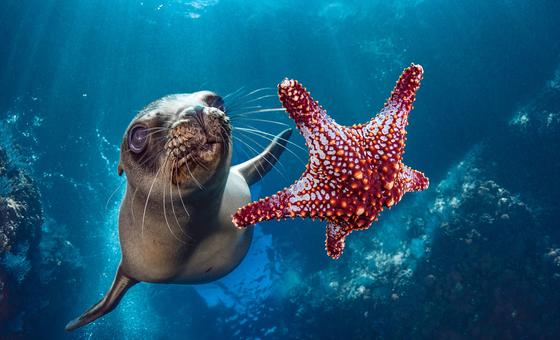
UN ‘high seas’ treaty clears ratification threshold, to enter into force in January

Morocco and Sierra Leone joined the list of States ratifying on Friday, becoming the 60th and 61st parties to the pact.

The treaty, formally known as the Agreement under the United Nations Convention on the Law of the Sea on the Conservation and Sustainable Use of Marine Biological Diversity of Areas beyond National Jurisdiction (BBNJ agreement), was adopted by UN Member States in June 2023 after nearly two decades of negotiations.

Secretary-General António Guterres welcomed the development, calling it a “historic achievement for the ocean and for multilateralism…  In two years, States have turned commitment into action – proving what is possible when nations unite for the common good,” he said in a statement.

“As we confront the triple planetary crisis of climate change, biodiversity loss, and pollution, this agreement is a lifeline for the ocean and humanity.”

The pact, also called the “high seas treaty,” covers two-thirds of the world’s ocean area that lies beyond national boundaries. It establishes legally binding rules to conserve and sustainably use marine biodiversity, share benefits from marine genetic resources more fairly, create protected areas, and strengthen scientific cooperation and capacity building.

UN Environment Programme (UNEP) Executive Director Inger Andersen also hailed the milestone. “Our ocean is the foundation of our very existence. Today we took an important step forward to save our ocean, and to save our future,” she said in a post on social media.

Safeguarding humanity’s future

The BBNJ agreement builds on the UN Convention on the Law of the Sea, regarded as the “constitution for the oceans.”

Once the high seas treaty enters into force on 17 January 2026, it will provide a global framework to help achieve international biodiversity targets, including the pledge to protect 30 per cent of land and sea areas by 2030 under the Kunming-Montreal Global Biodiversity Framework.

Mr. Guterres urged all remaining UN Member States to join the treaty without delay and called on partners to support its swift and full implementation. “The ocean’s health is humanity’s health,” he said.

ALSO READ: London’s Far-Right Rally Sends Shockwaves Through South Asian Communities

World News in Brief: Pandemic Treaty Update, DR Congo Ebola Response, More Casualties in Ukraine

Pandemic Treaty

Tedros Adhanom Ghebreyesus called the world’s first pandemic trety “a generational accomplishment”, while speaking at the start of a meeting of the Intergovernmental Working Group on the WHO Pandemic Agreement, taking place in Geneva through Friday. It comes four months after countries adopted the pact.

Tedros said the next step “is to bring this historic achievement to fruition” by finalizing the Pathogen Access and Benefit-Sharing (PABS) system. He urged countries to use this week to pave the way to developing the platform, with the ultimate goal of adoption next year.

“It is in every country’s interest that this process is not delayed any further. Because, as we are all aware, the next pandemic or major global health emergency is not a question of if, but when,” he said.

DR Congo: UN and partners support Ebola response in Kasai province

The Democratic Republic of the Congo (DRC) is facing an Ebola outbreak in Kasai province, located in the southwest, with 35 confirmed cases including 27 deaths.

The UN and partners are supporting the Government in the response, the Spokesperson for the Secretary-General said on Monday in New York. Stéphane Dujarric told reporters that partners working in health have facilitated the delivery of over 350 doses of the Ebola vaccine to the Bulape health zone, the epicentre of the outbreak.

“We have also mobilized rapid response teams focusing on case detection and surveillance, clinical case management, infection and prevention control, and risk communication and community engagement,” he added.

Meanwhile, health partners are mobilizing to contain the outbreak. He warned, however, that gaps in medical supplies and logistical capacity are hindering the response, and urgent funding is needed.

Ukraine: Dozens of casualties reported in weekend hostilities

Hostilities continued over the weekend in Ukraine, with the Donetsk region particularly affected, the UN Office for the Coordination of Humanitarian Affairs (OCHA) reported on Monday.

Several civilians have been killed and 40 injured in the region since Friday, while local authorities also documented damage to nearly 190 civilian facilities, including homes, schools, a hospital and a pharmacy.

Other parts of Ukraine also experienced hostilities which damaged homes, farmland and other civilian infrastructure. Nearly 5,000 people remain without electricity in the Zaporizhzhia region.

OCHA said the continuing violence has forced more than 2,700 people, including roughly 340 children, to flee their homes between 12 and 14 September.

Momentum builds towards marine biodiversity treaty, as experts convene in New York

Formally titled the Agreement under the United Nations Convention on the Law of the Sea on the Conservation and Sustainable Use of Marine Biological Diversity of Areas beyond National Jurisdiction, it was adopted in June 2023 after years of negotiation, and is open for signature until 20 September.

With only eight ratifications left before it can enter into force, momentum is accelerating toward the treaty’s implementation phase, which could begin as early as 2026.

Urgent, ‘decisive and concerted action’

By covering marine genetic resources, environmental impact assessments, area-based management tools, and the transfer of marine technology, the treaty is central to protecting the ocean.

The need for decisive and concerted action has never been more urgent,” UN Legal Counsel Elinor Hammarskjöld told delegates at the opening of the session.

From rules of participation and financing to digital access and institutional hosting, negotiators face complex trade-offs.

But the sense of urgency, and the crowded rooms at UN Headquarters, suggested that the international community is edging closer to turning text into reality.

Recalling the 2025 UN Ocean Conference held in Nice in June, co-hosted by France and Costa Rica, Ms. Hammarskjöld said that it reaffirmed the essential role of multilateralism in addressing the pressures putting marine ecosystems at risk.  

Further, the 39 treaty actions by States from all regions undertaken during the Ocean Conference demonstrated the international community’s strong commitment to conserve and sustainably use the ocean and its resources.

Now, “with the real probability of the first Conference of the Parties to the Agreement convening in 2026, we are at a critical juncture”, she stated.

That urgency was echoed by the Commission’s Co-Chair Janine Coye-Felson, who said that “if the momentum bolstered by the third United Nations Oceans Conference, held in Nice in June this year, sustains, it can be reasonably expected that the Agreement may enter into force in the latter part of 2025, or early 2026”.

Indigenous Peoples as rights-holders

During the session’s early debates, small island developing States (SIDS) pressed for flexibility, including virtual participation and guaranteed representation in the COP Bureau.

The representative of the Federated States of Micronesia, speaking for the Pacific small island developing States, also supported the allocation of one seat to small island developing States.  

Further, he called for recognition of “the distinct status of Indigenous Peoples under international law as rights-holders, rather than as mere stakeholders”. 

Financing and equity

Developing States, represented by groups including the G77 and China, the African Group, CARICOM and Pacific SIDS, stressed that participation funding shall not be optional but an obligation under the treaty, and called for a voluntary trust fund to cover the full expenses of delegates from least developed countries, landlocked states – and SIDS – while opposing restrictions on states in arrears.

‘Clearing house’

As entry into force approaches, delegates turned to operational issues. A proposed Clearing-House Mechanism will serve as the treaty’s central hub for information exchange.

“There is perhaps no more urgent piece of work that is in front of us than this one,” underscored Commission Co-Chair Adam McCarthy at one of the meetings.

Given the current rate of ratification, “we might need a form of Clearing-House Mechanism in operation sometime in early 2026”, he pointed out, encouraging delegates to work towards having the informal expert group “up and running” to start its work by September.

With 139 signatures and 52 ratifications already secured, the treaty is within reach of the 60 needed for entry into force.

The gathering will continue at UN Headquarters until 29 August.

Source link

World Health Assembly opens amid high-stakes pandemic treaty vote, global funding crisis

Tedros Adhanom Ghebreyesus, Director-General of the World Health Organization, urged Member States to remain focused on shared goals even amid global instability.

We are here to serve not our own interests, but the eight billion people of our world,” he said in his keynote address at the Palais des Nations. “To leave a heritage for those who come after us; for our children and our grandchildren; and to work together for a healthier, more peaceful and more equitable world. It’s possible.”

The Assembly, WHO’s highest decision-making body, runs through 27 May and brings together delegations from 194 Member States under the theme One World for Health.

This year’s agenda includes a vote on the intensely negotiated Pandemic Agreement, a  reduced budget proposal, and discussions on climate, conflict, antimicrobial resistance, and digital health.

Pandemic prevention focus

A central item on the Assembly’s agenda is the proposed WHO pandemic accord, a global compact aimed at preventing the kind of fragmented response that marked the early stages of COVID-19.

The treaty is the result of three years of negotiations between all WHO Member States.

“This is truly a historic moment,” Dr Tedros said. “Even in the middle of crisis, and in the face of significant opposition, you worked tirelessly, you never gave up, and you reached your goal.”

A final vote on the agreement is expected on Tuesday.

If adopted, it would mark only the second time countries have come together to approve a legally binding global health treaty under WHO’s founding rules. The first was the Framework Convention on Tobacco Control, adopted in 2003 to curb the global tobacco epidemic.

2024 health check

In his address, Tedros presented highlights from WHO’s 2024 Results Report, noting both progress and persistent global health gaps.

On tobacco control, he cited a global one-third reduction in smoking prevalence since the WHO Framework Convention entered into force two decades ago.

He praised countries including Côte d’Ivoire, Oman, and Viet Nam for introducing stronger regulations last year, including plain packaging and restrictions on e-cigarettes.

On nutrition, he pointed to new WHO guidelines on wasting and the expansion of the Tobacco-Free Farms Initiative in Africa, which has supported thousands of farmers in transitioning to food crops.

He also emphasised WHO’s growing work on air pollution and climate-resilient health systems, including partnerships with Gavi and UNICEF to install solar energy in health facilities across multiple countries.

On maternal and child health, Tedros noted stalled progress and outlined new national acceleration plans to reduce newborn mortality. Immunisation coverage now reaches 83 per cent of children globally, compared to less than 5 per cent when the Expanded Programme on Immunisation was launched in 1974.

We are living in a golden age of disease elimination,” he said, citing the certification of Cabo Verde, Egypt, and Georgia as malaria-free; progress in neglected tropical diseases; and Botswana’s recognition as the first country to reach gold-tier status in eliminating mother-to-child transmission of HIV.

WHO has been supporting Universal Health Coverage in Rwanda.

WHO budget strain

Turning to WHO’s internal operations, Tedros offered a stark assessment of the organisation’s finances.

We are facing a salary gap for the next biennium of more than US$ 500 million,” he said. “A reduced workforce means a reduced scope of work.”

This week, Member States will vote on a proposed 20 per cent increase in assessed contributions, as well as a reduced Programme Budget of $ 4.2 billion for 2026–2027, down from an earlier proposal of $ 5.3 billion. The cuts reflect an effort to align WHO’s work with current funding levels while preserving core functions.

Tedros acknowledged that WHO’s long-standing reliance on voluntary earmarked funding from a small group of donors had left it vulnerable. He urged Member States to see the budget shortfall not only as a crisis but also as a potential turning point.

“Either we must lower our ambitions for what WHO is and does, or we must raise the money,” he said. “I know which I will choose.”

He drew a sharp contrast between WHO’s budget and global spending priorities: “US$ 2.1 billion is the equivalent of global military expenditure every eight hours; US$ 2.1 billion is the price of one stealth bomber – to kill people; US$ 2.1 billion is one-quarter of what the tobacco industry spends on advertising and promotion every single year. And again, a product that kills people.”

It seems somebody switched the price tags on what is truly valuable in our world,” he said.

Emergencies and appeals

The Director-General also detailed WHO’s emergency operations in 2024, which spanned 89 countries. These included responses to outbreaks of cholera, Ebola, mpox, and polio, as well as humanitarian interventions in conflict zones such as Sudan, Ukraine, and Gaza.

In Gaza, he said, WHO had supported more than 7,300 medical evacuations since late 2023, but over 10,000 patients remained in urgent need of care.

Looking ahead: a transformed WHO?

The WHO chief closed with a look at the agency’s future direction, shaped by lessons from the COVID-19 pandemic. He highlighted new initiatives in pandemic intelligence, vaccine development, and digital health, including expanded work on artificial intelligence and support for mRNA technology transfer to 15 countries.

WHO has also restructured its headquarters, reducing management layers and streamlining departments.

Our current crisis is an opportunity,” Dr Tedros concluded. “Together, we will do it.”