High stakes and high flavour: Indigenous chef brings Amazonian soul to COP30

Indigenous chef and activist Tainá Marajoara will serve dishes rooted in ancestral Amazonian traditions, showcasing the biodiversity and spirituality of Brazil’s Indigenous Peoples.

Between rounds of negotiations, delegates will be treated to flavours such as maniçoba, açaí and pirarucu – all prepared with more than 10 tonnes of agroecological ingredients sourced through fair and sustainable food systems.

A taste of ancestral wisdom

“Our kitchen will feature canhapira, an Indigenous Marajoara dish that remains part of local cuisine today,” Ms. Marajoara explained. 


The dish comes from the Marajoara people, an Indigenous group native to Marajó Island, a vast river island where the Amazon meets the Atlantic.

“There will be plenty of açaí. We managed to secure its inclusion despite earlier controversy.

“We’ll also serve maniçoba, a dish made from cassava leaves cooked for seven days with pork, as well as tucupi, jambu, tacacá, and the Amazon’s iconic fish, pirarucu. We plan to buy at least two tonnes of it alone.”

Tainá is the founder of Ponto de Cultura Alimentar Iacitatá, the cultural and culinary collective selected to oversee the COP30 kitchen, which will serve everyone attending – from presidents to porters. 

© Courtesy of Tainá Marajoara

The indigenous activist and chef Tainá Marajoara, from Brazil, at the Food and Agriculture Museum and Network in Rome.

Peace meal

More than just a meal, the ancestral cook sees this culinary effort as a statement. “We want to show that it is possible to live in peace. We need to live in peace,” she said.

“Throughout COP30, we are building a space of ancestral diplomacy, making it clear that recognising the link between Indigenous and local communities and food sovereignty is urgent.

“As long as ancestral lands are violated and violence spreads across forests, rivers, and fields, our people and our culture are being killed.”

Speaking from Rome, where she was attending the World Food Forum at the UN Food and Agriculture Organization (FAO) headquarters, Ms. Marajoara stressed the COP30 kitchen will embody the values of sustainability, justice, and respect for life.
UN News/Felipe de Carvalho

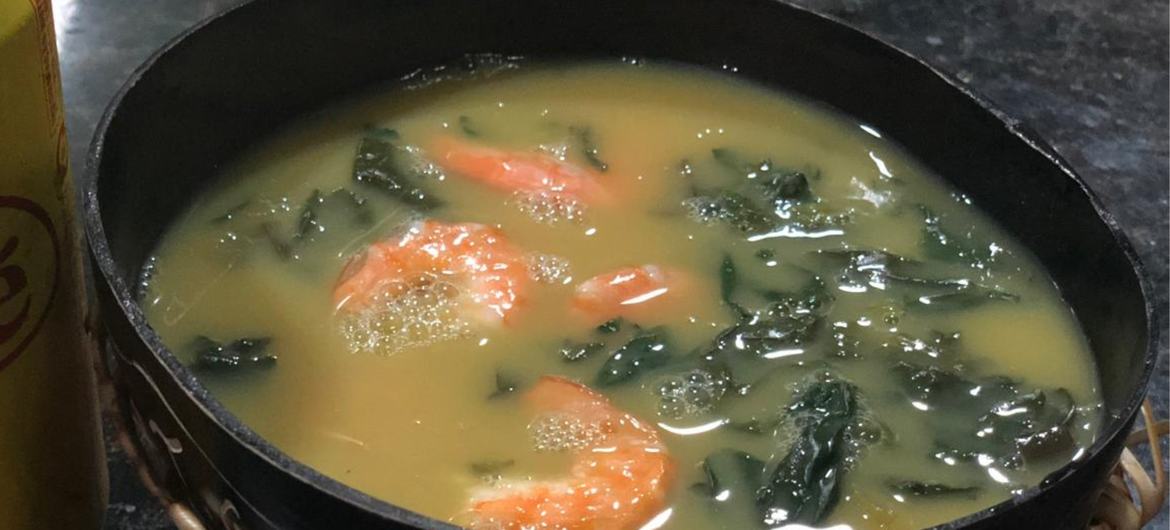
Tucupi is a yellow broth extracted from wild cassava, traditional in Amazonian cuisine.

Rooted in climate justice

For the Chef, Indigenous food systems represent much more than sustenance, they are a living form of environmental stewardship and spiritual connection.

“This knowledge has been invisible for too long,” she said. “Leading the COP30 kitchen is an act of cultural and ancestral diplomacy.”

She hopes the initiative will become a model for future international events. “This will be the first COP to feature a community-based, family-farming kitchen. It proves that it can be done, and it shouldn’t stop here. Let COP30 become a historic milestone, one that inspires similar initiatives across the world.”

Food and conservation

Ms. Marajoara emphasised that food sovereignty and environmental conservation are inseparable.

“The world is in collapse,” she warned. “There is no more time for endless negotiations. Protecting Indigenous and local community territories is a concrete, effective way to safeguard the planet’s climate.”


UN ‘high seas’ treaty clears ratification threshold, to enter into force in January

Morocco and Sierra Leone joined the list of States ratifying on Friday, becoming the 60th and 61st parties to the pact.

The treaty, formally known as the Agreement under the United Nations Convention on the Law of the Sea on the Conservation and Sustainable Use of Marine Biological Diversity of Areas beyond National Jurisdiction (BBNJ agreement), was adopted by UN Member States in June 2023 after nearly two decades of negotiations.

Secretary-General António Guterres welcomed the development, calling it a “historic achievement for the ocean and for multilateralism…  In two years, States have turned commitment into action – proving what is possible when nations unite for the common good,” he said in a statement.

“As we confront the triple planetary crisis of climate change, biodiversity loss, and pollution, this agreement is a lifeline for the ocean and humanity.”

The pact, also called the “high seas treaty,” covers two-thirds of the world’s ocean area that lies beyond national boundaries. It establishes legally binding rules to conserve and sustainably use marine biodiversity, share benefits from marine genetic resources more fairly, create protected areas, and strengthen scientific cooperation and capacity building.

UN Environment Programme (UNEP) Executive Director Inger Andersen also hailed the milestone. “Our ocean is the foundation of our very existence. Today we took an important step forward to save our ocean, and to save our future,” she said in a post on social media.

Safeguarding humanity’s future

The BBNJ agreement builds on the UN Convention on the Law of the Sea, regarded as the “constitution for the oceans.”

Once the high seas treaty enters into force on 17 January 2026, it will provide a global framework to help achieve international biodiversity targets, including the pledge to protect 30 per cent of land and sea areas by 2030 under the Kunming-Montreal Global Biodiversity Framework.

Mr. Guterres urged all remaining UN Member States to join the treaty without delay and called on partners to support its swift and full implementation. “The ocean’s health is humanity’s health,” he said.

ALSO READ: London’s Far-Right Rally Sends Shockwaves Through South Asian Communities

Gaza: Acute malnutrition among children hits record high

In July alone, nearly 12,000 children under five were identified as acutely malnourished out of 136,000 screened, according to aid partners. 

Of these, more than 2,500 were found to suffer from severe acute malnutrition, the most life-threatening form, and 40 had to be hospitalized in stabilisation centres.

More children affected

The proportion of children with severe acute malnutrition is rising, OCHA said.  

In June and July, 18 per cent of all acutely malnourished children had severe acute malnutrition, compared with 12 per cent between March and May.

Moreover, humanitarian access constraints are adding to the crisis.

Last month, aid partners were only able to reach 8,700 of the 290,000 children under five who require feeding and nutrition supplements due to the severe shortage of lipid-based nutrient supplements entering Gaza.

OCHA said the development “marks a dramatic collapse in the malnutrition prevention programme”, noting that an average of 76,000 children – or a quarter of those in need – were reached each month between April and June.

Distribution of other key nutrition supplies has also declined sharply, which is affecting children, pregnant women and breastfeeding mothers.

Shelter crisis worsens

Meanwhile, no shelter materials have entered Gaza since 2 March. 

At the same time, more than one million shelter items, and 2.3 million items such as tents, tarps, and sealing-off materials, have been procured and are currently stuck in Jordan and Egypt as the Israeli authorities have not approved their entry. 

The shelter crisis continues to worsen, with most families living in severely overcrowded and unsafe conditions. Some have no shelter at all. 

In July, humanitarians assessed 44 displacement sites, discovering that 43 had families with no shelter.

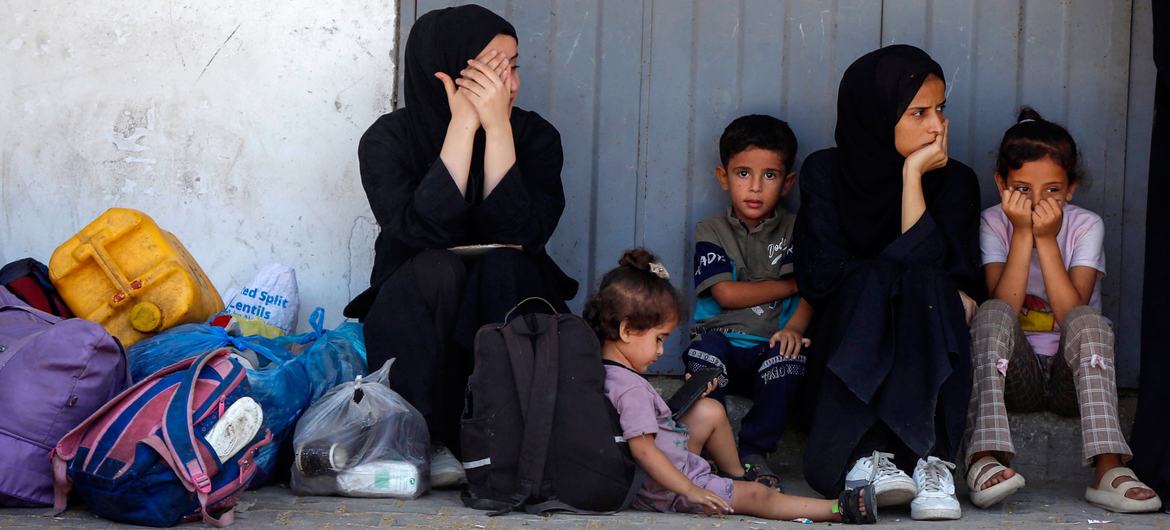
A family rests after evacuating from Deir Al-Balah in the Gaza Strip. (file)

Bombardment and displacement continue

The situation is further deteriorating due to ongoing bombardment, displacement orders and insecurity, which continue to displace families and disrupt humanitarian operations.

OCHA reported that overall, realities on the ground remain largely the same since Israel announced a “tactical pause” in military operations to allow the safe passage of aid.

The UN agency reiterated that supplies that have entered remain insufficient given the immense needs, while UN convoys continue to face challenges in delivering aid.

Aid missions taking hours

While fewer humanitarian movements have been denied outright, missions that are approved still take hours to complete, with some taking more than 18 hours.

On Wednesday, five out of 11 missions requiring coordination with the Israel authorities were facilitated. These included collecting food from the Kerem Shalom and Zikim crossings.

Another four missions were impeded but eventually fully completed, which included the collection of fuel from Kerem Shalom crossing and transfer of fuel from southern Gaza to the north. 

Medical evacuation update

One of the missions saw the medical evacuation of 15 children to Jordan, and 42 companions, with support from the World Health Organization (WHO).  However, more than 14,800 patients in Gaza still urgently need specialized medical care.

OCHA also reported on the flow of commercial goods into the Strip, noting that several trucks carrying food items have been entering over the past days. 

While the UN will continue to monitor the situation, humanitarians again stressed the need for unimpeded and predictable humanitarian access into and within Gaza, warning that “without it, time and resources are wasted, lives are lost, and the response cannot match the scale of the needs.” 

Source link

India’s IPO Boom: 15 Companies File Draft Papers in Single Day As Hungry Retail Investors Queue Up

In a sign of India’s booming equity markets, 15 companies submitted their initial public offering (IPO) draft documents to the Securities and Exchange Board of India (SEBI) on the last day of September. This brings the total number of IPO filings for the month to 41, marking the highest-ever filings in a single month.

Market analysts attribute the surge in filings to the expiration of audited financial statements for the quarter ending March 31, which remain valid only until September 30.

“We anticipate over ₹1.5 lakh crore ($18 billion) to be raised through IPOs this year, with many growth-stage businesses entering the market. Additionally, we expect multinational corporations to increasingly tap into India’s capital market,” said Mahavir Lunawat, Managing Director of Pantomath Capital Advisors.

Lunawat also noted that mutual fund inflows have nearly doubled since the previous quarter, reaching approximately ₹40,000 crore ($4.8 billion) each month. This surge in liquidity has significantly boosted market confidence.

Indian equity markets have reached record highs, reflecting strong investor sentiment, which has been bolstered by expectations of changes in domestic interest rates following the U.S. Federal Reserve’s recent 50-basis-point rate cut. Experts remain optimistic about the overall outlook for India’s stock markets.

India’s inclusion in JP Morgan’s global bond indices has also drawn approximately $18 billion in foreign investment over the past year, with analysts predicting further inflows following recent U.S. interest rate reductions. This trend is expected to lower bond yields and reduce borrowing costs, making Indian debt more attractive to foreign investors. Future monthly inflows could range between $2 billion and $3 billion, further enhancing foreign participation in India’s bond market.

According to Angel One Wealth, more than 5,450 companies have gone public globally in the first half of this year, with India accounting for around 25% of those listings. Last year also saw a high number of IPOs in India, driven by strong domestic investor interest in emerging sectors.