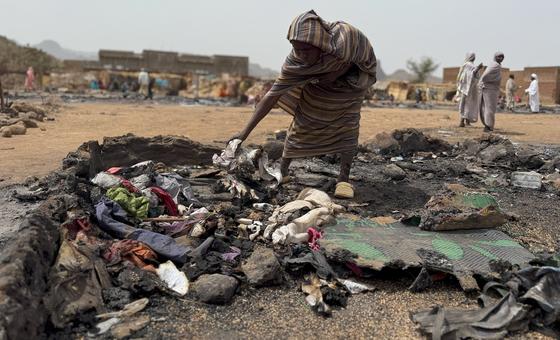
Monday’s attack left 40 civilians dead and 19 injured within Abu Shouk, according to humanitarian partners. The International Organization for Migration (IOM) reported that the renewed violence forced at least 500 residents of the camp to flee to other parts of North Darfur.
Acting Humanitarian Coordinator for Sudan, Sheldon Yett, condemned “all deliberate and indiscriminate attacks on civilians” in the strongest terms.
“All parties to the conflict have a clear obligation under international humanitarian law to ensure the protection of civilians,” UN Spokesperson Stéphane Dujarric stressed at Tuesday’s daily press briefing in New York.
“Displacement camps and other places of refuge for civilians must not be targeted. And the fact that we have to repeat this almost every day is tragic in itself.”
No exit
Amid the current escalation of violence in and around El Fasher – the last Government held bastion in Darfur – there are also reports that exit routes from the city have been blocked and civilians are trapped under siege, cut off from safety and aid.
Mr. Yett emphasised that the immediate provision of safe and unhindered passage for those fleeing El Fasher and other areas of active hostilities is crucial.
He also reiterated the Secretary-General’s repeated calls for a humanitarian pause in and around the city to allow for the much-needed delivery of food, water, medicine and other life-saving supplies, underscoring that those trapped are facing acute hunger and starvation.
Deepening catastrophe in Kordofan
To the east in the Kordofan region, violence and displacement are still raging.
In South Kordofan State, IOM estimates 3,000 people fled the town of Kadugli between 6 and 10 August because of deepening insecurity.
Humanitarian access to the town is extremely limited, as the primary supply route is inaccessible due to active hostilities, making road access virtually nonexistent.
This humanitarian crisis is worsening an already dire economic situation and causing further shortages of vital goods.
UN humanitarians reiterate that all combatants have obligations under international humanitarian law to refrain from attacking civilians, take constant care to spare them and facilitate unimpeded humanitarian access to everyone in need.
Mandates – requests or directives for action issued by the General Assembly, the Security Council and the Economic and Social Council – have multiplied significantly since 1945. Today, there are more than 40,000 active mandates, serviced by around 400 intergovernmental bodies. Together, they require more than 27,000 meetings a year and generate roughly 2,300 pages of documentation every day, at an estimated annual cost of $360 million.
A growing challenge
Mandates guide the UN’s work in over 190 countries and territories, from peacekeeping to humanitarian response and development. But many are outdated or overlapping, and their complexity is increasing. Since 2020, the average word count of General Assembly resolutions has risen by 55 per cent, while Security Council resolutions are now three times longer than they were 30 years ago.
“Let’s face facts,” said Secretary-General António Guterres during a briefing to the General Assembly on Friday, “we cannot expect far greater impact without the means to deliver. By spreading our capacities so thin, we risk becoming more focused on process than on results.”
A lack of coordination adds to the strain. Several UN entities cite the same mandates to justify separate programmes and budgets, leading to duplication and reduced impact. More than 85 per cent of mandates contain no provisions for review or termination. “Effective reviews are the exception, not the rule,” Mr. Guterres said. “The same mandates are discussed year after year – often with only marginal changes to existing texts.”
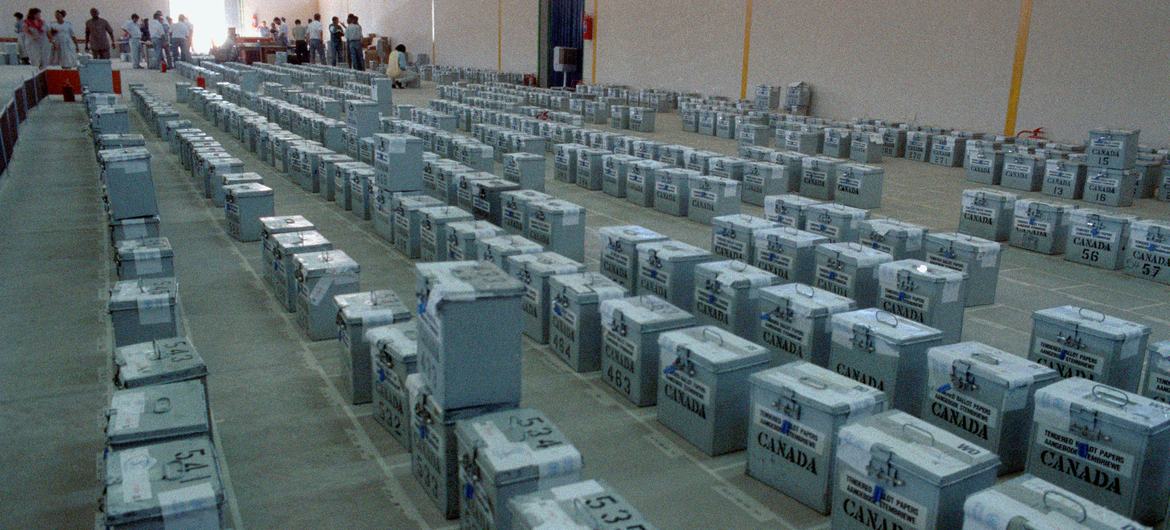
The UN has carried out mandates across the world including certifying the election in Namibia in 1989.
The UN80 Initiative: a systemic approach
The Report of the Mandate Implementation Review, released on 31 July, is part of the Secretary-General’s broader UN80 Initiative – a multi-year effort to modernize how the UN works. Rather than assess mandates individually, the report takes a “lifecycle” approach, looking at how mandates are created, implemented and reviewed, and proposing ways to improve each stage.
“Let me be absolutely clear: mandates are the business of Member States,” Mr. Guterres told the General Assembly. “They are the expression of your will. And they are the sole property and responsibility of Member States. The vital task of creating, reviewing or retiring them lies with you – and you alone. Our role is to implement them – fully, faithfully, and efficiently.”
“This report respects that division,” he added. “It looks at how we carry out the mandates you entrust to us.”
From creation to delivery
To address duplication and complexity, the report calls for digital mandate registries that make it easier to track what has been adopted across different bodies. It also encourages shorter, clearer resolutions with realistic resource requirements. “We cannot expect far greater impact without the means to deliver,” Mr. Guterres said.
The report also highlights the growing operational burden of meetings and reports. Last year, the UN system supported 27,000 meetings and produced 1,100 reports – three out of five on recurring topics. “Meetings and reports are essential,” Mr. Guterres said. “But we must ask: Are we using our limited resources in the most effective way?”
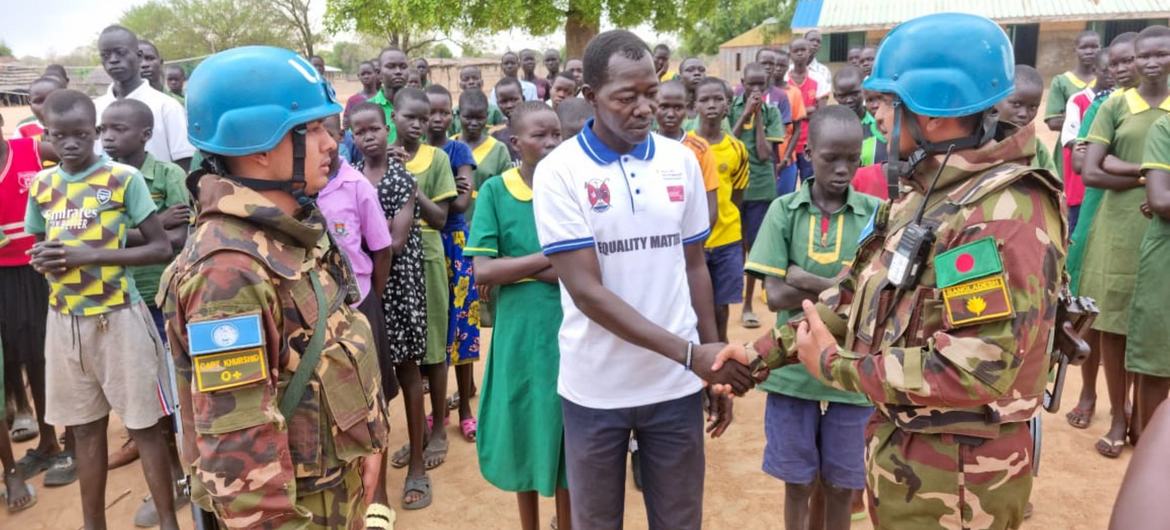
The UN peacekeeping mission in South Sudan, UNMISS, was mandated by the Security Council.
Funding and impact
Proposals include reducing the number of reports and meetings, streamlining formats and monitoring report usage to ensure relevance. The Secretary-General is also calling for stronger coordination among UN entities to avoid overlap and ensure each mandate is linked to clear deliverables.
The report warns that fragmented funding is undermining coherent delivery. In 2023, 80 per cent of the UN’s funding came from voluntary contributions, 85 per cent of which were earmarked. “Fragmented funding, combined with fragmented implementation, leads to fragmented impact,” said Mr. Guterres. “Each of us has a role to play to address this. And each of us must act on the levers within our control.”
Putting people first
For the Secretary-General, reforms are not only about process but about impact. “Mandates are not ends in themselves,” he said. “They are tools – to deliver real results, in real lives, in the real world.”
He praised UN staff as central to this effort. “None of the work in implementing mandates is possible without our staff – the women and men of the United Nations,” Mr. Guterres said. “Their expertise, dedication and courage are indispensable to this endeavor. If we are to improve how we implement mandates, we must also support and empower the people who carry them out.”
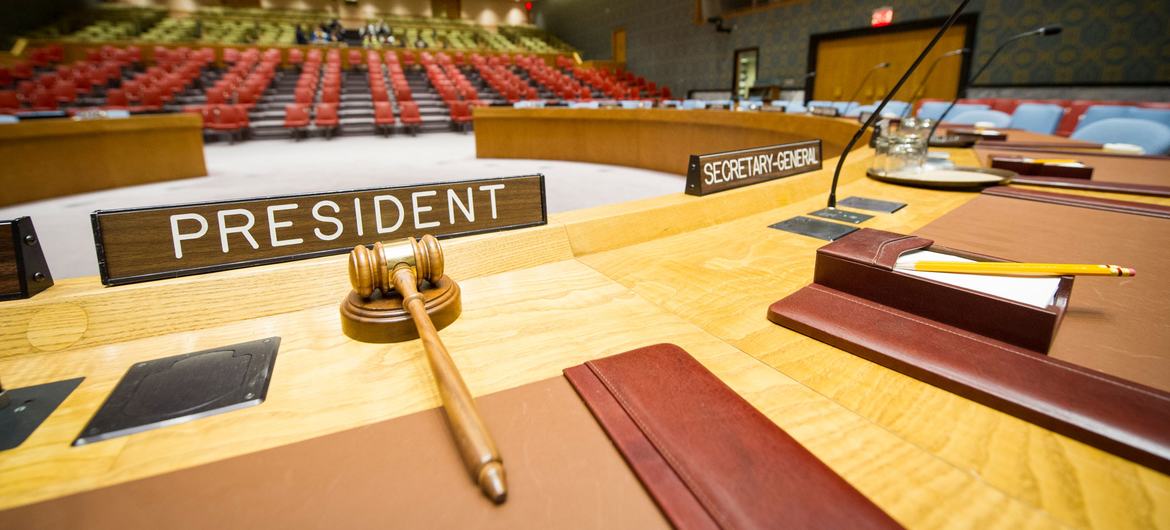
Many of the UN’s mandates are agreed at the Security Council at UN Headquarters in New York.
A call to Member States
In his concluding remarks, the Secretary-General underscored that the next steps must come from Member States. “The path forward is yours to decide,” he said. “My responsibility is to ensure that the Secretariat provides the capacities and inputs required by the course of action that you choose.”
The report invites Member States to consider a time-bound intergovernmental process to carry proposals forward and ensure that this effort succeeds where earlier ones have fallen short. The upshot, the report says, would be a more agile, coherent and impactful UN that is better at delivering programmes and services.
Briefing Member States in New York on Monday Mr. Guterres outlined wide-ranging effort to revamp how the UN system operates – cutting costs, streamlining operations, and modernizing its approach to peace and security, development and human rights.
“These are times of peril,” he said, “but they are also times of profound opportunity and obligation. The mission of the United Nations is more urgent than ever.”
Three main objectives
Launched in March, the UN80 Initiative centres on three priorities: enhancing operational efficiency, assessing how mandates – or key tasks – from Member States are implemented, and exploring structural reforms across the UN system.
The conclusions will be reflected in revised estimates for the 2026 budget in September this year, with additional changes that require more detailed analysis presented in 2027.
‘Meaningful’ budget reductions
Mr. Guterres said the changes are expected to yield “meaningful reductions” in the overall budget. For example, the departments for political and peacekeeping affairs could see a 20 per cent reduction in staff by eliminating duplication.
This level of reduction, he said, could serve as a benchmark across the UN system – while also considering unique factors for each department.
Additional examples include consolidating all counter-terrorism work within the main Office of Counter-Terrorism (UNOCT), ending building leases and relocating posts away from expensive “duty stations” where cost of living is high.
“There might be immediate, one-off costs involved in relocating staff and providing potential termination packages,” he said, “but by moving posts from high-cost locations, we can reduce our commercial footprint in those cities and reduce our post and non-post costs.”
UN Secretary-General António Guterres briefs on the UN80 Initiative.
Efficiencies and upgrades
The first workstream focuses on efficiencies and improvements, developing a new model that improves consolidation, looks at centralising services, relocating to cheaper locations, and expanding the use of automation and digital platforms.
Mr. Guterres said departments the UN’s headquarters in New York and Geneva have been asked to review whether some teams can be relocated to lower-cost duty stations, reduced or abolished.
Reviewing mandates
The second workstream involves a review of how existing mandates are being carried out – not the mandates themselves, which are the purview of Member States only.
A preliminary review identified more than 3,600 unique mandates for the Secretariat alone. A full and more detailed analysis is now underway.
Mr. Guterres emphasised that the sheer number of mandates – and the bureaucracy needed to implement them – places a particular burden on smaller Member States with limited resources.
“Based on this work, Member States may wish to consider the opportunity to conduct themselves a review of the mandates,” he added.
Structural change
The third workstream – focused on structural reform – is already underway, Mr. Guterres said.
Nearly 50 initial submissions have already been received from senior UN officials, reflecting what Mr. Guterres described as “a high level of ambition and creativity.”
Key work areas have been identified for review. These include peace and security, development, human rights, humanitarian, training and research and specialised agencies.
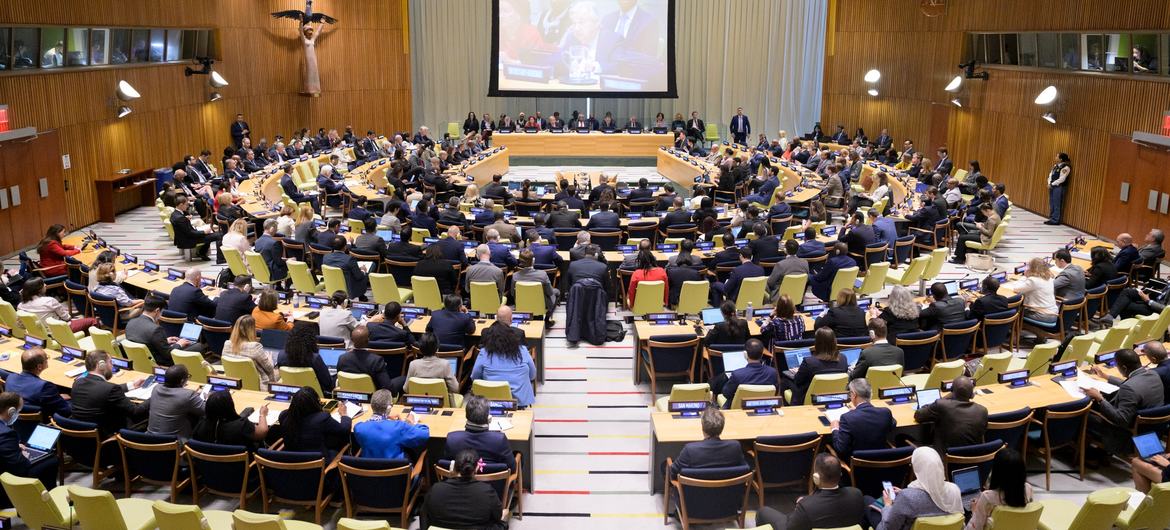
A wide view of the informal meeting of the General Assembly plenary that heard a briefing by the Secretary-General on the UN80 Initiative.
Not an answer to liquidity crisis
Mr. Guterres also touched on the UN dire cashflow situation, noting that the initiative “is not an answer” to the months-long liquidity crisis but by being more cost effective, it should help limit the impact.
“The liquidity crisis is caused by one simple fact – the arrears,” he said, adding that structural reform is not the answer to a fundamental failure by some Member States to pay what they owe on time to meet running costs.
Unpaid dues
According to information provided by the UN Controller to the General Assembly’s Fifth Committee (Administrative and Budgetary), only $1.8 billion has been received against the $3.5 billion regular budget assessments for 2025 – a shortfall of around 50 per cent.
As of 30 April, unpaid assessments stood at $2.4 billion, with the United States owing about $1.5 billion, China ($597 million), Russia ($72 million), Saudi Arabia ($42 million), Mexico ($38 million), and Venezuela ($38 million). An additional $137 million is yet to be paid by other Member States.
For the peacekeeping budget (which runs on a July-June cycle), including prior-period arrears, the unpaid amount totals $2.7 billion. For the International Tribunals, total contribution outstanding was $79 million as of 30 April.
Close consultation
The Secretary-General told Member States he would be consulting with them closely and regularly on the cash crisis and needed reforms, seeking guidance and presenting concrete proposals for countries to act on.
UN staff members and their representatives are being consulted and listened to, he added: “Our concern is to be humane and professional in dealing with any aspect of the required restructuring.”
In conclusion, he highlighted that the UN80 Initiative is a “significant opportunity” to strengthen the UN system and deliver for those who depend on it.
In response to the suggestion that the UN should focus on just the one key pillar of peace and security, he said it would be wrong to ditch development and human rights – all three are essential he underscored.
“Let us seize this momentum with urgency and determination, and work together to build the strongest and most effective United Nations for today and tomorrow.”