‘Only hunger and bombs’ for besieged civilians in Sudan’s El Fasher

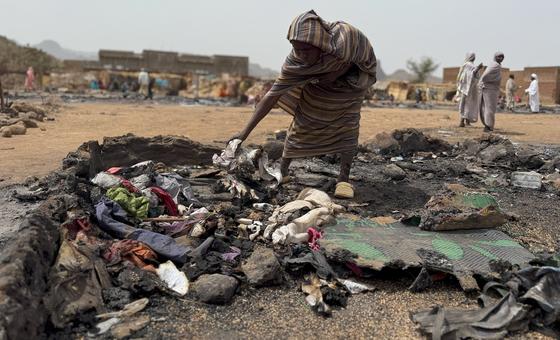
At least 57 civilians were killed in the attack, which included the Abu Shouk displacement camp on the outskirts of the city, and UN human rights office, OHCHR, is also following up on allegations of summary executions there.  

“It is with dismay that we yet again witness an unimaginable horror inflicted upon civilians in El Fasher, who have endured over a year of siege, persistent attacks and dire humanitarian conditions,” said Mr. Türk.

Serial attacks

“Such repeated attacks on civilians, which raise serious concerns under international humanitarian law, are totally unacceptable and must stop.”

Between January and June, the RSF – which has been battling forces of the military government for control of Sudan for over two years – has attacked the Abu Shouk camp at least 16 times, killing at least 212 and leaving 111 others injured.  

“Once again, I am raising the alarm about the serious risk of ethnically motivated persecution as the RSF tries to seize control of El Fasher and Abu Shouk camp,” Mr. Türk stressed, reiterating his call to protect civilians and urging humanitarian pauses in besieged areas to reach those in need.

Human rights violations in Zamzam

UN human rights officials recently interviewed survivors of the RSF’s devastating assault on Zamzam camp, 15 kilometres south of El Fasher, where famine was confirmed in August 2024.  

Testimonies corroborated previous documentation of serious human rights abuses against civilians during a particularly deadly attack on Zamzam camp in April 2025, including killings, widespread rape and gang rape, enforced disappearances and torture.  

“I urge third States to use all their influence to put an end to these violations,” said Mr. Türk. “Accountability is crucial to break this cycle of persistent and egregious violations.”

Deepening hunger

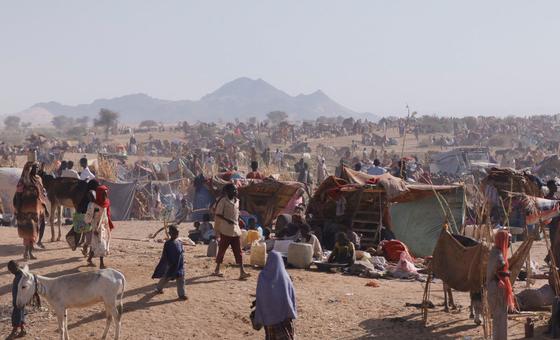
A year after famine was first confirmed in Zamzam, hundreds of thousands are still trapped in El Fasher, cut off from World Food Programme (WFP) assistance and facing deepening hunger.

Trade routes and supply lines entering El Fasher are blocked, resulting in soaring prices and the cessation of most community kitchens’ operations.  

Some residents are reportedly surviving on animal fodder and food waste.  

“Everyone in El Fasher is facing a daily struggle to survive,” said Eric Perdison, WFP’s Regional Director for Eastern and Southern Africa.

“Without immediate and sustained access,” for humanitarians, Perdison added, “lives will be lost.”

Sudan’s conflict, which began in April 2023, has created the world’s largest hunger crisis: around 25 million people – half the country’s population – face acute hunger, and 3.5 million women and children face malnutrition.

From El Fasher to Tawila

Many victims of the attack on the Zamzam camp and those suffering from hunger in El Fasher fled to the Tawila camp, 75 kilometres away.  

“Hunger forced us to leave,” said eight-year-old Sondos, who told WFP she had fled with her family after weeks of surviving on millet.

There was “only hunger and bombs,” she testified, with shells raining down on the city.

Another Tawila resident, 47-year-old Mohamed, travelled from Zamzam to El Fasher before making it to Tawila.

People died of thirst along the way, he said. “Many of them were begging for water. Each person had to have only one sip, just enough to reach their stomach.”

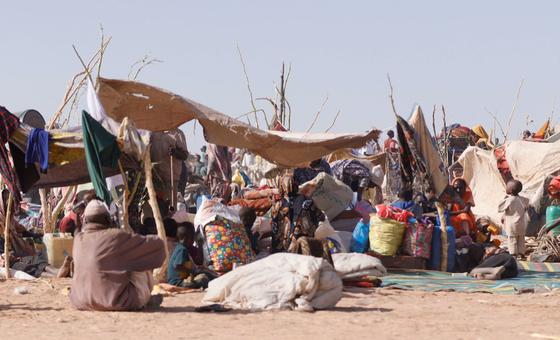
But even when people make it to Tawila, the camp’s makeshift tents offer little protection from the rainy season just beginning.  

WFP assistance

For the Tawila camp’s roughly 400,000 residents, WFP rations of nutrient-packed high-energy biscuits, sorghum, vegetable oil and salt are often their only sustenance.

They are just some of the four million Sudanese that WFP supports monthly.

This assistance has helped reduce catastrophic hunger in parts of Central and West Darfur. However, these gains are fragile: “WFP is ready with trucks full of food assistance to send into El Fasher,” says Corinne Fleischer, WFP’s Director of Supply Chain and Delivery. “We urgently need guarantees of safe passage.”  

The RSF has yet to agree a pause in fighting to allow humanitarian goods to enter the city. 
Source link

Sudan: UN ‘deeply alarmed’ by major attack on besieged El Fasher

Monday’s attack left 40 civilians dead and 19 injured within Abu Shouk, according to humanitarian partners. The International Organization for Migration (IOM) reported that the renewed violence forced at least 500 residents of the camp to flee to other parts of North Darfur.

Acting Humanitarian Coordinator for Sudan, Sheldon Yett, condemned “all deliberate and indiscriminate attacks on civilians” in the strongest terms.

All parties to the conflict have a clear obligation under international humanitarian law to ensure the protection of civilians,” UN Spokesperson Stéphane Dujarric stressed at Tuesday’s daily press briefing in New York.

“Displacement camps and other places of refuge for civilians must not be targeted. And the fact that we have to repeat this almost every day is tragic in itself.”

No exit

Amid the current escalation of violence in and around El Fasher – the last Government held bastion in Darfur – there are also reports that exit routes from the city have been blocked and civilians are trapped under siege, cut off from safety and aid.  

Mr. Yett emphasised that the immediate provision of safe and unhindered passage for those fleeing El Fasher and other areas of active hostilities is crucial.  

He also reiterated the Secretary-General’s repeated calls for a humanitarian pause in and around the city to allow for the much-needed delivery of food, water, medicine and other life-saving supplies, underscoring that those trapped are facing acute hunger and starvation.

Deepening catastrophe in Kordofan

To the east in the Kordofan region, violence and displacement are still raging.  

In South Kordofan State, IOM estimates 3,000 people fled the town of Kadugli between 6 and 10 August because of deepening insecurity.

Humanitarian access to the town is extremely limited, as the primary supply route is inaccessible due to active hostilities, making road access virtually nonexistent.  

This humanitarian crisis is worsening an already dire economic situation and causing further shortages of vital goods.  

UN humanitarians reiterate that all combatants have obligations under international humanitarian law to refrain from attacking civilians, take constant care to spare them and facilitate unimpeded humanitarian access to everyone in need. 

Source link

Sudan: UN rights chief appeals for greater protection of civilians in besieged El Fasher

The horror unfolding in Sudan knows no bounds,” Volker Türk said in a statement calling for an end to the war between the Sudanese Armed Forces (SAF) and former ally the Rapid Support Forces (RSF), now in its third year.

He noted that three days ago, the RSF launched coordinated attacks from multiple directions on the North Darfur capital El Fasher and nearby Abu Shouk camp, killing at least 40 civilians.

Fear of more bloodshed

This brings the confirmed number of civilians killed in the region to at least 542 in just the last three weeks, he said, although the actual death toll is likely much higher.

“My fears are all the greater given the ominous warning by the RSF of ‘bloodshed’ ahead of imminent battles with the Sudanese Armed Forces (SAF) and their associated armed movements,” Mr. Türk said.

“Everything must be done to protect civilians trapped amid dire conditions in and around El Fasher.”

Stop the fighting

Furthermore, reports of extrajudicial executions in Khartoum state are also extremely disturbing, he added.

The High Commissioner said he has personally alerted both leaders of the RSF and SAF to the catastrophic human rights consequences of the war. 

These harrowing consequences are a daily, lived reality for millions of Sudanese. It is well past time for this conflict to stop,” he said.

Diplomatic efforts continue

Meanwhile, the UN Secretary-General’s Personal Envoy for Sudan, Ramtane Lamamra, was in Cairo this week where he met with senior Egyptian officials, including Foreign Minister Badr Abdelatty, to discuss the Sudan crisis. 

They shared the view that an inclusive Sudanese-led political path is needed to restore peace in the country, preserving the unity of Sudan, its sovereignty and territorial integrity,” said UN Spokesperson Stéphane Dujarric, speaking on Thursday in New York.

Mr. Lamamra also exchanged views with Ahmed Aboul Gheit, the Secretary General of the League of Arab States, on coordinating efforts between the UN, the Arab League and concerned multilateral organizations to advance a lasting peace in Sudan.  


Source link