Will AI kickstart a new age of nuclear power?

The world’s demand for electricity is soaring at an unprecedented pace. Projections indicate that by 2035, global consumption will surge by over 10,000 terawatt-hours, a figure matching the combined current usage of every advanced economy on Earth today.

A primary driver of this explosive growth is the rise of artificial intelligence. The technology is fueled by vast data centers, whose energy needs are staggering. A single medium-sized data center now consumes as much electricity as 100,000 homes. According to the International Energy Agency, demand from these facilities skyrocketed by more than 75% between 2023 and 2024. By 2030, they are expected to be responsible for over 20 percent of all electricity demand growth in advanced nations.

In the United States, the epicenter of the AI industry, the scale is even more pronounced. Forecasts suggest that before this decade ends, the power required for AI data processing will surpass the total combined electricity consumption of the country’s entire aluminium, steel, cement, and chemical manufacturing sectors.

The Nuclear Industry Sees Its Moment

Facing this daunting challenge, a unique summit took place last December. Policymakers, tech executives, and nuclear leaders from across the globe gathered at the International Atomic Energy Agency (IAEA) headquarters in Vienna. Their mission: to explore a symbiotic future where nuclear power enables AI’s expansion, and AI, in turn, innovates the nuclear sector.

The logic is rooted in AI’s relentless operational needs. Training a top-tier AI model can require tens of thousands of computer processors to run non-stop for months. Meanwhile, daily AI applications are spreading into every corner of society, from healthcare and transport to education and agriculture. Every digital interaction consumes power.

“We need clean, stable zero-carbon electricity that is available around the clock,” said Manuel Greisinger, a senior manager at Google focused on AI. “This is undoubtedly an extremely high threshold, and it is not achievable with wind and solar power alone. AI is the engine of the future, but an engine without fuel is almost useless. Nuclear energy is not only an option, but also an indispensable core component of the future energy structure.”

A Bullish Vision for Atomic Energy

This view is championed at the highest levels. IAEA Director General Rafael Mariano Grossi believes the nuclear industry is destined to be the bedrock of the AI revolution. “Only nuclear energy can meet the five needs of low-carbon power generation, round-the-clock reliability, ultra-high power density, grid stability and true scalability,” he declared.

The industry is mobilizing. Currently, 71 new reactors are under construction worldwide, adding to the 441 already operating. The United States, which hosts 94 plants has plans for ten more.

Tech giants are putting their money where their data is. Major companies have pledged support for the goal of trippling global nuclear capacity by 2050. In a landmark move, Microsoft signed a 20-year power purchase agreement that directly facilitated the restart of Unit One at Pennsylvania’s Three Mile Island nuclear plant.

The trend is worldwide. “Europe has the world’s densest digital corridors, with Frankfurt, Amsterdam and London as hubs,” explained Grossi. Traditional nuclear powers like France and the UK are reinvesting heavily, while newcomers like Poland are accelerating plans.

Russia remains a dominant exporter and developer of reactor technology. China is achieving parallel leadership, leading the world simultaneously in both AI development and the construction of new nuclear reactors. Japan is upgrading its data center infrastructure, and the United Arab Emirates has coupled its new nuclear program with ambitions to become a regional AI hub.

The Promise of Smaller, Faster Reactors

The urgent timeline is fueling interest in small modular reactors (SMRs). Unlike traditional mega-projects that take a decade to build, SMRs offer a nimble alternative.

“These kinds of reactors have a small footprint and upgraded safety systems, and can be deployed in nearby industrial areas, including data centre campuses,” Grossi said. “Tech companies that use them don’t have to worry about regional grid supply constraints or transmission losses. This will be a decisive advantage in areas where grid upgrades are slow.”

Though still emerging from the development phase, progress is swift. Google has signed a pioneering global agreement to purchase nuclear power from a fleet of SMRs, targeting operational status by 2030.

The search for reliable power is pushing boundaries. Google is also looking skyward, researching space-based solar networks to power massive machine-learning operations in orbit, taking advantage of constant, unfiltered sunlight. The company plans to launch two prototype satellites in early 2027 to test the concept.

Whether it’s reviving dormant reactors, betting on compact new designs, building traditional plants, or even gazing at the stars, the trajectory is clear. The world’s digital and energy futures are converging, pointing toward an energy system fundamentally reliant on nuclear power to sustain the civilization of tomorrow.

Training cutting-edge AI models requires tens of thousands of central processing units (CPUs) to run continuously for weeks or even months. At the same time, the daily application of artificial intelligence is expanding to almost all sectors such as hospitals, public administration, transportation, agriculture, logistics and education.

Every query, every simulation, every recommendation consumes power. “We need clean, stable zero-carbon electricity that is available around the clock,” says Manuel Greisinger, a senior manager at Google, focusing on AI. “This is undoubtedly an extremely high threshold, and it is not achievable with wind and solar power alone. AI is the engine of the future, but an engine without fuel is almost useless. Nuclear energy is not only an option, but also an indispensable core component of the future energy structure.”

A data centre in Ireland © Unsplash/Geoffrey Moffett


Bullish nuclear industry

Mr. Greisinger’s view is shared by IAEA Director General Manuel Grossi, who believes that the nuclear industry is destined to be the energy partner of the AI revolution. “Only nuclear energy can meet the five needs of low-carbon power generation, round-the-clock reliability, ultra-high power density, grid stability and true scalability,” he declared.

The nuclear industry appears to be in bullish mood. Seventy-one new reactors are under construction, adding to the 441 that are currently operating globally. Ten are scheduled to be built in the US, which is already home to 94 plants, the largest amount of any country.

The tech giants that are using the data centres have pledged to support the goal of at least tripling global nuclear power capacity by 2050. Microsoft, for example, has signed a 20-year power purchase agreement that allowed Unit One of the Three Mile Island nuclear power plant in Pennsylvania, USA, to be restarted.

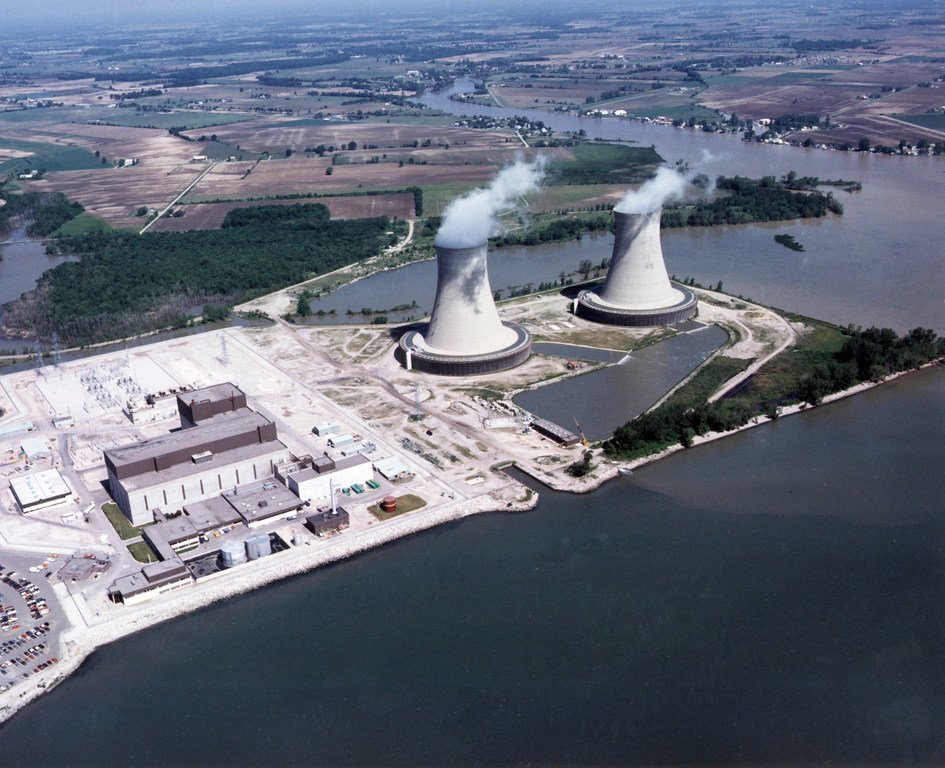
NOAA/OAR/Great Lakes Environmental Research Laboratory

Russia, with a research base proficient in mathematics and computer science, remains the world’s largest exporter in the field of nuclear energy, and is a leading operator and developer of advanced reactor technology, whilst China is making major achievements in both AI and nuclear energy.

“AI technology and the construction of artificial intelligence data centres are advancing simultaneously, and the number of new nuclear reactors in the world also ranks first in the world during the same period,” said the UN nuclear agency chief.

Japan is investing heavily in building and upgrading data centres to meet growing demand whilst, in the Middle East, the United Arab Emirates has established a nuclear energy programme and has emerged as a regional AI hub.

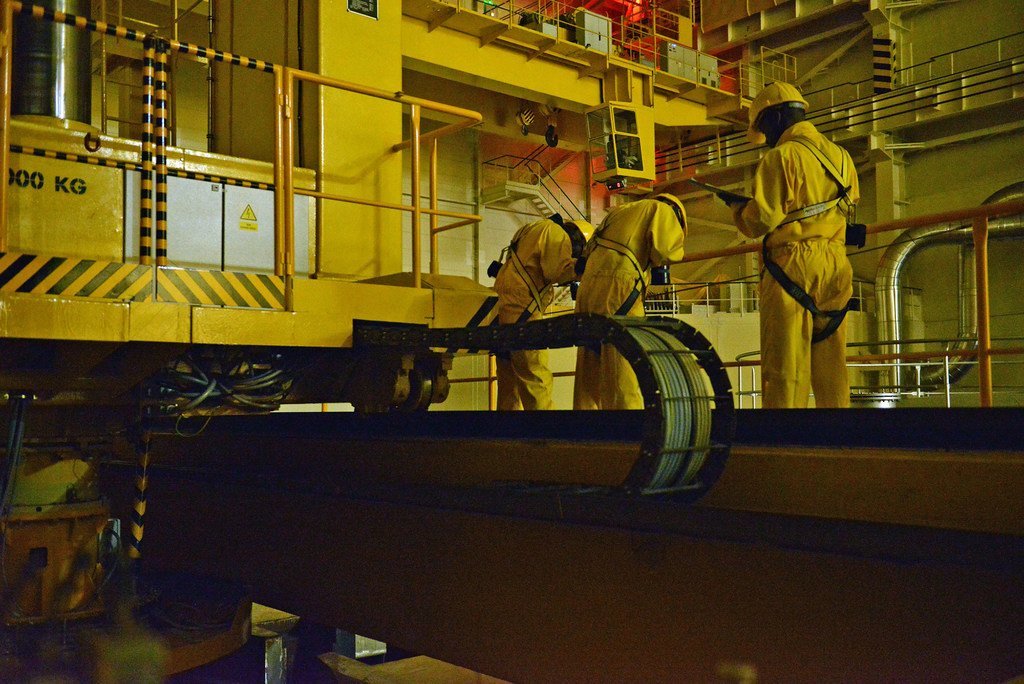
The IAEA supports training to ensure the safety of nuclear power plants like this one in the Czech Republic.


Human rights must anchor the digital age, says UN’s Türk

Digital technologies have the potential to drive progress and strengthen rights, including connecting people, improving access to health and education, and much more.

But the pace of their evolution also poses serious risks, warned Volker Türk, UN High Commissioner for Human Rights – from restrictions on free expression and privacy violations to discrimination and growing threats to our shared sense of truth and reality.

It is precisely in the face of massive change, that we need more human rights, not less,” he said on Monday, addressing a high-level event on the twentieth anniversary of the World Summit on the Information Society (WSIS) in Geneva.

Prioritising rights

In this time of sweeping change, human rights must be prioritised and used as the blueprint for action.

States’ legal obligations and companies’ duties to respect human rights offer guidance to tackle disinformation and protect our data from illicit use,” Mr. Türk stressed.

Such guidance also helps counter algorithmic bias, digital hate speech, and fosters trust and inclusive digital decision-making.

Role of WSIS

Founded in 2001, the inaugural WSIS was held in two phases in December 2003 (Geneva) and November 2005 (Tunis).

Since then, the forum has brought together diverse stakeholders to collaborate on digital governance and promote a digital landscape that is people-centred, inclusive and development-oriented.

“[The WSIS] helped create a space for States, technology companies, civil society, and others to harness the power of information and communication technologies for development,” said Mr. Türk.

Looking forward

The High Commissioner stressed that the coming months will see critical decisions on regulating the digital sphere, including new UN mechanisms on AI and data governance.

We have a window of opportunity to make a difference,” he concluded.

“We must join forces – States, technology companies, international organizations, civil society, and others – to work towards an inclusive and open digital environment for everyone, everywhere.”

Source link

How ‘Digital mask’ protects patients’ privacy [Details]

Scientists have created a ‘digital mask’ that will allow facial images to be stored in medical records while preventing potentially sensitive personal biometric information from being extracted and shared.

In research published today in Nature Medicine, a team led by scientists from the University of Cambridge and Sun Yat-sen University in Guangzhou, China, used three-dimensional (3D) reconstruction and deep learning algorithms to erase identifiable features from facial images while retaining disease-relevant features needed for diagnosis.

Facial images can be useful for identifying signs of disease. For example, features such as deep forehead wrinkles and wrinkles around the eyes are significantly associated with coronary heart disease, while abnormal changes in eye movement can indicate poor visual function and visual cognitive developmental problems. However, facial images also inevitably record other biometric information about the patient, including their race, sex, age and mood.

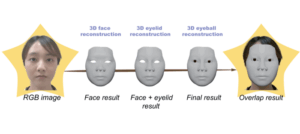
Graphic showing digital masking process/Photo:Professor Haotian Lin’s research group

With the increasing digitalisation of medical records comes the risk of data breaches. While most patient data can be anonymised, facial data is more difficult to anonymise while retaining essential information. Common methods, including blurring and cropping identifiable areas, may lose important disease-relevant information, yet even so cannot fully evade face recognition systems.

Due to privacy concerns, people often hesitate to share their medical data for public medical research or electronic health records, hindering the development of digital medical care.

Professor Haotian Lin from Sun Yat-sen University said: “During the COVID-19 pandemic, we had to turn to consultations over the phone or by video link rather than in person. Remote healthcare for eye diseases requires patients to share a large amount of digital facial information. Patients want to know that their potentially sensitive information is secure and that their privacy is protected.”

Professor Lin and colleagues developed a ‘digital mask’, which inputs an original video of a patient’s face and outputs a video based on the use of a deep learning algorithm and 3D reconstruction, while discarding as much of the patient’s personal biometric information as possible – and from which it was not possible to identify the individual.

Deep learning extracts features from different facial parts, while 3D reconstruction automatically digitises the shapes and movement of 3D faces, eyelids, and eyeballs based on the extracted facial features. Converting the digital mask videos back to the original videos is extremely difficult because most of the necessary information is no longer retained in the mask.

Next, the researchers tested how useful the masks were in clinical practice and found that diagnosis using the digital masks was consistent with that carried out using the original videos. This suggests that the reconstruction was precise enough for use in clinical practice.

Compared to the traditional method used to ‘de-identify’ patients – cropping the image – the risk of being identified was significantly lower in the digitally-masked patients. The researchers tested this by showing 12 ophthalmologists digitally-masked or cropped images and asking them to identify the original from five other images. They correctly identified the original from the digitally-masked image in just over a quarter (27%) of cases; for the cropped figure, they were able to do so in the overwhelming majority of cases (91%). This is likely to be an over-estimation, however: in real situations, one would likely have to identify the original image from a much larger set.

The team surveyed randomly selected patients attending clinics to test their attitudes towards digital masks. Over 80% of patients believed the digital mask would alleviate their privacy concerns and they expressed an increased willingness to share their personal information if such a measure was implemented.

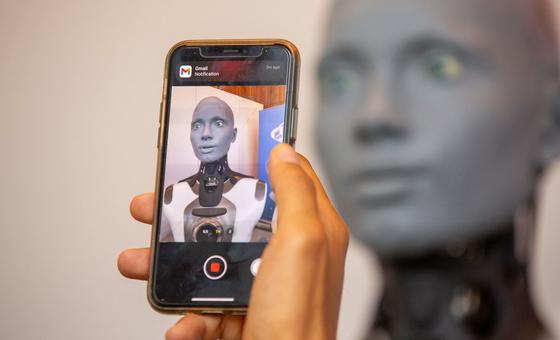
Doctor/IANS

Finally, the team confirmed that the digital masks can also evade artificial intelligence-powered facial recognition algorithms.

Professor Patrick Yu-Wai-Man from the University of Cambridge said: “Digital masking offers a pragmatic approach to safeguarding patient privacy while still allowing the information to be useful to clinicians. At the moment, the only options available are crude, but our digital mask is a much more sophisticated tool for anonymising facial images.

“This could make telemedicine – phone and video consultations – much more feasible, making healthcare delivery more efficient. If telemedicine is to be widely adopted, then we need to overcome the barriers and concerns related to privacy protection. Our digital mask is an important step in this direction.”

1 in 3 older adults take something to help them sleep but many don’t talk to their doctors

1 in 12 people over age 65 take prescription sleep medications, which carry health risks for older people, U-M/AARP National Poll on Healthy Aging finds.

Sleep doesn’t come easily for nearly half of older Americans, and more than a third have resorted to some sort of medication to help them doze off at night, according to new results from the National Poll on Healthy Aging.

But most poll respondents said they hadn’t talked to their doctor about their sleep, even though more than a third said their sleep posed a problem. Half believe — incorrectly — that sleep problems just come naturally with age.

The poll was conducted by the University of Michigan Institute for Healthcare Policy and Innovation, and is sponsored by AARP and Michigan Medicine, U-M’s academic medical center.

Those who turn to medications may not realize that prescription, over-the-counter and even “natural” sleep aids carry health risks, especially for older adults, either alone or in combination with other substances. In fact, national guidelines strongly warn against prescription sleep medicine use by people over age 65.

Despite this, the nationally representative poll of people ages 65 to 80 finds that 8 percent of older people take prescription sleep medicine regularly or occasionally. Among those who report sleep troubles three or more nights a week, 23 percent use a prescription sleep aid. Most who use such drugs to help them sleep had been taking them for years. Manufacturers and the U.S. Food and Drug Administration say such drugs are only for short-term use.

Medication: not the only option

“Although sleep problems can happen at any age and for many reasons, they can’t be cured by taking a pill, either prescription, over-the-counter or herbal, no matter what the ads on TV say,” says poll director Preeti Malani, M.D., a U-M physician trained in geriatric medicine. “Some of these medications can create big concerns for older adults, from falls and memory issues to confusion and constipation,” even if they’re sold without a prescription.

“The first step for anyone having trouble sleeping on a regular basis should be to talk to a doctor about it,” she continues. “Our poll shows that nearly two-thirds of those who did so got helpful advice – but a large percentage of those with sleep problems simply weren’t talking about it.”

She notes that non-medication-based sleep habits are the first choice for improving sleep in older people. Sleep and health

In all, 46 percent of those polled had trouble falling asleep one or more nights a week. Fifteen percent of the poll respondents said they had trouble falling asleep three or more nights a week.

Other health conditions can contribute to sleep difficulties. Twenty-three percent of poll respondents who had trouble sleeping said it was because of pain. And 40 percent of those with frequent sleep problems said their overall health was fair or poor. Other reasons for sleep troubles included having to get up to use the bathroom at night, and worry or stress.

Insomnia and other irregular sleep patterns can interfere with daytime functioning, and are associated with memory issues, depression and an increased risk of falls and accidents. Even so, many said they didn’t see sleep issues as a health problem – in fact, this belief was the most common reason that poll respondents said they didn’t talk to their doctor about sleep.

This also highlights the need for doctors to ask their older patients about their sleep habits and what they’re doing to address any issues they may be having

“We know that sleep is a critical factor for overall health as we age, and this new research highlights sleep problems as both a significant health issue for older adults and an underacknowledged one both by patients and their providers,” says Alison Bryant, Ph.D., senior vice president of research for AARP. “We need to help people understand that lack of sleep is not just a natural part of aging.”

More about medication use

In all, 14 percent of the poll respondents said they regularly took a prescription sleep medication, prescription pain medication, OTC sleep aid or herbal supplement to help them sleep. Another 23 percent took one of these options occasionally; most of the occasional users said they chose OTC sleep aids.

The most recent Beers Criteria established by the American Geriatrics Society, which guides the use of medications among older people, gives a strong warning against use of prescription sleep drugs, which are sold under such names as Ambien, Lunesta and Sonata.

Meanwhile, even though OTC sleep aids can be purchased without a doctor’s guidance or prescription, they still carry health risks for older people, Malani notes. Most of them contain diphenhydramine, an antihistamine that can cause side effects such as confusion, urinary retention and constipation.

Among poll respondents with frequent sleep problems who took something occasionally to help them sleep, OTC sleep remedies were the most common choice. But among those with frequent sleep issues who took something on a regular basis to try to sleep, prescription sleep medications were the most common option, with 17 percent reporting use.

Use of melatonin and other herbal remedies may be perceived as safer, but less is known about their potential side effects and they are not subject to the FDA’s approval process for medications, says Malani. But any issue that prompts someone to buy an OTC or herbal remedy on a regular basis is something they should discuss with their doctor, she adds.

The poll results are based on answers from a nationally representative sample of 1,065 people ages 65 to 80, who answered a wide range of questions online. Questions were written, and data interpreted and compiled, by the IHPI team. Laptops and Internet access were provided to poll respondents who did not already have it.

So lonely I could die

Social isolation, loneliness could be greater threat to public health than obesity, researchers say.

Loneliness and social isolation may represent a greater public health hazard than obesity, and their impact has been growing and will continue to grow, according to research presented at the 125th Annual Convention of the American Psychological Association.

“Being connected to others socially is widely considered a fundamental human need–crucial to both well-being and survival. Extreme examples show infants in custodial care who lack human contact fail to thrive and often die, and indeed, social isolation or solitary confinement has been used as a form of punishment,” said Julianne Holt-Lunstad, PhD, professor of psychology at Brigham Young University. “Yet an increasing portion of the U.S. population now experiences isolation regularly.”

Approximately 42.6 million adults over age 45 in the United States are estimated to be suffering from chronic loneliness, according to AARP’s Loneliness Study. In addition, the most recent U.S. census data shows more than a quarter of the population lives alone, more than half of the population is unmarried and, since the previous census, marriage rates and the number of children per household have declined.

“These trends suggest that Americans are becoming less socially connected and experiencing more loneliness,” said Holt-Lunstad.

To illustrate the influence of social isolation and loneliness on the risk for premature mortality, Holt-Lunstad presented data from two meta-analyses. The first involved 148 studies, representing more than 300,000 participants, and found that greater social connection is associated with a 50 percent reduced risk of early death. The second study, involving 70 studies representing more than 3.4 million individuals primarily from North America but also from Europe, Asia and Australia, examined the role that social isolation, loneliness or living alone might have on mortality. Researchers found that all three had a significant and equal effect on the risk of premature death, one that was equal to or exceeded the effect of other well-accepted risk factors such as obesity.

“There is robust evidence that social isolation and loneliness significantly increase risk for premature mortality, and the magnitude of the risk exceeds that of many leading health indicators,” said Holt-Lunstad. “With an increasing aging population, the effect on public health is only anticipated to increase. Indeed, many nations around the world now suggest we are facing a ‘loneliness epidemic.’ The challenge we face now is what can be done about it.”

Holt-Lunstad recommended a greater priority be placed on research and resources to tackle this public health threat from the societal to the individual level. For instance, greater emphasis could be placed on social skills training for children in schools and doctors should be encouraged to include social connectedness in medical screening, she said. Additionally, people should be preparing for retirement socially as well as financially, as many social ties are related to the workplace, she noted, adding that community planners should make sure to include shared social spaces that encourage gathering and interaction, such as recreation centers and community gardens.

Blood Vessels Can Actually Get Better With Age


Although the causes of many age-related diseases remain unknown, oxidative stress has been linked to cardiovascular and neurodegenerative diseases including diabetes, hypertension and age-related cancers.

However, researchers at the University of Missouri recently found that aging actually offered significant protection against oxidative stress, suggesting that aging may trigger an adaptive response to counteract the effects of oxidative stress on blood vessels.

“Molecules known as reactive oxygen species, or ROS, play an important role in regulating cellular function,” said Steven Segal, at the MU School of Medicine and senior author of the study. “However, the overproduction of ROS can help create a condition referred to as oxidative stress, which can alter the function of cells and interfere with their growth and reproduction.”

To understand the effects of aging on the function of blood vessels when they are exposed to oxidative stress, Segal’s team studied the inner lining, or endothelium, of small resistance arteries. Resistance arteries are important to cardiovascular function because they regulate both the amount of blood flow into tissues and systemic blood pressure.

“We studied the endothelium from resistance arteries of male mice at 4 months and 24 months of age, which correspond to humans in their early 20s and mid-60s,” Segal said. “We first studied the endothelium under resting conditions and in the absence of oxidative stress. We then simulated oxidative stress by adding hydrogen peroxide.

When oxidative stress was induced for 20 minutes, the endothelial cells of the younger mice had abnormal increases in calcium when compared to the endothelial cells of the older mice. This finding is important because when calcium gets too high, cells can be severely damaged.”

When oxidative stress was extended to 60 minutes, Segal’s team found that the death of endothelial cells in the younger mice was seven times greater than those from the older mice. These findings indicated that with advancing age, the endothelium had adapted to preserve cellular integrity when confronted with oxidative stress.

“This finding contrasts with the generally held belief that the functional integrity of the endothelium is compromised as we age. Our study suggests that blood vessels adapt during the aging process to regulate ROS and minimize cell death when subjected to an abrupt increase in oxidative stress. This adaptation helps to ensure that the arteries of older individuals can still do their jobs.”

The study was published in the Physiological Society’s Journal of Physiology.