

The world’s demand for electricity is soaring at an unprecedented pace. Projections indicate that by 2035, global consumption will surge by over 10,000 terawatt-hours, a figure matching the combined current usage of every advanced economy on Earth today.
A primary driver of this explosive growth is the rise of artificial intelligence. The technology is fueled by vast data centers, whose energy needs are staggering. A single medium-sized data center now consumes as much electricity as 100,000 homes. According to the International Energy Agency, demand from these facilities skyrocketed by more than 75% between 2023 and 2024. By 2030, they are expected to be responsible for over 20 percent of all electricity demand growth in advanced nations.
In the United States, the epicenter of the AI industry, the scale is even more pronounced. Forecasts suggest that before this decade ends, the power required for AI data processing will surpass the total combined electricity consumption of the country’s entire aluminium, steel, cement, and chemical manufacturing sectors.
The Nuclear Industry Sees Its Moment
Facing this daunting challenge, a unique summit took place last December. Policymakers, tech executives, and nuclear leaders from across the globe gathered at the International Atomic Energy Agency (IAEA) headquarters in Vienna. Their mission: to explore a symbiotic future where nuclear power enables AI’s expansion, and AI, in turn, innovates the nuclear sector.
The logic is rooted in AI’s relentless operational needs. Training a top-tier AI model can require tens of thousands of computer processors to run non-stop for months. Meanwhile, daily AI applications are spreading into every corner of society, from healthcare and transport to education and agriculture. Every digital interaction consumes power.
“We need clean, stable zero-carbon electricity that is available around the clock,” said Manuel Greisinger, a senior manager at Google focused on AI. “This is undoubtedly an extremely high threshold, and it is not achievable with wind and solar power alone. AI is the engine of the future, but an engine without fuel is almost useless. Nuclear energy is not only an option, but also an indispensable core component of the future energy structure.”
A Bullish Vision for Atomic Energy
This view is championed at the highest levels. IAEA Director General Rafael Mariano Grossi believes the nuclear industry is destined to be the bedrock of the AI revolution. “Only nuclear energy can meet the five needs of low-carbon power generation, round-the-clock reliability, ultra-high power density, grid stability and true scalability,” he declared.
The industry is mobilizing. Currently, 71 new reactors are under construction worldwide, adding to the 441 already operating. The United States, which hosts 94 plants has plans for ten more.
Tech giants are putting their money where their data is. Major companies have pledged support for the goal of trippling global nuclear capacity by 2050. In a landmark move, Microsoft signed a 20-year power purchase agreement that directly facilitated the restart of Unit One at Pennsylvania’s Three Mile Island nuclear plant.
The trend is worldwide. “Europe has the world’s densest digital corridors, with Frankfurt, Amsterdam and London as hubs,” explained Grossi. Traditional nuclear powers like France and the UK are reinvesting heavily, while newcomers like Poland are accelerating plans.
Russia remains a dominant exporter and developer of reactor technology. China is achieving parallel leadership, leading the world simultaneously in both AI development and the construction of new nuclear reactors. Japan is upgrading its data center infrastructure, and the United Arab Emirates has coupled its new nuclear program with ambitions to become a regional AI hub.
The Promise of Smaller, Faster Reactors
The urgent timeline is fueling interest in small modular reactors (SMRs). Unlike traditional mega-projects that take a decade to build, SMRs offer a nimble alternative.
“These kinds of reactors have a small footprint and upgraded safety systems, and can be deployed in nearby industrial areas, including data centre campuses,” Grossi said. “Tech companies that use them don’t have to worry about regional grid supply constraints or transmission losses. This will be a decisive advantage in areas where grid upgrades are slow.”
Though still emerging from the development phase, progress is swift. Google has signed a pioneering global agreement to purchase nuclear power from a fleet of SMRs, targeting operational status by 2030.
The search for reliable power is pushing boundaries. Google is also looking skyward, researching space-based solar networks to power massive machine-learning operations in orbit, taking advantage of constant, unfiltered sunlight. The company plans to launch two prototype satellites in early 2027 to test the concept.
Whether it’s reviving dormant reactors, betting on compact new designs, building traditional plants, or even gazing at the stars, the trajectory is clear. The world’s digital and energy futures are converging, pointing toward an energy system fundamentally reliant on nuclear power to sustain the civilization of tomorrow.
Training cutting-edge AI models requires tens of thousands of central processing units (CPUs) to run continuously for weeks or even months. At the same time, the daily application of artificial intelligence is expanding to almost all sectors such as hospitals, public administration, transportation, agriculture, logistics and education.
Every query, every simulation, every recommendation consumes power. “We need clean, stable zero-carbon electricity that is available around the clock,” says Manuel Greisinger, a senior manager at Google, focusing on AI. “This is undoubtedly an extremely high threshold, and it is not achievable with wind and solar power alone. AI is the engine of the future, but an engine without fuel is almost useless. Nuclear energy is not only an option, but also an indispensable core component of the future energy structure.”

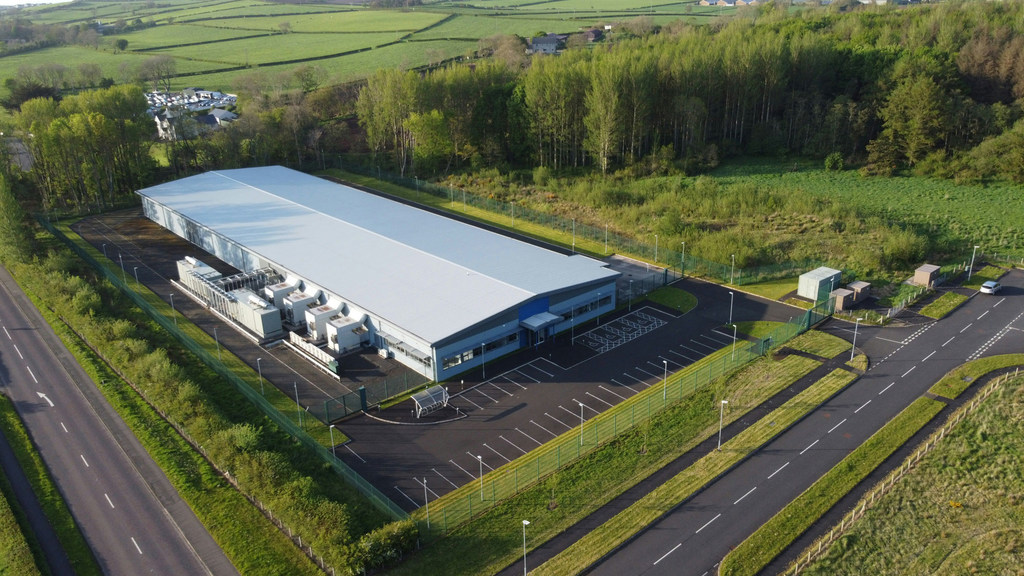
Bullish nuclear industry
Mr. Greisinger’s view is shared by IAEA Director General Manuel Grossi, who believes that the nuclear industry is destined to be the energy partner of the AI revolution. “Only nuclear energy can meet the five needs of low-carbon power generation, round-the-clock reliability, ultra-high power density, grid stability and true scalability,” he declared.
The nuclear industry appears to be in bullish mood. Seventy-one new reactors are under construction, adding to the 441 that are currently operating globally. Ten are scheduled to be built in the US, which is already home to 94 plants, the largest amount of any country.
The tech giants that are using the data centres have pledged to support the goal of at least tripling global nuclear power capacity by 2050. Microsoft, for example, has signed a 20-year power purchase agreement that allowed Unit One of the Three Mile Island nuclear power plant in Pennsylvania, USA, to be restarted.
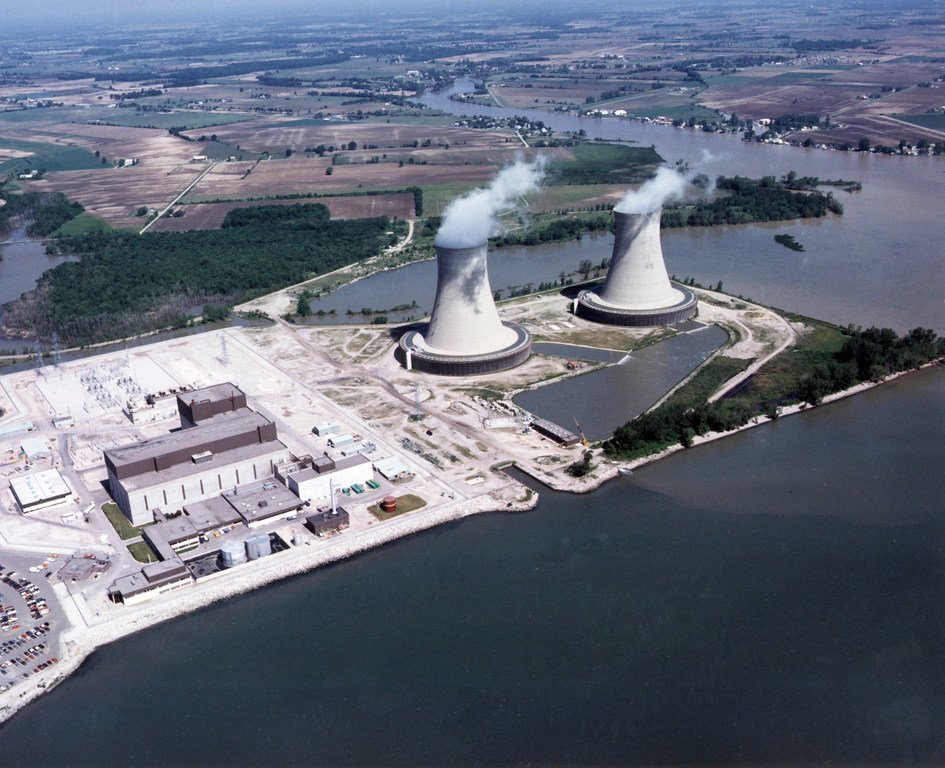
Russia, with a research base proficient in mathematics and computer science, remains the world’s largest exporter in the field of nuclear energy, and is a leading operator and developer of advanced reactor technology, whilst China is making major achievements in both AI and nuclear energy.
“AI technology and the construction of artificial intelligence data centres are advancing simultaneously, and the number of new nuclear reactors in the world also ranks first in the world during the same period,” said the UN nuclear agency chief.
Japan is investing heavily in building and upgrading data centres to meet growing demand whilst, in the Middle East, the United Arab Emirates has established a nuclear energy programme and has emerged as a regional AI hub.
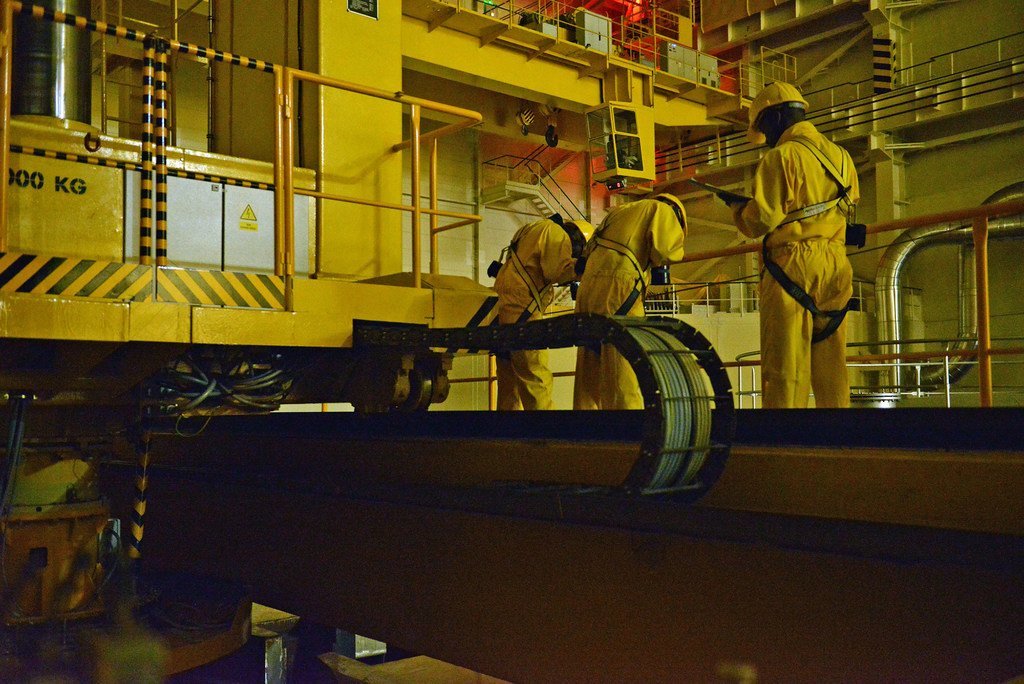
The IAEA supports training to ensure the safety of nuclear power plants like this one in the Czech Republic.