
Deleting Facebook cuts stress levels but depression stalks, says study

Facebook, which had admitted to sharing 50 million users’ data with political research tool Cambridge Analytica in 2015, is facing another challenge from the health experts, that too from the universities.

Researchers from the University of Queensland have taken a look at cutting out on Facebook for five days and measuring the
level of stress harmone cortisol, which has actually come down. But to their surprise, most of the participants were feeling low at the end of it and unhappy with their ‘life without Facebook’.

A University of Queensland research team led by Dr Eric Vanman of the School of Psychology, investigated the effects of a short break from Facebook on a person’s stress levels and encountered psychological impact as well. “Taking a Facebook break for just five days reduced a person’s level of the stress hormone cortisol,” Dr Vanman said.

“However, while participants in our study showed an improvement in physiological stress by giving up Facebook, they also reported lower feelings of well-being. People said they felt more unsatisfied with their life, and were looking forward to resuming their Facebook activity.”

Dr Vanman said that could be because physically the carisol harmone levels reduced but psychologically peple did not feel that way due to the social disconnect they had to suffer during the period. "People’s own ratings of their stress did not change — perhaps because they weren’t aware their stress had gone down,” he said.

Essentially, people felt less content with their lives, when they were cut off from Facebook for five days at a stretch, probably from the resulting social disconnection of being cut-off from their Facebook friends. However, Vanman was quick to add that this feeling is not necessarily confined to facebook but probably anytime they take a break from their favourite social media platforms.

In their study, two groups of active users of Facebook, with one group instructed to stay off Facebook for five days and the other group using Facebook as normal were employed. All 138 participants in the study provided saliva samples at the beginning and end of the study to measure changes in their cortisol levels.

Dr Vanman, who had recently quit Facebook hit upon the idea and his friends joined him soon. “When I told colleagues about my ‘Facebook vacations’, I found I wasn’t alone,” he said. “Others admitted that they took similar breaks from Facebook when they found it too stressful or overwhelming – quitting Facebook for several days or weeks but then reconnecting.

He recollected the incident when a female student kept herself off Facebook and asked her friend to change the password so she wouldn’t be tempted to come back. After two months, she broke down and got the password from her friend, he said.
“Facebook has become an essential social tool for millions of users and it obviously provides many benefits. Yet, because it conveys so much social information about a large network of people, it can also be taxing. It seems that people take a break because they’re too stressed, but return to Facebook whenever they feel unhappy because they have been cut off from their friends.

The study has been published in the Journal of Social Psychology.
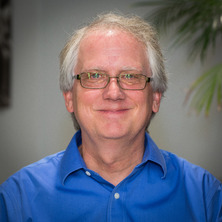
Dr. Eric Vanman of University of Queensland

So lonely I could die

Social isolation, loneliness could be greater threat to public health than obesity, researchers say.

Loneliness and social isolation may represent a greater public health hazard than obesity, and their impact has been growing and will continue to grow, according to research presented at the 125th Annual Convention of the American Psychological Association.

“Being connected to others socially is widely considered a fundamental human need–crucial to both well-being and survival. Extreme examples show infants in custodial care who lack human contact fail to thrive and often die, and indeed, social isolation or solitary confinement has been used as a form of punishment,” said Julianne Holt-Lunstad, PhD, professor of psychology at Brigham Young University. “Yet an increasing portion of the U.S. population now experiences isolation regularly.”

Approximately 42.6 million adults over age 45 in the United States are estimated to be suffering from chronic loneliness, according to AARP’s Loneliness Study. In addition, the most recent U.S. census data shows more than a quarter of the population lives alone, more than half of the population is unmarried and, since the previous census, marriage rates and the number of children per household have declined.

“These trends suggest that Americans are becoming less socially connected and experiencing more loneliness,” said Holt-Lunstad.

To illustrate the influence of social isolation and loneliness on the risk for premature mortality, Holt-Lunstad presented data from two meta-analyses. The first involved 148 studies, representing more than 300,000 participants, and found that greater social connection is associated with a 50 percent reduced risk of early death. The second study, involving 70 studies representing more than 3.4 million individuals primarily from North America but also from Europe, Asia and Australia, examined the role that social isolation, loneliness or living alone might have on mortality. Researchers found that all three had a significant and equal effect on the risk of premature death, one that was equal to or exceeded the effect of other well-accepted risk factors such as obesity.

“There is robust evidence that social isolation and loneliness significantly increase risk for premature mortality, and the magnitude of the risk exceeds that of many leading health indicators,” said Holt-Lunstad. “With an increasing aging population, the effect on public health is only anticipated to increase. Indeed, many nations around the world now suggest we are facing a ‘loneliness epidemic.’ The challenge we face now is what can be done about it.”

Holt-Lunstad recommended a greater priority be placed on research and resources to tackle this public health threat from the societal to the individual level. For instance, greater emphasis could be placed on social skills training for children in schools and doctors should be encouraged to include social connectedness in medical screening, she said. Additionally, people should be preparing for retirement socially as well as financially, as many social ties are related to the workplace, she noted, adding that community planners should make sure to include shared social spaces that encourage gathering and interaction, such as recreation centers and community gardens.