The missing half: The urgent need for more women’s representation in the media

“When women are missing, democracy is incomplete,” said Kirsi Madi, Assistant Secretary-General and Deputy Executive Director with the UN gender equality agency, UN Women, responding to the latest analysis.

Ms. Madi emphasised that the underrepresentation and misrepresentation of women in the media needs to be recognised as a key issue, so that democratic standards are not eroded for future generations.

Seeing ourselves

UN assessments show that, despite severe restrictions on their rights in many countries, women continue to lead community initiatives, support education, and advocate for social and economic resilience under the most challenging conditions.

In Afghanistan’s Kunduz Province, *Mehrgan leads a women’s organization that once trained hundreds of women and supported local NGOs but lost much of its funding and staff in 2022.

With support from UN Women, it has since rebuilt its capacity and is now helping other women’s groups do the same.

When the media focuses only on women’s victimhood, it erases their leadership and obscures the full reality of their contributions to peace, stability, and social progress, the report highlights. Sharing stories like Mehrgan’s ensures that the public and policymakers recognize not only the challenges, but also the solutions women are driving on the ground, UN Women said.

Barriers to gender equality

Equally important is the lack of news coverage relating to gender-based violence (GBV).

Instead of challenging stereotypes, news media continue to reinforce skewed narratives such as victim-blaming typecasts, portraying GBV as isolated incidents, silencing survivor voices, and using gendered language and tropes in reports.

“Fewer than two in 100 stories cover the abuse that far too many women experience”, underscored UN Women.

Not only does severe underreporting on GBV distort reality, it also shapes public perception. Nearly four in five news stories focus on politics, the economy, or crime, leaving issues like gender-based violence underreported.

Representation is even bleaker for minority women. While individuals from racial, ethnic, religious, and other minority groups represent just six per cent of the people featured in news coverage, only 38 per cent of them are women.

The likelihood that a woman in the news is likely to be from a minority group is less than one in 10.

The way forward

Although the path to greater representation remains challenging, digital news offers a clear pathway to increased inclusion.

During the pandemic, the proportion of female online reporters increased from 25 per cent in 2015 to 42 per cent in 2020. Campaigns like the UN’s HeForShe Campaign continue to be effective vectors for promoting women’s coverage in the media and challenging stereotypes.

As the UN’s 80th General Assembly approaches, the need to reinforce gender parity and gender representation becomes even more pressing, especially considering that over the last 30 years, little to no progress has been made, said UN Women. 

For more information and details, see the summary of key findings from the GMMP report here.

*Her name has been changed to protect her identity

Source link

Decades of memories and loss – searching for the missing in Syria

The Independent Institution on Missing Persons in the Syrian Arab Republic (IIMP) is the first entity of its kind established by the UN General Assembly in June 2023. It is dedicated to determining the fate and whereabouts of all missing persons in Syria and supporting survivors and families of the missing.

Here are five key things you need to know about the IIMP.

Dictatorship and disappearances

The IIMP was created to address the issue of missing persons in Syria, a country that has experienced significant turmoil and conflict over the past decades. 

Cages in which prisoners were apparently held are pictured at the infamous Sednaya prison in Damascus.

Fifty years of dictatorship and 14 years of civil war all but came to an end in Syria following the fall of the brutal Assad regime in December 2024. This allowed the IIMP to begin its work properly, most notably by gaining access to infamous detention centres where people were tortured, murdered or disappeared.

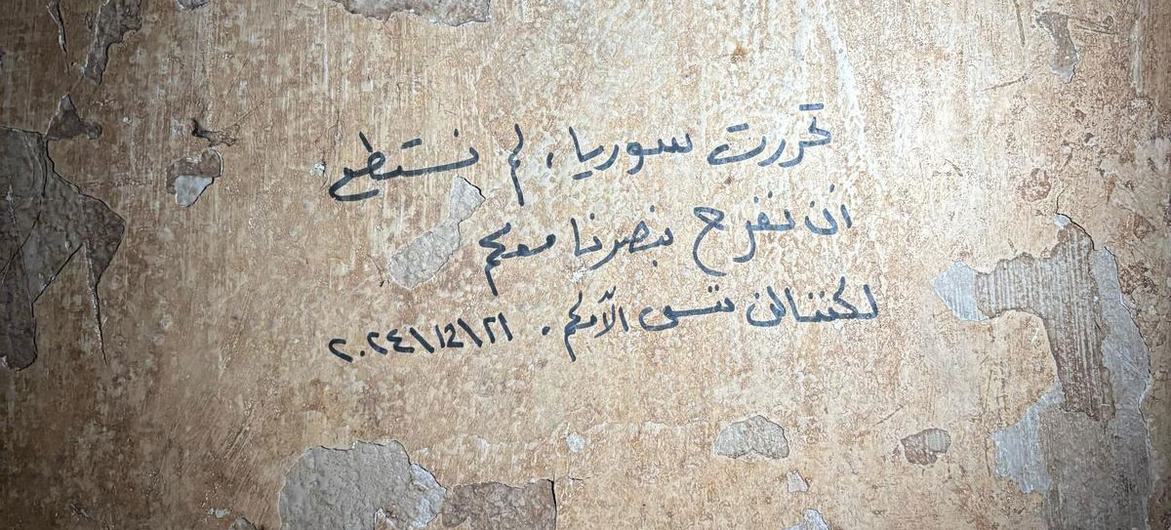
A message on the walls of Sednaya prison reads: ‘Syria is free; we couldn’t celebrate our victory with you, but we will not forget your pain.’

People went missing in Syria due to many reasons such as abductions, enforced disappearances, arbitrary deprivation of liberty, displacement, migration or military operations. It is not clear exactly how many missing persons there are, but it is thought to be in the tens of thousands.

Uncovering the truth

The institution’s primary role is to determine the fate and whereabouts of all missing people. This includes collecting and analysing information, conducting investigations, and working closely with families and survivors to provide them with the answers they seek. 

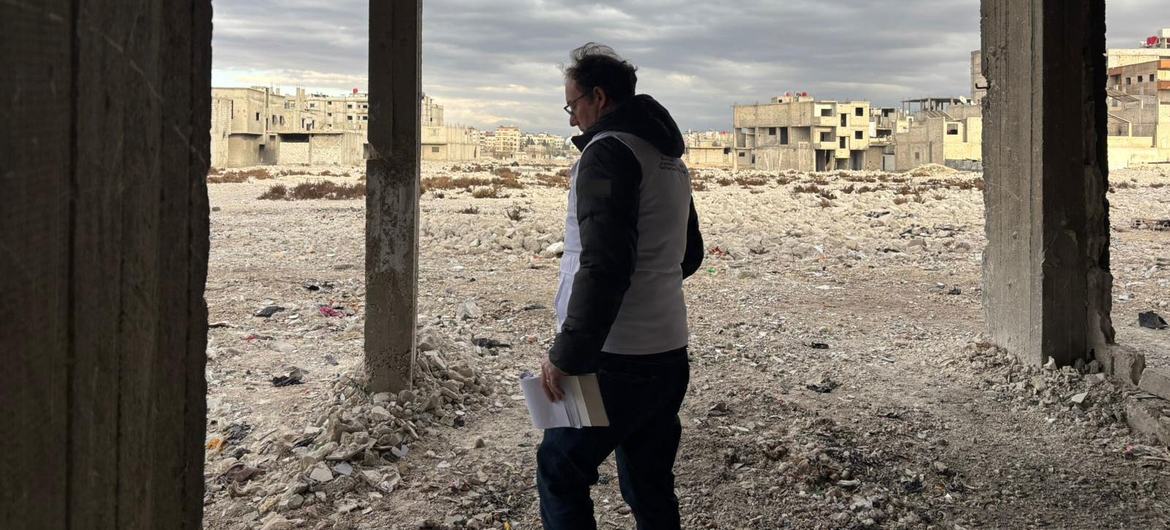
Much of Syria has been left in ruins following 14 years of civil war.

Uncovering the circumstances of disappearances will involve a massive effort, from checking prison arrival registers where detainee’s names were recorded and their exit to parts unknown.

Evidence of torture and mass graves will have to be carefully chronicled.  Due process will have to uncover the elaborate former State network of secret police, prison and judicial officials who carried out orders and enabled the disappearance of thousands.

Supporting survivors and families of the missing

IIMP supports survivors and the families of the missing to cope with the uncertainty and trauma of having a missing loved one.

This includes offering psychological support, legal assistance, and facilitating communication between families and relevant authorities.

The institution looks for everyone who is missing in Syria regardless of their nationality, group, ethnicity, political affiliation, or the reasons and circumstances surrounding their disappearance.  

‘Titanic mission’

The head of IIMP, Karla Quintana, has described the task the body faces as “titanic,” not least because it is still not clear how many Syrians are missing.

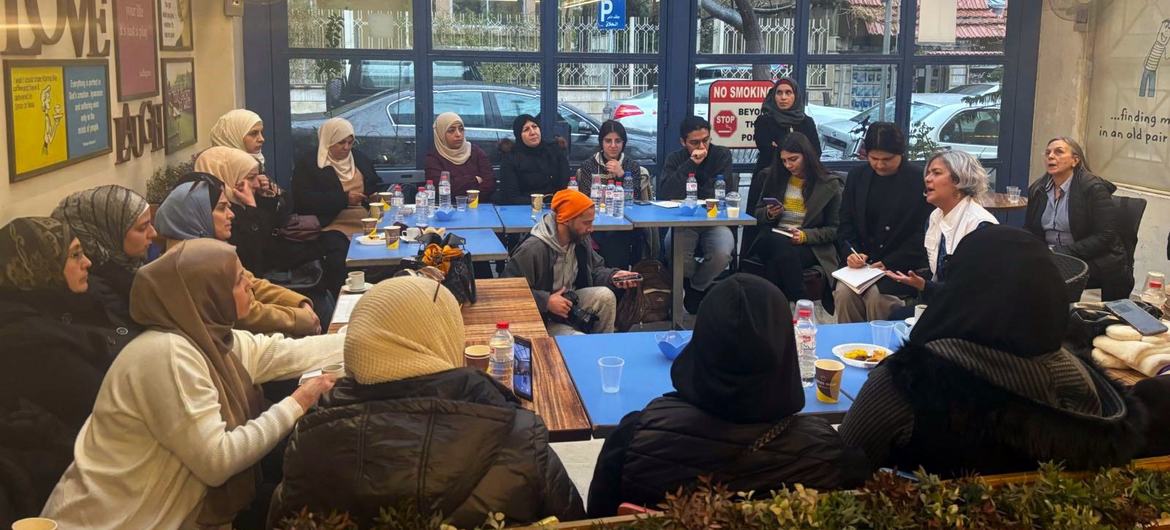
Karla Quintana (right in white jacket), the head of IIMP, meets women whose loved ones are missing.

Investigating the circumstances surrounding the disappearance of individuals can be costly, so securing the resources to do so is a “major challenge” according to Ms. Quintana. If resources are limited it will hinder the progress of investigations.

Searching for, processing, and analysing information is time-consuming – especially in Syria, where conflict has made many areas inaccessible, records may be incomplete or destroyed, and some regions remain unstable and dangerous to work in.

Working with Syrians

IIMP says searching for missing persons in Syria must be “locally owned and internationally supported.” The body operates through a collaborative approach partnering with local and international organizations, government agencies, and civil society groups.

It also engages with communities to raise awareness about the issue of missing persons and to encourage the sharing of information that could aid investigations.

Expectations of this unprecedented UN mechanism are high as it could play a pivotal role in contributing to peace and justice in Syria.