Cyclone Ditwah brings worst flooding in decades to Sri Lanka, killing hundreds

According to the UN relief coordination office, OCHA, 998,918 people across all 25 districts have now been affected, with 212 deaths reported and 218 people missing. More than 180,000 people from over 51,000 families are sheltering in 1,094 government-run safety centres as search and rescue efforts continue.

Cyclone Ditwah made landfall on 28 November before moving back over the Bay of Bengal, triggering some of the most severe flooding Sri Lanka has seen since the early 2000s.

The hardest-hit districts include Gampaha, Colombo, Puttalam and Mannar, as well as Trincomalee and Batticaloa, while deadly landslides in the central hill country have devastated Kandy, Badulla and Matale.

Homes destroyed, infrastructure shattered

Initial assessments indicate that more than 15,000 homes have been destroyed. Over 200 roads remain impassable, at least 10 bridges have been damaged, and sections of the rail network and national power grid affected.

Flooding along the Kelani River, which runs through Colombo and surrounding low-lying areas, continues to hamper access and disrupt information flow from affected communities, complicating rescue and relief operations.

Severe disruption to electricity, mobile and communications, and transport networks are reported in northern districts such as Jaffna, with entire villages isolated

Access to clean water also remains a major concern, with several areas reporting little or no supply.

Health system under strain, food insecurity looms

Sri Lanka’s already fragile health system is under severe pressure, OCHA said. Several district hospitals remain flooded and are receiving only limited supplies, with critically ill patients being airlifted to functioning facilities.

Response is further hindered by recurring landslides and the breach of multiple tank bunds (embankments or barriers), including at Mavilaaru, heightening risks in Trincomalee and Batticaloa.

Authorities have also warned of rising food insecurity, as submerged farmland, damaged storage facilities and severed supply routes threaten shortages and price increases in the weeks ahead.

The World Health Organization (WHO) warned that floods significantly raise the risk of vector-borne, food-borne and water-borne diseases, urging communities to prevent mosquito bites, ensure food safety and use safe drinking water wherever possible.

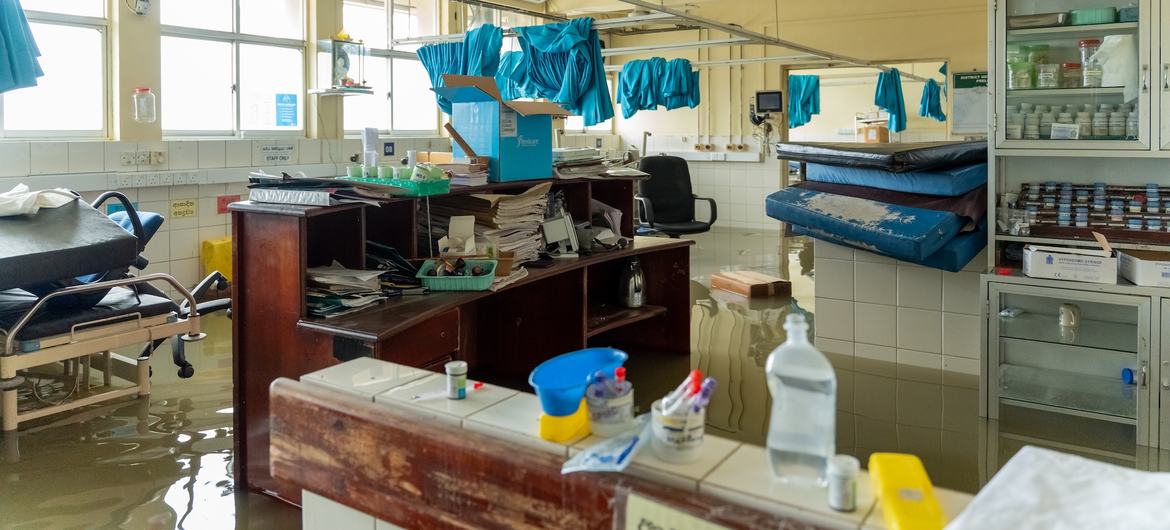
Floodwaters have entered several hospitals across Sri Lanka, further straining the health system.

UN mobilises coordinated response

The United Nations in Sri Lanka activated its emergency coordination system on Sunday to scale up a unified response with government agencies and humanitarian organizations.

Sector coordination has been set up across food security, health, water and sanitation (WASH), education, protection, shelter and early recovery, while a multi-sector needs assessment is under way with disaster management authorities to identify the most urgent gaps.

“The UN in Sri Lanka is mobilising its teams across the system to support national rescue and early recovery efforts, in coordination with authorities. We stand in solidarity with all affected communities,” said UN Resident Coordinator Marc-André Franche.

Despite access challenges, the UN Children’s Fund (UNICEF) has delivered portable water to 25 safety centres in Badulla in the central hills, which had been cut off from the rest of the country by floods and infrastructure damage.

To support government-led efforts, India and Pakistan have deployed emergency teams to work alongside Sri Lanka’s armed forces in the worst-hit districts.

Meanwhile, in the wider Asian region

Severe monsoon flooding continues across Thailand and Malaysia, affecting more than two million people in southern Thailand alone and displacing nearly 25,000 people in Malaysia, according to OCHA. People have been evacuated in several hard-hit Thai provinces, while the rainfall is expected to ease in coming days.

In Indonesia, media reports cite at least 440 deaths from floods and landslides, with more than 400 people missing, particularly in parts of Sumatra, where thousands remain stranded without access to food and water.
Decades of memories and loss – searching for the missing in Syria

The Independent Institution on Missing Persons in the Syrian Arab Republic (IIMP) is the first entity of its kind established by the UN General Assembly in June 2023. It is dedicated to determining the fate and whereabouts of all missing persons in Syria and supporting survivors and families of the missing.

Here are five key things you need to know about the IIMP.

Dictatorship and disappearances

The IIMP was created to address the issue of missing persons in Syria, a country that has experienced significant turmoil and conflict over the past decades. 

Cages in which prisoners were apparently held are pictured at the infamous Sednaya prison in Damascus.

Fifty years of dictatorship and 14 years of civil war all but came to an end in Syria following the fall of the brutal Assad regime in December 2024. This allowed the IIMP to begin its work properly, most notably by gaining access to infamous detention centres where people were tortured, murdered or disappeared.

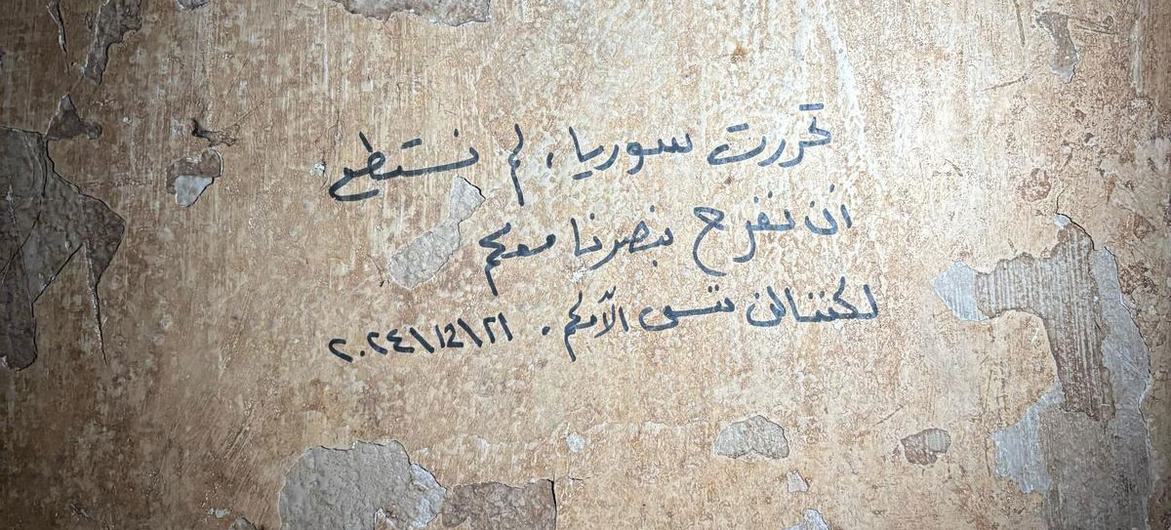
A message on the walls of Sednaya prison reads: ‘Syria is free; we couldn’t celebrate our victory with you, but we will not forget your pain.’

People went missing in Syria due to many reasons such as abductions, enforced disappearances, arbitrary deprivation of liberty, displacement, migration or military operations. It is not clear exactly how many missing persons there are, but it is thought to be in the tens of thousands.

Uncovering the truth

The institution’s primary role is to determine the fate and whereabouts of all missing people. This includes collecting and analysing information, conducting investigations, and working closely with families and survivors to provide them with the answers they seek. 

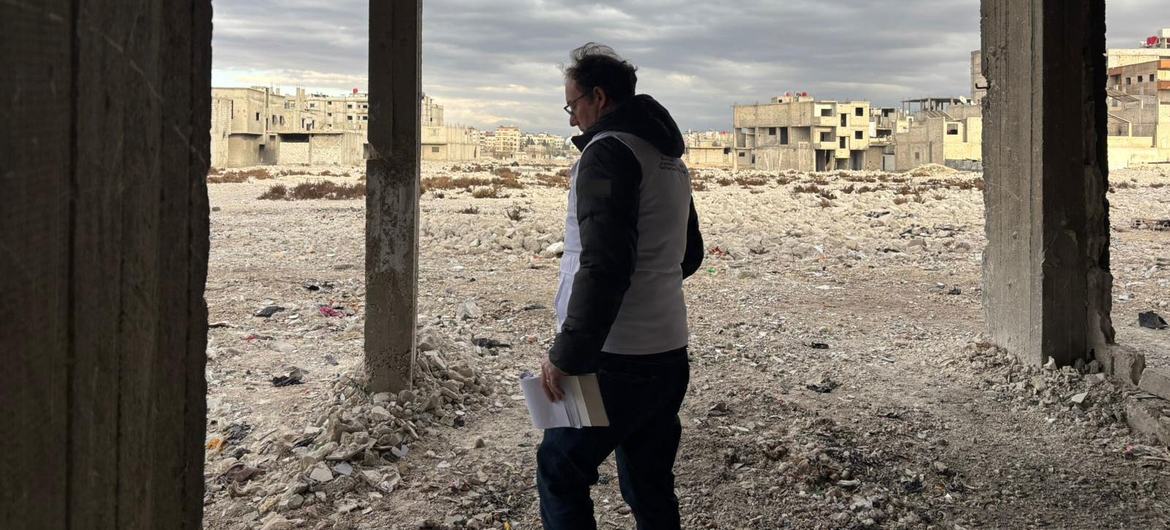
Much of Syria has been left in ruins following 14 years of civil war.

Uncovering the circumstances of disappearances will involve a massive effort, from checking prison arrival registers where detainee’s names were recorded and their exit to parts unknown.

Evidence of torture and mass graves will have to be carefully chronicled.  Due process will have to uncover the elaborate former State network of secret police, prison and judicial officials who carried out orders and enabled the disappearance of thousands.

Supporting survivors and families of the missing

IIMP supports survivors and the families of the missing to cope with the uncertainty and trauma of having a missing loved one.

This includes offering psychological support, legal assistance, and facilitating communication between families and relevant authorities.

The institution looks for everyone who is missing in Syria regardless of their nationality, group, ethnicity, political affiliation, or the reasons and circumstances surrounding their disappearance.  

‘Titanic mission’

The head of IIMP, Karla Quintana, has described the task the body faces as “titanic,” not least because it is still not clear how many Syrians are missing.

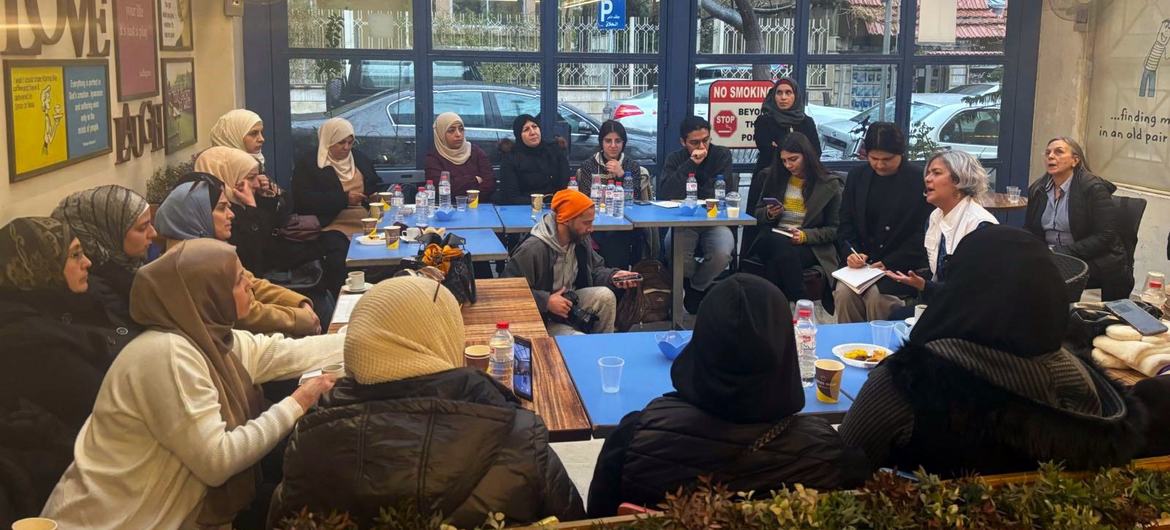
Karla Quintana (right in white jacket), the head of IIMP, meets women whose loved ones are missing.

Investigating the circumstances surrounding the disappearance of individuals can be costly, so securing the resources to do so is a “major challenge” according to Ms. Quintana. If resources are limited it will hinder the progress of investigations.

Searching for, processing, and analysing information is time-consuming – especially in Syria, where conflict has made many areas inaccessible, records may be incomplete or destroyed, and some regions remain unstable and dangerous to work in.

Working with Syrians

IIMP says searching for missing persons in Syria must be “locally owned and internationally supported.” The body operates through a collaborative approach partnering with local and international organizations, government agencies, and civil society groups.

It also engages with communities to raise awareness about the issue of missing persons and to encourage the sharing of information that could aid investigations.

Expectations of this unprecedented UN mechanism are high as it could play a pivotal role in contributing to peace and justice in Syria.