UN80 initiative should be ‘inclusive and transparent’, recognises General Assembly

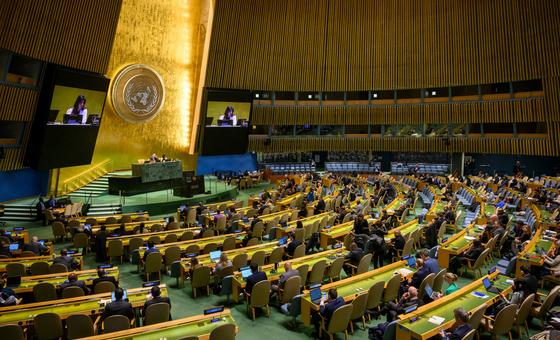
The text, introduced by Russia and adopted without a vote, “welcomes the efforts of the Secretary‑General to strengthen the United Nations in order to keep pace with a changing world” and calls on UN entities and specialised agencies to align their reform efforts “as appropriate”.

In the resolution, the 193-member Assembly “recognises the central role of Member States in the reform process, which should be inclusive and transparent”.

It also “looks forward to receiving, in accordance with established procedures” the Secretary‑General’s proposals under the initiative, “taking into account the necessity to have clearly defined objectives and an evidence-based approach, and aiming at strengthening the impact of the United Nations and enhancing its agility, responsiveness and resilience while addressing the issue of duplicative efforts and ensuring effective and efficient mandate delivery across all three pillars of the work of the United Nations.”

Launched by the Secretary-General in March, the UN80 Initiative centres on three priorities: enhancing operational efficiency, assessing how mandates – or key tasks – from Member States are implemented and exploring structural reforms across the UN system.

Mixed reactions on timing

Several delegations voiced backing for the reform effort, but questioned the timing of the resolution.

Speaking for the European Union, Denmark said the process was “premature and unnecessarily rushed”, noting that limited time for consultations “did not allow for the constructive engagement such an initiative requires”.

Australia, on behalf of the CANZ group (Canada, Australia and New Zealand), echoed that view, warning that an early resolution “risks limiting both the scope and ambition of the forthcoming proposals”.

Switzerland, speaking for a group including Iceland, Norway and Liechtenstein, also stressed that reform should be “ambitious and strategic”, building on existing assets while ensuring long‑term efficiencies.

Japan emphasised its “commitment to multilateralism” and said the initiative responds to the urgency of revitalising the UN.

“The success of the UN80 initiative relies on our shared and complementary responsibilities,” its delegate said.

Member States in the driving seat

Exercising its right of reply, Russia rejected claims that the text was rushed, saying it had “conducted several rounds of consultations” and “took into account the red lines specified by delegations, which came out in the silence procedure”.

The silence procedure sets out a window of time for delegations to express objections to a draft resolution or decision before it is formally acted upon.

The Russian delegate said the resolution puts Member States “into the driving force of this process” while recognising the Secretary‑General’s prerogative as chief administrative officer under the UN Charter.

“We seek success in the UN’s adaptation to current and future challenges,” the Russian delegate said, calling the resolution’s adoption “a very important step” to ensure universal support for the initiative.

Source link

DR Congo: New initiative to eliminate HIV in children ‘a beacon of hope’

“Our country can no longer tolerate children being born and growing up with HIV, when tools exist to prevent, detect and effectively treat this infection,” President Félix Tshisekedi declared at a recent government conference in the south-eastern Lualaba province, as he launched the five-year initiative.

Backed by an initial commitment of $18 million in national funds, the Presidential Initiative to End Pediatric AIDS will focus on political leadership, systems strengthening and inclusive healthcare access particularly for children, adolescents, and pregnant women.

It also aligns well with DRC’s global commitments under the Sustainable Development Goal 3 (SDG 3) to ensure healthy lives and promote well-being for all.

Children lagging behind

The initiative marks a renewed commitment by the DRC to address children’s extremely limited access to HIV prevention and treatment services.

While the DRC has made notable strides in adult HIV response – 91 per cent of adults living with HIV now have access to antiretroviral treatment – children continue to lag far behind. 

Only 44 per cent of children living with HIV in the country currently receive lifesaving treatment, a figure that has remained unchanged for over a decade.

Every year, thousands of Congolese children are still infected, often due to a lack of screening among pregnant women, depriving the health system of a crucial opportunity to prevent mother-to-child transmission as well as saving the mother’s live.

“The eradication of paediatric AIDS is a moral imperative, an imperative of social justice and an indicator of dignity,” Mr. Tshisekedi said.

Four core priorities

The Presidential Initiative targets four core areas:

  • Improving early detection and treatment of HIV for children, adolescents and pregnant women
  • Preventing new infections in children, adolescents and mothers
  • Guarantee systematic and immediate treatment for those diagnosed
  • Remove structural barriers hindering young people’s access to health services 

A breath of fresh air

The UN Joint Programme on HIV/AIDS (UNAIDS) praised the initiative as an example of the national leadership needed to close critical gaps in global HIV response.

Susan Kasedde, UNAIDS Country Director in the DRC, commended the initiative as “a breath of fresh air” at a time when global development financing is under strain.

“At a time when development financing is experiencing turbulence and risk jeopardizing the systems that support the most vulnerable, President Tshisekedi’s leadership initiative is a beacon of hope,” she said.

According to UNAIDS, recent funding cuts are threatening critical HIV services, with stock of medication and condoms feared to run out within months. Key areas like antenatal testing, paediatric treatment and data quality monitoring have also been impacted. 

Bold new initiative aims to strengthen and improve the UN, senior officials tell Member States

The informal meeting on the UN80 Initiative also provided a chance for ambassadors to share their views on the reform agenda, launched by Secretary-General António Guterres in March.

UN80 is centred around three workstreams focused on efficiencies and improvements, a mandate implementation review, and structural changes and programme realignments across the entire UN system.

Improving the UN

It also aims to reinforce the UN’s capacity to respond to global challenges such as conflict, displacement, and the climate crisis, while also managing external pressures effectively, such as shrinking budgets and growing political divisions. 

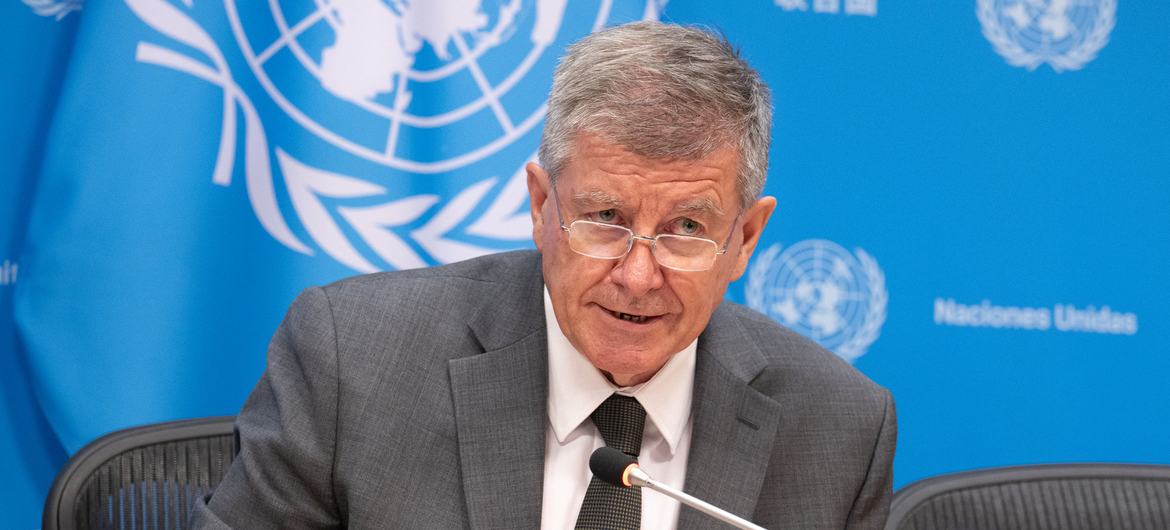
I think the UN80 Initiative is often characterised, but I think mischaracterised, simply as an exercise in downsizing in economy,” said Guy Ryder, Under-Secretary-General for Policy and chair of the Task Force overseeing the plan.

“But the Secretary-General has been rather clear in saying that whilst we have to respond to the resource situation, the overall intention of the Initiative is to strengthen and improve the workings of the UN system.”  

Learn why UN80 matters to the world in our explainer here.

Widespread impact

Mr. Ryder alongside UN Controller Chandramouli Ramanathan (who prepares and oversees the budget and manages the Organization’s funds) presented updates on two workstreams during the morning session of the day-long meeting.

He set the scene with a slideshow outlining the background for UN80 and the circumstances confronting the UN today.

Over the years, it has adopted some 40,000 mandates delivered by “a fairly numerous and complex constellation of entities,” more than 140.

In 2023, the global body delivered some $69 billion in support and services worldwide, with “the lion’s share”, $31 billion or around 45 per cent, going to humanitarian action.  

This was followed by development, $21 billion (30 per cent), peace and security, $9 billion (13 per cent), and human rights, $1 billion, or less than one per cent.

“We believe that the global population, in one manner or another…is connected to the global agenda of the United Nations,” he said.  Additionally, some 440 million lives are directly impacted by its development work, and 140 million people in crisis situations receive support

Reduction in resources

Mr. Ryder said the $69 billion mark two years ago represented “a peak” and it is estimated that the UN has some $50 billion in resources available today amid “a situation of significant uncertainty.”

This 30 per cent reduction means “we’re down to 380 million people who we’re able to reach directly in development work, and we’re down to 110 million as a reduction in emergency situations of our humanitarian spending.”

In light of this context, “maybe we can streamline the manner in which we implement the mandates that you hand down; maybe we can optimize the structures which form this archipelago of entities,” he suggested.

“The success of the UN80 Initiative depends on us being able to increase the impact that our work in the UN system has on the people who we are here to serve.”

Proposals to enhance efficiency

Mr. Ramanathan briefed delegates on workstream one.  He said a working group was established to develop concrete proposals to enhance efficiency, reduce duplication, standardize services, and relocate functions to existing lower-cost duty stations where appropriate. 

The “exhaustive list” includes measures such as consolidating existing human resources, finance and procurement services into unified support hubs. The process would start in New York and Geneva as they host the largest number of Secretariat entities and staff.

Another proposal involves having payroll operations centralized in three global processing centres, compared to 10 locations today.

The working group is finalising the proposals to be submitted to the Secretary-General and “if approved, they will be incorporated into the revised estimates for the 2026 proposed programme budget for the consideration of the General Assembly by 1 September,” said Mr. Ramanathan.

“Separately from the UN80 Initiative, we are reviewing the programme budget proposals for 2026 with a view to achieving between 15 and 20 per cent reductions for 2026, including a 20 per cent reduction in work force, post reduction, but with a focus on preserving capacity at entry levels and reducing senior posts where feasible,” he added.

A ‘universe of mandates’

Mr. Ryder returned to present workstream two, where the first step involved mapping out “the universe of mandates” that the UN implements, with initial focus on Secretariat departments and offices, peacekeeping operations, political missions, regional commissions and other bodies.

The Pact for the Future and the 2030 Agenda for Sustainable Development were among the most frequently cited mandates.  

The overall “landscape” of mandates means that the Secretariat services some 400 intergovernmental organs and roughly 27,000 meetings each year and processes some 2,300 pages of documentation on average every day, amounting to around $360 million annually. 

A mandate resource registry has been produced, and a report should be available by the end of July which will inform the way forward.

Concern over proposed budget cuts

During the session, several representatives expressed their views on UN80, such as Iraqi Ambassador Dr. Abbas Kadhom Obaid, who spoke on behalf of the Group of 77 and China.

He voiced concern over the proposed 15 to 20 per cent budget reductions, and the 20 per cent staff reduction, requesting more insight into how these figures were determined.

“This is important since we know that the departments, divisions, in the Organization’s funds, programmes and agencies vary greatly,” he said.

“We must also protect the geographical and gender balance in the context of any downsizing.  As the Group has reiterated several times, the matters of transparency, accountability and inclusivity are paramount during this process.”

Fit for the future

The meeting took place just days before the 80th anniversary of the signing of the UN Charter on 26 June 1945, as General Assembly President Philémon Yang noted in his opening remarks.

He said it was a time to “reflect on the last 80 years and all that this Organization has achieved, and also a time to look to the future,” so the UN can remain fit for purpose – and ready for the next 80 years.  

Source link

UN80 Initiative: What it is – and why it matters to the world

“This is a good time to take a look at ourselves and see how fit for purpose we are in a set of circumstances which, let’s be honest, are quite challenging for multilateralism and for the UN,” says Guy Ryder, Under-Secretary-General for Policy and chair of the UN80 Task Force.

Known as the UN80 Initiative, this process seeks not only to improve efficiency, but also to reassert the value of multilateralism at a time when trust is low and needs are high. It aims to reinforce the UN’s capacity to respond to today’s global challenges – ranging from conflict, displacement, and inequality to climate shocks and rapid technological change – while also responding to external pressures such as shrinking budgets and growing political divisions in the multilateral space.

“We will come out of this with a stronger, fit-for-purpose UN, ready for the challenges the future will undoubtedly bring us,” explains Mr. Ryder.

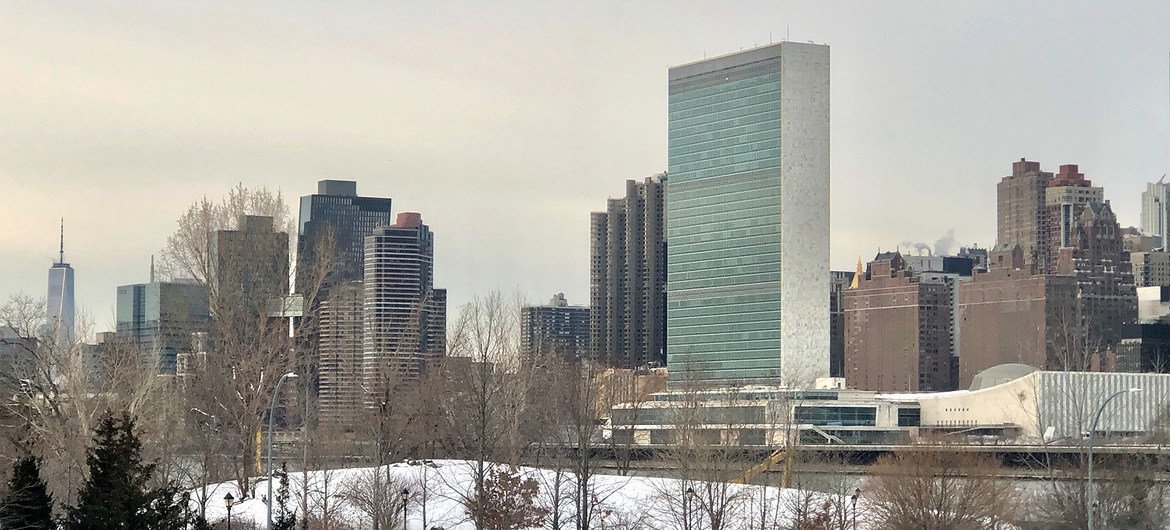
View of the UNHQ building from Roosevelt Island, New York

Three tracks of reform

At the heart of UN80 are three major workstreams. The first is focused on improving internal efficiency and effectiveness, cutting red tape, and optimizing the UN’s global footprint by relocating some functions to lower-cost duty stations. Mr. Ryder notes that burdensome administrative procedures and duplications are being targeted.

“We want to see what we can do better. We want to look at those areas where we think we can improve efficiencies and strip out unnecessary bureaucratic processes,” he outlines.

The second workstream is a mandate implementation review, which involves examining nearly 4,000 mandate documents underpinning the UN Secretariat’s work. A mandate refers to a task or responsibility assigned to the organisation by the Member States, usually through resolutions adopted by UN organs such as the General Assembly or the Security Council.

These mandates guide what the UN does – from peacekeeping operations and humanitarian aid to human rights and environmental action.  Over the decades, at least 40,000 mandates have accumulated, sometimes overlapping or becoming outdated, which is why reviewing them is a key part of the UN80 initiative .

“Let’s take a look at them,” Mr. Ryder says. “Let’s see where there may be duplication, where we can prioritise and de-prioritise, and find redundancies.”

But reviewing this mountain of mandates is not new. “We’ve tried this exercise before. We had a look at these bulky mandates back in 2006. It didn’t work very well.” Mr. Ryder reflects.

This time, however, the process is favoured by one key factor. “This time, we’ve got the data and analytical capacities. We’re applying artificial intelligence techniques to provide much more and better organised information to Member States – a more compelling case that could drive, I think, a productive process.”

He emphasises that the responsibility for deciding what to retain, revise, or discontinue rests squarely with the Member States.

“These mandates belong to Member States. They created them, and only they can evaluate them. We can look at the evidence, we can put that to Member States, but eventually they are the decision-makers on mandates and on very much else that the UN80 initiative brings.”

The third stream explores whether structural changes and programme realignment are needed across the UN System. “Eventually, we might want to look at the architecture of the United Nations system, which has become quite elaborate and complicated,” Mr. Ryder adds. Proposals are also likely to emerge from the mandate implementation review.

Guy Ryder, Under Secretary-General for Policy and Chair of the UN80 taskforce

A task force and a system-wide lens

To tackle reform across such a complex system, the Secretary-General established seven thematic clusters under the UN80 Task Force; each coordinated by senior UN leaders from across the system. These cover peace and security, humanitarian action, development (Secretariat and UN system), human rights, training and research, and specialised agencies.

“It’s important to say that at a moment when the system is under pressure, the system is responding as a system,” the UN80 Taskforce chair notes. “This is not just New York, not just the Secretariat. It is system-wide.”

Each cluster is expected to produce proposals to improve coordination, reduce fragmentation, and realign functions where needed. Several clusters have already submitted initial ideas. A broader set of proposals will follow in July.

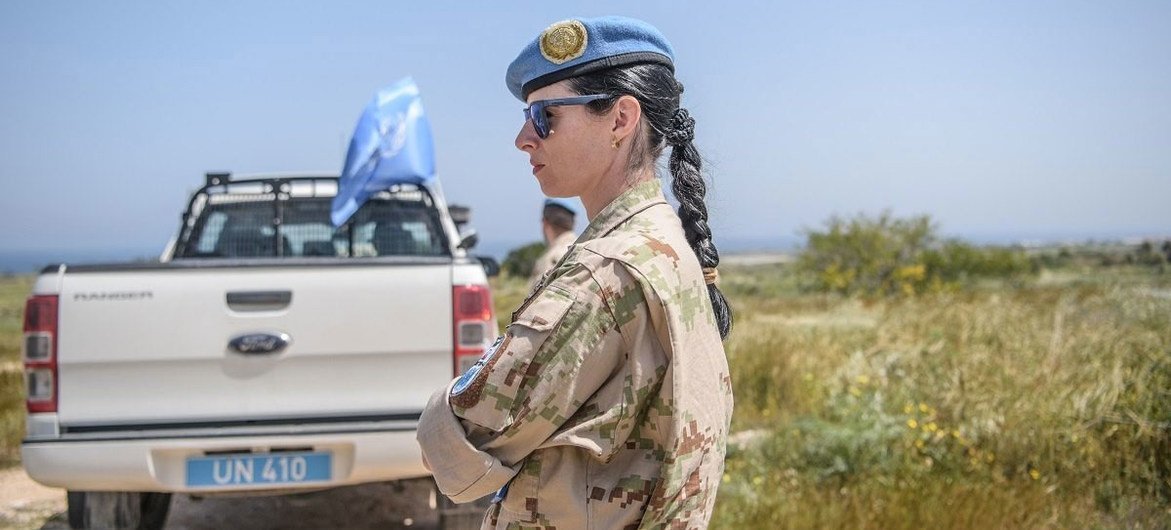
UNFICYP/Katarina Zahorska

The United Nations works to prevent conflict, support peace processes, and protect civilians—upholding its core mandate to maintain international peace and security.

Reform, not retrenchment

Attention around the UN80 Initiative has largely focused on proposed budget cuts and staff reductions, raising concerns that it is mainly a cost-saving exercise. Mr. Ryder underscores that this view misses the bigger picture.

“Yes, we do face financial challenges. No need to avert our eyes from that. But this is not a cost-cutting, downsizing exercise. We want to make the UN stronger,” he says.

Still, the financial pressures across the system are undeniable. A revised programme budget for 2026, due in September, is expected to include significant reductions in funding and posts for Secretariat entities — a consequence of persistent cash flow constraints linked to delayed and incomplete contributions from Member States.

“The UN80 Initiative wants to improve the impact and effect of multilateralism and the UN,” Mr. Ryder explained. “Now, that does not mean – we wish it were otherwise – that we do not have to take a look at our budget and our resources in different parts of the system.”

“Organisations have faced some wrenching decisions, and this is happening every day. That’s the reality of our circumstances,” he adds.

Mr. Ryder contends that financial sustainability and mission impact are not mutually exclusive – but must be pursued in tandem. “We have to reconcile the two objectives of making ourselves financially sustainable in the difficult circumstances we find ourselves in, but also be attentive, as always, to the impact that we have in delivering on our responsibilities under the Charter,” he said.

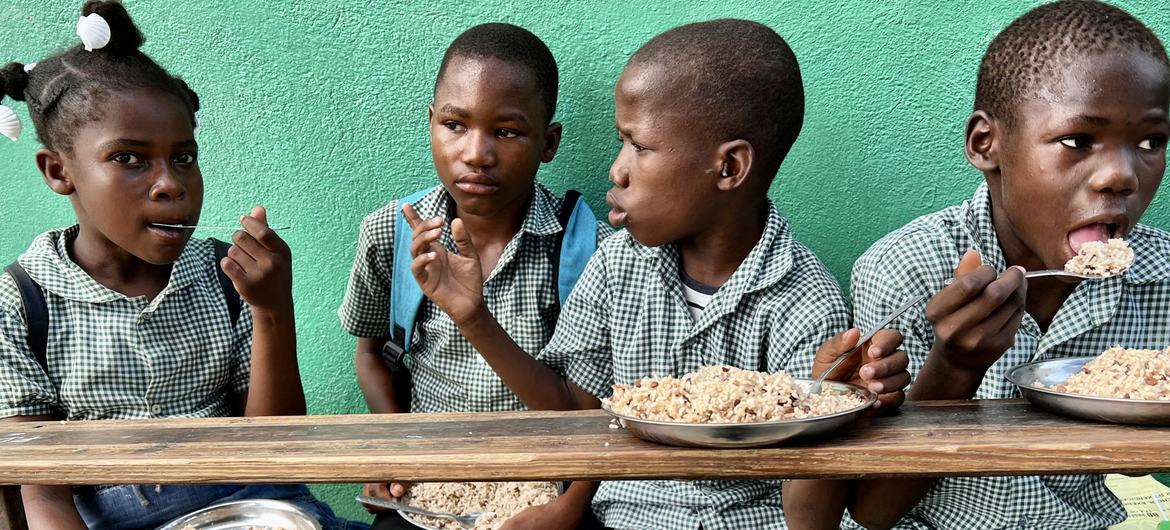
Children in Haiti eat a meal provided as part of WFP’s school feeding programme.

Why UN80 matters to people everywhere

Rather than mere bureaucratic reform, UN80 is ultimately about people, those who rely on the UN’s support during crisis, conflict, or development challenges.

“If the UN is able to transform itself, to make improvements, sometimes through difficult decisions, that can mean those life-saving interventions reach the people we serve more effectively,” Ryder says.

The UN remains the essential, one-of-a-kind meeting ground to advance peace, sustainable development and human rights for all.

“This is the United Nations taking seriously its responsibilities to the people we serve”, Mr. Ryder says.

Right now, the UN assists over 130 million displaced people, provides food to more than 120 million, supplies vaccines to nearly half the world’s children, and supports peacekeeping, human rights, elections, and climate action across the globe. The UN’s development work has helped build peaceful, stable societies.

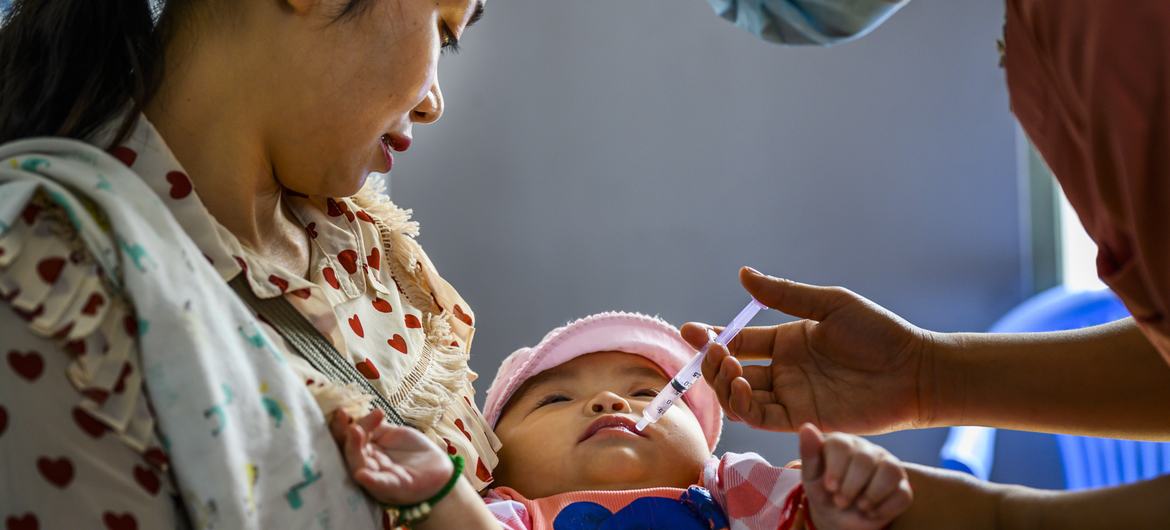
UNICEF-supported vaccination in remote Shan State village, Myanmar

What happens next

The UN80 Task Force will present its proposals to the Secretary-General, who has already indicated the first areas where outcomes are expected. A working group on efficiencies in the UN Secretariat, led by Under-Secretary-General Catherine Pollard, is expected to deliver initial proposals by the end of June. A report on the mandate implementation review will follow at the end of July.

This work under the first two workstreams will help inform broader thinking around structural changes and programme realignment across the UN system. Proposals under the third workstream will be put forward to Member States in the coming months and into next year.

Although the work is just beginning, Mr. Ryder believes the UN has the right tools – and a clear sense of ambition and urgency.

“We’re progressing well. There’s a lot of homework being done now,” he said. “As the weeks go by, this will be shifting more and more to the Member States’ space, and that’s when we’ll see results.”

Eventually, Member States will need to decide how to act on the findings. “They’re going to have to decide what they want to do. Will they wish to set up an intergovernmental process? The Secretary-General has mentioned this as a possibility already.”

UN Secretary-General António Guterres briefs the media about the UN80 Initiative.

Defining success

So, what does success look like?

“A UN system which is able to deliver more effectively, to strengthen and consolidate trust in multilateral action,” Mr. Ryder says. “A system which can convey to public opinion and political decision-makers that this is an organisation worth investing in. That this should be your preferred option when it comes to meeting the challenges of the future.”

For the UN80 Task Force chair, it comes down to credibility, capability, and public trust – and ensuring the UN remains not just relevant, but essential.

“We should all care about this,” he says. “If we take the view that multilateralism is the best instrument we have for meeting global challenges, then we need to make sure we renovate, refresh, and make that machinery as effective and as fit for purpose as it can possibly be.”


Source link

Modi Ponders Make in India Initiative

Defence sector being a User driven sector, Defence Forces are actively involved in various policies & procedures related to procurement, indigenous design, development & manufacture of defence equipment, co-development & co-production with foreign OEMs, thus contributing towards ‘Make in India’ . Some of the major areas, where defence personnel are involved, are listed below:

‘Make Procedure’: ‘Make’ procedure as given out at Chapter-III of Defence Procurement Procedure (DPP)-2016, envisages involvement of Defence personnel at various stages of development of a defence equipment. The ‘Make’ projects are identified through a consultative process with involvement of members from Services Head Quarters (SHQs). Project Management Unit (PMU) headed by Service officer, established at SHQs, is responsible for monitoring the implementation of ‘Make’ projects of respective SHQ. The Integrated Project Management Team (IPMT) mandated to steer the Make project, is also headed by Service Officer.

Technology Development Fund (TDF) Scheme: TDF scheme launched by the Government aims at funding the development of defence and dual use technologies that are currently not available with the Indian defence industry, or have not been developed so far, thus creating an Eco-system for enhancing cutting edge technology capability for Defence application. The scheme envisages constitution of Empowered Committee and Technical Committee with representation from Armed Forces as members, which are involved in identification of technologies, Project Monitoring & Mentoring activities.

‘Buy & Make (Indian)’ and ‘Buy & Make’ Categories of Capital Acquisition: ‘Buy & Make (Indian)’ and ‘Buy & Make’ categories of capital acquisition under DPP, envisage tie-up between Indian Vendor/ Indian Production Agency & foreign OEM, for indigenous production of defence equipment involving Transfer of Technology (ToT) of critical technologies to promote ‘Make in India’. The Defence Personnel are engaged at various stages of procurement to progress the projects categorized under these categories.

Army Design Bureau (ADB): SHQ (Army) has established an Army Design Bureau (ADB) in August – 2016 as a single point coordination with Industry & Academia. The mandate of ADB, inter- alia is to act as a central repository of technical know-how, to bring forward the innovation undertaken by field formation, to generate long-term research requirement for Indian Army etc.

In addition, a large number of personnel from the Armed forces are posted in DRDO (Defence Research & Development Organisation) to provide impetus to design & development of projects of the Armed forces, thus contributing to indigenization process.

This information was given by Minister of State for Defence Dr. Subhash Bhamre to Shri Raghav Lakhanpal in a written reply in Lok Sabha today.