Landlocked but not left behind: UN summit in Turkmenistan wraps with bold new roadmap

Held under the theme Driving Progress Through Partnerships, the four-day forum known as LLDC3, brought together Heads of State, senior UN officials, development partners, and private sector leaders to tackle persistent challenges faced by LLDCs, including high trade costs, inadequate infrastructure, and vulnerability to climate change.

Anchored by the Awaza Programme of Action for 2024–2034, which was adopted by the UN General Assembly last year, the new ‘Awaza Declaration’ outlines a unified strategy across five priority areas:

  1. Structural economic transformation;
  2. Trade and regional integration;
  3. Transport and infrastructure;
  4. Climate change adaptation and disaster risk reduction; and
  5. Mobilizing finance and partnerships.

The Awaza Declaration marks a turning point. It is a blueprint for action, not just words,” said Under Secretary-General Rabab Fatima.

“With targeted investments in infrastructure, trade facilitation, and climate resilience, we can unlock the potential of LLDCs and ensure no one is left behind.”

Ms. Fatima, who also serves as the UN High Representative for the Least Developed Countries, Landlocked Developing Countries, and Small Island Developing States (UN-OHRLLS), said the conference would be remembered as a defining moment in the LLDC journey, ushering in a new era of bold partnerships and decisive action.

“It is this spirit…of solidarity, partnership, and shared purpose that will carry us forward. A future where we are not divided by geography, but connected through ideas, trade and innovation,” she said. 

Let us make the promise of ‘land-linked’ not only a phrase but a new way of life…the UN stands ready to support this decade of delivery,” she added.

A call for investment and inclusion

The Declaration calls for increased investments from multilateral development banks, stronger South-South cooperation, and broader inclusion of LLDC interests in global trade and climate agendas.

It also emphasizes the importance of monitoring implementation and ensuring that LLDCs themselves lead the process, coordinated by UN-OHRLLS.

Turkmenistan’s initiatives

As host country, Turkmenistan presented several initiatives aligned with the Conference’s goals, including the Global Atlas for Sustainable Transport Connectivity, the Global Hydrogen Energy Transition Programme, and the Caspian Environmental Initiative.

“The Awaza Declaration reflects our shared vision of partnership and progress,” said Gurbanguly Mälikgulyýewiç Berdimuhamedow, National Leader of the Turkmen People and Chairman of the People’s Council of Turkmenistan.

“Together – transit countries, development partners, and the private sector – we can overcome geographical constraints and build sustainable prosperity for our peoples.”

What’s next?

The Awaza Declaration represents a major step forward for LLDCs and a renewed symbol of global solidarity – turning a geographical disadvantage into a shared advantage.

Implementation will be tracked by the UN General Assembly through annual LLDC ministerial meetings.

Key upcoming platforms to advance LLDC priorities include:

  • The 2025 UN climate conference in Brazil (COP30);
  • The next meeting of the UN Conference on Trade and Development (UNCTAD); and
  • The 2027 Global Mountain Summit in Kyrgyzstan.

A mid-term review of the Awaza Programme of Action is scheduled for 2030.

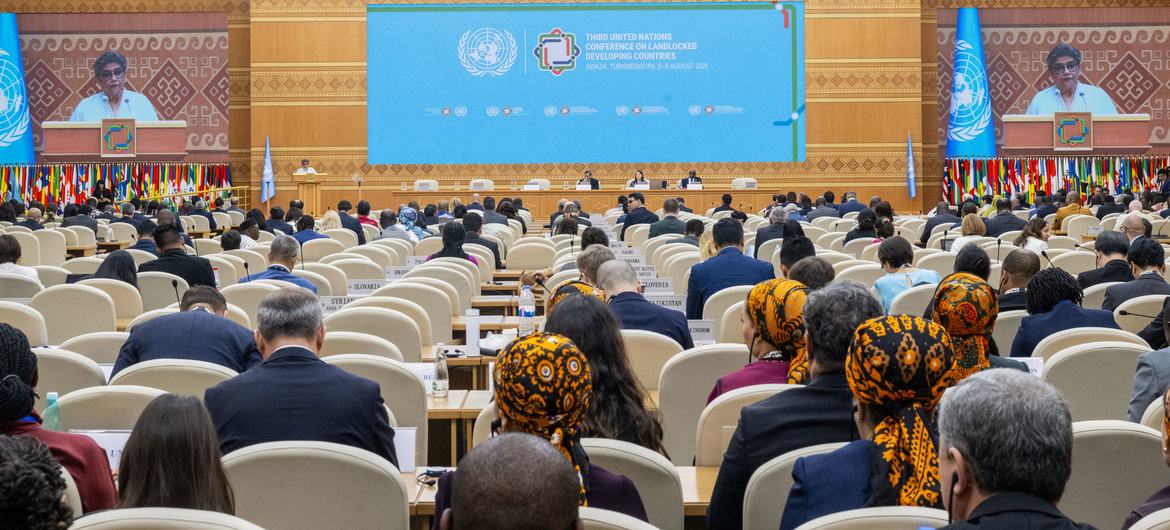
Rabab Fatima (on screen), Under Secretary-General and High Representative for the Least Developed Countries, Landlocked Developing Countries and Small Island Developing States, holds a wrap-up press conference at the Third UN Conference on the Landlocked Developing Countries (LLDC3).

Cooperation begins with neighbours

At a wrap-up press briefing, Aksoltan Ataeva, Permanent Representative of Turkmenistan to the United Nations, said that for his country, “hosting LLDC3 is not only a significant political event, but it also reflects Turkmenistan’s foreign policy philosophy: to be a bridge, not a barrier.

UN Resident Coordinator in Turkmenistan Dmitry Shlapachenko told UN News the Conference was especially important for the region, bringing together several Central Asian heads of state.

Global partnerships matter – but real cooperation starts with neighbours.

Mr. Shlapachenko shared an example cited by the UN Secretary-General in meetings with Central Asian leaders:

“Before Portugal and Spain joined the European Union, trade between them was minimal. But once they became part of the EU, 40 per cent of all goods exported by Portugal went to Spain. This really improved life for [the people of both countries]. I think it’s very important to keep this in mind when we talk about Central Asia.”

There is still a lot to be done here, but we are moving in the right direction,” he added.

UN Resident Coordinator in Uzbekistan Sabine Machl noted that UN country teams in Central Asia regularly meet to coordinate their work. Uzbekistan, one of only two double landlocked countries in the world (alongside Liechtenstein), faces unique challenges – but also opportunities.

“As the United Nations country team in Uzbekistan, for the next five years, what we want to do is to harness the demographic dividend by investing in the people of Uzbekistan,” she said.

“That’s our one strategic priority. Because Uzbekistan has a very young population – 60 per cent of the population is under 30 years old.”

In Lesotho, a landlocked African country, water is a major opportunity. UN Resident Coordinator Amanda Khozi Mukawashi told UN News that the country wants to share its abundant water and other resources – but needs investment.

“Lesotho has got water. It’s one of its biggest natural assets; lots of water that flows from Lesotho and saves lives in neighboring countries like Namibia, Botswana, and so on,” she said.

“What they’re trying to do is to look for investment, to develop the infrastructure so that they can produce renewable energy, hydropower.”

She added that Lesotho could use its wind and solar resources not just for its own industrial development, but to export into a region facing challenges in both water and energy.

These and other ideas were discussed on the sidelines of the Conference and will continue to be advanced at future forums.

Farewell to Awaza

On Friday, Awaza – nesteled on the shores of the Caspian Sea, the world’s largest inland body of water – bid farewell to its guests with a ceremonial lowering of the UN and Turkmenistan flags, which had been raised at the start of the week.

Awaza will be remembered as a defining moment for the journey of LLDCs – not only for the great success of the Conference itself, but as the beginning of a new era of ambitious partnerships and decisive action,” said Ms. Fatima, wrapping up the forum.

The Third UN Conference on Least Developed Countries opened in Awaza, Turkmenistan on Tuesday, 5 August.

UN News was on the ground in Awaza, bringing you all the highlights and discussions. Find all our coverage here.
Source link

Deputy UN chief urges bold action to transform food systems at global summit in Addis Ababa

Delivering closing remarks at the UN Food Systems Summit +4 Stocktaking Moment (UNFSS+4) in Addis Ababa, co-hosted by Ethiopia and Italy, Ms. Mohammed praised the growing momentum behind food systems transformation.

But she also warned that with just five years left to 2030, “hunger and malnutrition persist. Climate shocks, conflict, debt, and inequality are widening the cracks in our systems.”

“Too often food systems are seen as part of our challenges,” she said. “When in fact, they can be one of the greatest solutions to deliver for people, planet, peace and prosperity.”

A global process for transformation

The UN Food Systems Summit process was launched in 2021 “in the midst of a global pandemic” to catalyse national and global action to make food systems more inclusive, resilient and sustainable.  

The 2025 stocktake brought together over 3,000 participants from governments, civil society, Indigenous Peoples, youth, and the private sector to assess progress and renew commitments.

To date, more than 130 countries have developed National Pathways for food systems transformation, supported by UN agencies and development partners.

Moving the UNFSS process forward

In her address, Ms. Mohammed highlighted several areas of progress and called for urgent, coordinated action:

  • Food systems as climate solutions: 
    “Food and agriculture are now part of the climate plans of 168 countries,” she said, noting their potential to reduce emissions and build resilience.
  • School meals as a strategic investment: 
    Over 170 countries are implementing school meal programmes. These are not just meals – they are investments in children, our farmers, and the future.
  • Cities driving innovation: 
    Urban centres are leading efforts to reduce food waste and strengthen local supply chains. Cities are showing what innovation looks like on the ground.
  • Inclusion is essential: 
    Ms. Mohammed called for inclusion of youth, Indigenous Peoples, women, and marginalized communities. “These are powerful commitments to transform food systems for people and the planet that you have helped inspire.”
  • Financing must match ambition: 
    She urged donors and development banks to align investments with national pathways.  

“As we conclude this Stocktake, we must acknowledge that we met in the face of challenges that test our moral values and threaten the future sustainability of our planet, underscoring the urgency of our work together.”

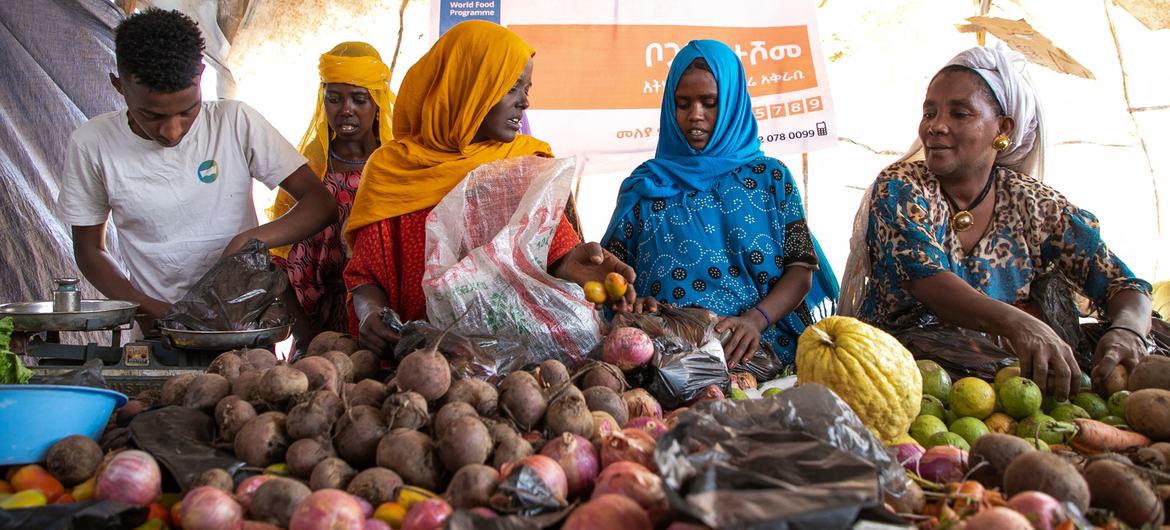
A food market in the Amhara region of Ethiopia.

Global hunger declines, but regional disparities persist

The Summit, which has been running in the Ethiopian capital since 27 July, saw the launch of the State of Food Security and Nutrition in the World 2025 (SOFI) report, which revealed a modest decline in global hunger – but a troubling rise in food insecurity in Africa and Western Asia  

Jointly produced by FAO, IFAD, UNICEF, WFP and WHO, the report highlights how persistent food price inflation has undermined access to healthy diets, especially for low-income populations. Vulnerable groups – including women, children, and rural communities – remain disproportionately affected.

The report calls for:

  • Coherent fiscal and monetary policies to stabilize markets
  • Open and resilient trade systems
  • Targeted social protection for at-risk populations
  • Sustained investment in resilient agrifood systems

While noting an encouraging decrease in the global hunger rate, the report underscored that progress is uneven. SOFI 2025 serves as a critical reminder that the international community must intensify efforts to ensure that everyone has access to sufficient, safe, and nutritious food.  

Hope for those who need it most

At a key side event on Tuesday, Ms. Mohammed appealed for long-term, inclusive solutions to food insecurity in crisis-affected regions. She highlighted the staggering toll of acute malnutrition, noting that over 37 million children under five will face acute malnutrition this year – nearly 10 million of them suffering from severe wasting, the deadliest form of undernutrition.

“Communities are trapped in relentless cycles of hardship,” she said. “But courage is on display at all moments.”

Ms. Mohammed urged governments and partners to move beyond short-term interventions and embrace transformative, locally driven solutions. She praised countries embedding resilience into national strategies and combining traditional knowledge with science to rebuild food systems.

“These governments are not waiting for permission – they are leading,” she said.

She outlined three priorities for action: Catalytic finance that builds local capacity; Coordinated responses that bridge humanitarian and development divides; and Community-centred approaches, especially for women and youth.

“Food systems transformation is especially critical in complex settings,” she said. “It drives food security, resilience, stability, and inclusive growth.”

She wrapped up the event with a call to strengthen multilateralism and unlock opportunity “for and with those who need it most.”

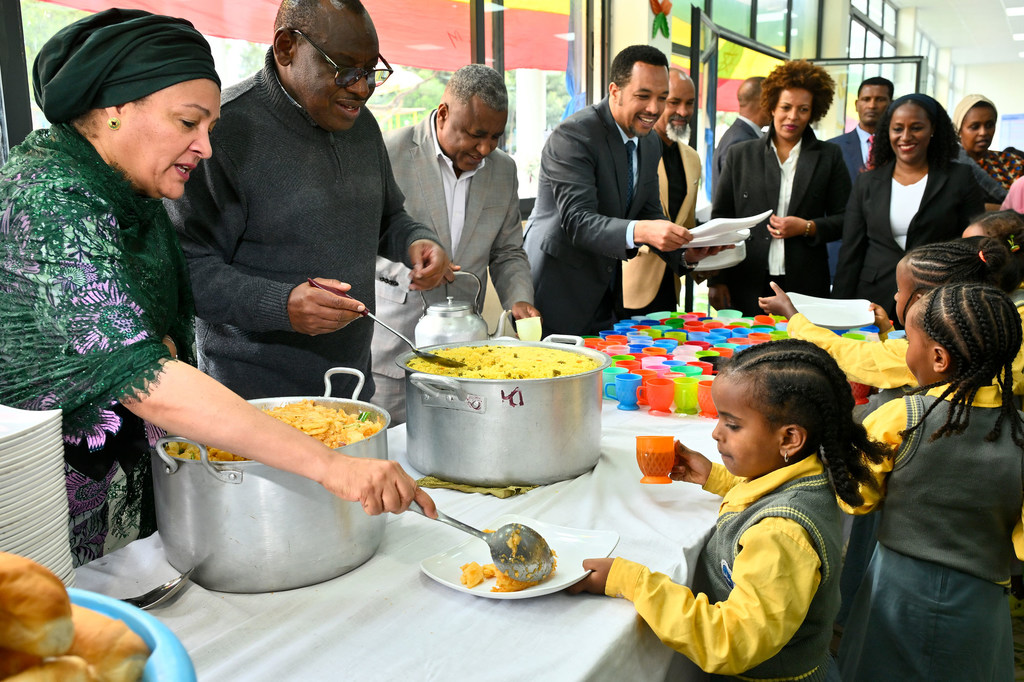
UN Deputy Secretary-General Amina Mohammed (left) serves food to children at a UN Food Systems Summit event in Addis Ababa, Ethiopia.

Looking ahead

Ms. Mohammed closed the Summit with a call to action:

“Our movement has shown what is possible when we work together in deliberate ways across sectors, stakeholders, and countries with a shared purpose.”

She called on governments and people everywhere to build on what has been accomplished and continue to work together for peace and to realize the vision of the 2030 Agenda.

“Let’s continue to lead the way – together.”

Source link

Bold new initiative aims to strengthen and improve the UN, senior officials tell Member States

The informal meeting on the UN80 Initiative also provided a chance for ambassadors to share their views on the reform agenda, launched by Secretary-General António Guterres in March.

UN80 is centred around three workstreams focused on efficiencies and improvements, a mandate implementation review, and structural changes and programme realignments across the entire UN system.

Improving the UN

It also aims to reinforce the UN’s capacity to respond to global challenges such as conflict, displacement, and the climate crisis, while also managing external pressures effectively, such as shrinking budgets and growing political divisions. 

I think the UN80 Initiative is often characterised, but I think mischaracterised, simply as an exercise in downsizing in economy,” said Guy Ryder, Under-Secretary-General for Policy and chair of the Task Force overseeing the plan.

“But the Secretary-General has been rather clear in saying that whilst we have to respond to the resource situation, the overall intention of the Initiative is to strengthen and improve the workings of the UN system.”  

Learn why UN80 matters to the world in our explainer here.

Widespread impact

Mr. Ryder alongside UN Controller Chandramouli Ramanathan (who prepares and oversees the budget and manages the Organization’s funds) presented updates on two workstreams during the morning session of the day-long meeting.

He set the scene with a slideshow outlining the background for UN80 and the circumstances confronting the UN today.

Over the years, it has adopted some 40,000 mandates delivered by “a fairly numerous and complex constellation of entities,” more than 140.

In 2023, the global body delivered some $69 billion in support and services worldwide, with “the lion’s share”, $31 billion or around 45 per cent, going to humanitarian action.  

This was followed by development, $21 billion (30 per cent), peace and security, $9 billion (13 per cent), and human rights, $1 billion, or less than one per cent.

“We believe that the global population, in one manner or another…is connected to the global agenda of the United Nations,” he said.  Additionally, some 440 million lives are directly impacted by its development work, and 140 million people in crisis situations receive support

Reduction in resources

Mr. Ryder said the $69 billion mark two years ago represented “a peak” and it is estimated that the UN has some $50 billion in resources available today amid “a situation of significant uncertainty.”

This 30 per cent reduction means “we’re down to 380 million people who we’re able to reach directly in development work, and we’re down to 110 million as a reduction in emergency situations of our humanitarian spending.”

In light of this context, “maybe we can streamline the manner in which we implement the mandates that you hand down; maybe we can optimize the structures which form this archipelago of entities,” he suggested.

“The success of the UN80 Initiative depends on us being able to increase the impact that our work in the UN system has on the people who we are here to serve.”

Proposals to enhance efficiency

Mr. Ramanathan briefed delegates on workstream one.  He said a working group was established to develop concrete proposals to enhance efficiency, reduce duplication, standardize services, and relocate functions to existing lower-cost duty stations where appropriate. 

The “exhaustive list” includes measures such as consolidating existing human resources, finance and procurement services into unified support hubs. The process would start in New York and Geneva as they host the largest number of Secretariat entities and staff.

Another proposal involves having payroll operations centralized in three global processing centres, compared to 10 locations today.

The working group is finalising the proposals to be submitted to the Secretary-General and “if approved, they will be incorporated into the revised estimates for the 2026 proposed programme budget for the consideration of the General Assembly by 1 September,” said Mr. Ramanathan.

“Separately from the UN80 Initiative, we are reviewing the programme budget proposals for 2026 with a view to achieving between 15 and 20 per cent reductions for 2026, including a 20 per cent reduction in work force, post reduction, but with a focus on preserving capacity at entry levels and reducing senior posts where feasible,” he added.

A ‘universe of mandates’

Mr. Ryder returned to present workstream two, where the first step involved mapping out “the universe of mandates” that the UN implements, with initial focus on Secretariat departments and offices, peacekeeping operations, political missions, regional commissions and other bodies.

The Pact for the Future and the 2030 Agenda for Sustainable Development were among the most frequently cited mandates.  

The overall “landscape” of mandates means that the Secretariat services some 400 intergovernmental organs and roughly 27,000 meetings each year and processes some 2,300 pages of documentation on average every day, amounting to around $360 million annually. 

A mandate resource registry has been produced, and a report should be available by the end of July which will inform the way forward.

Concern over proposed budget cuts

During the session, several representatives expressed their views on UN80, such as Iraqi Ambassador Dr. Abbas Kadhom Obaid, who spoke on behalf of the Group of 77 and China.

He voiced concern over the proposed 15 to 20 per cent budget reductions, and the 20 per cent staff reduction, requesting more insight into how these figures were determined.

“This is important since we know that the departments, divisions, in the Organization’s funds, programmes and agencies vary greatly,” he said.

“We must also protect the geographical and gender balance in the context of any downsizing.  As the Group has reiterated several times, the matters of transparency, accountability and inclusivity are paramount during this process.”

Fit for the future

The meeting took place just days before the 80th anniversary of the signing of the UN Charter on 26 June 1945, as General Assembly President Philémon Yang noted in his opening remarks.

He said it was a time to “reflect on the last 80 years and all that this Organization has achieved, and also a time to look to the future,” so the UN can remain fit for purpose – and ready for the next 80 years.  

Source link