Potential turning point for Gaza as peace plan enters second phase: UN envoy

Ramiz Alakbarov warned that risks of violence escalating again remain high, while the situation in the occupied West Bank continues to deteriorate.

The Deputy Special Coordinator for the Middle East Peace Process said he was addressing ambassadors “at a moment of both profound opportunity and considerable risk,” pointing to cautious diplomatic progress on Gaza alongside deepening instability elsewhere.

“In front of us we see a potential turning point for Gaza, a genuine chance for a better future,” Mr. Alakbarov said. “But many uncertainties remain.”

He heralded the second phase of President Donald Trump’s 20-point Comprehensive Plan as “a critical step in consolidating the ceasefire in Gaza,” alongside the establishment of new transitional bodies, including the National Committee for the Administration of Gaza and the Office of the High Representative for Gaza.

Deputy Special Coordinator Alakbarov briefs the Security Council members via video link.

Monumental task ahead

Mr. Alakbarov said he had just returned from Cairo, where he met members of the National Committee to discuss how the UN could support efforts to restore essential public services, facilitate humanitarian aid and begin planning for reconstruction, in line with Security Council resolution 2803.

He cautioned that the task ahead is “monumental” and will require close coordination among all stakeholders, considering existing systems and capacities.

The UN envoy welcomed the recovery of the remains of the last hostage held in Gaza, expressing condolences to the family of Ran Gvili and said he hoped that with all hostages returned, “the process of healing for the families and all those affected may begin.”

He also said Israel’s announcement that the Rafah crossing would open for pedestrian movement in both directions was encouraging, while stressing that demilitarisation of the Gaza Strip and effective security arrangements remain essential for the next phase to succeed.

Mr. Gvili was among more than 250 Israeli and foreign nationals abducted by Hamas and other Palestinian armed groups during their 7 October 2023 attack on southern Israel, in which more than 1,250 people were also killed.

The ensuing Israeli military offensive in Gaza resulted in widespread devastation and a massive loss of Palestinian life, with tens of thousands reported killed and countless others wounded, many suffering life-long injuries.

Gazans want a better, stable future

Despite continued hardship, Mr. Alakbarov said his recent visit to Gaza underscored the determination of its people.

The people in Gaza are ready and eager to lead the way to a better, more stable future,” he told the Council, describing students taking exams under extreme conditions, farmers finding ways to plant despite shortages, and small business owners adapting to a devastated market.

At the same time, he emphasised that humanitarian needs remain severe. Nearly the entire population of Gaza still requires assistance, with more than 1.5 million displaced people exposed to winter rains and cold temperatures.

Mr. Alakbarov warned that humanitarian operations are still unable to function at scale, citing insecurity, access restrictions and delays at crossings.

Occupied West Bank unravelling

Turning to the occupied West Bank, the senior UN official said the situation is “unravelling,” marked by ongoing violence, settlement expansion, demolitions and displacement.

These trends, he warned, are undermining prospects for peace and could jeopardise progress on implementing the second phase of the ceasefire plan.

The implementation of the second phase of the Gaza ceasefire plan is critical,” Mr. Alakbarov said, urging the Council to act collectively.

He reaffirmed the UN’s commitment to supporting Palestinians and Israelis in advancing toward a two-State solution, in line with international law and UN resolutions.

Click here for in-depth coverage of this meeting, including national and regional positions.

Source link

‘Bet on youth’ to realise Africa’s digital potential, UN deputy chief says

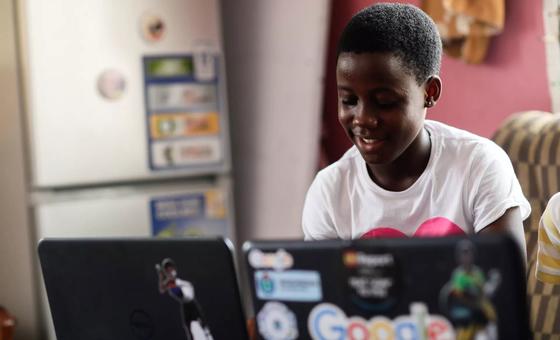
In 2024, only 34 per cent of women and 45 per cent of men on the continent used the internet, compared to global averages of 65 and 70 per cent. Meanwhile, 98 per cent of Africans under the age of 18 do not complete school with even basic STEM (science, technology, engineering and mathematics) skills, reflecting long-term underinvestment in education.  

This slow progress in digital integration and STEM education is impeding Africa’s ability to reach the Sustainable Development Goals (SDGs) by 2030, the report noted. The “digital divide” hits marginalised groups hardest, including women and rural communities.  

“Africa is a vast and populous continent, rich in natural endowments and talents. Yet much of that potential remains underutilised,” said Philémon Yang, the President of the General Assembly in a message to the meeting.  

The potential of youth

Deputy Secretary-General Amina Mohammed, told delegates that Africa must “bet on youth.”

By 2050, there will be over 850 million young people in Africa.   

“This is an incredible opportunity. Realising this potential means investing in STEM education now. It means building digital infrastructure that connects talent to opportunity,” Ms. Mohammed said.

But current systems do not sufficiently support young innovators – three-fourths of young Africans have insecure employment, lacking basic protections.

This lack of social protection is part of a wider labour rights gap, the report noted. In 2023, only 19 per cent of people in Africa had access to at least one form of social protection –such as social security or health insurance – compared to 53 per cent globally.

“Strong social protection is not just about safety nets. It is about creating the stability that allows societies to take risks, innovate and grow,” Ms. Mohammed said. 

People-cantered approaches

The report calls on governments and partners to adopt a people-cantered approach that promotes digital and technological innovation while also decent work, rights and intellectual property.  

“Resilience cannot be achieved without governance that places people at the centre of policy design and implementation,” the report said.

Speakers also stressed that African expertise must guide solutions.

“We reaffirm our collective determination to ensure that Africa’s development is led by its own people, grounded in knowledge, innovation and social justice,” said Ahmadou Lamin Samateh, Minister of Health of the Gambia, speaking for the African Group.

Power of partnerships

In his message, Mr. Yang said no single African country can achieve full digital integration alone; regional cooperation and multilateral support are essential.

“[Digital tools] can offer a way into the future… [but] no country can close these gaps alone…multilateral cooperation with the United Nations at its centre has secured eight decades of unprecedented human progress,” he said.

Ms. Mohammed emphasised the possibilities “when we get this right.”

“The choice is ours — we can continue business-as-usual and watch the 2030 Agenda slip away or we can support systemic transformation.” 
Source link

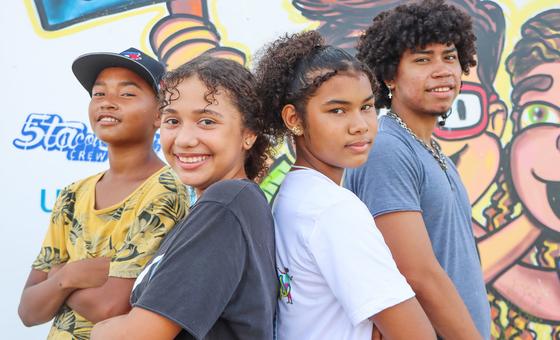
Celebrating the potential and promise of the largest youth generation ever

Secretary-General António Guterres said empowering young people in a fair and hopeful world reaffirms the UN promise that every person has the right to make informed choices about their lives and futures.

While many young people face economic uncertainty, gender inequality, health challenges, the climate crisis and a spike in conflicts – they are still leading with courage, conscience and clarity, “calling for systems that uphold their rights and support their choices,” he said in his message.

“Let’s listen to what young people want and support them in exercising their rights, making their own choices and enjoying a hopeful future,” said Natalia Kanem, Director of the UN sexual and reproductive rights agency, formally known as the UN Population Fund (UNFPA).

An inclusive future

“Young people are not just thinking about their future children – they are thinking about the world those children will inherit,” one youth activist told UNFPA.

Mr. Guterres urged countries to invest in policies that will ensure young people have access to education, healthcare, and promoting the protection of reproductive rights.

Let us stand with young people and build a future where every person can shape their destiny in a world that is fair, peaceful and full of hope,” he said. 

2025 award winners

Each year, the Committee for the UN Population Award honours an individual and/or institution in recognition of outstanding contributions to population and reproductive health questions and to their solutions.

On this World Population Day, the 2025 recipients were recognised for their groundbreaking work in empowering women and addressing critical challenges facing demographic growth.

The winner in the individual category, Varshan Deshpande who founded Dalit Mahila Vikas Mandal, tirelessly works to empower women at the community level in India, by building vocational skills, connecting them to vital resources and services, and fostering financial independence.

The winner in the institutional category, the International Union for the Scientific Study of Population (IUSSP), has played a pivotal role in advancing population science and policy, notably by helping establish regional population associations in Asia, Africa, and Latin America.

Watch our interview with Natalia Kanem who is stepping down as UNFPA’s Director after more than eight years.

Source link

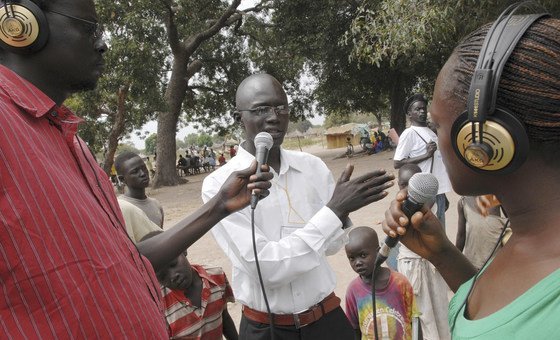
Both radio and sports can help people achieve their potential, says UN on World Radio Day


In an era of dramatic advances in communications, radio retains its power to entertain, educate, inform and inspire, United Nations Secretary-General António Guterres said, marking World Radio Day with a call to celebrate both radio and sports as ways of helping people achieve their potential.

Source link