
World News in Brief: Shipwreck off Italy kills at least 27, anniversary of Taliban takeover, Peru amnesty law

UNHCR is supporting at least 60 survivors who have been brought ashore, but the Italian coast guard warned more bodies could still be recovered.  

According to local news reports, the passengers were travelling from Libya in the hopes of reaching Italy.

Migrants and refugees heading to Italy from the African coast often use leaky or overcrowded boats organized by human traffickers and travel via the often-deadly Mediterranean route, aiming to reach Lampedusa.

In a social media statement on Thursday, the High Commissioner for Refugees, Filippo Grandi, reported that over 700 refugees and migrants have died in the Central Mediterranean in 2025.

“All responses – rescue at sea, safe pathways, helping transit countries and addressing root causes – must be strengthened,” he said.  

UN Women marks four years since Taliban takeover

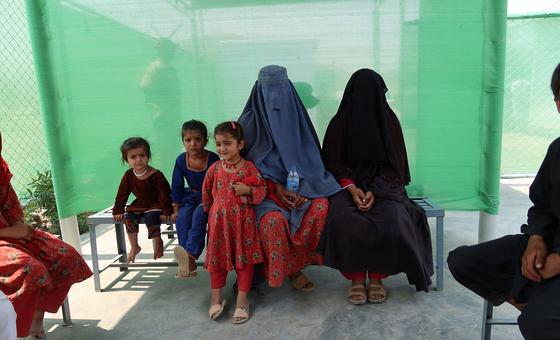
UN Women Afghanistan Special Representative Susan Ferguson addressed the widescale erosion of human rights of women in the country in a briefing to reporters in New York on Thursday, just ahead of the fourth anniversary of the Taliban takeover.

Since the takeover, dozens of permanent decrees have curtailed women’s and girls’ rights and dignity.  

The most severe women’s rights crisis in the world is being normalised,” she told correspondents at the daily noon briefing from Kabul.  

For example, last year’s “morality law” crystallised the systematic erasure of women from public life, codifying long-standing social norms.

Banned from schools and most jobs, women “continue to feel – and often are – unsafe in public places, in their communities or families, and are unable to reap the benefits of an increase in the overall security situation since the takeover,” Ms. Ferguson stressed.

Migration and women-run organizations

This year, 1.7 million Afghans have returned, but women among them cannot interact with male aid workers to access education, healthcare or economic support.  

Women-run organizations are therefore essential, providing healthcare, psychosocial services and protection from violence.

However, this March, it was reported across civil society organizations that funding cuts have meant layoffs for 50 per cent of women staffers, and over one-third of these organizations warned they may have to scale back or close.

These organizations are trying to keep going – but they urgently need more financial assistance.

“We must keep investing in their NGOs, their businesses and their voice in international dialogues,” Ms. Ferguson concluded.

Türk: Peru amnesty law is an ‘affront’ to victims of country’s war

The UN’s top human rights official Volker Türk on Thursday described Peru’s amnesty law as an “affront” to victims of the country’s armed conflict.

The development comes after the President of Peru signed into law legislation a day earlier granting amnesty to the armed forces, the national police and self-defence committees, for crimes committed between 1980 and 2000.  

An estimated 70,000 people were killed during the conflict and at least 20,000 were disappeared, according to the National Commission on Truth and Reconciliation. 

‘Backwards step’

Mr. Türk said that hundreds of cases, both concluded and ongoing, will be affected by the new law. And he described it as a “backwards step” in the search for justice for gross human rights violations committed.

“It is an affront to the thousands of victims who deserve truth, justice, reparations, and guarantees of non-recurrence, not impunity,” Mr. Türk said.

International law, to which Peru is bound, clearly prohibits amnesties and statutes of limitations for gross violations of human rights and serious violations of humanitarian law.

OHCHR called for its immediate reversal. 
Source link

Israel’s military takeover of Gaza City would mark ‘a dangerous escalation’: Guterres

The announcement following an Israeli cabinet meeting “marks a dangerous escalation and risks deepening the already catastrophic consequences for millions of Palestinians, and could further endanger more lives, including of the remaining hostages,” it said.

The statement noted that Palestinians in Gaza continue to endure a humanitarian catastrophe of horrific proportions. 

More displacement, death and destruction

The UN chief warned that this further escalation will result in additional forced displacement, killings and massive destruction, compounding the unimaginable suffering of the population.

He reiterated his urgentappeal for a permanent ceasefire, unimpeded humanitarian access across Gaza, and the immediate and unconditional release of all hostages.

 “The Secretary-General once again strongly urges the Government of Israel to abide by its obligations under international law,” the statement continued.

End the occupation

Mr. Guterres recalled that in an Advisory Opinion last July, the International Court of Justice (ICJ) declared that Israel is under an obligation to cease immediately all new settlement activities, to evacuate all settlers from the Occupied Palestinian Territory, and to bring to an end its unlawful presence there as rapidly as possible.

 “There will be no sustainable solution to this conflict without an end to this unlawful occupation and the achievement of a viable two-State solution,” the statement concluded, stressing that “Gaza is and must remain an integral part of a Palestinian State.”

Security Council meeting

In the wake of the development, the Permanent Observer of the Observer State of Palestine, Riyad Mansour, held consultations with the president of the UN Security Council in New York.

“This escalation by the Israeli Government is going in total contradiction to the will of the international community, international law and common sense – and, I even dare to say, against the wish of the majority of people inside Israel as we read opinion polls,” he told journalists at UN Headquarters.

The Security Council is due to meet on Saturday at 3 PM in emergency session to discuss the crisis. 

Insufficient aid still a problem

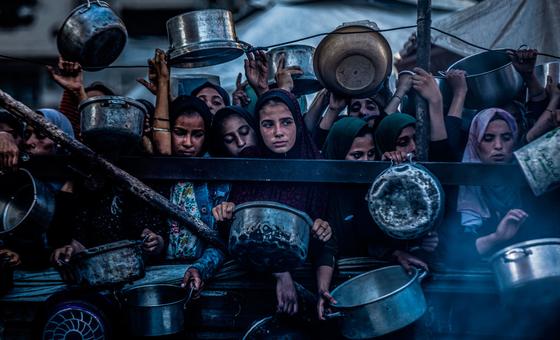
Meanwhile, civilians continue to be killed and wounded in Gaza, where even basic tasks such as finding food and water have become impossible, the UN Office for the Coordination of Humanitarian Affairs (OCHA) said in an update.

Furthermore, aid entering the Strip continues to be far below the minimum required to meet the immense needs, OCHA added.

Scarcity and ‘exorbitant prices’ 

“Since the entry of some commercial trucks into Gaza in the past few days, partners reported a minor reduction in commodities prices as of yesterday. Most food items remain scarce in the market and sold at exorbitant prices,” OCHA said.

At the same time, airdrops in different parts of Gaza continue to reportedly kill and injure people, with one child reportedly losing their life in Khan Younis on Thursday.

While welcoming all efforts to provide desperately needed aid, OCHA reiterated that the most efficient way to bring supplies into Gaza is by road. 

It is imperative that aid is allowed to enter through all crossings and via all available corridors so that the UN and its partners can deliver it at scale in a safe and dignified manner through their community-based mechanisms, reaching the most vulnerable,” the agency said.

Severe heatwave

OCHA added that the region has been hit by a severe heatwave as people continue to struggle with access to water.

On Thursday, aid partners reported that the South Gaza Desalination Plant’s electricity line was damaged for the third time in the past seven days and the plant is operating at less than 14 per cent of its capacity. 


Source link