


UNHCR is supporting at least 60 survivors who have been brought ashore, but the Italian coast guard warned more bodies could still be recovered.
According to local news reports, the passengers were travelling from Libya in the hopes of reaching Italy.
Migrants and refugees heading to Italy from the African coast often use leaky or overcrowded boats organized by human traffickers and travel via the often-deadly Mediterranean route, aiming to reach Lampedusa.
In a social media statement on Thursday, the High Commissioner for Refugees, Filippo Grandi, reported that over 700 refugees and migrants have died in the Central Mediterranean in 2025.
“All responses – rescue at sea, safe pathways, helping transit countries and addressing root causes – must be strengthened,” he said.
UN Women marks four years since Taliban takeover
UN Women Afghanistan Special Representative Susan Ferguson addressed the widescale erosion of human rights of women in the country in a briefing to reporters in New York on Thursday, just ahead of the fourth anniversary of the Taliban takeover.
Since the takeover, dozens of permanent decrees have curtailed women’s and girls’ rights and dignity.
“The most severe women’s rights crisis in the world is being normalised,” she told correspondents at the daily noon briefing from Kabul.
For example, last year’s “morality law” crystallised the systematic erasure of women from public life, codifying long-standing social norms.
Banned from schools and most jobs, women “continue to feel – and often are – unsafe in public places, in their communities or families, and are unable to reap the benefits of an increase in the overall security situation since the takeover,” Ms. Ferguson stressed.
Migration and women-run organizations
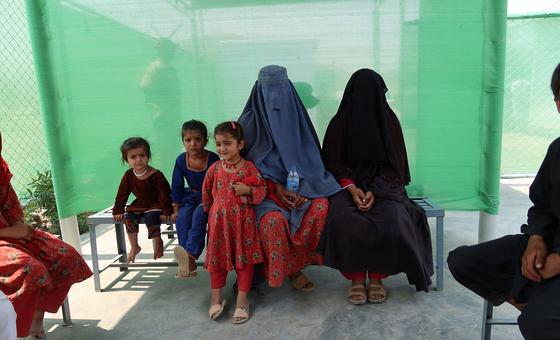
This year, 1.7 million Afghans have returned, but women among them cannot interact with male aid workers to access education, healthcare or economic support.
Women-run organizations are therefore essential, providing healthcare, psychosocial services and protection from violence.
However, this March, it was reported across civil society organizations that funding cuts have meant layoffs for 50 per cent of women staffers, and over one-third of these organizations warned they may have to scale back or close.
These organizations are trying to keep going – but they urgently need more financial assistance.
“We must keep investing in their NGOs, their businesses and their voice in international dialogues,” Ms. Ferguson concluded.
Türk: Peru amnesty law is an ‘affront’ to victims of country’s war
The UN’s top human rights official Volker Türk on Thursday described Peru’s amnesty law as an “affront” to victims of the country’s armed conflict.
The development comes after the President of Peru signed into law legislation a day earlier granting amnesty to the armed forces, the national police and self-defence committees, for crimes committed between 1980 and 2000.
An estimated 70,000 people were killed during the conflict and at least 20,000 were disappeared, according to the National Commission on Truth and Reconciliation.
‘Backwards step’
Mr. Türk said that hundreds of cases, both concluded and ongoing, will be affected by the new law. And he described it as a “backwards step” in the search for justice for gross human rights violations committed.
“It is an affront to the thousands of victims who deserve truth, justice, reparations, and guarantees of non-recurrence, not impunity,” Mr. Türk said.
International law, to which Peru is bound, clearly prohibits amnesties and statutes of limitations for gross violations of human rights and serious violations of humanitarian law.
OHCHR called for its immediate reversal.