
Deadly Attacks, Trembling Services Push Sudan Closer to Catastrophe

According to local reports, heavy shelling and assaults late last week in El Fasher, the capital of North Darfur state, killed at least six civilians and injured scores more, triggering fresh displacement from the already besieged city.

Sudan has been roiled in a brutal civil war between rival militaries – the Sudanese Armed Forces and the paramilitary Rapid Support Forces (RSF) and affiliated militias. Thousands of civilians have been killed, villages and farmlands destroyed, and nearly 12 million people driven from their homes – over four million as refugees into neighbouring countries.

The country also risks becoming the world’s largest hunger crisis in recent history as infrastructure, trade routes and supply chains lie in ruins. Famine has already been confirmed in the Zamzam camp, which once sheltered hundreds of thousands of civilians – and many more areas are at risk.

Humanitarians warn that essential services are breaking down. Water trucking to the only functioning hospital was suspended over the weekend and community kitchens shut down after running out of food.

Without urgent support, they warn that the most vulnerable people could face severe hunger within days. Across Darfur, hospitals remain under immense strain.

Nearly 100 wounded people, including women and children, were admitted to medical facilities in a single day last week, with several pronounced dead on arrival, according to reports from the medical charity Médecins Sans Frontières (MSF – Doctors Without Borders).

Survivors who managed to escape El Fasher described “unbearable” conditions in the city, which has endured more than a year of siege by the Rapid Support Forces (RSF) and allied groups.

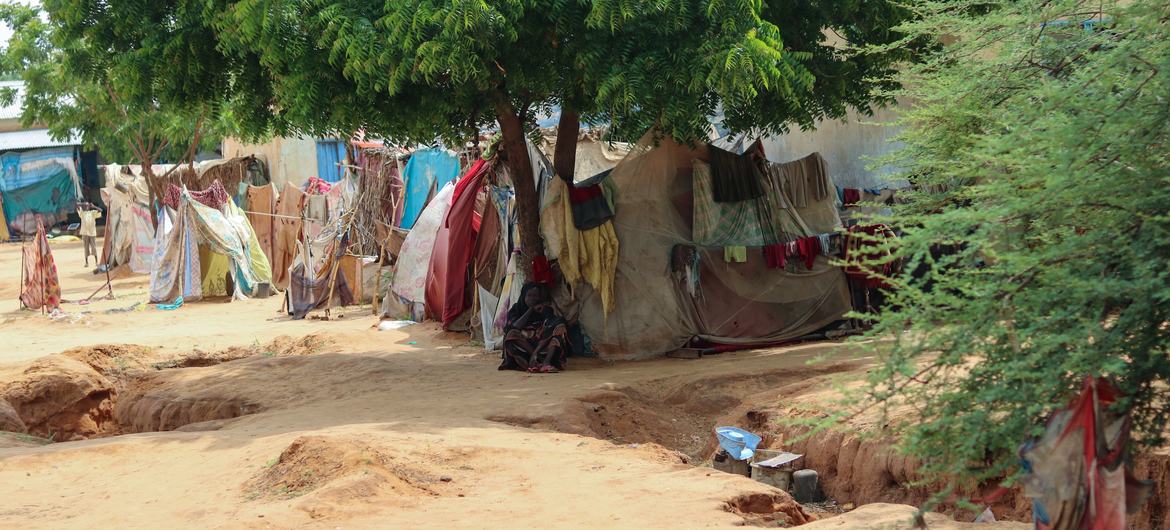
Children sit beside makeshift tents in El Fasher, North Darfur, where intensified fighting has left thousands trapped.

Drone strikes on 10 September hit multiple locations across Darfur, injuring scores. A strike landed just four kilometres (about 2.5 miles) from an MSF-supported hospital in Central Darfur, forcing staff to activate a mass casualty plan. The following day, two more strikes struck Nyala in South Darfur, reportedly killing at least four people, including a child.

The fighting is not confined to Darfur. In Khartoum, RSF airstrikes on 9 September damaged a power station, causing a blackout in parts of the capital and disrupting critical hospital equipment and services.

Disasters add to misery

Meanwhile, Sudan is grappling with natural disasters on top of conflict. A landslide triggered by heavy rains on 31 August in Sharg Aj Jabal, near the Central and South Darfur border, killed an estimated 400 people, half of them children, according to local reports.

Furthermore, over 4,000 people were displaced and 550 homes destroyed in Aj Jazirah state in flash floods last week.
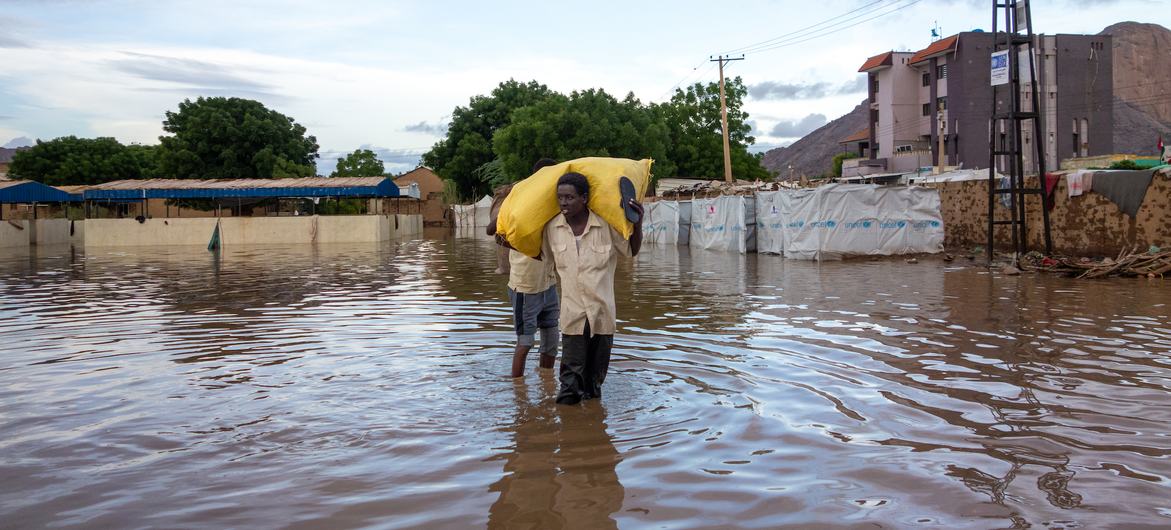
Every year, hundreds of thousands of people in Sudan are affected by heavy rains, flash floods and landslides.

The UN Office for the Coordination of Humanitarian Affairs (OCHA) stressed that civilians remain at the epicentre of the violence. “[We] once again call for an immediate cessation of hostilities, protection of civilians, safe and unimpeded humanitarian access, and increased international support to sustain life-saving operations across Sudan,” the Office said.

In Khartoum, OCHA reported some improvements in restoring basic services and security. Yet more than 800,000 people who have returned to the capital in recent months still urgently need assistance to rebuild their lives.

On the political front, the Secretary-General’s Personal Envoy for Sudan, Ramtane Lamamra, is currently in Port Sudan after concluding consultations in Nairobi.

According to UN Spokesperson Stéphane Dujarric, Mr. Lamamra has held “very constructive engagements” with Sudanese stakeholders across the spectrum as well as key international interlocutors.

“These discussions will help lay the groundwork necessary to support an inclusive process that can deliver a sustainable solution that preserves Sudan’s sovereignty, its unity and its territorial integrity,” Mr. Dujarric said.

He added that the UN also looks forward to working closely with regional partners, including the African Union, the east African regional bloc Intergovernmental Authority on Development (IGAD), and the League of Arab States, to restart efforts toward an intra-Sudanese dialogue.

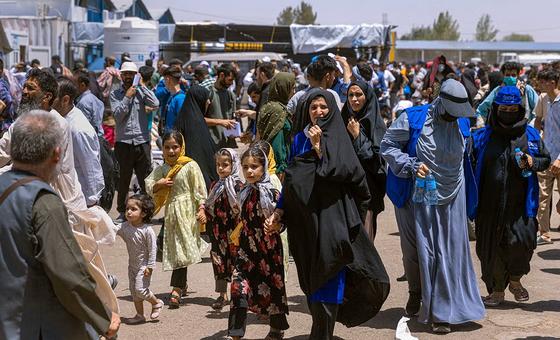
Afghanistan: Lifesaving services cut as Taliban bars women aid workers

“All of us at the United Nations are suffering from a reinforcement of the ban on females working with us…We are simply unable to operate without females,” said Arafat Jamal, UN refugee agency (UNHCR) Representative to Afghanistan, a day after agencies warned that the de facto authorities’ measures have impacted life-saving assistance for hundreds of thousands of people.

Last Sunday, de facto Afghan security forces prevented national female staff members and contractors of the UN from entering the global body’s compounds in Kabul, the UN Mission in the country, UNAMA, said in a statement on Thursday.

Centres closed

And in light of the restrictions, on Tuesday, UNHCR temporarily closed its cash and support centres for vulnerable Afghans, both at the border and in areas where so many people have been returning from Iran, Pakistan and elsewhere since the start of the year.

The registration process involves providing biometric data, along with screening and interviews – work that would be “entirely impossible without Afghan female workers”, the UNHCR official stressed, noting that more than one in two returnees are women.

This was an operational decision,” Mr. Jamal continued. It is not a decision taken to punish anyone or to make a statement, but simply it demonstrates that we cannot work without female workers in certain circumstances.”

Since the start of the year, some 2.6 million Afghans have returned from neighbouring countries – “many not by choice”, UNHCR said.

Mr. Jamal noted that the pace of returns continues to surge, with nearly 100,000 people crossing back from Pakistan in the first week of September alone, “stretching our capacities and the capacities of this country to the limit”.

Aftershocks reverberate

Echoing those concerns, the UN Children’s Fund (UNICEF) warned that Afghanistan is still reeling from the 6.0 magnitude earthquake that struck Kunar and Nangarhar provinces on 31 August, followed by multiple severe aftershocks.

At least 1,172 children have died, more than half the entire death toll, said UNICEF Country Representative in Afghanistan, Dr. Tajudeen Oyewale.

Briefing journalists in Geneva via videolink, Dr Oyewale described meeting young victims of the disaster in Machkandol in Nangahar, three girls and a young boy rescued from the emergency.

“For the girls it was even more sobering; they were lost; they have lost their families, their homes have been destroyed,” he said. “The family livestock have died. And for these young girls and this young boy, the future is completely bleak.”

The provinces impacted by the earthquake are mountainous and extremely remote, the UNICEF official continued.

Jammed dirt roads

“It is filled with steep terrain, difficult navigation…it took us about three and a half hours’ drive, 40 minutes of which was on paved road and the rest was through rough mountain dirt roads, a lot of turns with jammed with oncoming vehicles and especially with falling rocks on the road.”

Humanitarians warn that the earthquake has compounded Afghanistan’s existing acute problems.

In total, the crisis has claimed more than 2,164 lives, at least 3,428 people have been injured and at least 6,700 homes have either been destroyed or badly damaged.

“Behind these numbers are children left standing alone in the rubble and families torn apart in the blink of an eye… UNICEF is literally going the extra mile and doing whatever it takes to reach these children and families with the support they need,” Dr Oyewale insisted.

Consumer Protection Act

The Consumer Protection Act, 1986 provides a consumer the right to be informed about the quality, quantity, potency, purity, standard and price of goods or services.

In so far as drugs are concerned, the manufacture, sell and distribution of drugs is regulated under the Drugs and Cosmetics Act, 1940 and Rules, 1945. The said Rules require various statutory details on the label of the drugs. However, labelling of drugs in regional Indian languages is not mandatory in the said Rules. As regards bank pass books, the Reserve Bank of India has issued a circular in July, 2011 to all the scheduled banks to the effect that in order to ensure that banking facilities percolate to the vast sections of the population, banks should make available all printed material used by retail customers including account opening forms, pay-in-slips, passbooks etc in trilingual form, i.e., English, Hindi and the concerned Regional language.

This information was given by Shri C. R. Chaudhary, the Minister of State for Consumer Affairs, Food and Public Distribution, in a written reply to a question in Lok Sabha, today.

Haj Committee Formed to Review India’s HAJ Policy

Indian Ministry of Minority Affairs has constituted a Committee on January 31, 2017 under a retired IAS officer Afzal Amanullah to review the Haj Policy 2013-17 and to suggest framework for Haj Policy for five years from 2018 to 2022.

This Committee comprises of Mr. Amanullah, former Secretary to Government of India and former Consul General, Consulate General of India, Jeddah, Justice S.S. Parkar, Retired Judge of Bombay High Court, Mr. Qaiser Shamim, IRS (Retd), former Chairman, Haj Committee of India, Mr. Kamal Faruqui, Chartered Accountant & Muslim Scholar, Mr. Michael Mascarenhas, former CMD, Air India and Mr. J. Alam, Joint Secretary, in-charge of Haj, Ministry of Minority Affairs.

The main issues to be examined by the Haj Committee will include review the existing Haj policy pertaining to HCoI and PTOs, examine implications of various directions of the Supreme Court to reduce Haj subsidy by 2022, review arrangements made by HCoI for Haj pilgrims’ accommodation and air travel including issues related with Haj subsidy.

The committee will also examine coordination in the functioning of Haj Committee of India and CGI, examine transparency, consumer satisfaction and disclosure requirements for PTOs to protect interest of the Haj Pilgrims.

The Committe will suggest measure for ensuring fair competition among PTOs and enhanced value for services and suggest the framework for new Haj policy for HCoI and PTOs.

The Committee has been given three months to submit its report, said Mr. Mukhtar Abbas Naqvi, the Minister of State for Minority Affairs, in written reply to a question in Lok Sabha on Wednesday.