South Sudan: UN forced to suspend food aid after ‘unacceptable’ attacks on convoy

As fighting intensifies there between opposition forces and national troops, there are reports of airstrikes and daily civilian casualties.

UN agencies warn that worsening insecurity is blocking lifesaving aid, while hunger projections deteriorate and cholera treatment centres struggle to cope with an influx of newly displaced people.

The renewed violence comes as South Sudan’s 2018 Revitalised Peace Agreement continue to fall apart amid stalled reforms, rising political tensions ahead of planned elections in 2026, and mounting pressure from more than one million refugees fleeing the brutal war in neighbouring Sudan.

Click here to read a summary of threats to South Sudan’s peace process and the converging political, security and humanitarian crises, and their impact on civilians.

Humanitarian statistics for South Sudan as of December 2025.

WFP convoy attacked, activities suspended

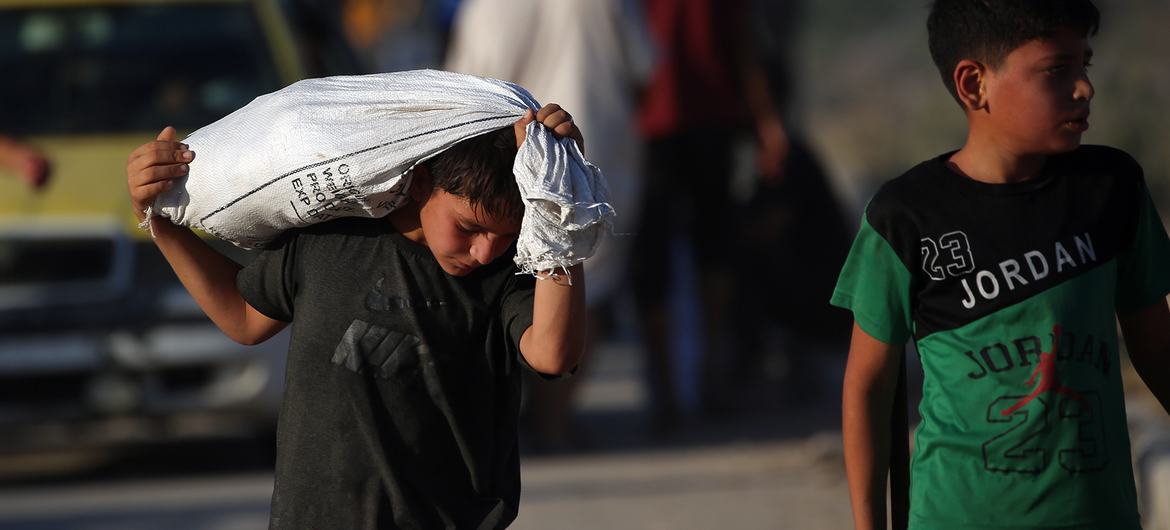
The UN World Food Programme (WFP) on Wednesday suspended all activities in Baliet County, Upper Nile state, following repeated attacks on a convoy carrying humanitarian assistance down river.

Between last Friday and Sunday, a 12-boat convoy transporting more than 1,500 metric tonnes of food and other relief items was attacked several times by armed youth.

The cargo was later looted in multiple locations, despite receiving prior security assurances for the safe passage of aid.

WFP said the suspension would remain in place until the safety of its staff, partners and contractors is assured and authorities take immediate steps to recover the stolen supplies.

Attacks on humanitarians are never acceptable,” WFP said, urging all parties to respect humanitarian workers and safeguard the facilities and resources essential for delivering aid.

Aid access under threat

The convoy attack reflects a broader collapse in humanitarian access, particularly in Jonglei state, where renewed fighting since late December has intensified clashes between the South Sudan People’s Defense Forces and the South Sudan People’s Liberation Army-in-Opposition across multiple counties.

According to the UN relief coordination office, OCHA, fighting and airstrikes have displaced around 280,000 people since late December, including more than 235,000 across Jonglei alone. Many have fled to areas with minimal water, sanitation and health services, sharply increasing the risk of disease outbreaks.

Humanitarian partners report that at least seven aid facilities have been looted or damaged in Jonglei, with assets confiscated and aid workers intimidated, forcing the suspension of operations in several locations.

South Sudan: Humanitarian snapshot (December 2025).

Hospitals hit, services halted

The medical charity Médecins Sans Frontières (MSF) reported that Government forces bombarded its hospital in Lankien, Jonglei State, overnight on 3 February, destroying the main warehouse and most critical medical supplies. One MSF staff member suffered minor injuries.

In a separate incident the same day, MSF’s health facility in Pieri was looted by unknown assailants, forcing staff to flee. The NGO said the violence had left around 250,000 people without healthcare, as the organization had been the only provider in the area.

Hunger and disease risks rising

UN agencies warn that escalating conflict is expected to significantly worsen food insecurity, particularly in northern Jonglei and Upper Nile states.

Projections indicate that the number of counties facing emergency-level hunger (IPC Phase 4) between February and May will more than double, with some households at risk of slipping into catastrophic conditions (IPC Phase 5).

Insecurity has already forced WFP to pause plans to pre-position 12,000 metric tons of food ahead of the rainy season in Jonglei, raising concerns that access will further deteriorate once roads become impassable.

Since September 2024, South Sudan has recorded nearly 98,000 cholera cases and more than 1,600 deaths, with Jonglei among the worst affected, overwhelming treatment centres.

Source link

Gaza: UNESCO condemns ‘unacceptable’ killing of journalists

“I condemn the killing of journalists Anas Al-Sharif, Mohammed Qreiqeh, Ibrahim Zaher, Mohammed Noufal, Moamen Aliwa, and Mohammed Al-Khaldi and call for a thorough and transparent investigation,” UNESCO’s Director-General, Audrey Azoulay, said in a statement on Tuesday.

Five of the six worked for the influential Qatari-based media organization, Al Jazeera: Anas Al-Sharif and Mohammed Qreiqeh were on air correspondents, while Ibrahim Zaher, Mohammed Noufal and Moamen Aliwa worked as camera operators. Mohammed Al-Khaldi was a freelance photojournalist.  

They were reportedly killed by an Israeli attack on a tent used by media personnel at the entrance of Al-Shifa Hospital in Gaza City.

Blatant, premeditated attack

The Israeli Defense Forces (IDF) alleged that 28-year-old correspondent Anas al-Sharif was a serving Hamas operative. Al Jazeera strongly denies this, describing the attack as an “assassination” and “yet another blatant and premeditated attack on press freedom.”

The UN Human Rights Council-appointed independent expert on freedom of expression issued a statement on 31 July denouncing an Israeli military spokesperson’s “repeated threats” and “unfounded accusations” against Mr. Anas Al-Sharif, flagging it as “a blatant attempt to endanger his life and silence his reporting” in Gaza.  

Condemning the attack in the strongest possible terms on Tuesday, two special rapporteurs described the killings as “an attempt to silence reporting on the ongoing genocide and starvation campaign” in Gaza.

“It is outrageous that the Israeli army dares to first launch a campaign to smear Anas Al-Sharif as Hamas in order to discredit his reporting and then kill him and his colleagues for speaking the truth to the world,” the experts said, demanding an immediate investigation into the killings and full access to international media, which Israel currently bars from entering Gaza.

Special Rapporteurs and other independent experts are appointed by and report regularly to the Human Rights Council. They work in their individual capacity, are not UN staff and receive no payment for their work.

Violation of international law

UNESCO chief Ms. Azoulay stressed that targeting journalists reporting on conflicts is unacceptable and violates international law.  

She also reiterated her call to respect UN Security Council Resolution 2222, which was unanimously adopted in 2015 to protect journalists, media professionals and associated personnel in conflict situations.

Since October 2023, UNESCO has reported at least 62 journalists and media workers killed in the line of duty in Palestine, excluding deaths in circumstances unrelated to their work, while OHCHR reports that at least 242 Palestinian journalists have been killed in the same time frame. 

Gaza: ‘Unacceptable’ choice between getting shot or getting fed

UN Human Rights Office (OHCHR) spokesperson Ravina Shamdasani told reporters in Geneva on Friday that “we’ve raised concerns about atrocity crimes having been committed and the risk of further atrocity crimes, where people are lining up for essential supplies such as food and medicine and where they are being attacked, where again… they have a choice between being shot or being fed”.

Deadly lottery

This is unacceptable and it’s continuing,” she deplored.

Ms. Shamdasani said that her office is still looking into the incident in which at least 15 Palestinians including women and children were reportedly killed by a strike in front of a clinic in Deir al-Balah run by US-based aid group Project Hope, a partner organization of the UN Children’s Fund (UNICEF).  

In a statement on Thursday UNICEF chief Catherine Russell said that the killing of families trying to access life-saving aid is “unconscionable”.

The Israeli military reportedly said that it was targeting a Hamas member involved in the terror attacks in Israel on 7 October 2023.

Asked about the rationale of putting civilians, including children, in mortal danger when targeting one specific person, Ms. Shamdasani said that over the course of the conflict in Gaza OHCHR has had serious concerns about respect for essential international humanitarian law principles, including that of distinction and proportionality.

“We have seen that of the overall death toll in Gaza; a large proportion are women and children. And again, that raises serious questions about whether these principles are being respected,” she said.

Hungry people in Gaza run the risk being shot when picking up food aid.

Hundreds killed queuing for food

Killings of Gazans at or around aid distribution sites and near humanitarian convoys have become a regular occurrence in a context of restrictions on the entry of food, fuel and relief items into the Strip and particularly since the establishment of food distribution sites bypassing the UN operated by the Gaza Humanitarian Foundation (GHF).

Since late May, this militarised aid distribution model, backed by Israel and the United States, has sought to sideline the UN and its experienced humanitarian partners.  

OHCHR’s Ms. Shamdasani said that from 27 May, when the GHF started operations in Gaza, until 7 July, OHCHR recorded 798 killings “including 615 in the vicinity of the GHF sites and 183 presumably on the routes of aid convoys”.  

Gunshot injuries

The deaths of almost 800 people trying to access aid were “mostly due to… gunshot injuries”, Ms. Shamdasani said.

Joining her in condemning the killings, World Health Organization (WHO) spokesperson Christian Lindmeier said that he is “slowly lacking words to describe the scenario”.

“People being shot at distribution sites… scores of women and children and men and boys and girls being killed while either getting food or in what’s supposedly safe shelters or on the road to health clinics or inside health clinics – this is far beyond unacceptable.”

Fuel crisis

Asked to comment on a 75,000-litre fuel delivery into Gaza on Wednesday, the first such provision in over 130 days, Mr. Lindmeier said that “as good as it is that these this amount of fuel came finally in… we should not be relying on special news of special deliveries,” be it on fuel, food or other relief items.

“There should be a reoccurring delivery into Gaza to keep the lifelines open, to supply the ambulances, the hospitals, the water desalination plants, the bakeries… whatever is necessary to keep a little bit of lifeline open there, to run the incubators,” he said.  

The WHO spokesperson pointed out that 94 per cent of the hospitals in Gaza are now damaged or destroyed, while displacement continues and civilians are being pushed into ever smaller spaces.

Mr. Lindmeier also expressed his hope for a positive outcome of the ongoing ceasefire talks.

“Peace is the best medicine and opening the doors remains the only viable option,” he concluded.

Source link

‘Politically unacceptable, morally repugnant’: UN chief calls for global ban on ‘killer robots’

“There is no place for lethal autonomous weapon systems in our world,” Mr. Guterres said on Monday, during an informal UN meeting in New York focused on the use and impact of such weapons.

“Machines that have the power and discretion to take human lives without human control should be prohibited by international law.”

The two-day meeting in New York brought together Member States, academic experts and civil society representatives to examine the humanitarian and human rights risks posed by these systems.

The goal: to lay the groundwork for a legally binding agreement to regulate and ban their use.

Human control is vital

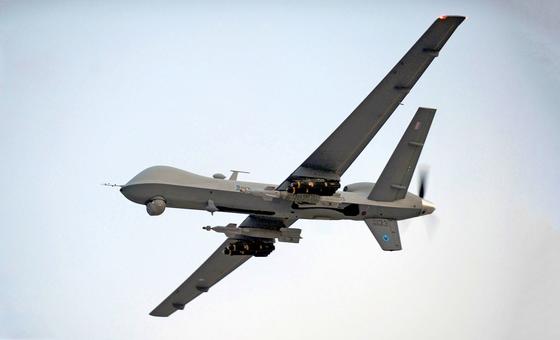
While there is no internationally accepted definition of autonomous weapon systems, they broadly refer to weapons such as advanced drones which select targets and apply force without human instruction.

The Secretary-General said in his message to the meeting that any regulations and prohibitions must make people accountable. 

“Human control over the use of force is essential,” Mr. Guterres said. “We cannot delegate life-or-death decisions to machines.”

There are substantial concerns that autonomous weapon systems violate international humanitarian and human rights laws by removing human judgement from warfare.

The UN chief has called for Member States to set clear regulations and prohibitions on such systems by 2026.

Approaching a legally binding agreement

UN Member States have considered regulations for autonomous weapons systems since 2014 under the Convention on Certain Conventional Weapons (CCW) which deals with weapons that may violate humanitarian law.

Most recently, the Pact for the Future, adopted in September last year, included a call to avoid the weaponization and misuse of constantly evolving weapons technologies.

Stop Killer Robots – a coalition of approximately 270 civil society organizations – was one of the organizations speaking out during this week’s meeting. 

Executive Director Nicole van Rooijen told UN News that consensus was beginning to emerge around a few key issues, something which she said was a “huge improvement.”

Specifically, there is consensus on what is known as a “two-tiered” approach, meaning that there should be both prohibitions on certain types of autonomous weapon systems and regulations on others.

However, there are still other sticking points. For example, it remains unclear what precisely characterizes an autonomous weapon system and what it would look like to legislate “meaningful human control.”

Talks so far have been consultations only and “we are not yet negotiating,” Ms. Rooijen told UN News: “That is a problem.”

‘Time is running out’

The Secretary-General has repeatedly called for a ban on autonomous weapon systems, saying that the fate of humanity cannot be left to a “black box.”

Recently, however, there has been increased urgency around this issue, in part due to the quickly evolving nature of artificial intelligence, algorithms and, therefore, autonomous systems overall.

The cost of our inaction will be greater the longer we wait,” Ms. Rooijen told us.

Ms. Rooijen also noted that systems are becoming less expensive to develop, something which raises concerns about proliferation among both State and non-state actors.

The Secretary-General, in his comments Monday also underlined the “need for urgency” in establishing regulations around autonomous weapon systems.

“Time is running out to take preventative action,” Mr. Guterres said. 

Source link